

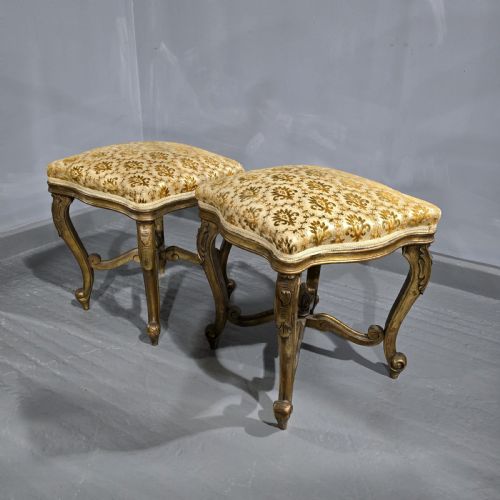
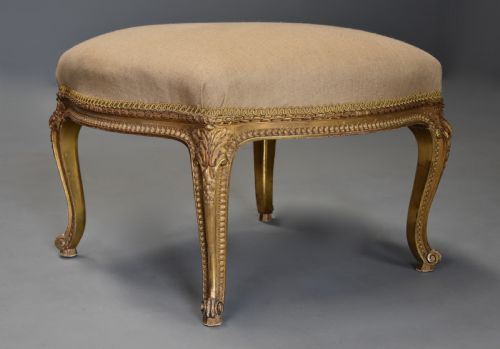


French Style Gilt Stool
A french style gilt stool brings giltwood, upholstery and revival forms into a room with genuine period presence.
French Style Gilt Stool
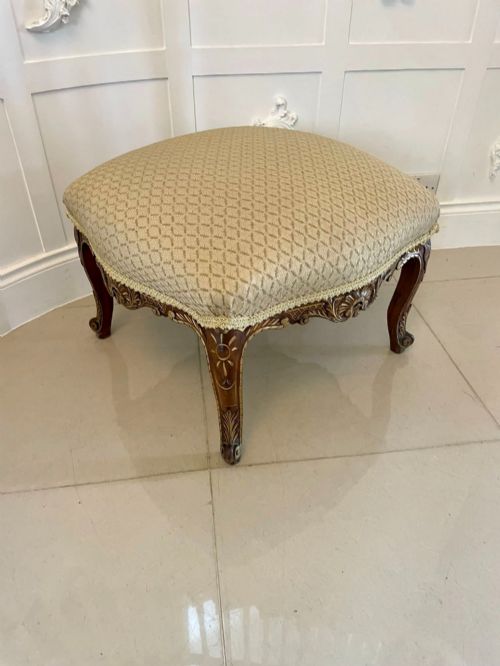
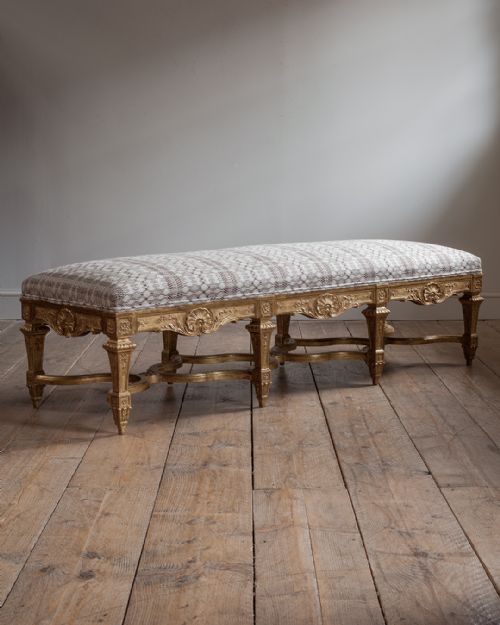
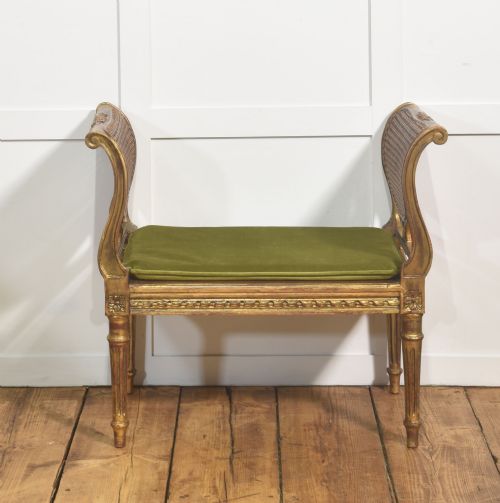
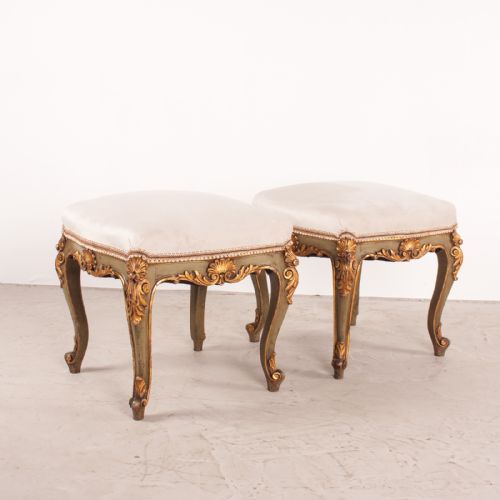
When you search for a french style gilt stool, you encounter low seating designed to catch the eye in a reception room or boudoir. The forms span simple footstools and long benches to X-frame curule shapes and adjustable piano stools, originating across the nineteenth century.
Most pieces you meet on this page date from the nineteenth century, including specific years like 1860, 1870, 1880, 1890, 1910 and 1920, alongside Victorian and Regency periods. Styles draw directly on French court vocabulary, featuring Louis XV, Louis XVI, Empire, Baroque and Rococo revivals.
Makers ranged from provincial workshops to Parisian cabinetmakers, as seen in stamped signatures on larger giltwood frames. You find single seats, matched pairs, and longer forms intended for windows or bed ends.
Materials and construction
Makers shaped these frames from solid hardwoods like walnut, mahogany and various painted woods, applying layers of gesso to carve fine decorative details before gilding. Ormolu mounts and brass hardware appear on select Empire and piano stool variants.
Surface treatment relies on gold leaf or gilt paint applied over gesso grounds, sometimes combined with parcel gilt highlights on painted wood surfaces or exposed carved walnut details.
Upholstery employs traditional textiles including contemporary fabric, velvet, and tapestry needlework, secured over webbed and sprung bases or woven cane panels.
The listings on this page include materials such as giltwood, gesso, velvet, brass, and painted wood, spanning the nineteenth century up to the 1920s.
Judging the work
Quality rests primarily on the depth and crispness of the wood carving beneath the gilt layer. Hand-carved gesso work on solid giltwood demonstrates superior craftsmanship compared to simpler moulded or painted substitutes.
The integrity of the frame construction and the original gilding distinguish finer pieces from later decorative copies. Crisp joinery, substantial timber weight, and authentic wear to the gold leaf reveal a higher tier of nineteenth-century production.
LOIDRAULT FRERES PARIS
The French Style Gilt Stool Glossary
- Giltwood
- Timber coated with gold leaf or powder over a prepared gesso ground. It forms the primary gleaming surface of most decorative French-taste seating.
- Gesso
- A plaster mixture applied to wood frames to create a smooth surface for carving and gilding. It allows for sharp relief ornament.
- Curule stool
- An ancient Roman magistrate seat shape featuring X-shaped intersecting legs. Revival versions adopt this profile for compact gilt seating.
- Ormolu
- Gilded bronze mounts applied to furniture woodwork. It adds metallic contrast to mahogany and gilt frames on Empire pieces.
- Parcel gilt
- A decorative technique where only specific raised portions of a painted or stained wooden surface receive gold leaf.
French Style Gilt Stool: Frequently Asked Questions
Where should I place a gilt stool?
These pieces suit positions where their reflective surfaces and decorative upholstery catch ambient light, such as beside a fireplace or beneath a window. Long benches work well at the foot of a bed.
Keep them away from direct sunlight and damp atmospheres to protect the delicate giltwood and fabric surfaces over time.
How do I clean giltwood?
Dust the carved surfaces gently with a soft, dry ostrich feather duster or a clean, dry artist's brush. Avoid applying water, oils, or modern chemical polishes directly to the gold leaf.
Professional conservators should handle any losses to the gesso or gilding to prevent further flaking of the historic finish.
What is the difference between Louis XV and Louis XVI styles?
Louis XV style embraces asymmetrical curves, C-scrolls, and exuberant Rococo naturalism. The lines are flowing and organic.
Louis XVI style shifts toward neoclassical straight lines, symmetry, fluted legs, and geometric leaf motifs derived from classical antiquity.