






Fluted Leg Vanity Seat
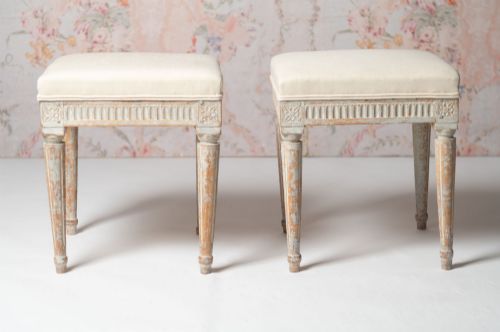
These fluted leg vanity seat examples are refined low seating pieces designed for the dressing room or bedroom, offering both period charm and practical daily function.
Fluted Leg Vanity Seat
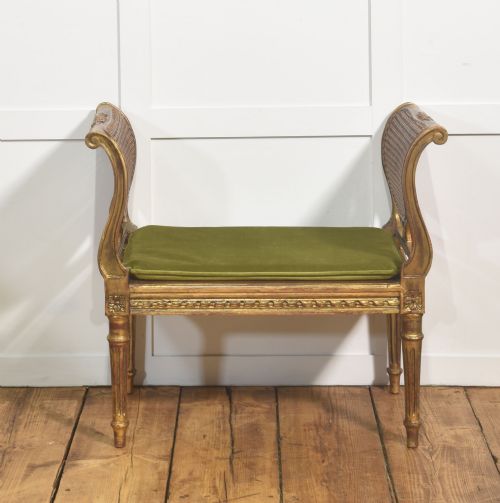
A fluted leg vanity seat brings classic neoclassical detailing to the dressing room, drawing on eighteenth-century French and Swedish design traditions. You will encounter various forms ranging from compact dressing stools and piano stools to window benches.
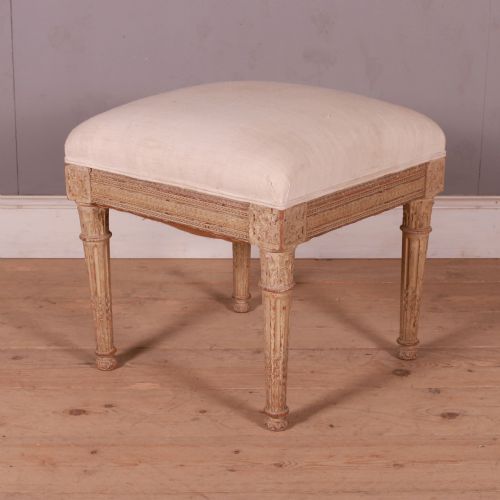
The pieces available span from the eighteenth century through the Victorian and Edwardian eras, with nineteenth-century examples appearing frequently. Swedish Gustavian interpretations and French Louis XVI styles dominate the selection alongside British Victorian mahogany and giltwood pieces.
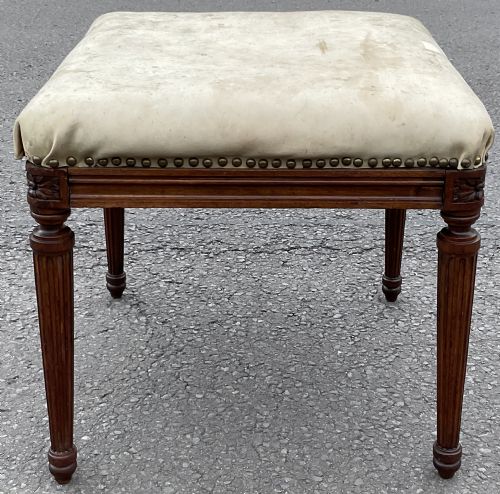
Most examples function as dressing stools or low bedroom seating, often upholstered in linen, velvet, fabric, or leather. Their defining characteristic remains the linear carved fluting along the wooden legs, which echoes classical architecture.
Materials and construction
Frames are constructed from hardwoods such as mahogany, walnut, teak, and oak, alongside painted wood and giltwood. Carved details and fluted channels are executed by hand directly into the timber frame.
Upholstery materials include traditional linen, textured fabric, plush velvet, and supple leather, often paired with woven rattan or cane panels. Gilt finishes and original painted surfaces provide the decorative exterior layer on continental pieces.
Fluted Leg Vanity Seat Retail Price Guide 2026
Typical asking prices for fluted leg vanity seat among the pieces listed under this phrase on Sellingantiques today, from the lower quarter to the upper quarter. They describe what is for sale here now, not the wider market.
Several pieces double as piano stools, proving that nineteenth-century musicians took their vanity just as seriously as their scales.
Evaluating craftsmanship and condition
Quality rests in the crispness of the wood carving, particularly the depth and precision of the fluting along the legs. Finer pieces display hand-carved details that remain sharp and well-defined through centuries of use.
The integrity of the frame construction and the preservation of original painted or gilt surfaces dictate the standing of a piece. Original upholstery textiles and secondary cane or rattan work also influence the overall character of the seat.
Jas Shoolbred
The Fluted Leg Vanity Seat Glossary
- Fluted leg
- A column or furniture leg carved with vertical parallel grooves that create a classical architectural profile.
- Gustavian
- The Swedish interpretation of neoclassical design, characterised by restrained carving, light painted finishes, and elegant proportions.
- Giltwood
- Timber that has been coated with a thin layer of gold leaf or gilt pigment to create a luminous metallic surface.
- Cane
- Material woven from peeled rattan strips, utilised to create lightweight and breathable panels for seating.
Fluted Leg Vanity Seat: Frequently Asked Questions
Where were these seats placed?
These low seats were traditionally designed for the bedroom or dressing room, positioned in front of a dressing table or vanity mirror. They also served as window stools or piano benches in formal reception rooms.
Because of their compact proportions, they easily fit into smaller corners or beneath table surfaces when not in use.
How do I identify a Gustavian piece?
Gustavian pieces originate from Sweden and reflect a lighter, more restrained version of French neoclassical style. They typically feature pale painted finishes and subtle carved details rather than heavy dark wood.
Look for clean lines, muted colour palettes, and handcrafted wooden frames that show traditional Swedish craftsmanship.
What materials are used for upholstery?
Period upholstery materials vary from simple woven linen and durable fabrics to luxurious velvet and leather. Some examples incorporate natural woven rattan or cane directly into the seat structure.
Many antique pieces have been reupholstered over time to preserve their usability while maintaining period-appropriate aesthetics.
How do I care for giltwood?
Giltwood surfaces require gentle dusting with a soft, dry cloth to protect the delicate gold leaf layer. Avoid using water, chemical sprays, or abrasive cleaners which can strip the metallic finish.
Keep the seat away from direct sunlight and moisture to prevent the wood beneath from warping and the gilding from flaking.