
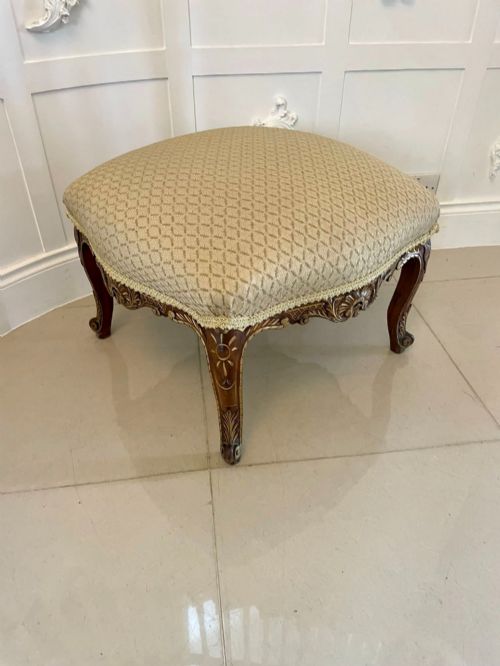
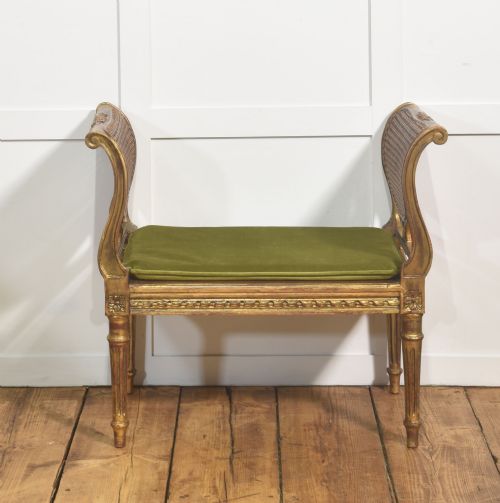
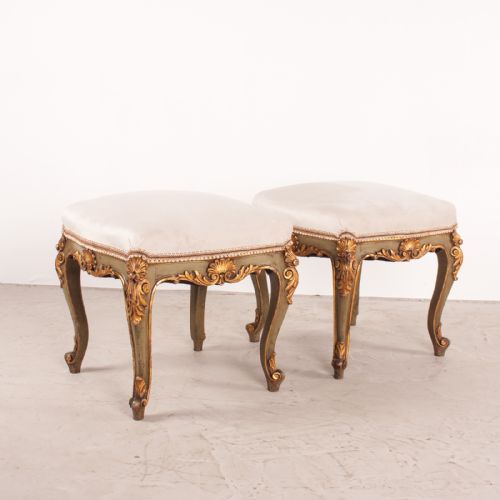
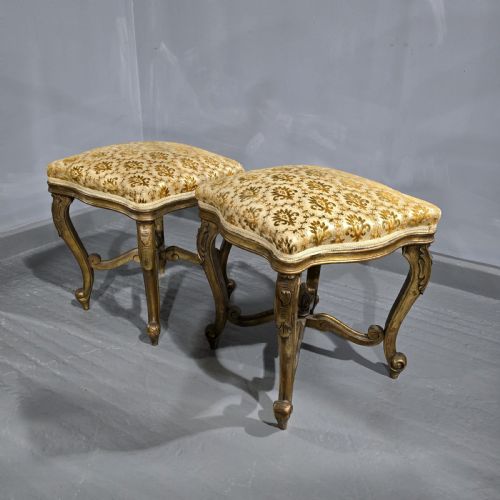
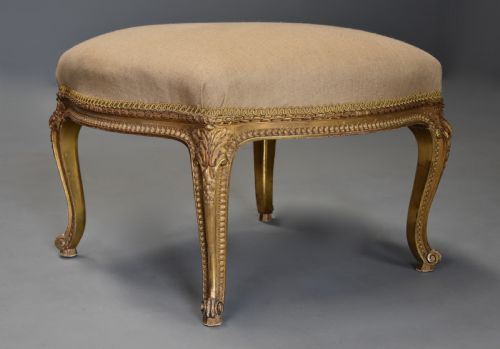


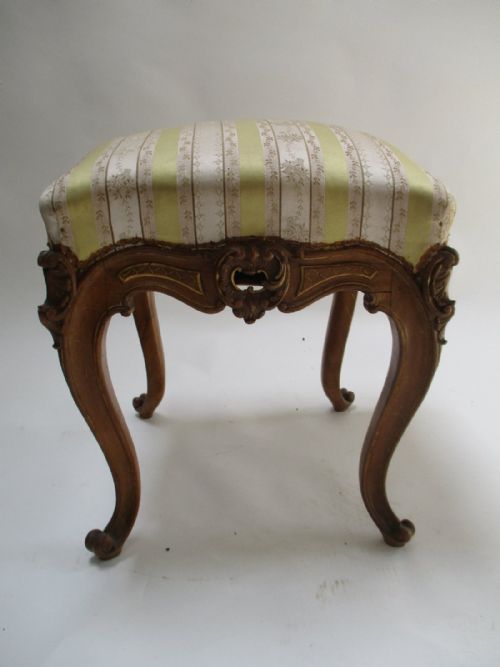

Gold Gilt Vanity Stool
A gold gilt vanity stool brings a touch of continental display to a dressing room through carved frames and rich upholstery.
Gold Gilt Vanity Stool
A gold gilt vanity stool represents a compact seating form designed for dressing rooms and private chambers, drawing upon various continental and domestic traditions. When exploring a gold gilt vanity stool, buyers encounter diverse iterations ranging from neoclassical curule frames to French revival duet benches.
The pieces on this page span the nineteenth century, including Victorian interpretations and specific decades such as eighteen-sixty and eighteen-eighty. Forms vary from simple footstools and window benches to adjustable empire piano stools and carved Baroque examples originating from French and Italian workshops.
Materials and Construction
Makers constructed these frames predominantly from walnut, beech, or general hardwoods, frequently applying a layer of gesso to prepare carved surfaces for gilding. Artisans then coated the prepared wood in gold leaf or paint to achieve the bright metallic finish characteristic of the style.
Upholstery completed the piece, utilising fabrics such as velvet, silk, and patterned textiles secured over traditional stuffing. Some variants incorporated woven cane panels or adjustable screw mechanisms for height regulation.
Several examples include clever mechanical screw tops, proving that nineteenth-century users took the exact height of their vanity seating quite seriously.
Craftsmanship and Detail
Quality rests primarily in the crispness of the hand-carved detail on the wooden or gesso frame, where deeper relief work distinguishes finer atelier production from simpler commercial output. The weight and selection of the underlying timber, such as solid walnut rather than softer secondary woods, also separate robust examples from lesser pieces.
The application of the gilt finish dictates visual success, with gold leaf demonstrating a warmer, more nuanced degradation over time compared to flat metallic paint. Furthermore, the integrity of the original joinery and the survival of period textiles or appropriate reupholstery influence the standing of each piece.
LOIDRAULT FRERES PARIS·A.M.E. Fournier
The Gold Gilt Vanity Stool Glossary
- Giltwood
- Wood that has been covered with a thin layer of gold leaf. This technique was widely utilised across nineteenth-century seating furniture.
- Gesso
- A plaster mixture applied to wood surfaces to create a smooth base for carving and gilding. It allows for sharp decorative details.
- Curule stool
- An ancient Roman shape of X-shaped seating revived during neoclassical and nineteenth-century periods. These stools often fold or feature crossed supportive legs.
- Baroque style
- An ornate design aesthetic characterised by dramatic curves and heavy ornamentation. Pieces in this style display exaggerated sculptural movement.
Gold Gilt Vanity Stool: Frequently Asked Questions
What is a gold gilt vanity stool used for?
These small seats served primarily in dressing rooms and bedrooms for sitting while grooming or playing the piano. Their decorative frames were intended to complement grand interior schemes.
Today, they function easily as flexible accent seating or dressing table companions in domestic spaces.
How do I identify the period of a gilt stool?
Dating relies on stylistic clues, timber choice, and construction methods visible in the frame. Nineteenth-century pieces often reflect revival movements like Louis XVI or Aesthetic styles.
Examining the underside and joinery helps determine whether a piece originates from the mid nineteenth century or later.
Are these stools comfortable for daily seating?
Most of these pieces are compact and low, designed for brief periods of use at a vanity or mirror. The padding is typically firmer than modern lounge furniture.
Upholstery can be updated for comfort while preserving the historic frame beneath.
How should I care for gilded wooden frames?
Gilt surfaces require gentle dusting with a soft, dry cloth to protect the thin metallic layer from damage. Moisture and harsh cleaning agents must be avoided entirely.
Keeping the piece away from direct sunlight preserves the original tone of the gold leaf.