
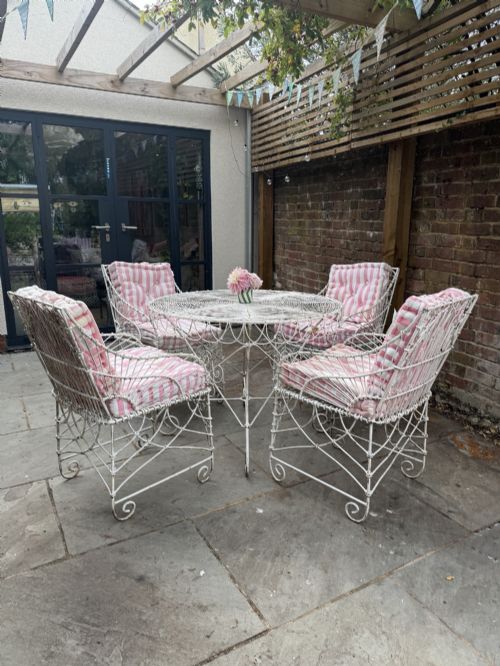
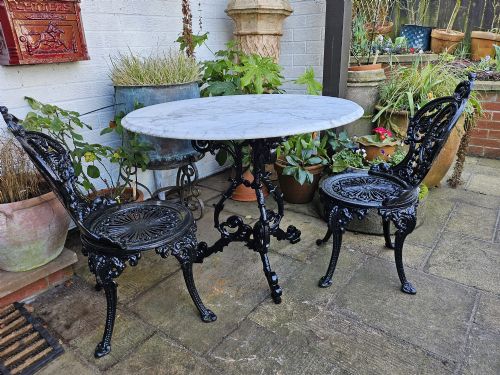
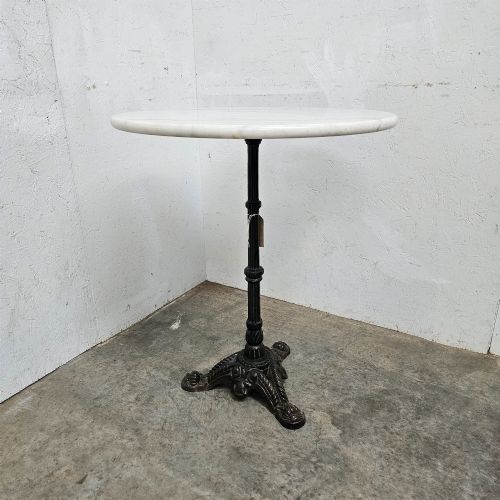


French Style Garden Table
These pieces are french style garden table examples, bringing timeless outdoor elegance and practical charm to terraces and conservatories.
French Style Garden Table
When you search for french style garden table, you encounter practical outdoor furniture designed for dining and leisure. These items originate from periods spanning the nineteenth century through to the interwar decades of the 1920s and 1930s.
The selections on this page most commonly appear as bistro tables, garden dining sets, and plant stands. They reflect specific design traditions including French bistro, Victorian wirework, and Art Deco aesthetics.
Makers utilised diverse forms ranging from simple cafe tables to elaborate garden sets complete with matching chairs. Their origins encompass both domestic country houses and commercial establishments.
How they were made
Construction relies heavily on durable metals such as cast iron and wrought iron for structural stability and decorative bases. These metal elements often incorporate intricate strapp work or wirework patterns.
Surfaces frequently feature contrasting materials including smooth white marble, zinc, ceramic tile, and mosaic work. This combination provides a resilient top suitable for both indoor conservatory use and outdoor garden settings.
The listings span from the 1880s through the 1930s, featuring materials such as wrought iron, cast iron, marble, wirework, and ceramic tile.
What varies in quality
Differentiation across the range depends on the complexity of the ironwork and the quality of the top surface. Elaborate cast iron bases paired with genuine marble demonstrate higher craftsmanship than simpler utilitarian designs.
The integrity of the original materials and the presence of decorative stylistic elements like Rococo Revival details or specialised wirework elevate the character of individual pieces.
The French Style Garden Table Glossary
- Bistro table
- A small café table typically designed for compact outdoor or indoor seating. These tables usually feature a central pedestal or four slender metal legs supporting a round top.
- Strapp work
- A decorative metal technique involving flat strips of iron shaped into geometric or scroll patterns. It adds rigidity and visual interest to table skirts and bases.
- Wirework
- A style of construction using bent and intertwined metal wires to create lightweight yet sturdy furniture and plant stands. This technique was particularly popular during the Victorian and Edwardian eras.
- Rococo Revival
- A nineteenth-century design style characterised by asymmetrical scrollwork, floral motifs, and natural curves. It appears on ornate cast iron frames and garden accessories.
- White marble
- A classic metamorphic rock prized for its cool touch and polished surface. It is frequently selected for cafe and garden table tops.
French Style Garden Table: Frequently Asked Questions
Can I leave my iron garden table outside all year?
Iron and cast iron furniture withstands outdoor conditions well due to its sturdy metallic composition. However, protective measures during harsh winter weather help preserve the metal and any fitted stone tops.
Regular maintenance prevents weathering damage and keeps the surface finish intact across changing seasons.
How do I clean a marble top garden table?
Cleaning marble requires gentle methods to protect the polished stone surface from staining and etching. Use mild soapy water and a soft cloth rather than abrasive chemicals.
Dry the surface thoroughly after cleaning to maintain the natural finish of the stone.
Are these tables suitable for indoor use?
Many of these pieces transition easily into interior spaces such as conservatories, sunrooms, and kitchens. Their decorative metalwork and marble surfaces complement indoor living areas.
Padded feet or protective pads help prevent scratching on indoor flooring.
How do I identify a Victorian wirework table?
Victorian wirework pieces feature complex hand-bent wire structures that create airy, skeletal patterns. They often support plant stands or lightweight garden tables from the nineteenth century.
The intricate looping and weaving distinguish them from solid cast iron furniture.