
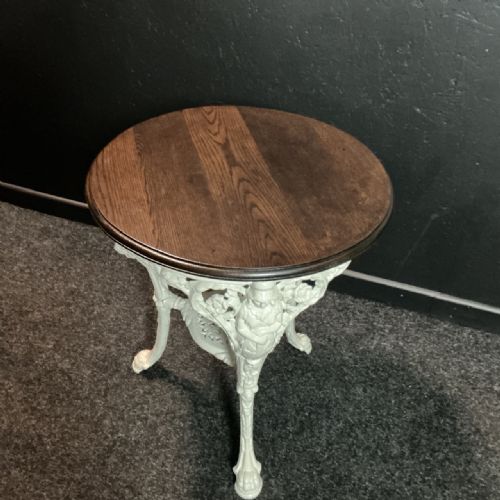
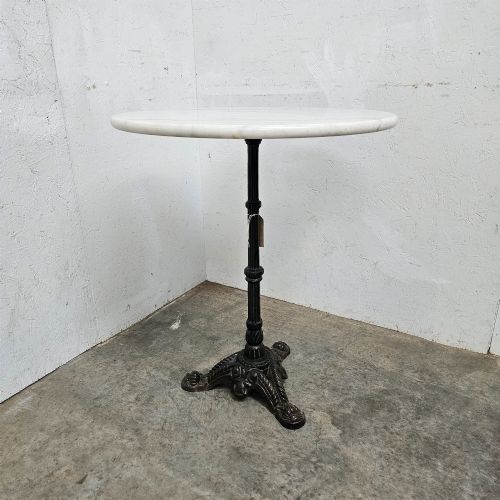
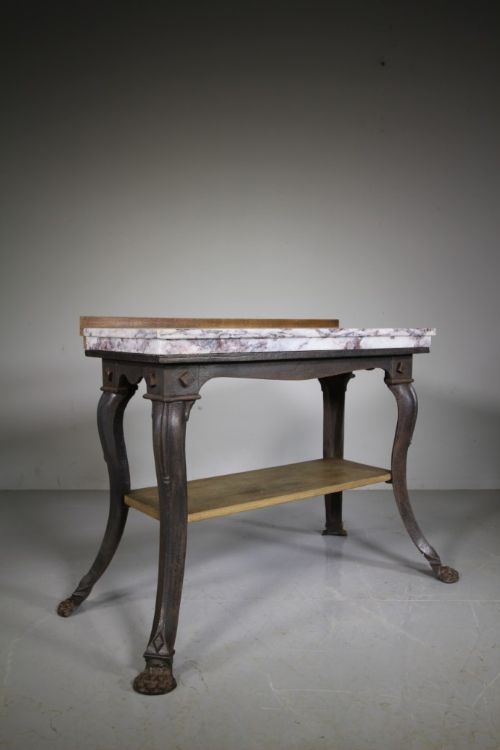


White Iron Side Table
A white iron side table brings industrial character and practical surface space to any room, combining robust metal frames with classic stone or wood tops.
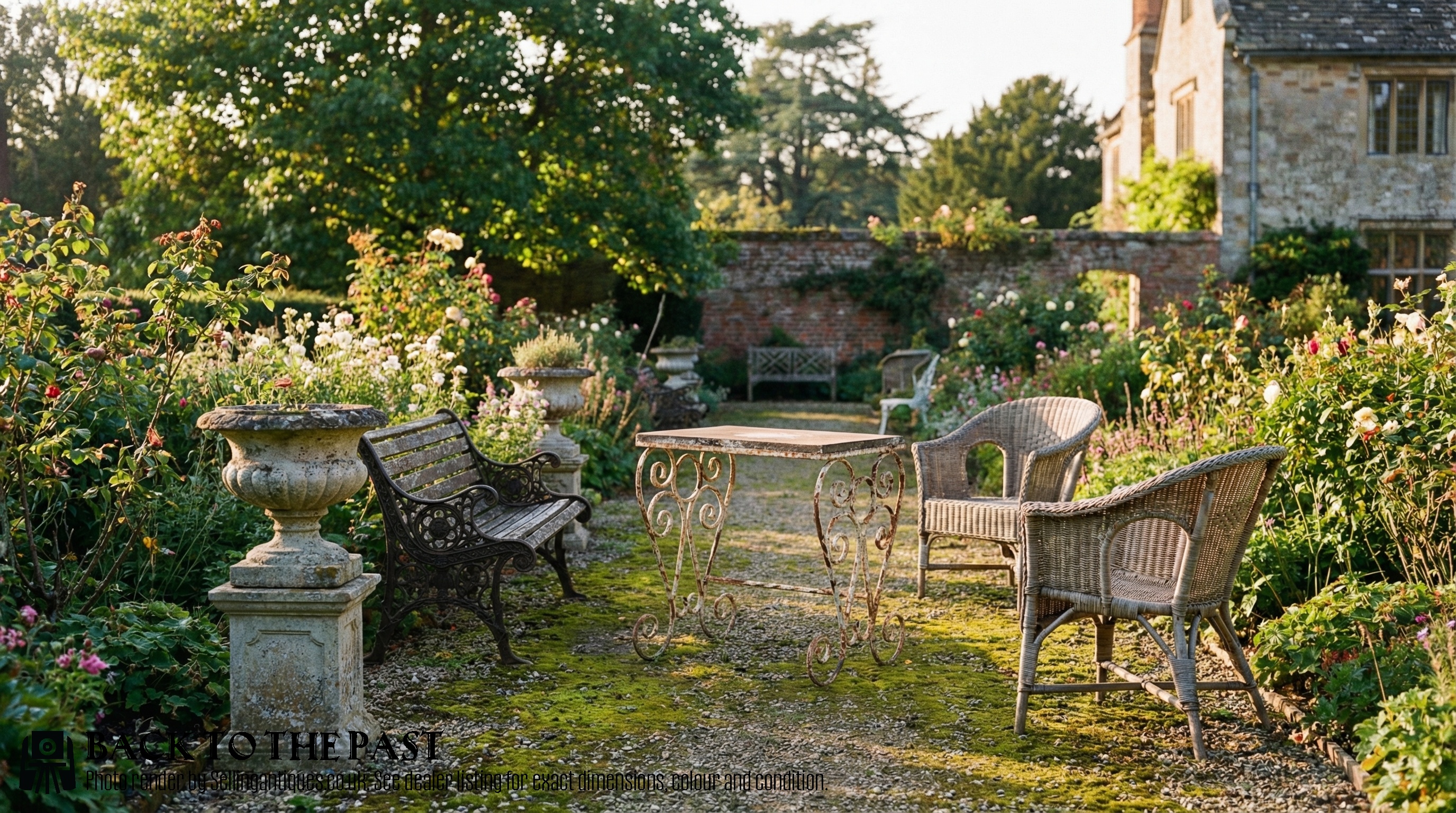
White Iron Side Table
A white iron side table encompasses various forms such as bistro tables, console tables, garden tables, and occasional tables originating from the nineteenth and early twentieth centuries. These pieces reflect Victorian and French provincial styles, blending utility with decorative appeal.
The selections on this page predominantly feature iron frameworks paired with contrasting tops, most notably white marble, green marble, wood, or steel. Such items were originally utilised in cafes, patisseries, gardens, and conservatories before finding a place in modern domestic interiors.
Materials and construction
The structural framework relies on cast iron, wrought iron, or steel, shaped into durable pedestals, legs, and strapp work supports. These metals provide the structural integrity required for heavy use in commercial or outdoor settings.
Tops are constructed from marble slabs, oak, or other wood varieties, fitted neatly to the metal bases. The combination of heavy stone and sturdy iron results in a substantial piece designed to remain stable without complex joinery.
Some garden tables arrive with faint traces of old outdoor paint buried beneath decades of weathering, telling tales of forgotten French patios.
Assessing quality
Quality rests in the finesse of the metal casting or forging, where finer pieces display intricate decorative work on the bases and legs rather than plain industrial forms. The proportion between the heavy top and the supporting iron base dictates the visual balance.
The material composition of the top also defines the tier of the piece, with genuine marble slabs or carefully selected oak offering superior substance compared to standard steel alternatives. Original patination on the iron frame contributes significantly to the character of the object.
The White Iron Side Table Glossary
- Cast iron
- A sturdy alloy poured into moulds to create decorative bases and frames. This material allows for ornate Victorian and French styling.
- Wrought iron
- Iron beaten into shape by hand, resulting in robust and often more linear structural supports. It differs from cast methods by showing individual forge marks.
- Bistro table
- A small table traditionally used in cafes and patisseries. These typically feature round marble tops and compact metal bases.
- Console table
- A table designed to stand against a wall, frequently featuring a rectangular marble or wood top. They serve as narrow surface ledges in hallways and living spaces.
- Strapp work
- Metalwork arranged in intersecting flat bands or straps, commonly found on garden tables. This technique provides geometric rigidity and decorative interest.
White Iron Side Table: Frequently Asked Questions
Where do these tables originate?
Many examples originate from nineteenth-century France and Victorian Britain, where they served practical functions in cafes, patisseries, and gardens.
Over time, their durable construction and compact sizes transitioned them into domestic environments as versatile accent furniture.
Are these tables suitable for outdoor use?
Most of these tables were originally built to withstand outdoor conditions in gardens and cafes, utilising weather-resistant iron frames and stone tops.
Protecting vulnerable wood tops or monitoring marble against weathering preserves the longevity of the piece.
How do I care for a marble top?
Marble requires gentle cleaning with mild soap and water to avoid dulling the polished surface or staining the porous stone.
Using coasters and avoiding acidic substances protects the finish of vintage marble surfaces.
How do I identify a Victorian piece?
Victorian pieces often feature specific cast iron registry markings, heavier decorative pedestals, and distinct nineteenth-century foundry characteristics.
Comparing the base ornamentation with established regional styles helps confirm the nineteenth-century timeline.