
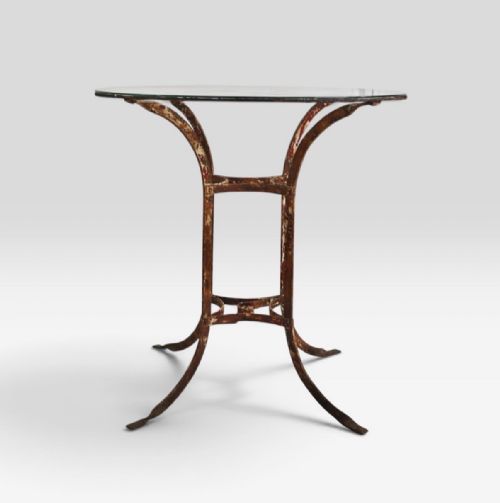

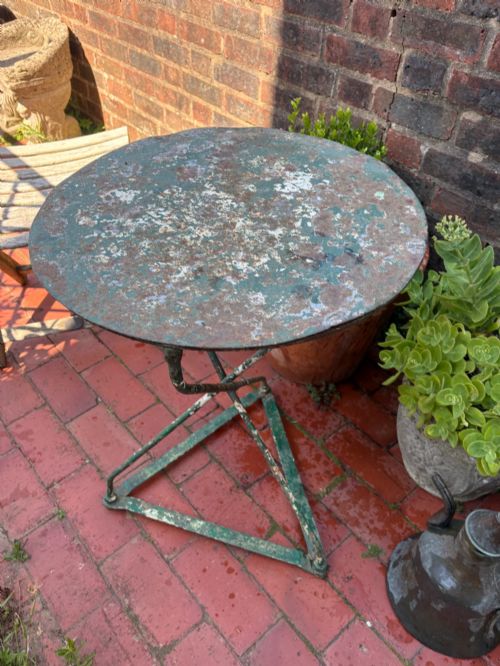


Painted Iron Patio Table
A painted iron patio table brings industrial strength and outdoor charm together, offering a sturdy surface for garden dining that stands up to the elements.
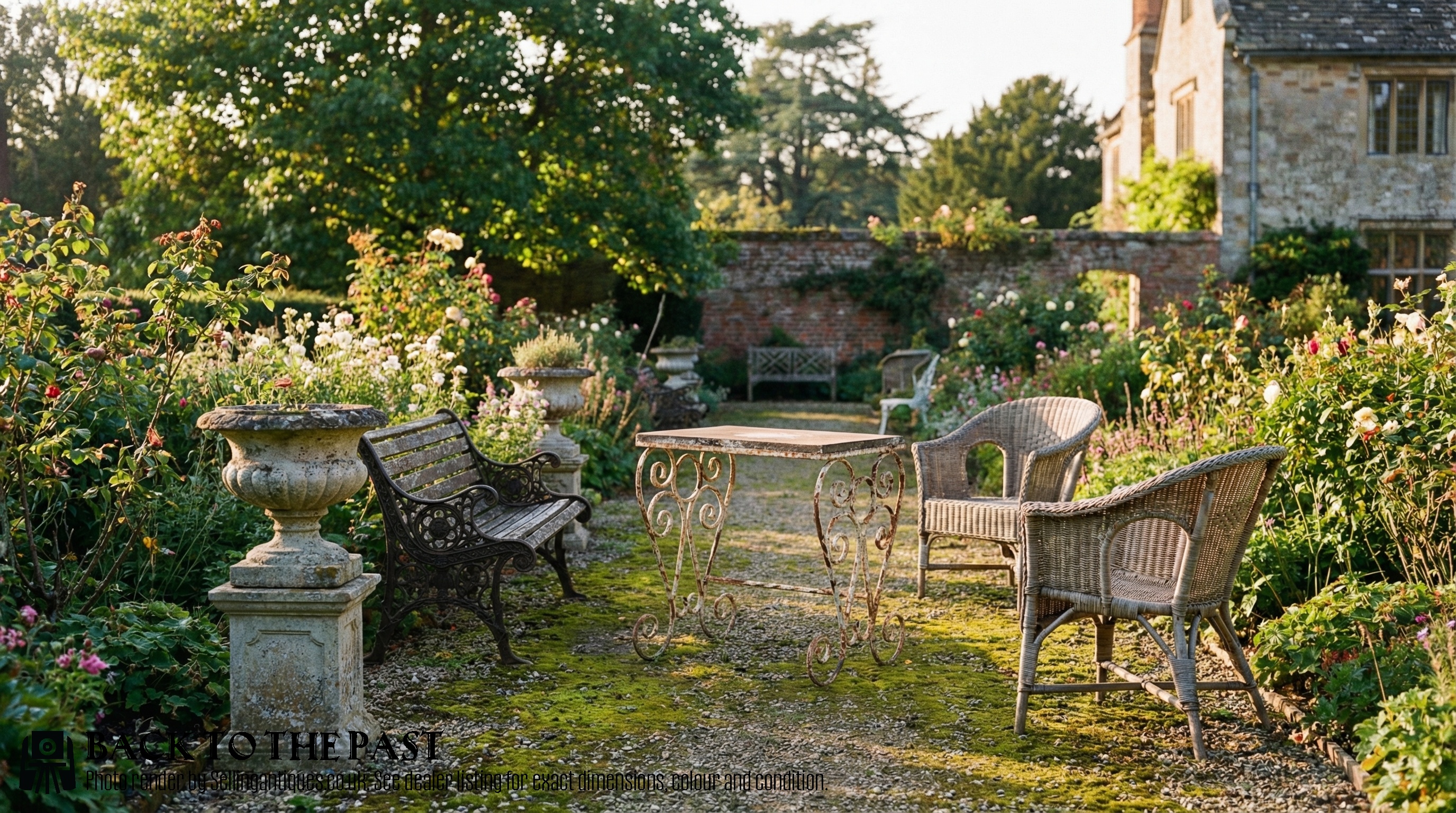
Painted Iron Patio Table
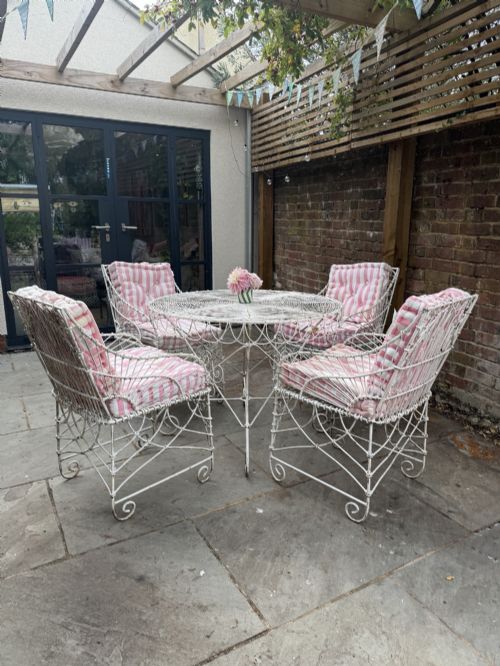
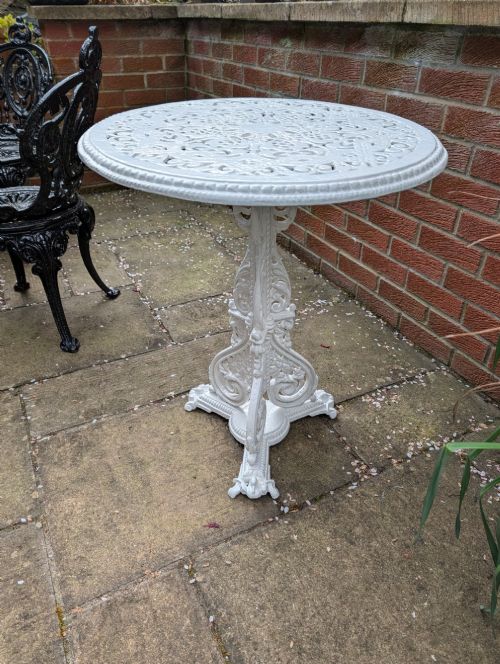
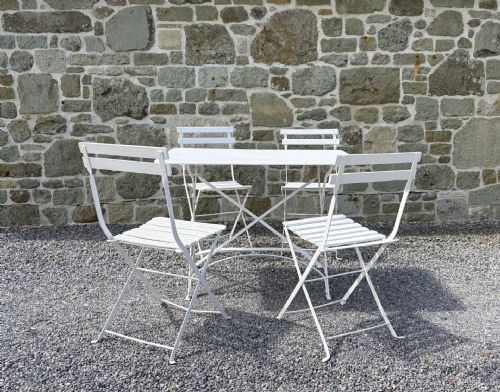
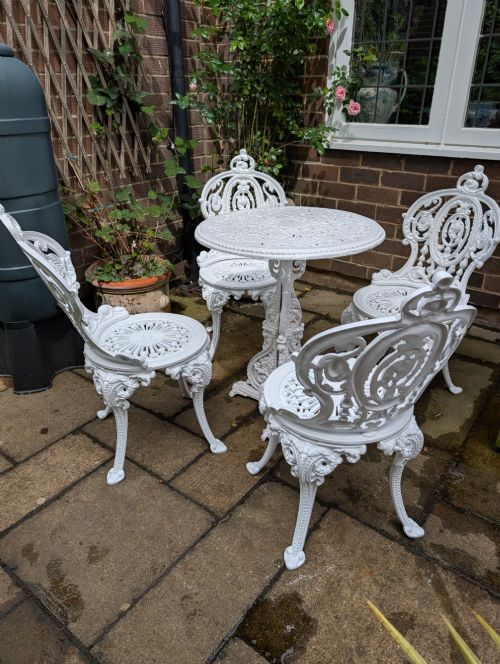
A painted iron patio table serves as a robust outdoor centrepiece, appearing in forms such as round garden bistro tables, square café tables, and larger dining sets complete with matching chairs. These pieces originate across the nineteenth and twentieth centuries, spanning Victorian, Art Deco, and French provincial styles.
Buyers browsing this selection encounter various configurations, including round gueridon tables with painted metal tops, designs paired with marble or wood surfaces, and intricate wirework constructions. Most examples combine heavy metal framing with weathered painted finishes that show decades of garden exposure.
How a painted iron patio table was made
Maker workshops utilised cast iron and wrought iron for structural stability, shaping heavy metal components through casting and forging techniques to create ornate scrollwork, strapp work, and sturdy pedestal bases. Selected nineteenth and twentieth-century examples incorporate contrasting materials like marble, wood, and steel into the table tops.
Protective and decorative paint coats were applied directly over the metal surfaces, preserving the iron beneath through changing weather conditions. Over time, these painted finishes acquire natural patinas through weathering and repeated seasonal use.
Listings feature items spanning the Victorian era through the 1930s, utilising cast iron, wrought iron, marble, wood, and wirework.
What varies in quality
The sophistication of the ironwork and the integrity of the original construction dictate the character of each table, with crisp casting details and balanced proportions marking superior examples. Simpler utilitarian designs offer robust utility, whereas pieces featuring specialised elements like integrated marble tops or complex wirework demonstrate greater ambition.
The condition of the painted surface and the degree of original material preservation influence how each piece presents. Tables retaining early or original paint layers possess an authentic visual depth that later refinishing lacks.
Christopher Dresser
The Painted Iron Patio Table Glossary
- Cast iron
- A strong, hard iron alloy poured into moulds to create intricate furniture frames and bases. It allows for detailed ornamentation that distinguishes nineteenth-century garden furniture.
- Wrought iron
- Iron heated and hammered into shape by hand, known for its fibrous structure and flexibility. This material provides the tensile strength seen in structural braces and scrollwork.
- Gueridon
- A small round table supported by a central pillar or column. Originating in seventeenth-century France, this form remains popular for compact garden dining.
- Strapp work
- An ornamental pattern of interlaced flat bands resembling leather straps. It appears on metal garden tables from the early twentieth century.
- Wirework
- A technique using interwoven metal wires to form geometric or mesh patterns. Victorian makers utilised this method to create lightweight yet durable garden furniture.
Painted Iron Patio Table: Frequently Asked Questions
How do I care for a painted iron patio table?
Keep the metal clean by washing it gently with mild soap and water to remove dirt and organic debris. Inspect the painted surface regularly for signs of wear and address exposed metal promptly to prevent rusting.
Store the table under cover during harsh winter months or protect it with a breathable outdoor furniture cover. Avoid using harsh chemical cleaners that can strip away aged paint layers.
Can these tables stay outside year round?
Cast and wrought iron tables tolerate outdoor environments well due to their heavy weight and durable metal construction. The painted finish acts as a primary barrier against moisture and seasonal elements.
Tables featuring wood or marble tops require more careful attention during freezing weather to prevent cracking or moisture damage. Moving sensitive combinations into a shed or greenhouse during winter extends their lifespan.
How do I distinguish Victorian pieces from later ones?
Victorian examples often feature heavier cast iron construction with ornate botanical motifs, structural Britannia bases, or intricate wirework. These nineteenth-century pieces display deep casting relief and traditional assembly methods.
Twentieth-century items, including Art Deco designs and 1920s French café tables, tend to show cleaner geometric lines or simpler strapp work construction. Examining the joining methods and fastener types helps clarify the production era.
What surfaces are paired with the iron frames?
Metal tops dominate the selection, often painted to match the supporting iron base or finished in contrasting tones. Selected tables incorporate stone, marble, cedar wood, or steel plates into the design.
These mixed-material surfaces provide varied textures for outdoor dining and display. The combination of iron with marble or wood reflects specific regional styles from French and Swedish workshops.