
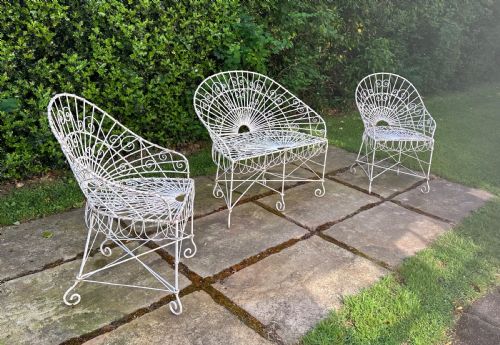


Wrought Iron Garden Set
A wrought iron garden set brings enduring character to outdoor spaces, offering robust seating and dining arrangements shaped by decades of weathering.
Wrought Iron Garden Set
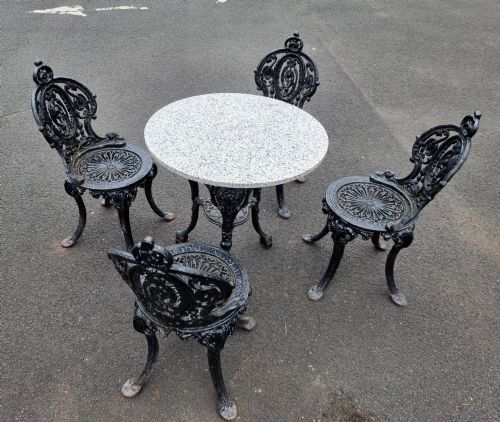
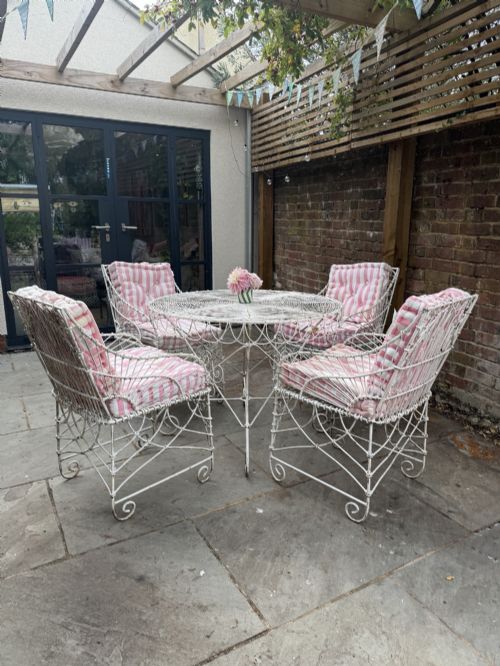
A wrought iron garden set comprises matching tables and chairs designed for exterior use, frequently paired with bistro sets, folding chairs, and garden dining tables. These ensembles span multiple decades and stylistic influences, from Victorian wirework to French country designs.
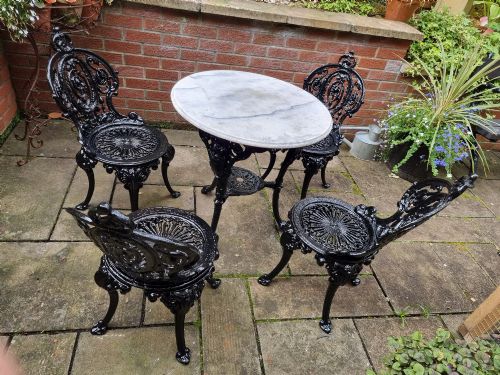
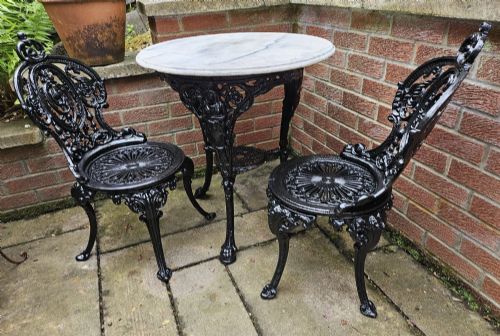
Buyers on this page most commonly encounter sets dating from the late nineteenth century through the nineteen-thirties. Forms range from heavy cast-iron dining tables with four chairs to intimate two-seater bistro arrangements and mosaic cafe tables.
Origins vary across British, French, and Spanish traditions, reflecting distinct regional tastes in outdoor metalwork. Pieces incorporate diverse configurations, including garden benches with matching chairs and large dining sets with zinc or marble tops.
How they were made
Construction relies heavily on durable metals, primarily wrought iron, cast iron, and wirework, often combined with stone surfaces such as marble or granite. Makers utilised heavy casting techniques for structural frames and detailed chair backs, ensuring stability in exterior environments.
Surfaces frequently feature specialised treatments, including zinc tabletops on French pieces and decorative wirework patterns bent and soldered into intricate scrolls. Folding mechanisms on chairs required precise hinge construction using standard metal rods and pivot points.
Wrought Iron Garden Set Retail Price Guide 2026
Typical asking prices for wrought iron garden set among the pieces listed under this phrase on Sellingantiques today, from the lower quarter to the upper quarter. They describe what is for sale here now, not the wider market.
Some French folding chairs survived generations of cafe terrace gossip before retiring to the lawn.
What varies in quality
Quality separates through the integrity of the original metalwork and the complexity of the design, such as elaborate Victorian wirework versus plain industrial casting. Heavier gauge iron and substantial framing indicate superior durability and higher grade production.
The refinement of decorative details, including matched seating sets and intact stone or zinc tabletops, distinguishes exceptional examples from standard utilitarian pieces. Original patination earned through decades of weathering adds distinction compared to stripped or heavily repainted surfaces.
The Wrought Iron Garden Set Glossary
- Wrought iron
- Iron that has been heated and worked with tools, known for its fibrous structure and resistance to bending under stress.
- Cast iron
- Iron poured into a mould to create rigid components with detailed ornamentation, frequently utilised for garden table bases and chair frames.
- Wirework
- Metal strands bent and joined to form open lattice patterns, characteristic of Victorian garden furniture.
- Bistro set
- A small table accompanied by two chairs, designed for compact outdoor spaces and informal dining.
- Zinc top
- A sheet metal surface applied to wooden tabletops, offering a durable and weather-resistant finish seen on French pieces.
Wrought Iron Garden Set: Frequently Asked Questions
How do I date a garden set?
Dating relies on construction techniques, material choices, and stylistic markers recorded in the pieces. Heavy cast iron and specific wirework patterns align with nineteenth and early twentieth-century manufacturing.
Changes in fastener types and the presence of regional styles, such as French folding mechanisms or Spanish mosaic work, help narrow the period of origin.
Can these sets stay outside all year?
These metal sets are built for exterior environments and handle weathering well due to robust iron and stone materials.
Protecting vulnerable surfaces like marble or fabric cushions during harsh winter months preserves the condition of the materials over time.
Are folding chairs period accurate?
Folding iron chairs appear across French pieces from the early twentieth century, designed for easy storage and seasonal movement.
Their hinges and folding mechanisms match the utilitarian needs of cafe and garden use from that era.
What is the difference between cast and wrought iron?
Cast iron is poured into moulds, resulting in rigid, heavy components with detailed decorative patterns suitable for table bases and chair frames.
Wrought iron is hammered and shaped while hot, yielding a resilient material that bends rather than snaps under heavy loads.