


White Wrought Iron Bench
White wrought iron bench examples combine durable metalwork with a weathered pale finish, offering a practical garden seat that suits both traditional and structured outdoor spaces.
White Wrought Iron Bench
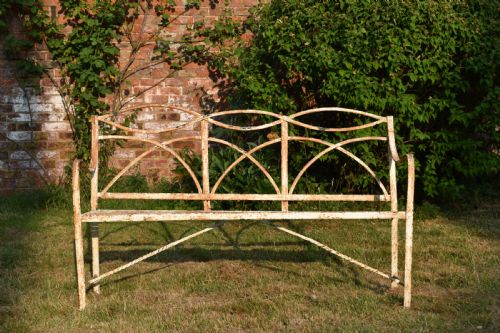
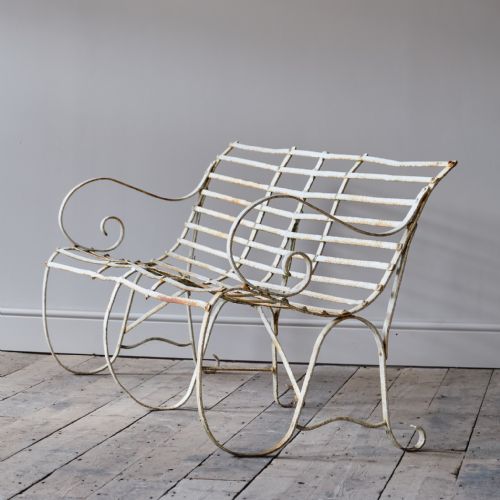
A white wrought iron bench forms a traditional feature for gardens and terraces, drawing on forms from the Regency, Victorian, and Edwardian periods. These outdoor seats utilise robust metal frameworks designed to withstand external conditions while providing decorative appeal.
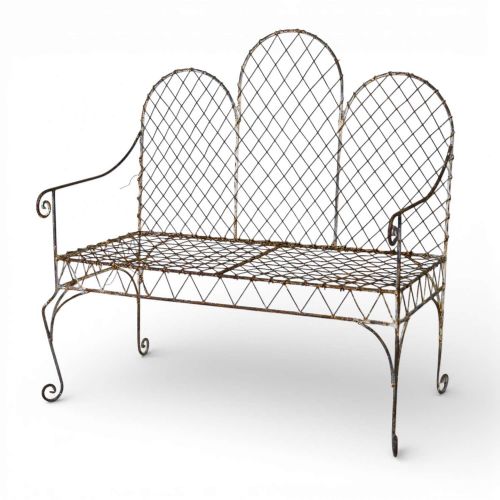
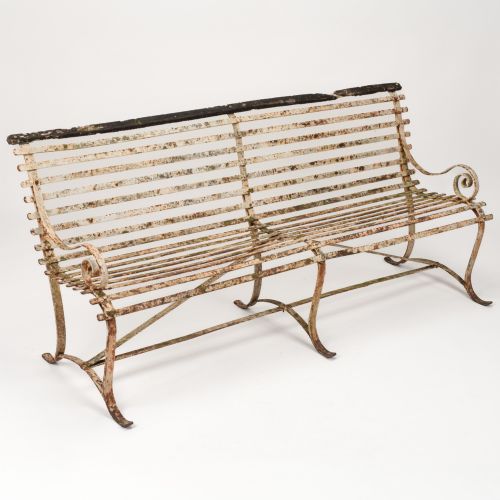
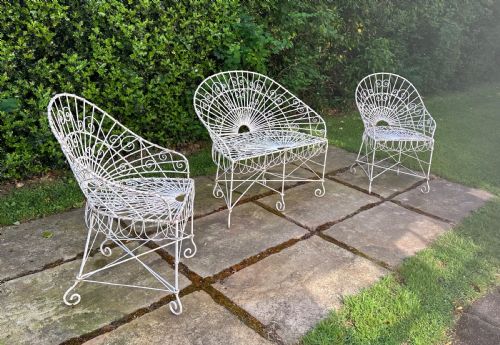
The versions most commonly met on this page span the nineteenth and early twentieth centuries, featuring strapwork, wirework, or French Gothic influences. Many examples incorporate painted timber elements or match companion chairs to create coordinated garden sets.
How they were made
Makers shaped wrought iron and steel wire through manual blacksmithing techniques, hammering and bending the metal into intricate strapwork and supportive scroll motifs. These resilient metal structures frequently paired with painted timber seats or slats.
Protective layers of white paint applied over the iron substrate served both to brighten the exterior appearance and to guard against oxidation in damp garden environments over decades of use.
Listings feature periods spanning from the Regency era through to the 1930s, utilising wrought iron, steel wire, and painted timber.
What varies in quality
The refinement of the metalwork distinguishes finer examples, where strapwork and scroll details display careful hand-forging and balanced proportions rather than rigid industrial uniformity. Early Regency and Victorian pieces often show greater attention to structural rhythm in the backrests and arm supports.
The integrity of the original construction and the character of the aged white paint surface define the condition and visual depth of a piece. Retaining honest patination without excessive structural compromise elevates a bench above standard utilitarian replacements.
The White Wrought Iron Bench Glossary
- Strapwork
- Flat strips of iron or steel riveted or joined in geometric patterns. This decorative technique provides both structural rigidity and visual lightness to the back of a garden seat.
- Wirework
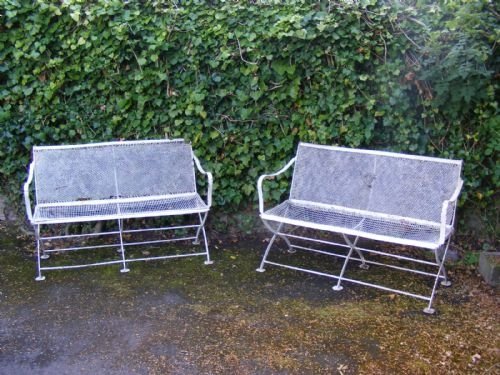
- Thin metal rods and wires woven into intricate mesh or scroll designs. It appears on lighter garden arbours and seats from the early twentieth century.
- Regency Style
- Design characteristics drawing from the early nineteenth century, featuring classical restraint, curves, and rhythmic strapwork. Pieces built later often emulate these specific ornamental motifs.
- French Gothic Revival
- Architectural style influencing nineteenth-century metalwork through pointed arches and ecclesiastical tracery patterns. This aesthetic brings a vertical emphasis to garden benches.
- Cast Iron
- Molten iron poured into a mould rather than hammered by hand. It frequently combines with wrought iron or timber to form heavier garden furniture frames.
White Wrought Iron Bench: Frequently Asked Questions
How do I date a white wrought iron bench?
Dating relies on observing construction methods, joinery, and stylistic markers such as strapwork or Gothic influences. Earlier nineteenth-century examples often display hand-forged irregularities that differ from later mass-produced steel wire pieces.
Paint layers and wear patterns also offer clues to age, though many pieces have received later maintenance coats of white paint over the decades.
Can these benches stay outdoors all year?
Most of these pieces are constructed from durable iron and steel intended for exterior garden use. However, prolonged exposure to winter moisture can accelerate paint degradation and surface corrosion.
Protecting the metal with appropriate maintenance and providing shelter during severe weather helps preserve the original structure and aged finish.
How should I care for the aged white paint?
Preserving the aged white paint involves gentle cleaning with mild soap and water to remove dirt without stripping the historic patination. Avoid harsh chemical solvents that might damage the underlying layers.
Where flaking occurs, stabilizing the surface prevents further loss while keeping the weathered character intact.
What is the difference between wrought iron and cast iron?
Wrought iron is worked by hand while hot, resulting in fibrous, malleable metal that can be bent into strapwork and scrolls. It tends to be tougher and more resilient against sudden impacts.
Cast iron is brittle and poured into moulds, allowing for heavier, highly decorative frames often seen on nineteenth-century Victorian bench supports.