



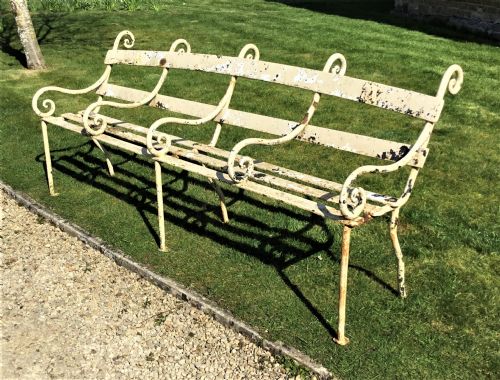


Antique Outdoor Settee
An antique outdoor settee provides robust garden seating shaped by decades of weathering, drawing collectors to durable metal and timber forms.
Antique Outdoor Settee
When you search for an antique outdoor settee, you meet sturdy garden benches, seating suites, and conservatory sets built for exterior and sheltered placement. These pieces emerge from periods ranging through the Regency, Victorian, and 19th Century eras, alongside pieces dated to the 1920s, 1930s, and 1940s.
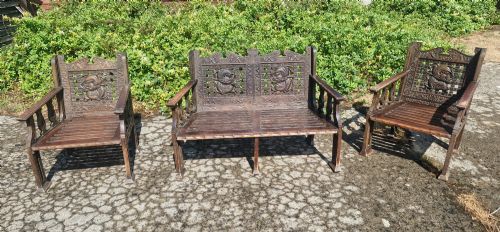
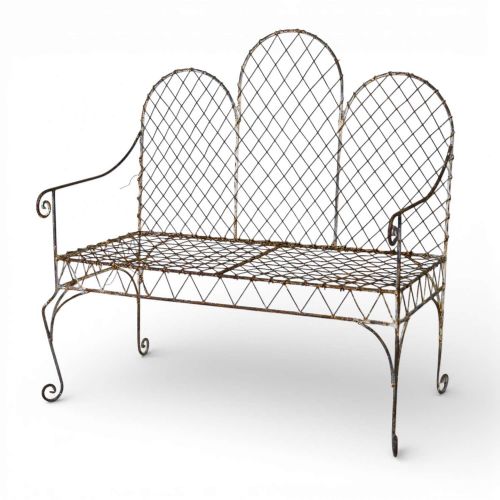
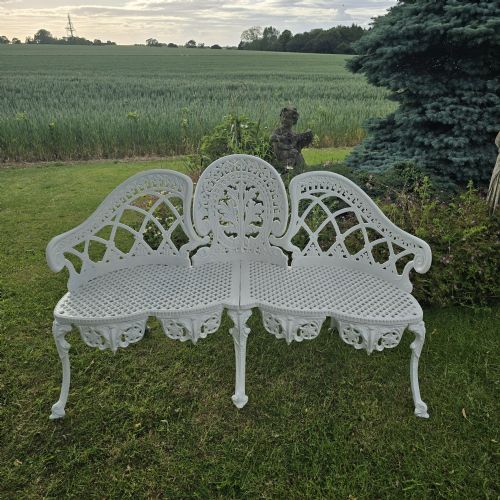
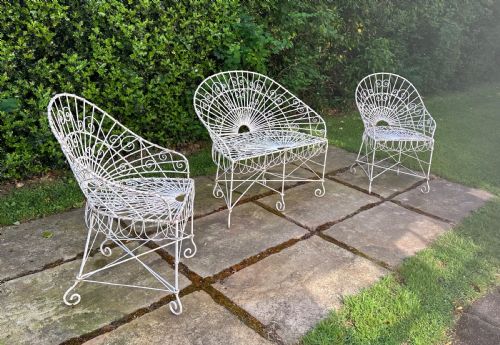
The selections available on this page include wrought iron and cast iron designs, alongside teak and wire constructions. Forms stretch from single garden benches to three-piece country house suites and larger matching seating sets.
Regional and design influences span French Gothic Revival, Anglo-Indian, French Country, and Victorian Revival styles. Buyers typically encounter items such as four-seater iron garden seats and French conservatory benches ready for placement on terraces or lawns.
How they were made
Maker workshops utilised heavy metals such as cast iron, wrought iron, steel, and cast aluminium to form structural frames capable of enduring outdoor exposure. Molten metal poured into moulds created ornate openwork patterns, while heated wrought iron was hammered into precise structural curves.
Timber versions relied on durable woods like teak, shaped through traditional joinery and carving techniques seen in Burmese country house suites. Protective layers of paint were applied to metal surfaces to prevent corrosion and enhance the visual finish.
Antique Outdoor Settee Retail Price Guide 2026
Typical asking prices for outdoor settee among the pieces listed under this phrase on Sellingantiques today, from the lower quarter to the upper quarter. They describe what is for sale here now, not the wider market.
Listings incorporate items fashioned from cast iron, wrought iron, teak, wire, and paint across Victorian, Regency, and early twentieth-century periods.
What varies in quality
The calibre of an antique outdoor settee depends on the crispness of the casting detail and the integrity of the original construction materials. Heavily detailed metalwork, such as complex Gothic tracery, demonstrates superior foundry skill compared to simpler utilitarian frames.
Structural preservation also dictates standard, where surviving original metal components and sound timber joints hold greater distinction than heavily replaced sections. The refinement of stylistic details, whether Regency restraint or French Gothic ornamentation, separates standard seating from exceptional examples.
The Antique Outdoor Settee Glossary
- Cast iron
- Iron poured into a mould to create rigid, highly detailed decorative frames for garden seating. This material provides substantial weight and intricate openwork patterns.
- Wrought iron
- Iron heated and hammered into shape by hand, producing tough and resilient structural supports. It permits slender profiles that differ from thicker cast elements.
- Gothic Revival
- A design style inspired by medieval architecture, featuring pointed arches and trefoil motifs. It appears frequently on 19th-century metal garden benches.
- Conservatory suite
- A matching collection of seating designed for semi-sheltered garden rooms and glazed verandas. These suites often incorporate carved timber or lighter metal frames.
Antique Outdoor Settee: Frequently Asked Questions
Where should I place my settee?
Position your settee on a stable, level surface such as stone paving or a gravel terrace to prevent uneven weight distribution on the legs.
Sheltered spots beneath pergolas or near garden walls help shield the metal and timber from the harshest weather extremes.
How do I clean iron furniture?
Wash the metal surfaces gently with warm water and a mild soap solution to remove accumulated dirt and debris.
Avoid abrasive scouring pads that might damage surviving painted finishes or protective surface coatings.
Can teak settees stay outside?
Teak possesses natural oils that resist moisture, allowing the timber to remain outdoors throughout changing seasons.
Unfinished teak outdoors will gradually weather to a silver-grey patina over time without compromising the structural strength of the wood.
How do I identify Victorian pieces?
Victorian examples often feature heavy cast iron construction decorated with naturalistic leaf motifs or structured geometric patterns.
Design registrations and foundry marks stamped into the metal framework can sometimes confirm the period of manufacture.