


White Iron Garden Chairs
White iron garden chairs bring enduring structure to the lawn, offering robust seating shaped by nineteenth and twentieth-century makers.
White Iron Garden Chairs
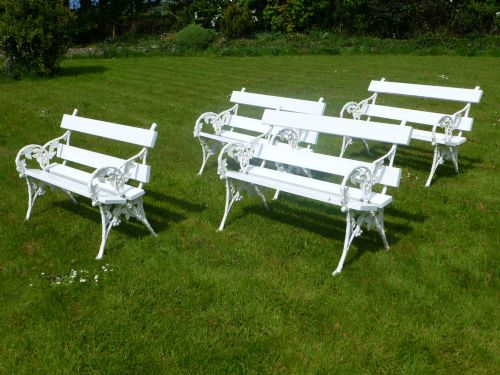
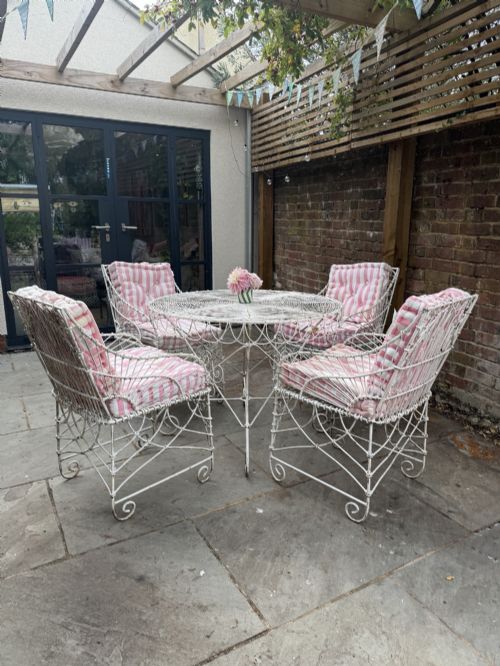
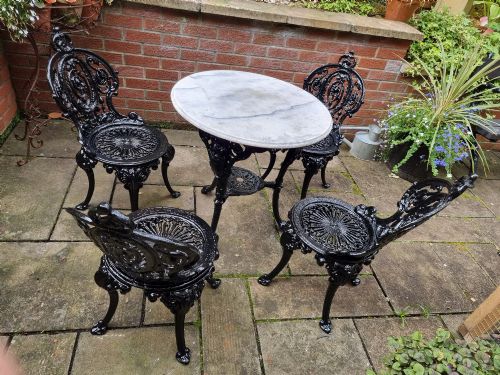
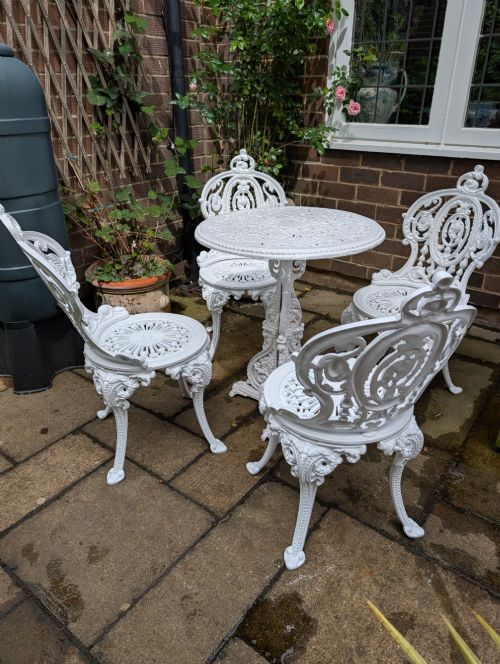
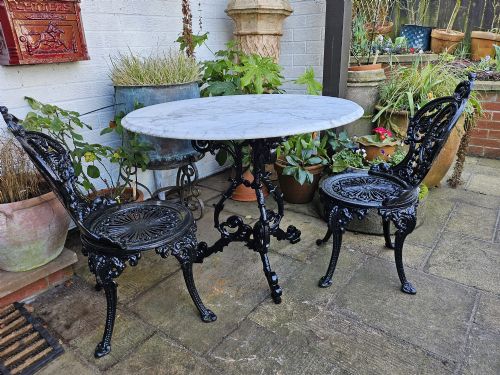
White iron garden chairs encompass seating designed for outdoor placement, ranging from single garden armchairs to matched sets of four alongside tables. When searching for white iron garden chairs, a buyer finds robust metal frameworks spanning the nineteenth century up to the interwar period, with Victorian and nineteen-thirties examples appearing frequently.
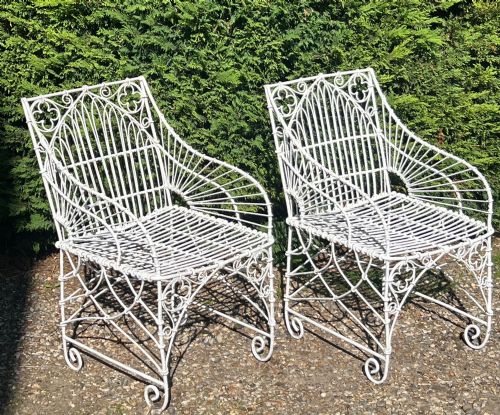
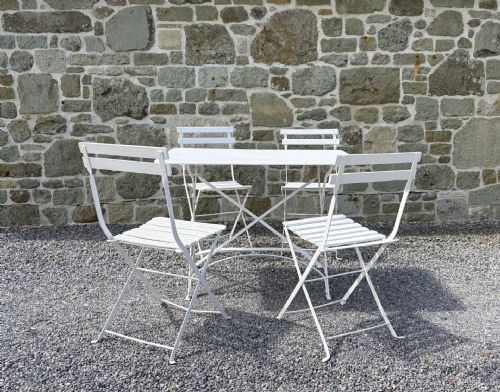
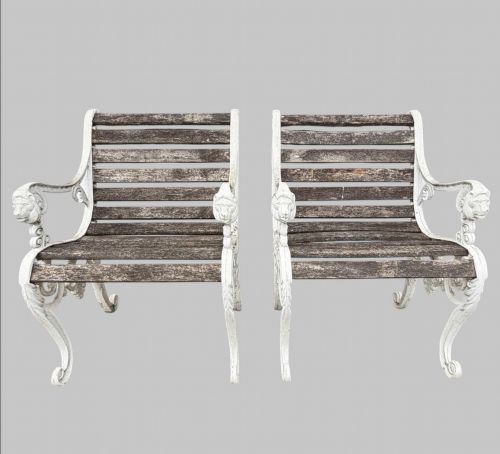
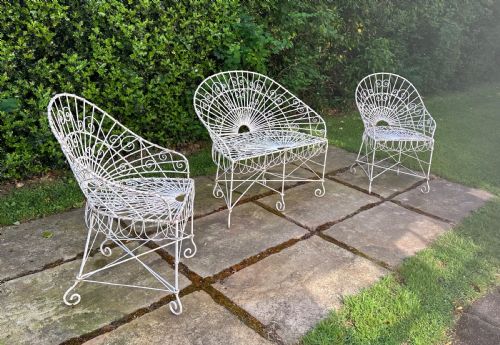
The forms vary from simple bistro chairs to elaborate Gothic Revival pieces, lion mask armchairs, and wirework designs. French bistro styles and heavy cast-iron sets represent common configurations encountered on this page.
Origins stretch across British and continental workshops, including specific pieces linked to the Falkirk foundry and Christopher Dresser designs. Buyers select these chairs to anchor gravel paths, lawns, and terraces with historical weight and functional seating.
What varies in quality
The distinction between ordinary and exceptional chairs lies in the crispness of the casting detail and the complexity of the ironwork. Pieces featuring high-relief botanical motifs, lion masks, or sophisticated strapwork demonstrate superior foundry skill compared to plain utilitarian forms.
Completeness dictates value, with matched sets of four commanding greater interest than isolated single chairs. The structural integrity of the heavy iron framework and the survival of early painted surfaces further separate standard garden furniture from works associated with known designers like Christopher Dresser or notable foundries.
Listings feature periods spanning the Regency era, the Victorian period, and the interwar years up to nineteen-thirty.
Falkirk foundry·Christopher Dresser
The White Iron Garden Chairs Glossary
- Cast iron
- Iron poured into a mould in a molten state to create rigid forms with detailed surface decoration. This technique allowed Victorian foundries to mass-produce intricate garden furniture.
- Wrought iron
- Iron heated and worked by hand with hammers and anvils to produce strong, pliable components. This material suited the creation of curved strapwork and slender structural braces.
- Wirework
- Metal rods bent and woven into geometric or botanical patterns for lightweight garden furniture. Victorian makers favoured this technique for delicate tables and chairs.
- Strapwork
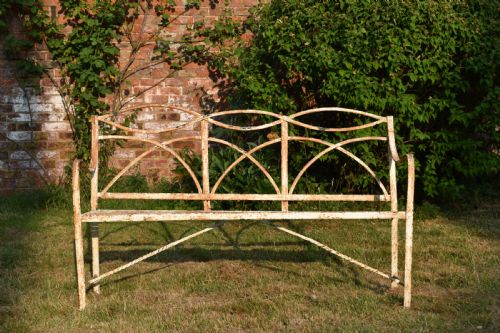
- Flat bands of metal arranged in interlaced patterns resembling leather straps. This decorative style appears frequently on Regency and nineteenth-century garden benches.
- Gothic Revival
- An architectural and decorative style drawing inspiration from medieval forms, featuring pointed arches and quatrefoils. Ironfounders applied these motifs to garden chairs to echo church architecture.
White Iron Garden Chairs: Frequently Asked Questions
Are these chairs suitable for outdoor use?
These metal chairs tolerate outdoor placement well due to their heavy iron construction, though winter storage under cover helps preserve the painted surface.
Regular checks for weathering allow owners to maintain the protective paint layers against moisture.
How do I identify a Victorian iron chair?
Victorian examples often display heavy cast-iron construction with botanical motifs, gothic tracery, or intricate wirework structures.
Foundry marks and stylistic clues such as lion masks or strapwork help distinguish nineteenth-century pieces from later twentieth-century reproductions.
Can I buy matching tables with the chairs?
Many listings offer complete garden sets comprising a central table accompanied by four matching chairs for dining.
These coordinated groups provide a unified arrangement for lawns and terraces without needing to piece separate items together.
What is the difference between cast and wrought iron?
Cast iron is poured into moulds to create rigid shapes with deep surface relief, making it ideal for decorative seat backs and heavy frames.
Wrought iron is hammered into shape, resulting in tougher, more flexible components often used for structural braces and strapwork.