
French Style Chest Drawers
When searching for french style chest drawers, buyers encounter elegant commodes and bedside cabinets shaped by centuries of craftsmanship and continental aesthetic traditions.
French Style Chest Drawers
Buyers exploring french style chest drawers typically look for storage furniture rooted in continental design, spanning formal commodes to practical bedside cabinets and tall chests. The selection draws heavily upon historical periods including the eighteenth and nineteenth centuries, alongside later revivals stretching into the 1930s.
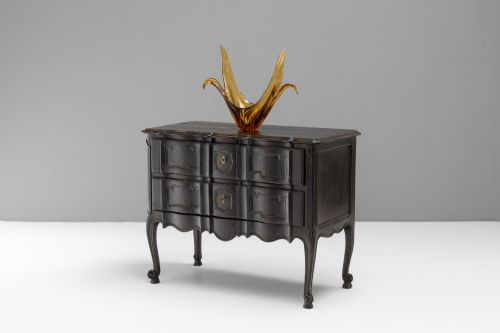
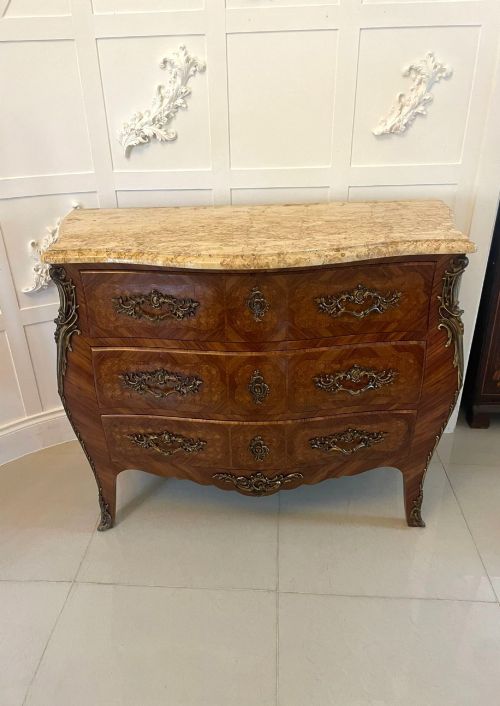
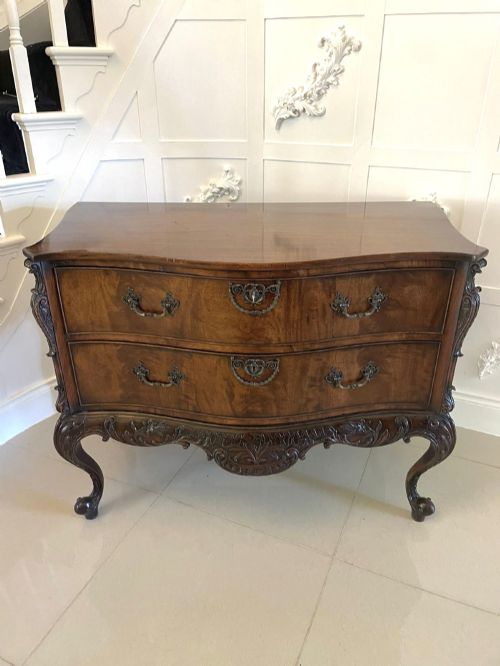
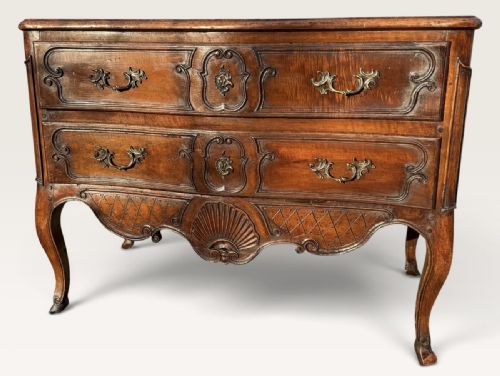
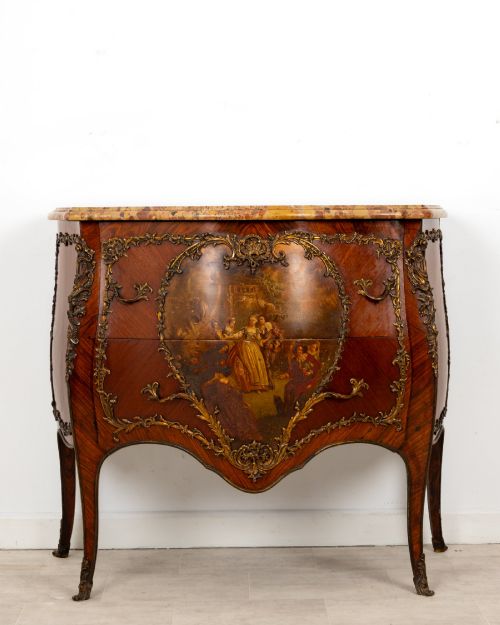
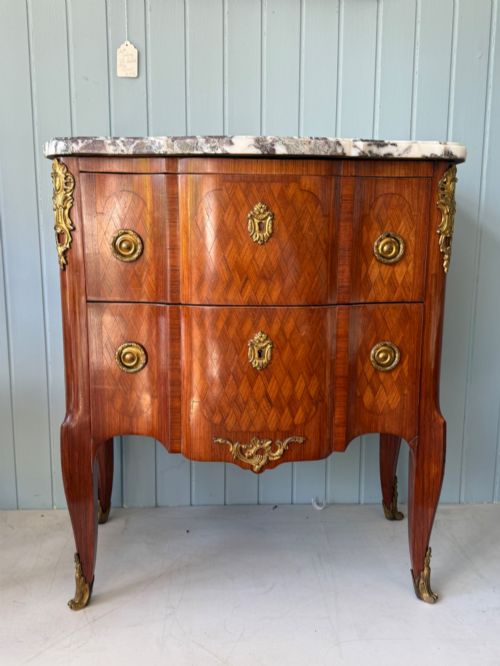
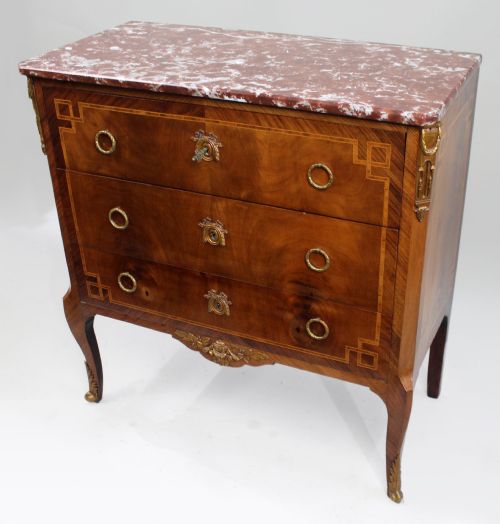
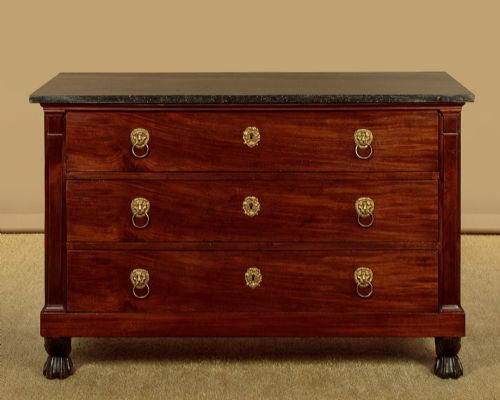
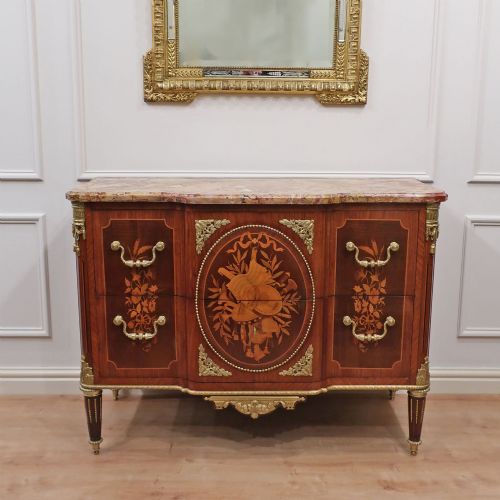
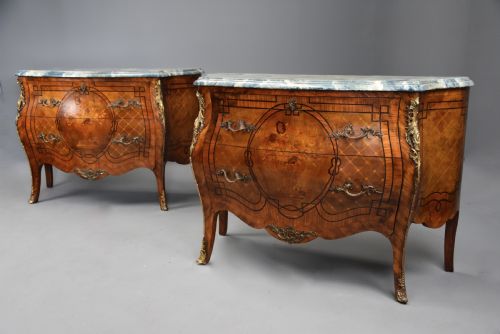
The most common versions met on this page are commodes in the Louis XV and Louis XVI styles, frequently featuring serpentine or bombe silhouettes. These pieces originate from diverse workshops and incorporate regional variations such as French Provincial oak and cherrywood designs.
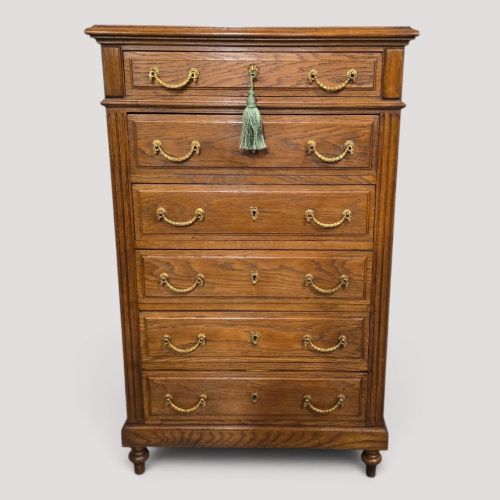
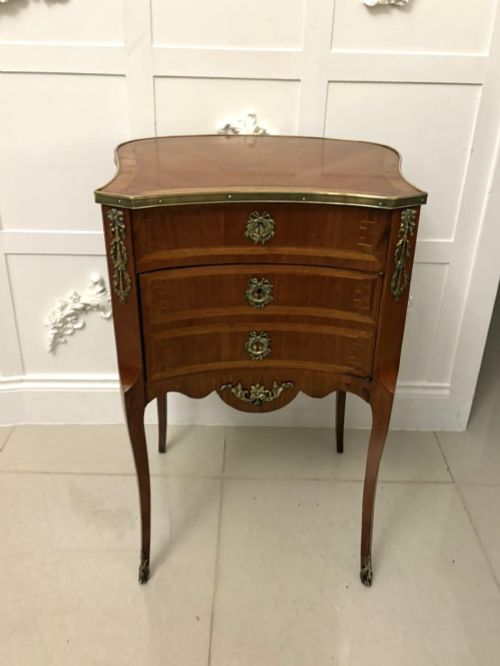
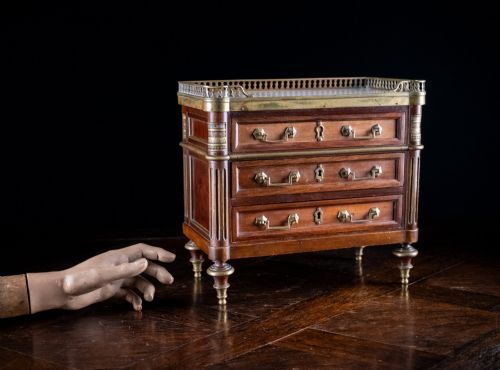
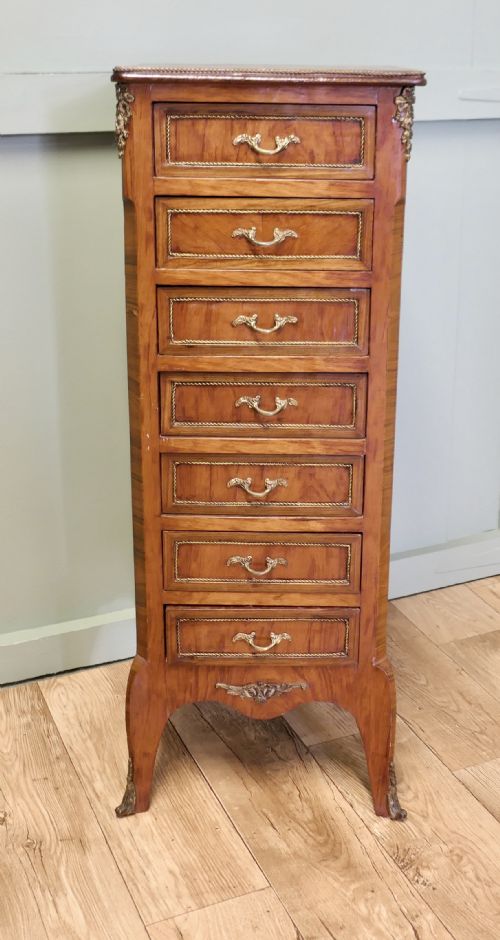
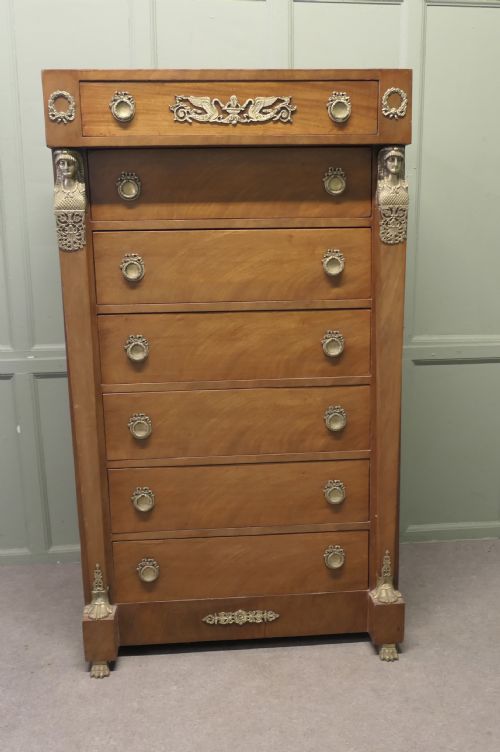
Beyond traditional commodes, the search reveals specialised forms like miniature chests, narrow semainiers, and matching pairs of bedside tables. Their proportions range from grand marble-topped reception pieces to compact bedside units adapted for modern domestic interiors.
Materials and Construction Techniques
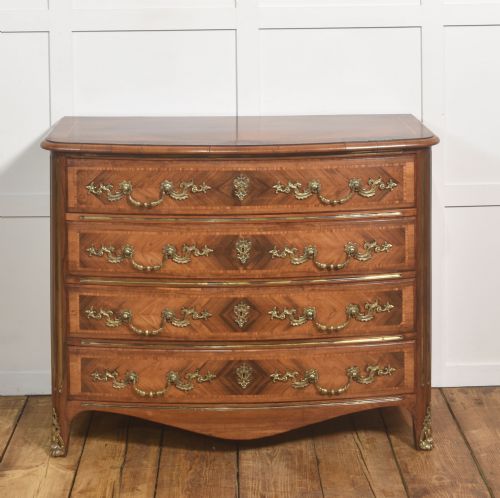
Cabinetmakers utilised a rich palette of timbers including walnut, mahogany, oak, kingwood, and burr elm, often arranging veneers in intricate marquetry and parquetry patterns. Structural carcasses were built from solid native woods before receiving decorative surface treatments and protective coatings.
Mounts, handles, and sabots cast in brass, ormolu, and gilt-bronze added structural definition and ornate contrast to the wooden surfaces. Heavy stone slabs, particularly marble and sienna marble, were precision-cut to fit the upper contours of commodes and cabinets.
Specialised decorative techniques such as vernis martin lacquer, chinoiserie painting, and diamond-point carving transformed standard storage items into ornate display furniture. Joinery relied on traditional hand-cut dovetails and pegged frames designed to accommodate seasonal timber movement.
Listings feature walnut, mahogany, oak, and kingwood timbers alongside marble tops.
Indicators of Quality
The distinction between standard execution and top-tier craftsmanship lies in the precision of the veneer work and the crispness of the bronze mounts. Superior pieces display seamless matching of wood grains across drawer fronts and sides, whereas lesser examples rely on painted approximations or simpler repeating patterns.
Structural integrity reveals itself in the internal framing, drawer linings, and the weight of the hardware. Finely cast ormolu mounts screwed securely from behind contrast with lightweight, stamped metal replacements fixed carelessly to the timber.
The integration of secondary elements such as original marble tops with correct bevelling edges elevates an item above mass-produced revival pieces. Finer iterations exhibit harmonious proportions where curved serpentine or bombe profiles maintain structural symmetry without distortion.
Thomas Hache of Grenoble
The French Style Chest Drawers Glossary
- Commode
- A low French chest of drawers, typically featuring two or three long drawers and standing on relatively short legs. They formed a principal decorative element in formal continental interiors from the eighteenth century onwards.
- Bombe
- A bulging, swelling contour found on cabinet sides and drawer fronts, characteristic of rococo furniture design. This curvaceous profile required advanced woodworking skill to construct accurately from solid timber and shaped veneers.
- Marquetry
- The art of forming decorative patterns on furniture by fitting together thin slices of various coloured woods, shells, or ivory. Master craftsmen utilised this technique to create elaborate floral, geometric, or pictorial scenes.
- Ormolu
- Gilded bronze mounts applied to furniture for decorative and protective purposes. The best examples feature hand-chased surface details that enhance the reflective quality of the metallic finish.
- Serpentine
- A furniture front or top shaped with a double-curved edge resembling the undulations of a snake. This convex central section flowing into concave corners adds dynamic movement to case pieces.
- Semainier
- A tall, narrow chest traditionally containing seven drawers, designed to hold a week's supply of linen or clothing. Originating in France, these pieces maximise vertical storage space while maintaining a slender footprint.
French Style Chest Drawers: Frequently Asked Questions
What is a French commode?
A French commode is a low chest of drawers developed in France during the seventeenth and eighteenth centuries as a luxurious alternative to basic storage trunks. They typically feature decorative wood veneers, shaped fronts, and ornate metal mounts.
Over subsequent centuries, the form was revived repeatedly, leading to the diverse nineteenth and twentieth-century interpretations seen in modern collections today.
How do I date a French style chest?
Dating requires examining the internal construction methods, secondary woods used in drawer linings, and the style of the bronze or brass hardware. Hand-cut dovetails and native timber usage often point toward earlier periods.
Revival pieces from the later nineteenth and early twentieth centuries frequently combine historic styling cues with machine-assisted joinery techniques and standardised fittings.
Are marble tops original?
Marble tops on antique commodes were generally specified by the original commissioner to add weight, colour, and a durable working surface to the cabinet. Many survive intact, shaped precisely to follow the serpentine or bombe contours of the wooden frame below.
Replacements do occur following accidental breakage over generations, which can sometimes be detected through minor discrepancies in edge profiling or stone thickness.
How do I maintain wood and marble?
Maintenance involves applying quality beeswax sparingly to nourish hardwood surfaces and grain patterns without causing a heavy buildup of wax. Gentle buffing with a soft cloth preserves the natural lustre of both veneers and patinated timbers.
Marble surfaces require simple cleaning with damp cloths and neutral soaps, avoiding acidic cleaning agents that etch or dull the polished stone finish.