
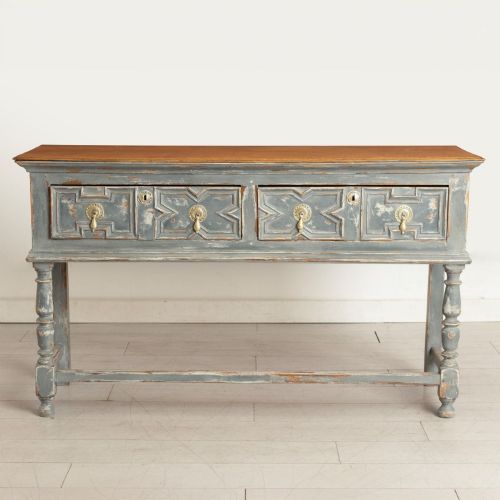
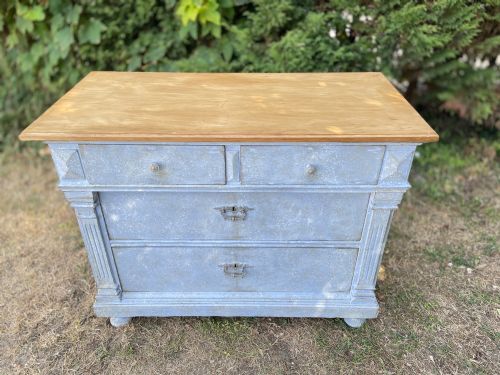
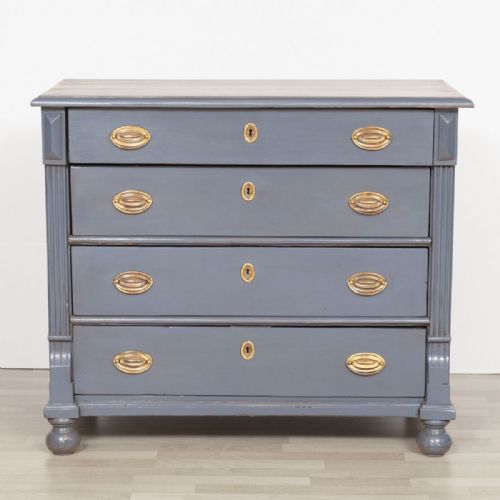


Painted Oak Chest Drawers
These painted oak chest drawers bring together sturdy native timber and decorative surface work, offering solid storage with distinct regional character.
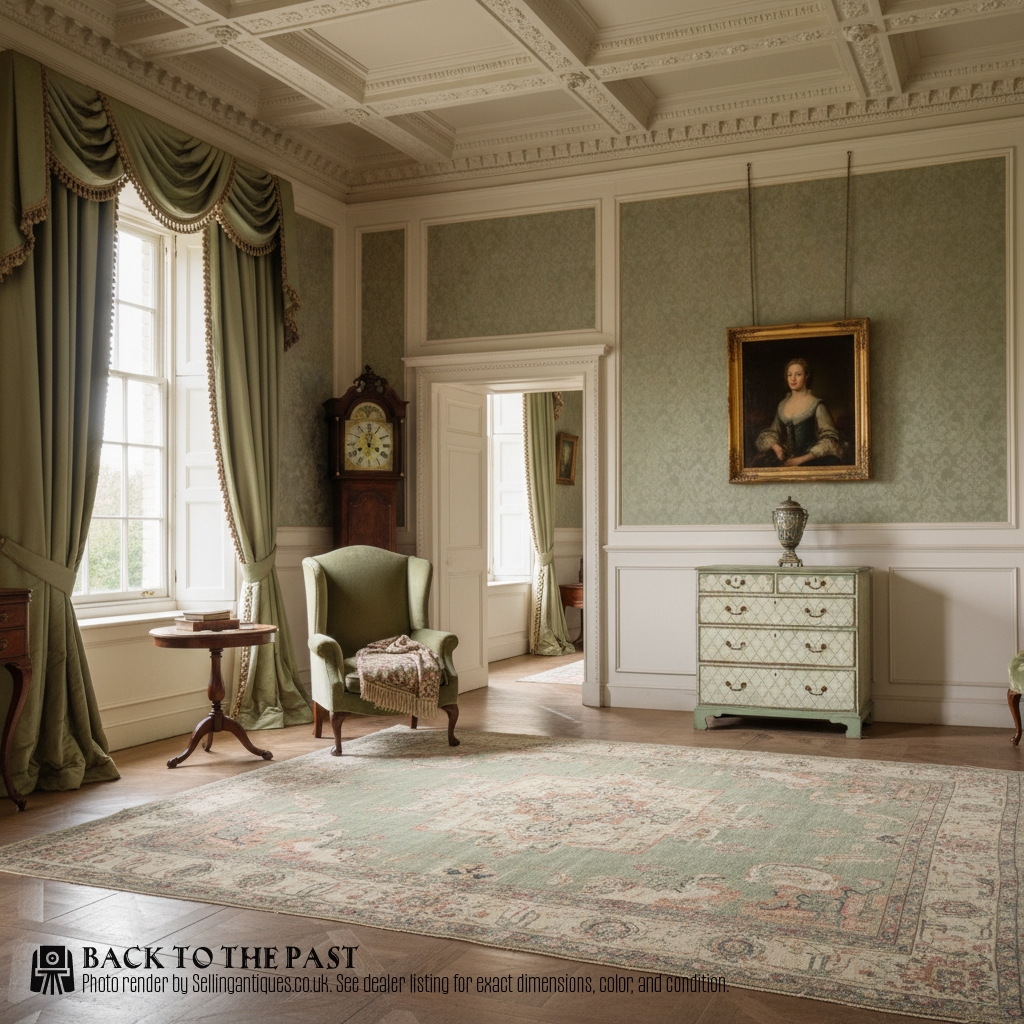
Painted Oak Chest Drawers
A painted oak chest drawers combines utilitarian timber framing with decorative surface treatments, spanning periods from the eighteenth century through to the early twentieth century. These pieces appear in forms ranging from French commodes and English country pieces to Scandinavian Baroque and Georgian chests.
The version most commonly encountered on this page is the continental European commode, particularly French carved oak examples and Dutch bombe or serpentine designs. Buyers also frequently find English and Scandinavian variations featuring simulated finishes or distressed blue paint.
What varies in quality
Quality separates along the crispness of the original timber carving and the integrity of the structural joinery beneath the painted surface. Superior examples maintain balanced proportions and well-figured oak framing that supports the decorative scheme without warping.
The handling of the painted finish also distinguishes finer pieces, whether executed as deliberate regional folk art, sophisticated neoclassical detailing, or simulated wood grain. The integration of period brassware and fitted marble tops further influences the standing of individual pieces.
Listings feature oak, pine, and marble alongside brass hardware, encompassing periods from the mid-eighteenth century to the early twentieth century.
The Painted Oak Chest Drawers Glossary
- Commode
- A lower chest of drawers or cabinet, frequently associated with French furniture design of the eighteenth and nineteenth centuries. These pieces often feature serpentine fronts or marble tops.
- Bombe
- A swelling, convex curved profile to the front and sides of a chest or commode, prominent in Dutch furniture of the eighteenth century. This sculptural form requires skilled timber shaping.
- Serpentine
- A furniture front curving inward in the centre and outward at the ends, creating a gentle wave shape. This contour appears frequently on eighteenth-century French and English chests.
- Simulated wood
- A painted finish designed to imitate the grain and figure of a more costly timber, such as oak on a pine carcase. Nineteenth-century makers utilised this technique for decorative effect.
Painted Oak Chest Drawers: Frequently Asked Questions
Are painted oak chest drawers original?
Many pieces retain their historical painted finishes, though some seventeenth- and eighteenth-century oak furniture received decorative paint layers at a later date. Examining the wear patterns and the interaction between the timber and pigment helps determine the age of the surface.
Distinguishing between original factory schemes, period folk decoration, and later embellishment is part of assessing individual examples. Listings often note whether a finish is period, simulated, or distressed.
How do I care for a painted oak surface?
Protect the painted finish by keeping the piece away from direct sunlight and maintaining stable room humidity. Gentle dusting with a dry, soft cloth preserves the pigment without causing abrasion.
Avoid chemical polishes or modern cleaning solvents that might lift historic paint layers. Wax should only be used if the specific finish type is appropriate for it.
Where were these chests made?
Origin points span across England, France, the Netherlands, and Scandinavia, reflecting diverse regional furniture traditions. French workshops often produced carved oak commodes, while Dutch makers favored bombe and serpentine forms.
English and Scandinavian examples range from country workshop pieces to formal Gustavian and Baroque styles. Each region imparted distinct structural characteristics and decorative preferences.
How do I tell periods apart?
Georgian and eighteenth-century pieces typically display heavier framing, hand-cut dovetails, and proportioned bracket feet or stands. Nineteenth-century interpretations often adopt continental styles such as French provincial or Dutch neoclassical forms.
Revival pieces from around nineteen hundred imitate earlier Jacobean or Baroque aesthetics with machine-assisted precision. Comparing construction methods and hardware styles clarifies the date of manufacture.