
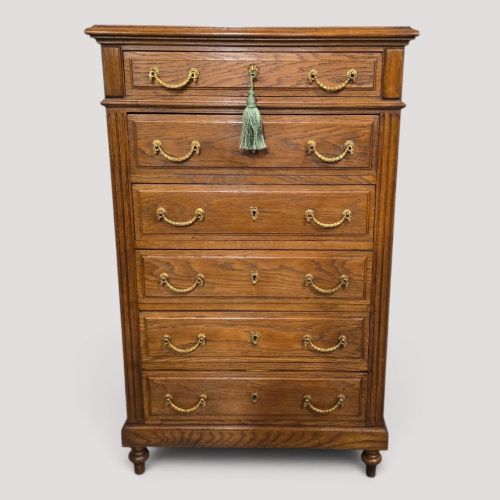
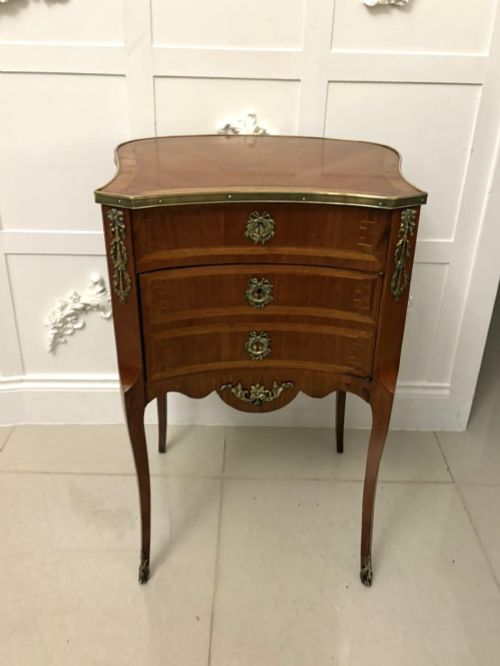
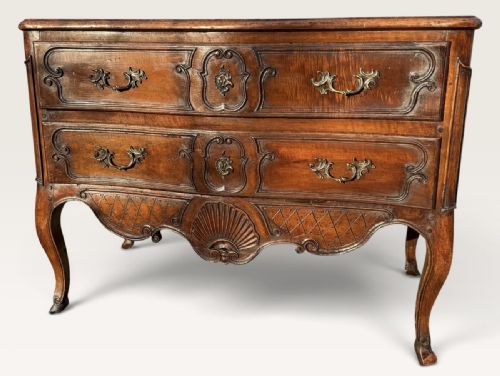
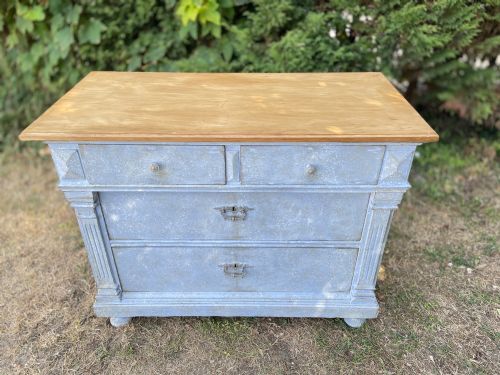
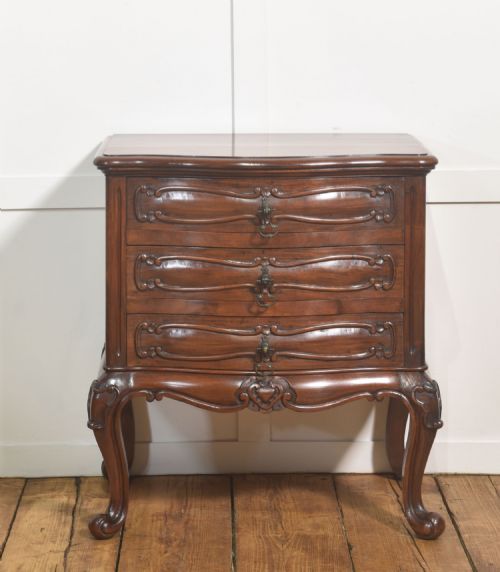
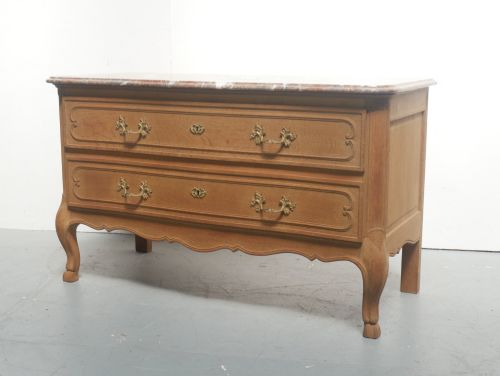
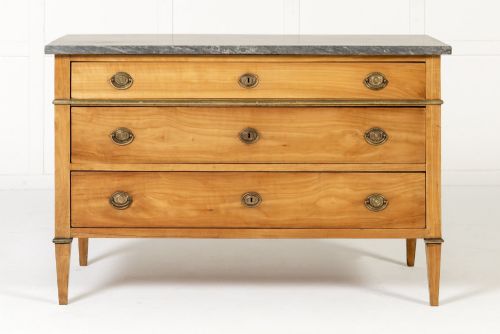
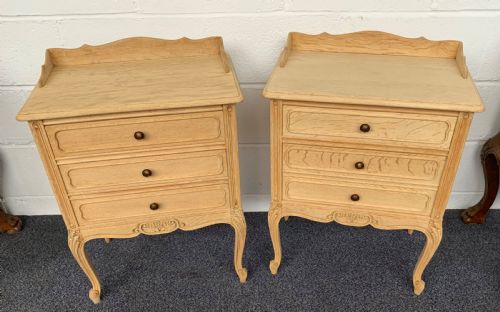
French Provincial Style Commode
A french provincial style commode brings architectural presence and generous storage to a room through serpentine lines and substantial timber.
French Provincial Style Commode
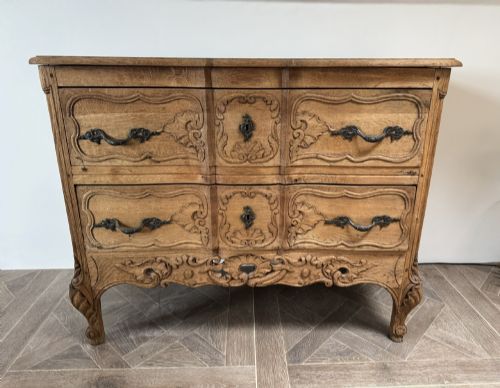
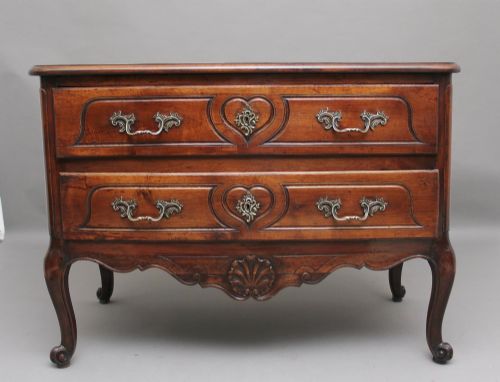
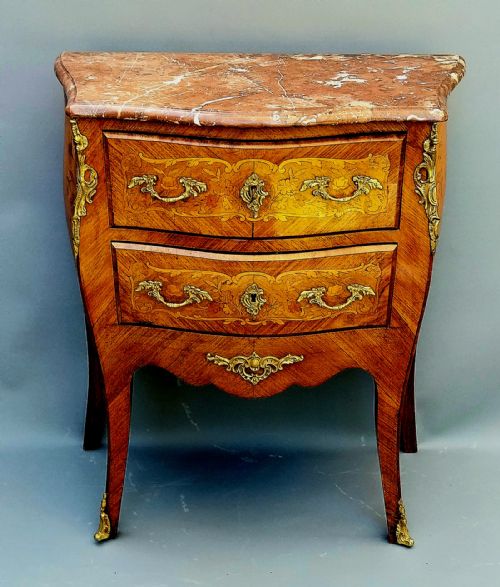
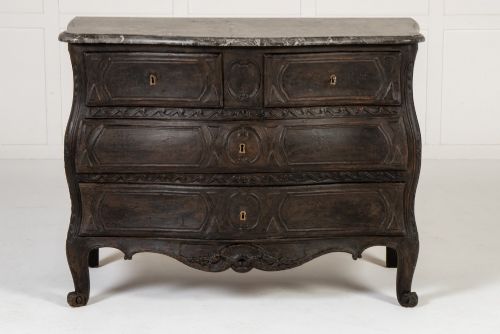
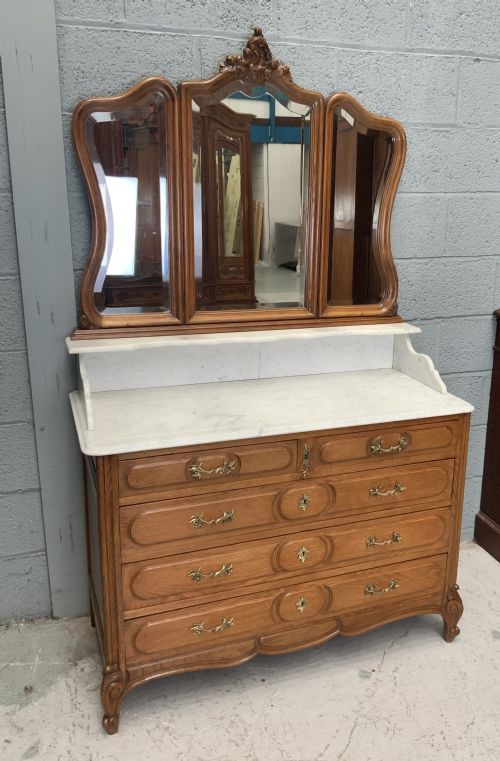
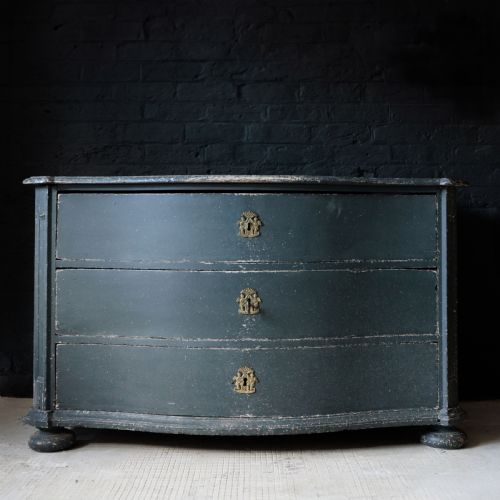
A french provincial style commode is fundamentally a low chest of drawers designed with regional craftsmanship, often adopting the curvilinear outlines associated with court furniture but executed in sturdier local timbers. The examples found here span multiple centuries, ranging from eighteenth-century originals in walnut and cherrywood to later revival pieces produced across the nineteenth and early twentieth centuries.
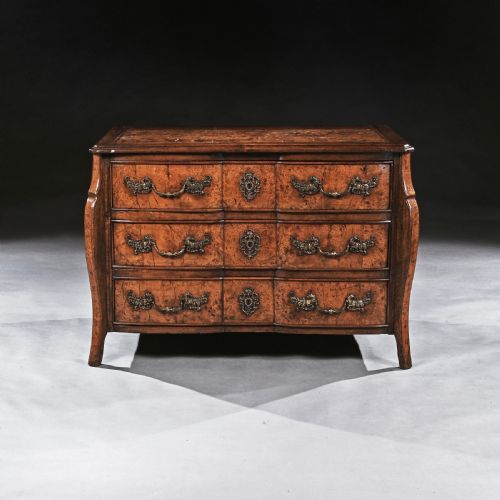
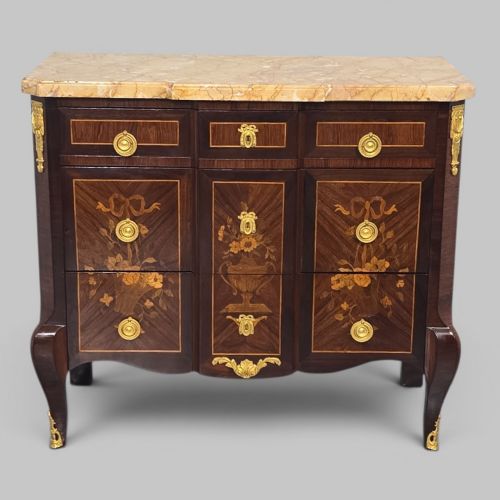
Buyers frequently encounter variants featuring marble tops, bombe silhouettes, and marquetry inlays alongside simpler carved oak constructions. Forms stretch from classic drawer chests to bedside cabinets and side cupboards, reflecting the practical domestic uses these storage items served across French households.
Materials and construction
Cabinetmakers utilised heavy regional hardwoods like oak, walnut, and cherrywood for the primary carcases, often applying burr elm, tulipwood, or kingwood veneers for decorative surfaces. Joinery relied on traditional hand-cut methods to accommodate the sweeping serpentine and bombe fronts characteristic of the style.
Marble slabs were fitted precisely to the upper surfaces of many pieces, providing a durable and cool landing surface that contrasted with the timber below. Brass and ormolu mounts were frequently added to key escutcheons, handles, and corners to accent the structural lines.
Several pieces feature secret compartments tucked behind decorative mouldings, designed for storing small valuables out of sight.
Distinguishing quality
The standard of a commode rests on the integrity of its timber selection and the precision of its decorative veneers. Pieces displaying balanced grain matching, crisp carving along the drawer rails, and tightly fitted original marble tops stand apart from simpler or later utilitarian interpretations.
Attention to structural harmony defines the better examples, where serpentine curves flow naturally across the drawer fronts and side panels without distortion. The retention of original hardware and well-executed joinery within the drawer linings further separates workshop output.
Joseph Zwiener
The French Provincial Style Commode Glossary
- Commode
- A low chest of drawers, typically featuring two or more drawers and standing on relatively short legs. The form evolved in France during the seventeenth century before spreading to regional provinces.
- Bombe
- A swollen, convex shape where the front and sides of the cabinet curve outward and taper towards the base. This dynamic silhouette requires advanced woodworking skill to construct from solid timber.
- Serpentine
- A shaped furniture front featuring a concave centre flanked by convex curves, resembling the undulating movement of a snake. It adds visual depth to the face of a chest of drawers.
- Marquetry
- The art of applying decorative veneer pieces in geometric or pictorial patterns onto a structural carcase. Makers used various coloured woods to create contrast without relying on paint.
- Ormolu
- Gilt bronze mounted onto furniture as decorative handles, feet, or corner mounts. The technique involves applying a mercury and gold amalgam to bronze.
French Provincial Style Commode: Frequently Asked Questions
How do I clean a marble top?
Wipe the marble surface regularly with a soft cloth dampened in warm water and mild, neutral soap. Avoid acidic cleaners, vinegar, or citrus solutions that can etch the polished stone.
Dry the surface completely with a clean towel to prevent water spots and maintain the natural lustre of the material.
Where should I place a commode?
These low chests work well in bedrooms as primary storage or in hallways and living rooms as statement console surfaces. Ensure the placement avoids direct heat sources and strong sunlight to protect the aged timber.
Allow sufficient clearance around the piece so that drawers can open fully without obstruction.
How do I identify an older commode?
Examine the drawer construction for hand-cut dovetails and irregularities in the timber boards that indicate manual sawing. The presence of pegged joints and hand-planed secondary woods often points to earlier manufacturing periods.
Look at the wear patterns around handles and feet, which should show consistent handling over long periods of use.
Are these pieces suitable for daily use?
Most antique chests remain structurally robust and function reliably for everyday storage needs. The deep drawers accommodate modern clothing, linens, or household items while adding historical character to a room.
Take care not to overload the drawers and maintain a stable indoor humidity to prevent the timber from warping.