
French Style Accent Table
A French style accent table brings decorative continental charm to a room, offering surface space and period craft in forms ranging from side tables to guéridons.
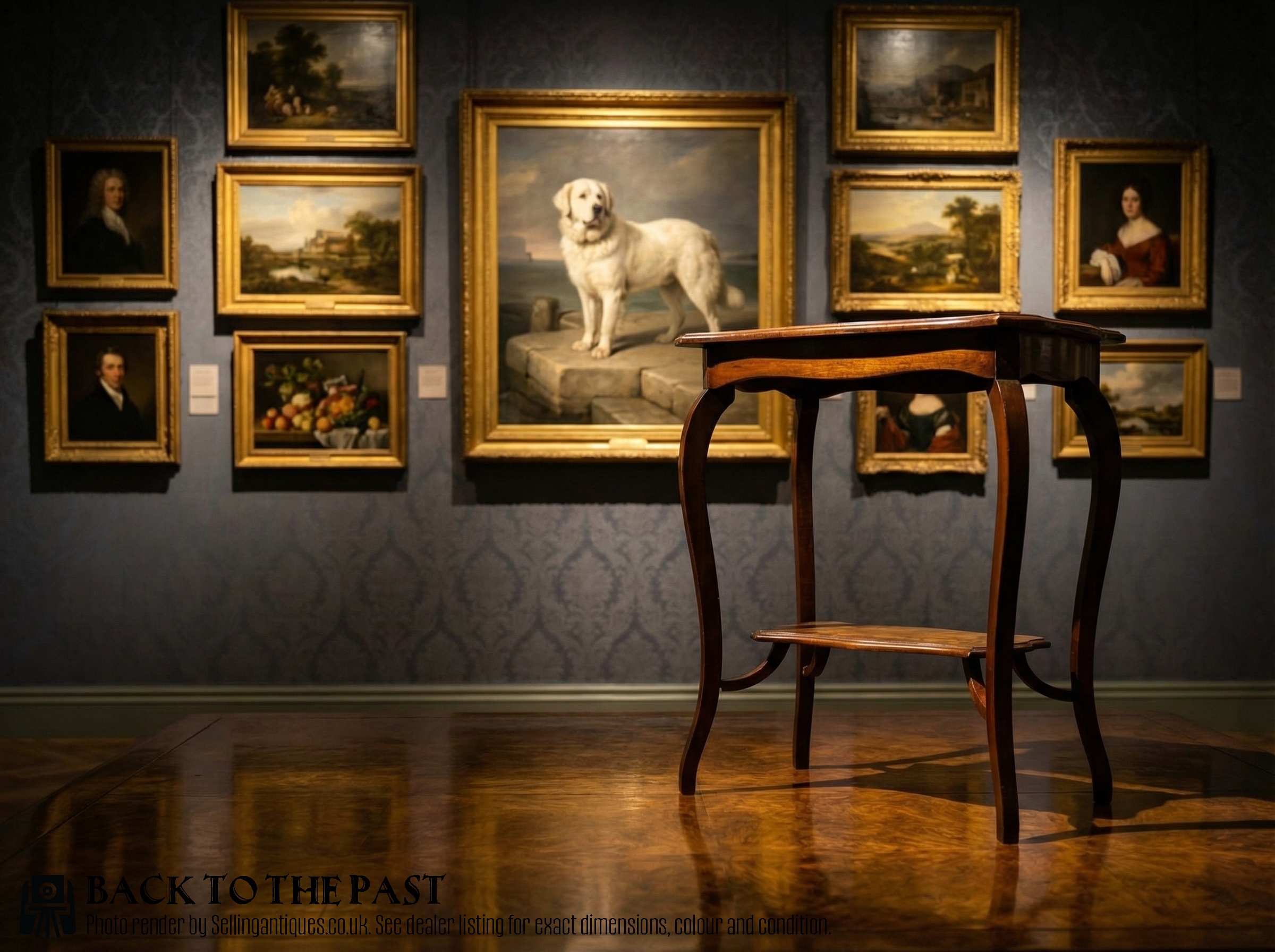
French Style Accent Table
A French style accent table encompasses occasional pieces designed for domestic utility and display, drawing on historical aesthetics from the nineteenth and early twentieth centuries. These items serve as functional surfaces in reception spaces while reflecting distinct revival movements and continental tastes.
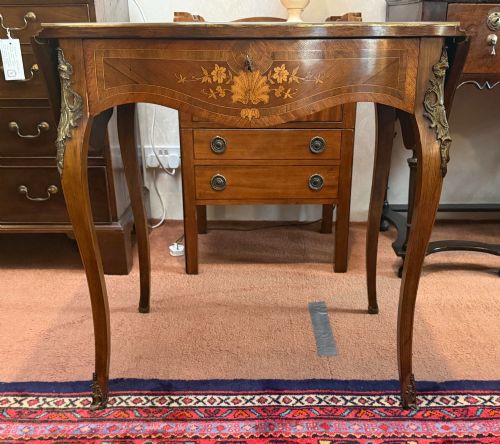
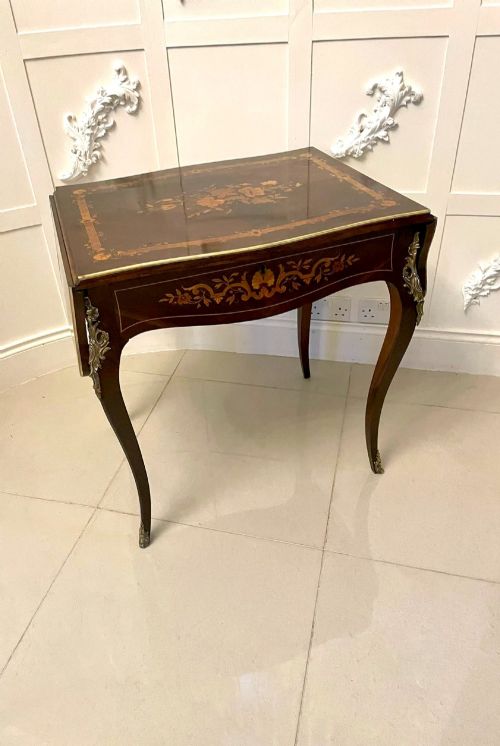
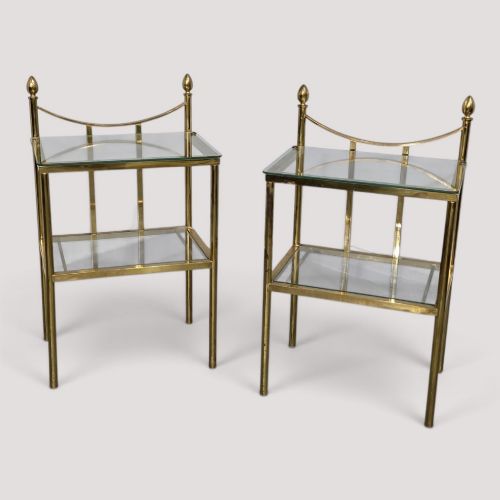
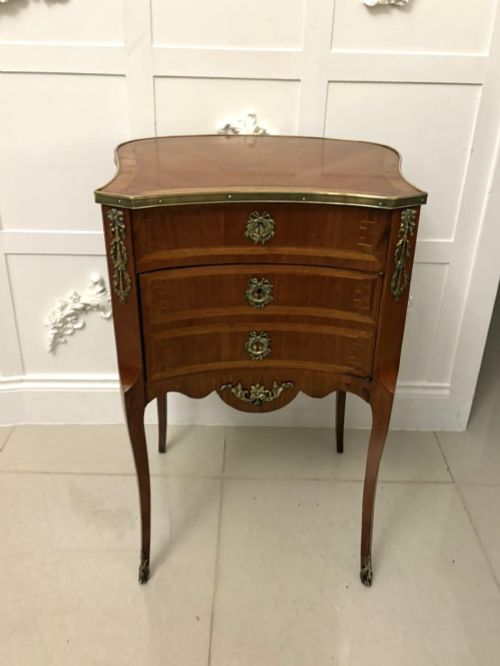
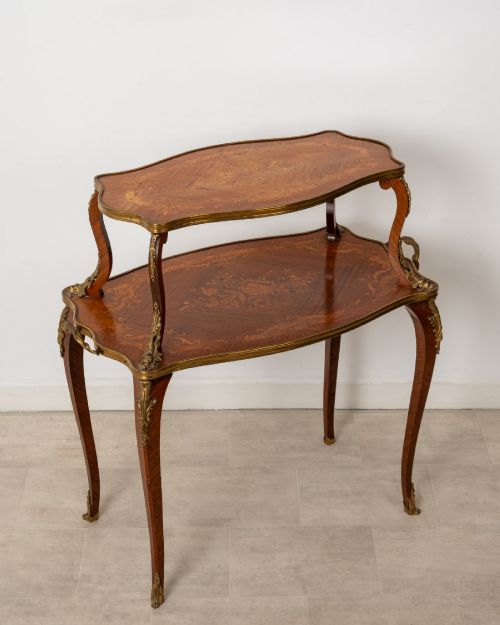
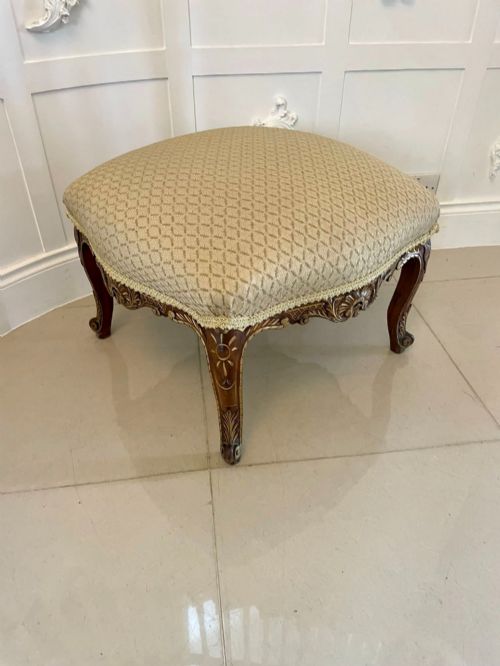
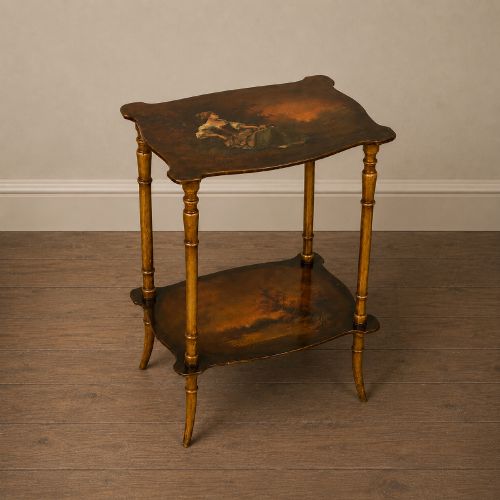
The selection on this page centres on smaller occasional furniture, including side tables, guéridons, étagères, and centre tables. These forms emerge from periods spanning the mid-nineteenth century through the 1930s, reflecting shifts in interior decoration.
Makers and workshops utilised varied timbers and mounts to create distinct regional and stylistic expressions, from Louis XV revival curves to neoclassical symmetry. Buyers encounter pieces that range from inlaid marquetry designs to marble-topped brass-mounted stands.
Materials and construction methods
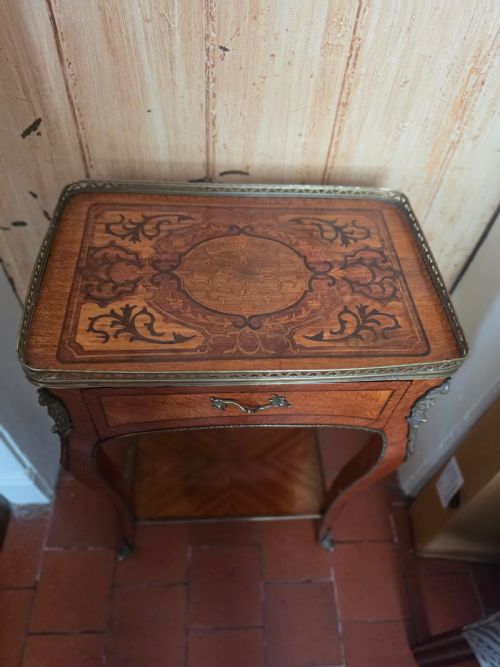
Cabinetmakers constructed these tables using a foundation of solid timbers such as mahogany, walnut, or oak, frequently veneered with exotic woods like kingwood and rosewood. Marquetry patterns were meticulously cut and fitted into the surfaces to create floral or geometric motifs.
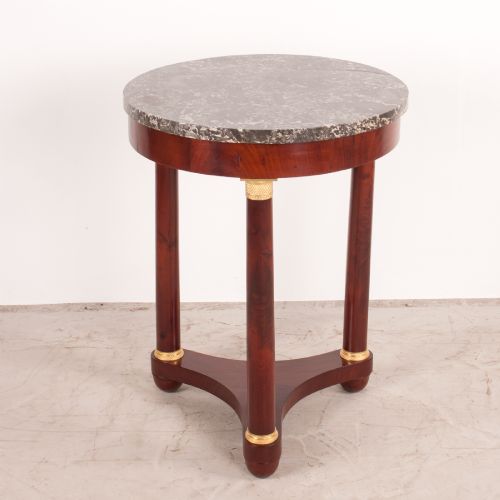
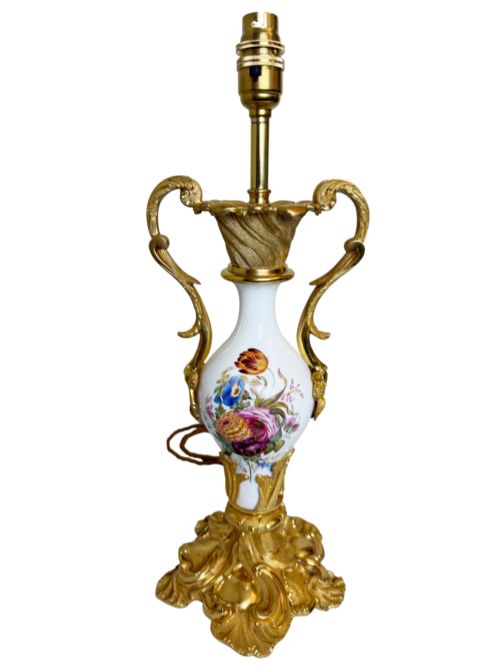
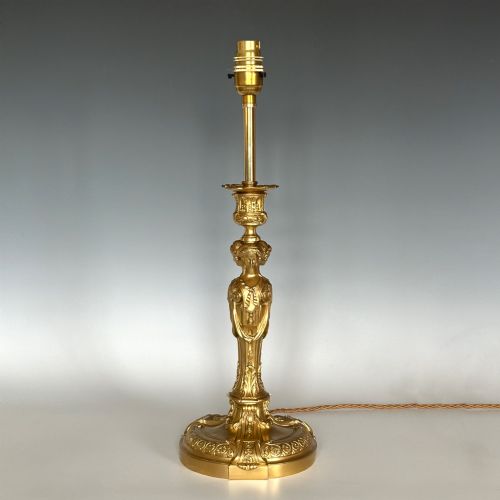
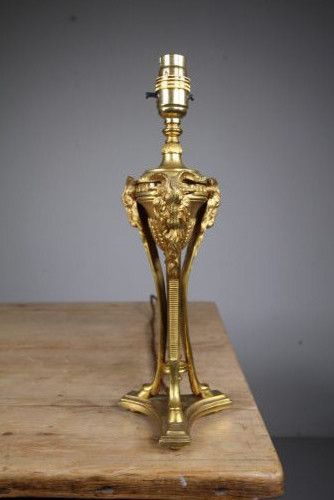
Metalwork played a defining structural and decorative role, with ormolu, gilt bronze, and cast brass mounts secured to corners, legs, and aprons. Marble tops, including rouge and white varieties, were shaped to fit recessed wooden frames, adding weight and durability to the piece.
French Style Accent Table Retail Price Guide 2026
Typical asking prices for french style accent table among the pieces listed under this phrase on Sellingantiques today, from the lower quarter to the upper quarter. They describe what is for sale here now, not the wider market.
Some tables double as card tables with folding tops, ready for an impromptu evening of nineteenth-century parlor games.
Distinctions in quality
Quality rests in the precision of the marquetry inlay and the crispness of the cast ormolu mounts, where hand-chased details reveal the artisan's skill. Finer examples display seamless veneer matching and substantial timber selection that withstands structural shifting over time.
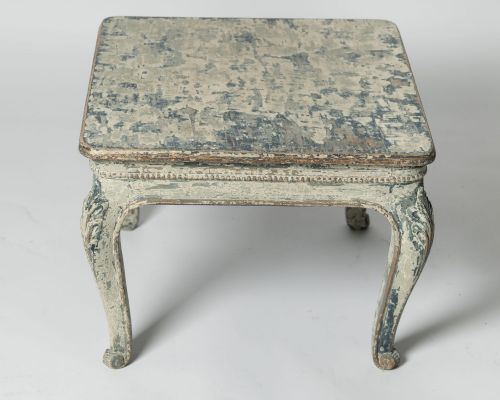
The integration of marble tops and the fluidity of carved cabriole legs or turned supports indicate the level of workshop execution. Superior pieces maintain structural integrity alongside balanced proportions, ensuring the decorative elements complement the underlying form without appearing heavy.
Edwards & Roberts·François Linke·Gabriel Viardot
The French Style Accent Table Glossary
- Guéridon
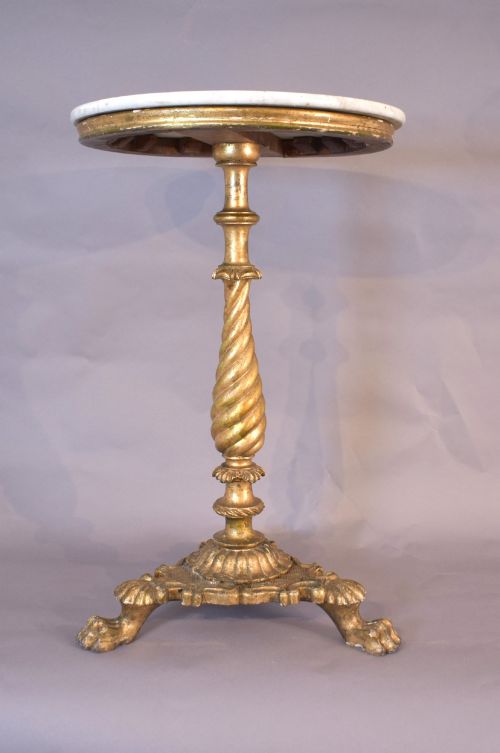
- A small round table, typically supported by a central pillar or tripod legs, originating in seventeenth-century France. These pieces function well as display surfaces for lamps or decorative objects.
- Ormolu
- Gilt bronze ornamentation applied to furniture mounts and decorative hardware. The technique involves coating bronze with a finely ground mercury and gold amalgam before heating.
- Marquetry
- Decorative veneer applied to furniture surfaces in patterned wood designs. Craftsmen assemble contrasting wood veneers to form pictorial or geometric compositions.
- Étagère
- A set of open shelves for displaying small objects or ornaments. These tiered tables provide vertical storage within compact floor footprints.
- Cabriole leg
- A furniture leg that curves outward and then tapers inward, inspired by the shape of an animal's leg. This form appears frequently in revival furniture styles.
French Style Accent Table: Frequently Asked Questions
What distinguishes a gueridon table?
A gueridon is characterised by its circular top and vertical support structure, often featuring three legs or a central column. These tables were traditionally used for holding candles or serving drinks.
Today, they function effectively as standalone display pieces or beside seating areas where a compact circular footprint is required.
How do I identify Louis XV style?
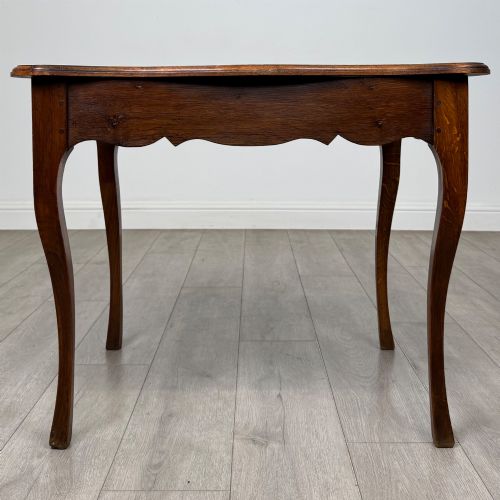
Louis XV style furniture relies on asymmetrical curves, floral marquetry, and cabriole legs without straight structural lines. This aesthetic prioritises comfort and naturalistic ornamentation.
Tables from this design lineage often feature shaped aprons and delicate ormolu mounts that trace the sweeping contours of the wood.
Where should I place an etagere?
An etagere provides multiple open tiers, making it suitable for displaying collections of small porcelain objects, glassware, or books. Their vertical design maximises surface display in restricted spaces.
They work well in corners or against empty wall expanses where single-surface tables might appear lost.
What timber was used for kingwood?
Kingwood is a dense, durable tropical timber featuring rich brown tones with dark violet and black grain markings. Cabinetmakers used it primarily as a veneer for high-end decorative surfaces.
Its striking grain made it a preferred choice for nineteenth-century marquetry tables designed for formal drawing rooms.