

French Storage Commode
A french storage commode brings substantial presence and deep drawers to a room, offering a practical surface beneath stately lines.
French Storage Commode
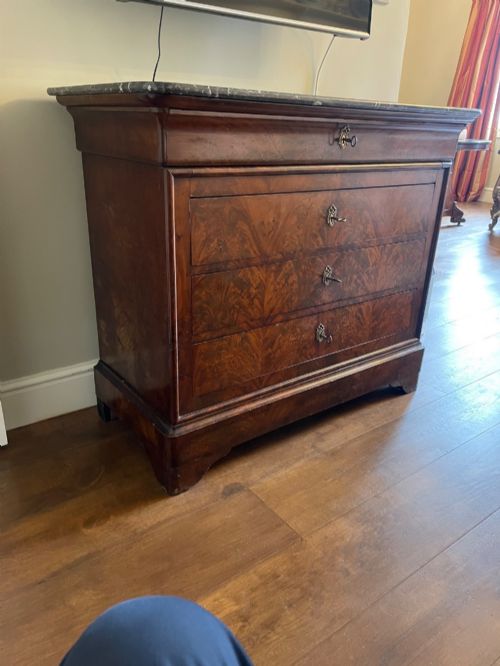
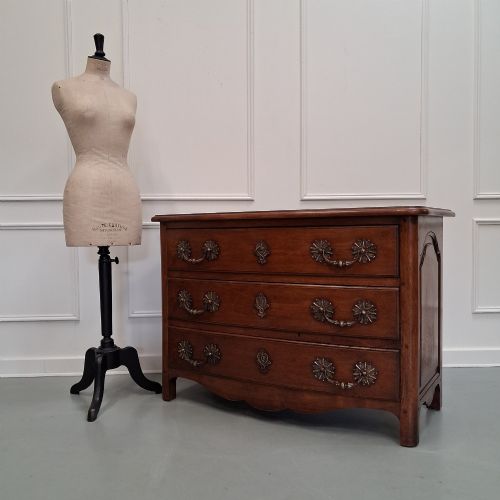
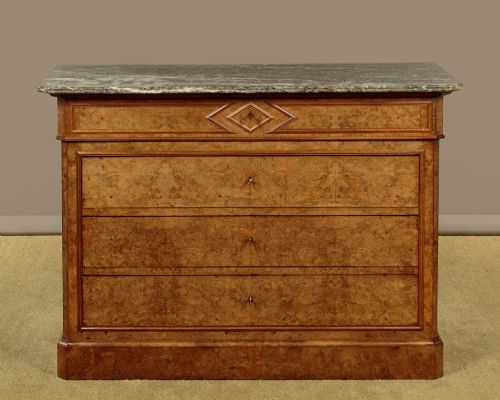
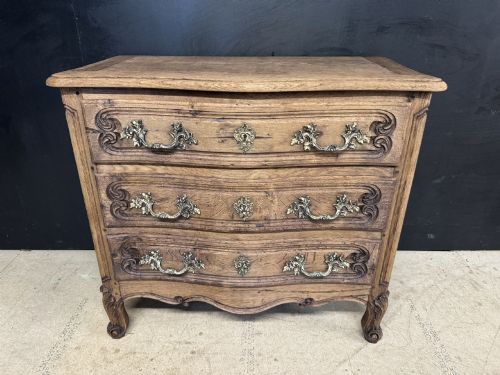
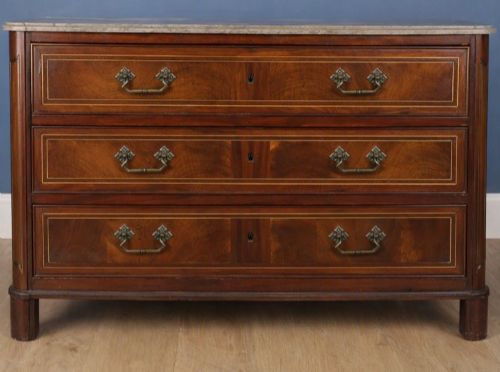
A french storage commode serves primarily as a chest of drawers or side cabinet, designed to hold household items while anchoring a room's aesthetic. These pieces trace back through periods spanning the eighteenth, nineteenth, and early twentieth centuries, encompassing styles from Louis XV and Louis XVI to French Provincial and Empire.
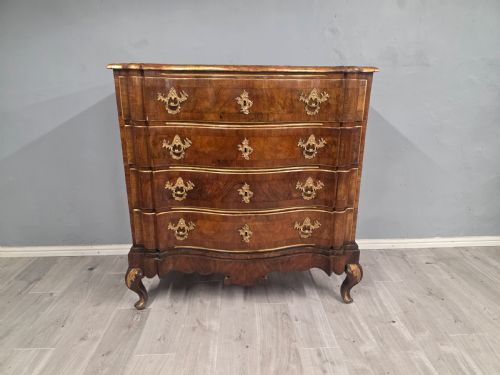
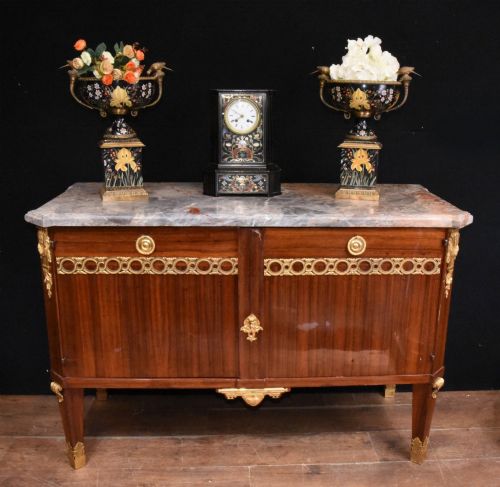
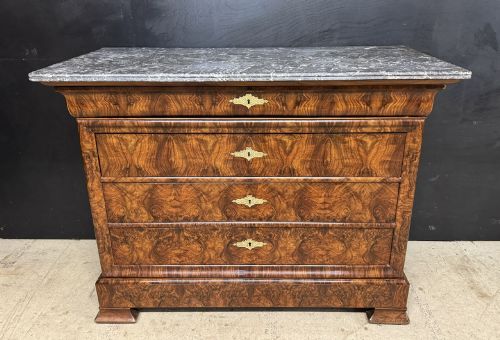
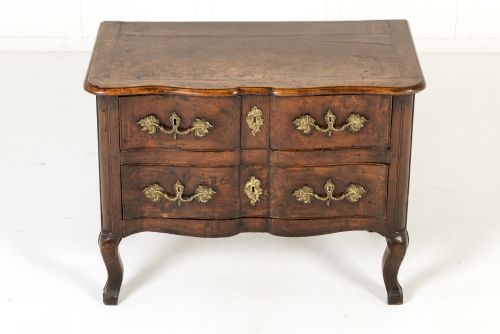
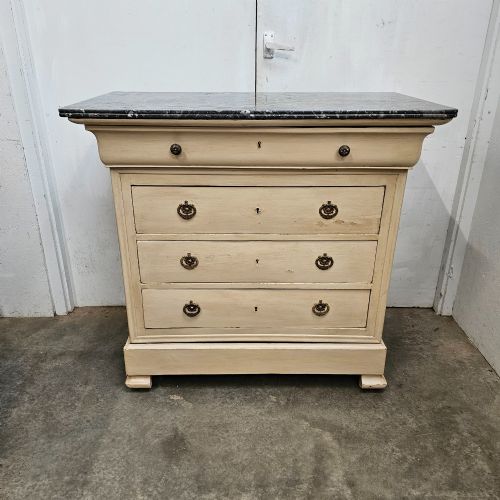
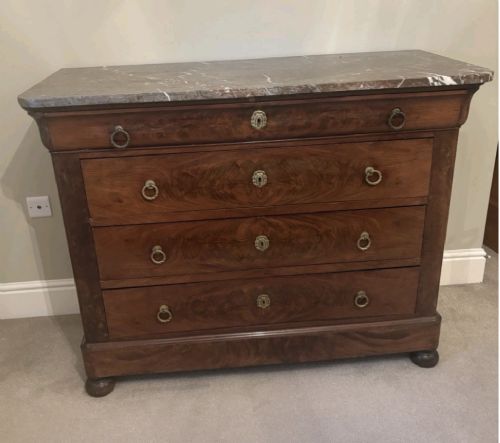
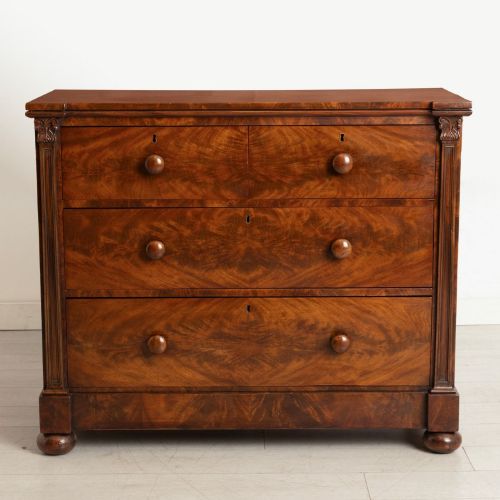
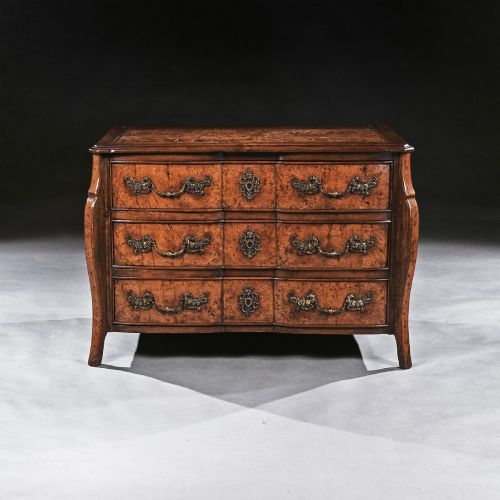
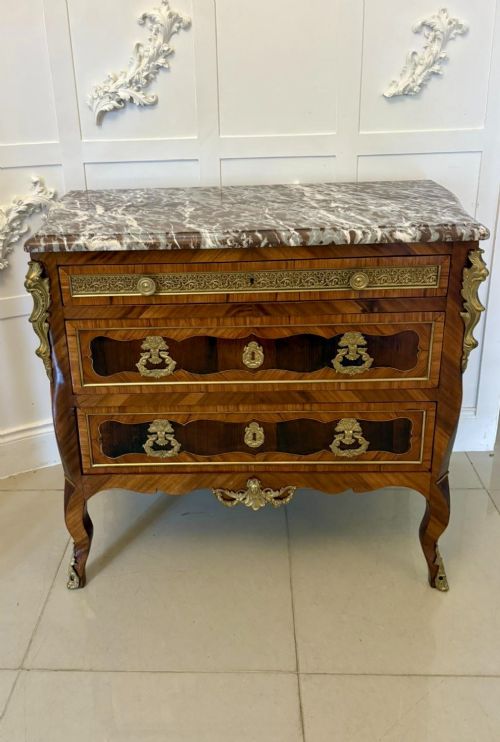
The versions most commonly met on this page include walnut and mahogany chests, alongside marble-topped variants and painted wood finishes. Forms range from straightforward upright chests to serpentine fronts, demi lune shapes, and compact bedside cabinets.
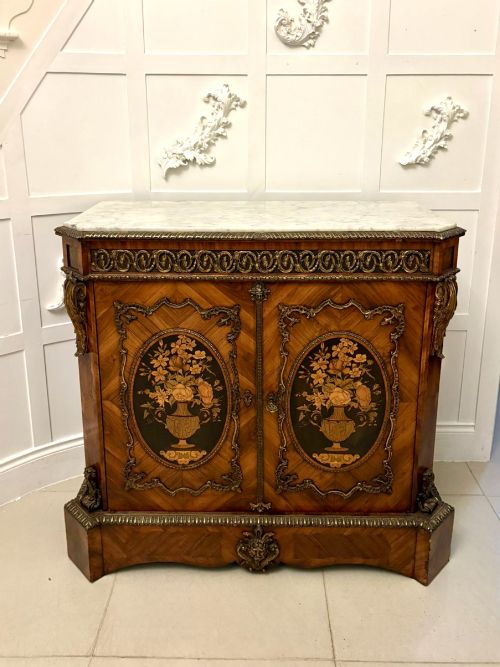
Origins heavily reflect continental workshops, blending functional storage capacity with decorative surface treatments like marquetry, parquetry, and veneer work. Buyers encounter both provincial vernacular items and grander chateau-style furniture.
Materials and Construction
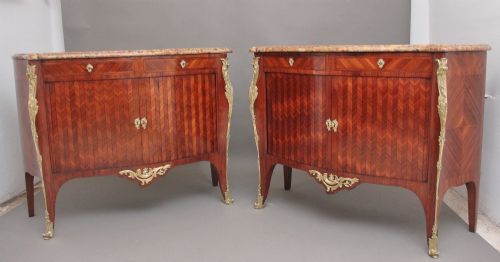
Cabinetmakers utilised hardwoods such as walnut, mahogany, oak, and fruitwood for the main carcase and drawer structures, often applying veneers of burr walnut, kingwood, or rosewood to display rich grain patterns. Marble tops in white, grey, or rouge varieties were frequently fitted to provide a durable and decorative upper surface.
Decorative detailing relies on cast or chased brass and ormolu mounts, highlighting corners, keyhole escutcheons, and drawer pulls. Marquetry and parquetry techniques introduce contrasting timber shapes, while painted wood and vernis martin finishes offer alternative surfaces.
French Storage Commode Retail Price Guide 2026
Typical asking prices for french storage commode among the pieces listed under this phrase on Sellingantiques today, from the lower quarter to the upper quarter. They describe what is for sale here now, not the wider market.
Some nineteenth-century drawers close with a satisfying heavy thud that proves air-tight fitting was an art form in itself.
Markers of Quality
Quality reveals itself in the choice and matching of timber veneers, the crispness of ormolu mounts, and the integration of the marble slab. Superior examples display thoughtful grain continuity across drawer fronts and precise joinery that maintains drawer alignment over centuries.
The depth of carving and the sophistication of marquetry inlay distinguish standard provincial work from high-end urban production. Structural integrity depends upon original timber thicknesses and the restrained use of later restorations.
The French Storage Commode Glossary
- Ormolu
- Gilt bronze mounts applied to furniture for decoration. This technique involves coating cast metal with a gold amalgam.
- Marquetry
- Decorative veneer work forming pictorial or geometric patterns using various coloured woods. Craftsmen cut thin pieces of timber and fit them together precisely.
- Parquetry
- Geometric wood inlay forming repeating patterns such as squares or lozenges. It differs from marquetry by sticking strictly to geometric layouts.
- Serpentine
- A curved furniture front with a convex centre flanked by concave ends. This shape requires skilled woodworking to follow the undulating line.
French Storage Commode: Frequently Asked Questions
What is a french storage commode used for?
These pieces function primarily as chests of drawers for clothing, linens, or general household storage. The flat top surface also provides space for lamps, mirrors, or decorative objects.
In living areas or bedrooms, they serve as focal points that combine hidden storage capacity with decorative presence.
How do I care for a marble top?
Marble surfaces require prompt wiping of liquid spills to prevent staining, particularly from acidic substances like wine or citrus. Use coasters and placemats to protect the polished stone from scratches.
Clean the surface using a soft damp cloth with mild soap, avoiding abrasive scouring powders that dull the polish.
How do I identify a Louis XV style commode?
Louis XV style pieces typically feature characteristic asymmetrical curves, cabriole legs, and floral or leaf ormolu mounts. Serpentine fronts and flowing lines replace strict symmetry.
These designs emerged during the eighteenth century and saw revivals throughout the nineteenth century, maintaining an emphasis on organic forms.
Are these commodes suitable for modern homes?
The generous drawer capacity makes them practical for contemporary bedrooms, hallways, or living rooms. Their varied wood tones and marble surfaces mix easily with modern minimalist interiors.
Placing one against a plain wall allows the historical woodwork and mounts to stand out as a central feature.