


French Still Life Artwork
These pieces of french still life artwork capture domestic arrangements, flora, and game across varied movements from the nineteenth century onward.
French Still Life Artwork
French still life artwork encompasses oil and gouache paintings depicting domestic objects, flora, and fauna across several distinct historical periods. When searching for french still life artwork, buyers encounter representations ranging from academic nineteenth-century compositions to twentieth-century modernist and avant-garde interpretations.
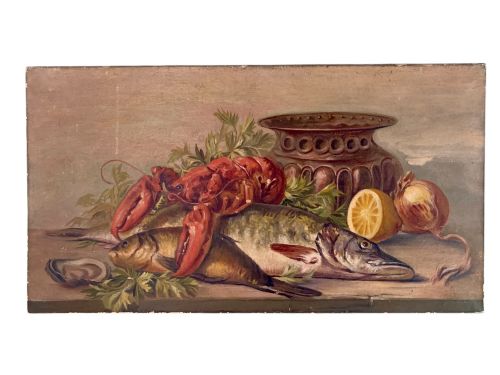
The selection includes canvases, wood panels, and metal supports executed by various regional schools and named painters. Floral arrangements, game animals, and tabletop fruit appear frequently across these diverse formats.
Dating spans from the early nineteenth century through the mid-twentieth century, capturing shifts in technique from traditional realism to post-impressionism and cubist-influenced modernism.
How They Were Made
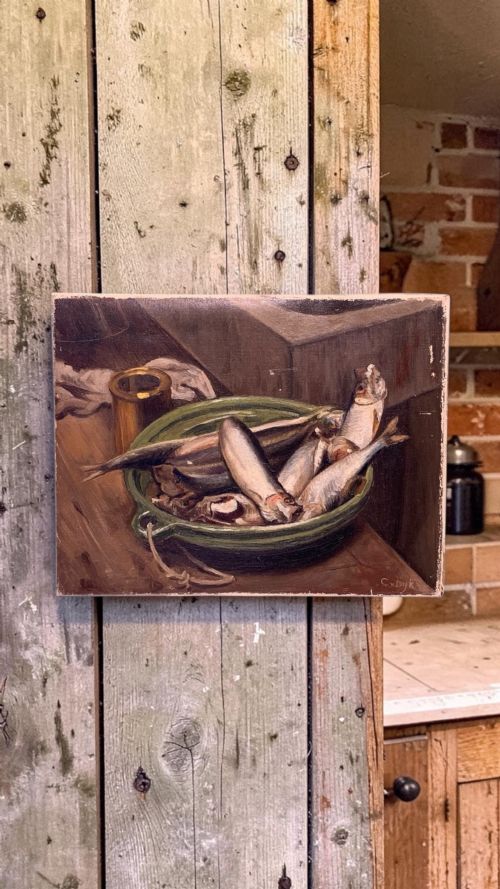
Artists primarily applied oil paint or gouache onto stretched canvas, prepared wooden panels, mahogany boards, or metal sheets. Support structures often reveal period preparation methods specific to French studios of the nineteenth and twentieth centuries.
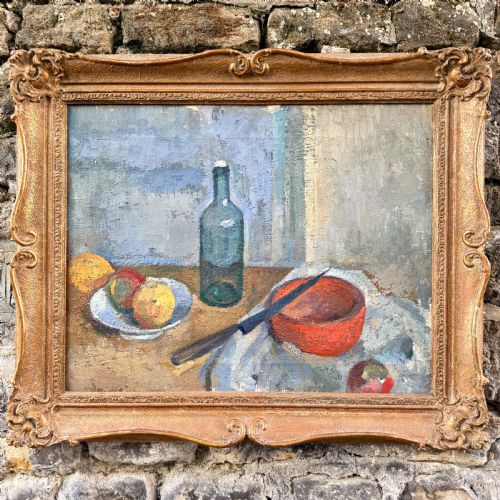
Gilt and giltwood frames frequently accompany these works, providing period-appropriate housing that complements the painted surface. Pigments are handled through diverse stylistic lenses, ranging from academic precision to luminist pointillism and modernist abstraction.
Listings feature works spanning the 19th century through 1960, utilising oil on canvas, gouache, and oil on metal.
What Varies in Quality
The sophistication of brushwork and the handling of light and colour distinguish individual pieces within this category. Stronger examples demonstrate confident composition and harmonious tonal relationships, whether rendered in an academic or a modernist idiom.
The integrity of the original support and the preservation of the paint layer influence overall character. Works retaining their period frames and untouched surfaces offer a more complete historical presentation.
Paul Lelong·Jean Baptiste Isabey·Girieud·Alfred Arthur Brunel de Neuville·Bertoldo Taubert·Emile Lecomte·Jules Felix Ragot
The French Still Life Artwork Glossary
- Oil on Canvas
- Pigment mixed with drying oil applied to a woven fabric support. This traditional method allows for rich blending and textured impasto.
- Gouache
- An opaque water-based medium containing pigment, water, and a binding agent such as gum arabic. It produces a matte surface with strong colour saturation on paper or board.
- Giltwood
- Wood carved and coated with gold leaf or metallic powder. This finish is commonly found on period frames enclosing nineteenth and twentieth-century canvases.
- Post-Impressionism
- An art movement extending beyond impressionist principles to emphasise geometric forms, expressive use of colour, and distinct brushstrokes. Works in this style appear frequently in mid-period French modernist selections.
- Fauve
- A style associated with painters who used bold, non-naturalistic colours and vigorous brushwork. This approach breaks away from traditional academic representation.
French Still Life Artwork: Frequently Asked Questions
What periods do these paintings cover?
The available works span from the early nineteenth century through the mid-twentieth century. This timeline captures significant stylistic developments across French art.
Examples range from academic nineteenth-century pieces to avant-garde and modernist compositions from the 1920s to the 1960s.
What surfaces were used for these artworks?
Paintings are executed on traditional stretched canvas, wooden panels, mahogany boards, and metal supports. Gouache works commonly appear on paper or board.
These varied supports reflect the different studio practices and preferences of artists working across the 1800s and 1900s.
How should I display a vintage still life?
These works suit domestic interiors, particularly when paired with appropriate lighting to highlight the brushwork and colour palette. Many retain their original gilt or wood frames.
Placing paintings away from direct sunlight helps preserve the integrity of oil and gouache pigments over time.
How do I identify modernist French pieces?
Modernist examples often feature abstracted forms, flattened perspectives, and non-naturalistic colour choices. Movements such as fauvism and cubism heavily influence these compositions.
Dates and stylistic signatures help place these works within the broader context of twentieth-century French art.