



French Shop Counter
These french shop counter pieces bring commercial utility and period character into modern interiors, sourced from nineteenth and early twentieth century French commerce.
French Shop Counter
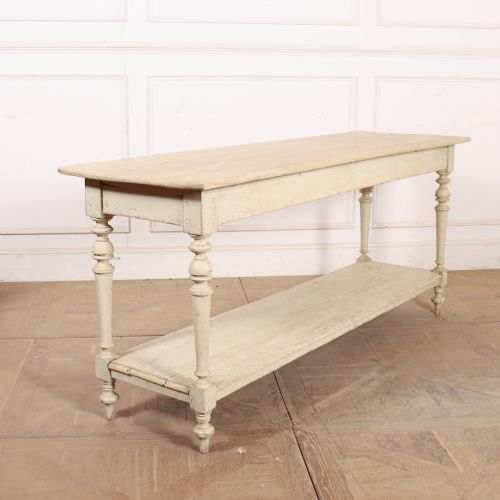
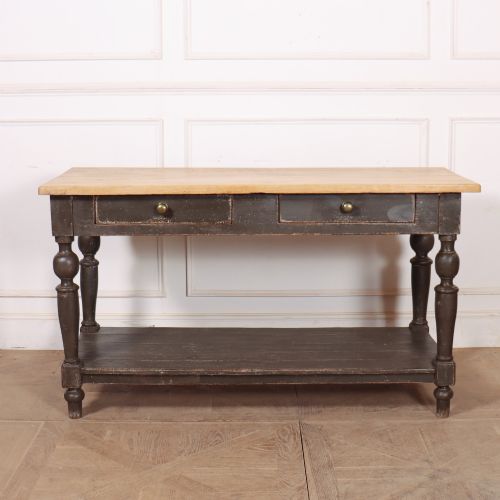
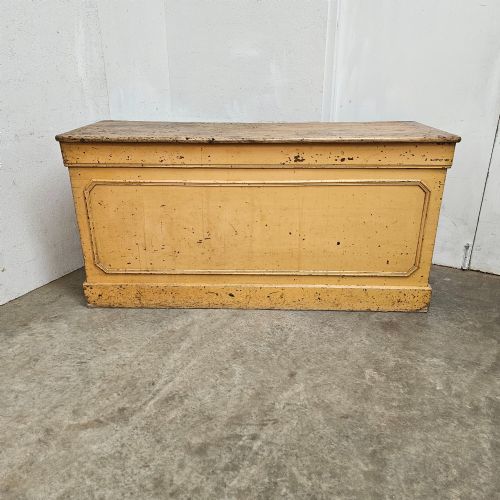
A French shop counter serves as a substantial functional furnishing, drawing on nineteenth and early twentieth century commercial origins. The pieces on this page include panelled oak counters, painted pine drapers tables, bank of drawers units, and display cases.
Most examples originate from provincial or Parisian retail settings, spanning styles from French country and provincial to Art Deco and industrial. Buyers encounter robust timbers, original painted surfaces, and glazed display sections designed for daily mercantile use.
What varies in quality
Quality rests in the integrity of the original timber structure and the preservation of authentic surface patination, such as untouched paint or natural wear from decades of trade. Substantial proportions and well-executed panel carpentry elevate certain examples above standard utilitarian builds.
The degree of original hardware, including brass detailing or fitted drawer banks, distinguishes standard counters from exceptional commercial survivals. Alterations to height or timber surfaces affect the overall integrity of the piece.
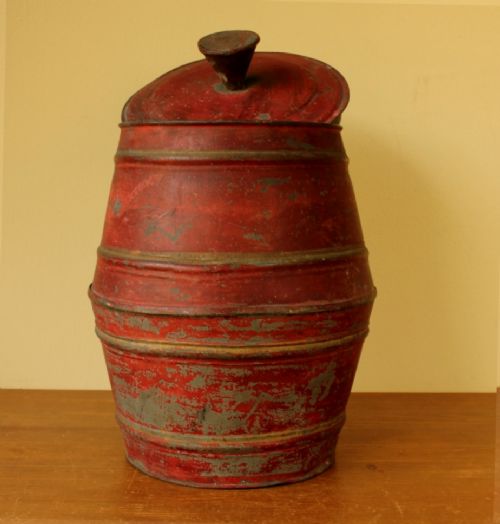
Even tobacco jars and grocery hoppers find a second career holding modern kitchen utensils.
Trussant & Cie·Pierre Iman·Charmereine
The French Shop Counter Glossary
- Drapers table
- A long, narrow table historically used in textile shops for measuring and displaying cloth. These pieces feature deep proportions and often include lower shelving or multiple drawers.
- Bleached oak
- Timber that has been treated to lighten the natural dark tones of oak. This finish became popular for achieving a lighter, more neutral aesthetic on period furniture.
- Haberdashery counter
- A multi-drawer retail unit designed for storing small sewing goods, ribbons, and fastenings. They are characterised by banks of small, numbered or brass-pull drawers.
- Tole
- Painted or lacquered metalware used for decorative and storage items in nineteenth century commerce. Tole items often feature hand-painted floral motifs or plain coloured finishes.
French Shop Counter: Frequently Asked Questions
How were french shop counters used?
These counters served as central service points in nineteenth century retail shops, accommodating transactions, goods display, and customer interaction. Many incorporated storage drawers and shelving for textiles, groceries, or haberdashery.
Today, they function effectively as kitchen islands, reception desks, or console tables in domestic and commercial interiors. Their generous proportions provide practical surface area and substantial storage capacity.
How do I identify a nineteenth century piece?
Nineteenth century examples typically exhibit traditional joinery techniques such as hand-cut dovetails, pegged mortise and tenon joints, and heavy timber construction. Materials are predominantly solid oak or pine with period patination.
Subtle indicators include hand-forged or brass hardware, authentic tool marks, and wear patterns consistent with intensive commercial use over generations.
Can these counters be used in kitchens?
Kitchen environments suit these sturdy tables and counters well, provided the timber surfaces receive appropriate care against moisture and daily wear. Oak and pine variants offer robust workspaces for food preparation.
Their substantial height and depth align with standard kitchen island dimensions, making them practical focal points for contemporary open-plan spaces.
What is the difference between bleached oak and painted finishes?
Bleached oak surfaces reveal the natural grain of the timber with a lighter, Scandinavian-influenced tone achieved through chemical treatment or stripping. Painted finishes preserve the historical layers of pigment applied during the working life of the counter.
Selection depends on the desired interior palette, with painted surfaces offering distinct colour accents and bleached oak providing neutral warmth.