

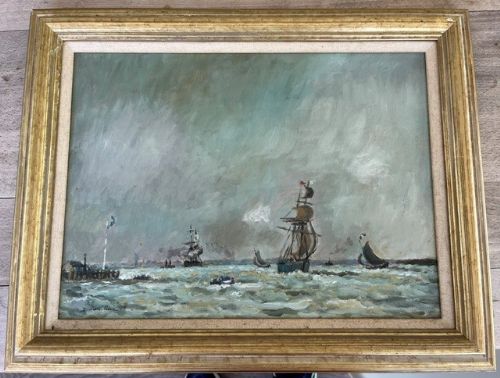


French Seascape Painting
A french seascape painting captures the light and movement of coastal harbours, cliffs, and open waters along the channel and Mediterranean shores.
French Seascape Painting
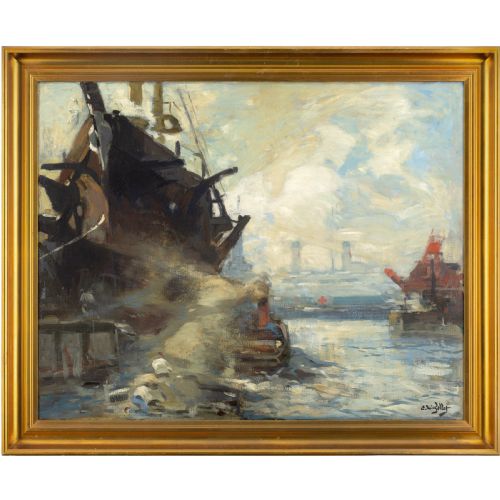
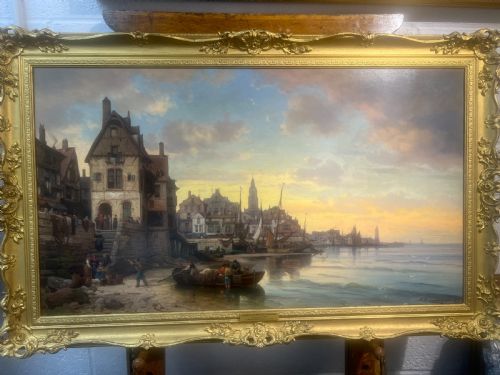
A french seascape painting encompasses works ranging from nineteenth-century academic harbour views to mid-century modernist coastal scenes. Collectors searching this phrase encounter depictions of bustling ports, quiet fishing villages, and dramatic cliffs along the Atlantic and Mediterranean coasts. These pieces capture specific coastal locations from Normandy to the Côte d'Azur across various historical periods.
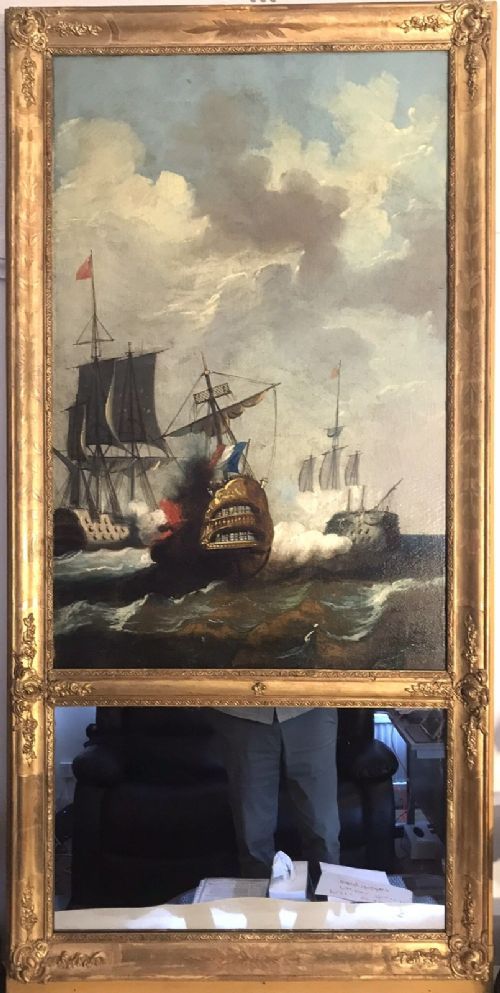
The selection includes framed oil paintings on canvas and board, alongside watercolours on paper. Certain examples incorporate marine subjects within decorative furnishings such as trumeau mirrors. These works reflect both professional atelier output and regional studies created by artists recording specific maritime conditions.
How They Were Made
Artists relied primarily on oil paint applied to canvas, wood panels, or board, building up textures with brushwork or impasto. Watercolour on paper served for lighter, more immediate coastal studies and harbour sketches. Frames were commonly fashioned from wood, frequently with giltwood finishes.
Makers integrated various supports, mounting canvases and papers within protective glass and frames. The physical construction combines traditional stretcher frames with applied pigments, capturing atmospheric light through varied paint thicknesses and tonal layering.
Listings feature works spanning from the nineteenth century through the mid-twentieth century, utilising oil, watercolour, canvas, wood, and giltwood.
What Varies in Quality
Quality rests upon the artist's command of light, atmospheric perspective, and coastal topography. Stronger examples demonstrate confident brushwork and accurate structural rendering of rigging, hulls, and architecture. Weaker works often rely on formulaic repetition without genuine observation of coastal conditions.
The handling of the medium determines depth and permanence. Superior paintings display stable pigment adhesion and nuanced colour harmonies, whereas lesser pieces show flat application and muddy tonal transitions.
Eugène-Louis Gillot·Hector Caffieri·Charles Euphraisie Kuasseg·Erich Mercker·Elisabeth Bardon·Paul Delvaux·Louis Suire·Gustave Vidal·Jean-Baptiste Olive·Raymond Picque·William Lee Hankey·Charles Malfroy·Roger de la Corbiere·Marie-Edouard Adam·Edward Henry Holder·Owen Bowen·Yves Brayer·Henri Cadiou
The French Seascape Painting Glossary
- Impasto
- Paint applied thickly to a canvas or board, standing out in relief from the surface. This technique creates tactile texture and catches ambient light effectively.
- Giltwood
- Wood carved and coated with gold leaf or a gold-coloured finish. This material is standard for traditional picture frames and decorative mouldings.
- Trumeau
- A decorative wall mirror featuring an oil painting set into the upper wooden panel. These integrated architectural pieces date largely to the nineteenth century.
- Post-Impressionism
- An artistic movement following impressionism that explored emotional response and structural form through distinct brushwork. Artists pushed beyond pure optical realism.
- Watercolour
- A paint consisting of water-soluble pigments suspended in a water-based solution. It is applied to paper to achieve translucent colour washes.
French Seascape Painting: Frequently Asked Questions
How do I identify the coastal region in a painting?
Study the architectural details, vegetation, and quality of light recorded in the composition. Mediterranean scenes often feature bright sun and pastel structures, while northern coasts display dramatic tides and grey granite ports.
Signatures, inscriptions on the reverse, and recorded titles frequently name specific locations such as Brittany, Cannes, or Normandy to confirm the exact setting.
What is the difference between oil and watercolour sea views?
Oil paintings on canvas or board provide heavier texture, rich colour saturation, and durability. They suit deep ocean scenes and textured impasto effects.
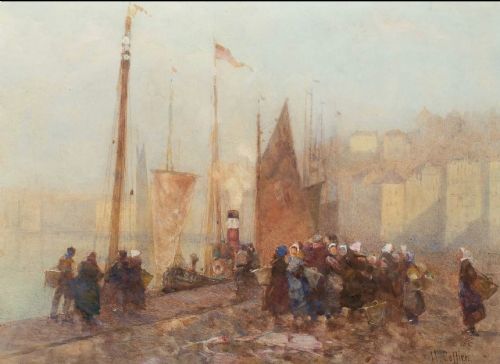
Watercolours on paper offer transparent washes and delicate light effects, capturing transient atmospheric weather and mist with immediacy.
How should I care for antique marine art?
Keep paintings away from direct sunlight and sources of extreme heat or dampness. Stable room temperatures prevent warping of wooden panels and cracking of oil paint.
Dust surfaces gently with a soft, dry brush. Avoid using liquid cleaners or chemical solvents on canvases and antique frames.
How can I date a French coastal painting?
Examine the style of dress of any figures depicted, the construction of the boats, and the framing materials. Artistic movements like post-impressionism provide broad chronological markers.
Artist biographical dates, stretcher construction, and handwritten labels on the reverse help narrow the period of creation.