

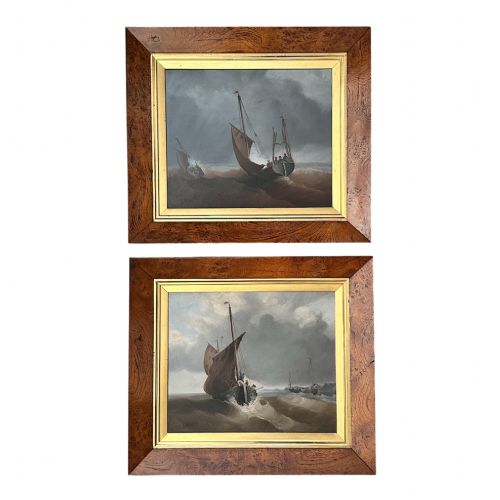
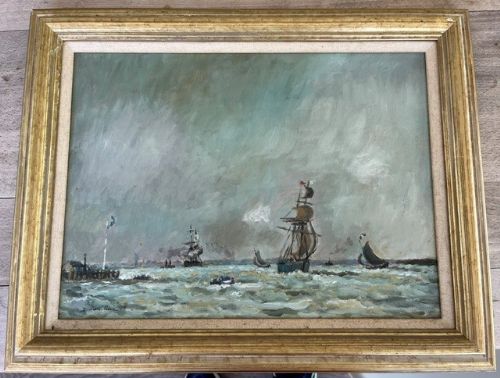


Ocean Artwork on Board
Ocean artwork on board comprises maritime scenes and coastal views painted on rigid supports, prized for direct brushwork and enduring nautical charm.
Ocean Artwork on Board
When you search for ocean artwork on board, you look at paintings rendered directly onto wooden supports rather than stretched fabric. These pieces capture seascapes, coastal scenes, and maritime activity across various historical periods.
The versions most likely to meet you on this page include nineteenth century maritime art and Victorian coastal scenes, alongside early twentieth century depictions and mid-century French works. Makers rendered choppy seas, harbour views, and calm open waters using this durable substrate.
Compositions range from single intimate panels to paired works in matching frames. Subjects encompass large sail ships, fishing boats, and French cliffs rendered with distinct regional character.
How they were made
Artists applied oil paint directly onto board, burr timber, or wood panels, sometimes incorporating gilt wood frames to finish the piece. The rigidity of the board allowed for confident brushwork and firm application of pigment without the bounce associated with stretched canvas.
Frames matched the period of creation, utilising gilt finishes and decorative moulding to complement the maritime subject matter. These physical materials ensure the longevity of the oil medium across centuries of display.
Ocean Artwork on Board Retail Price Guide 2026
Typical asking prices for ocean artwork on board among the pieces listed under this phrase on Sellingantiques today, from the lower quarter to the upper quarter. They describe what is for sale here now, not the wider market.
Several artists clearly braved choppy seas themselves to capture such windswept coastal spray directly onto their wooden boards.
What varies in quality
Quality rests in the handling of light, atmosphere, and movement within the choppy seas or coastal air. Superior examples demonstrate confident tonal control and precise draughtsmanship in depicting vessels and cliffs.
The integrity of the board and the preservation of the original oil surface determine the enduring strength of the piece. Period framing and clear signatures by known artists elevate individual works within the broader tradition.
John Moore of Ipswich·John Bell
The Ocean Artwork on Board Glossary
- Board
- A rigid flat surface of wood or manufactured material used as a painting support instead of canvas. This substrate provides a firm backing that resists punctures.
- Oil
- A slow-drying paint made by combining pigments with drying oils such as linseed. This medium allows for rich colour blending and textured impasto application.
- Gilt
- A thin layer of gold leaf or gold paint applied to surfaces such as wooden picture frames. This finish enhances the visual separation between the painting and the wall.
- Burr Timber
- Wood featuring twisted grain patterns caused by tree growths, often utilised for decorative framing or panel backing. It offers unique visual movement.
- Maritime Art
- Depictions of the sea, ships, and coastal environments. This genre encompasses historical naval battles, tranquil harbours, and stormy open waters.
Ocean Artwork on Board: Frequently Asked Questions
What is ocean artwork on board?
Ocean artwork on board consists of paintings depicting maritime and coastal subjects executed on rigid wooden supports rather than canvas.
These pieces span the nineteenth and twentieth centuries, featuring mediums like oil paint set within period frames.
How do I date these paintings?
Dating relies on stylistic clues, framing techniques, and signatures recorded within the specific nineteenth and twentieth century periods. Costume, ship design, and artistic movements such as post-impressionism also offer chronological markers.
Written inscriptions on the reverse of the board frequently provide specific years or locations.
Are these works always framed?
Most pieces appear in frames, often gilt wood mouldings appropriate to their nineteenth or twentieth century origins. These surrounds protect the edges of the board and complement the maritime subject.
Some collectors choose to display panels in alternative settings depending on interior aesthetics.