







French School Landscape Painting
When you search for french school landscape painting, you encounter centuries of atmospheric oil paintings and watercolours capturing rural scenes, rivers and cityscapes.
French School Landscape Painting
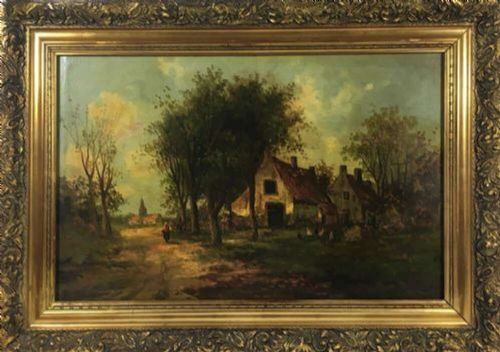
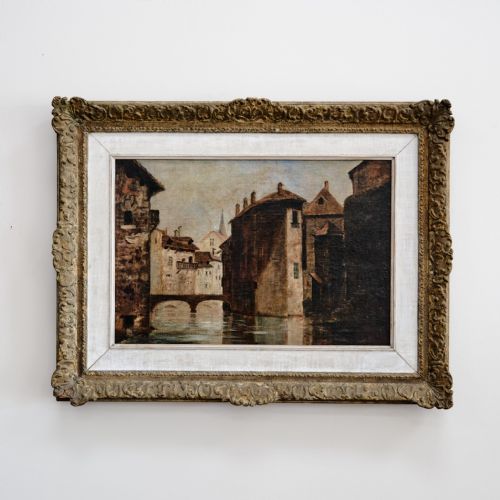
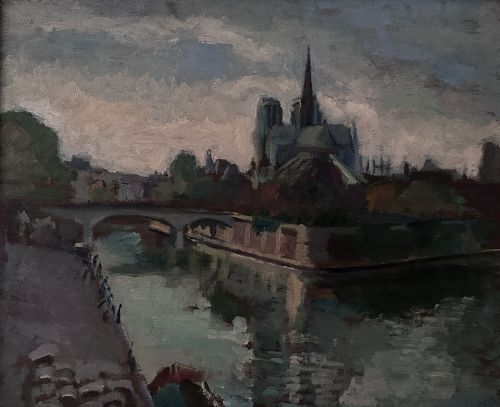
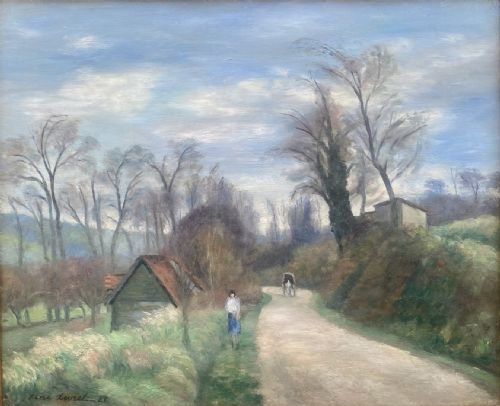
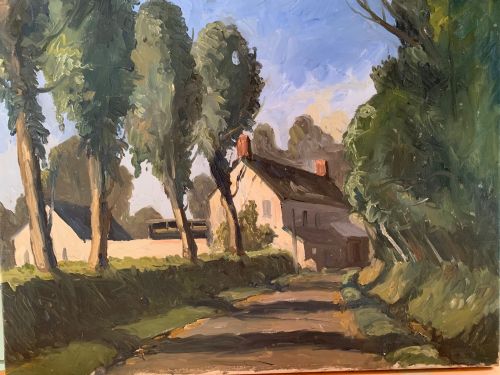
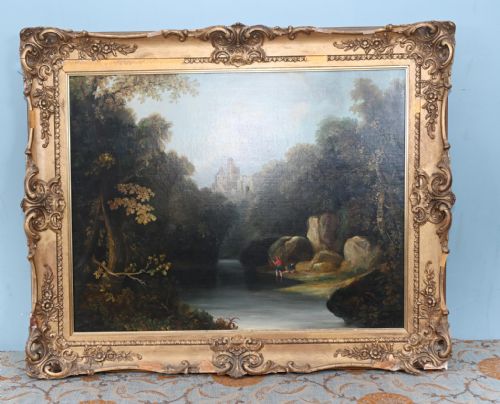
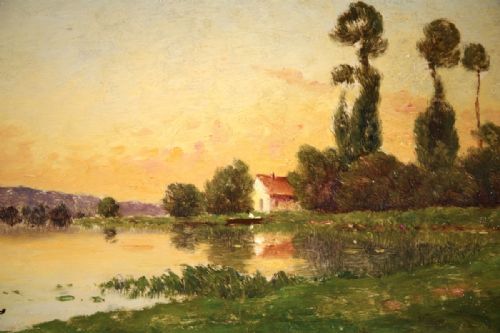
A french school landscape painting encompasses rural views, river scenes, farmyards and maritime vistas produced across the nineteenth and twentieth centuries. The works reflect shifting artistic movements, ranging from the rustic realism of the Barbizon School to Impressionism, Post-Impressionism and Mid-Century Modernism. Buyers selecting a french school landscape painting often seek the atmospheric light and brushwork characteristic of continental European fine art from these periods.
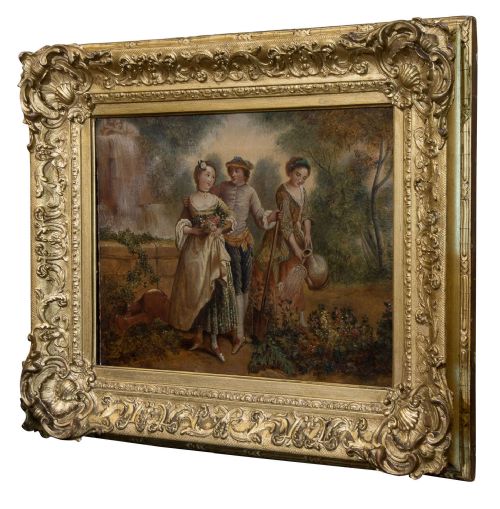
The pieces on this page span oil on canvas, wood panels and works on paper such as gouache and watercolour. Formats vary from intimate panel paintings to large canvases depicting scenes in Normandy, Provence, Paris and along the Seine. Whether created by named academicians or unidentified hands of the period, each french school landscape painting records a specific topography and aesthetic approach.
What Varies in Quality
Quality in these paintings rests upon the confidence of the handling, the subtlety of the colour palette and the compositional depth achieved by the artist. Stronger examples demonstrate a assured grasp of perspective, atmospheric light and tonal harmony, whereas lesser works can appear formulaic or stiff in execution.
The preservation of the original paint surface and the survival of contemporary framing significantly influence the overall integrity of the piece. Works that retain their unlined canvases and vibrant pigments offer a more direct connection to the period of creation.
Listings feature works executed in oil on canvas, wood panel, gouache and watercolour across the nineteenth and twentieth centuries.
Paul Desire Trouillebert·Honore Cavaroc·Henri Jaques Delpy·Raymond Picque·Gabriel Dauchot·Manet·Majorie Hoare·Henri Joseph Harpinies·Alphonse Robert·Eduard Leon Cortes·Pierre Emmanuel Eugene Damoye·Yves Brayer·Frederick Bartman
The French School Landscape Painting Glossary
- Barbizon School
- A nineteenth-century French movement focused on realistic, tonal landscape painting inspired by the forest of Fontainebleau. Artists associated with this group prioritized direct observation of nature over classical academic composition.
- Plein air
- The practice of painting outdoors directly from nature to capture transient effects of light and weather. This technique became fundamental to Impressionist and late nineteenth-century French landscape artists.
- Gesso
- A plaster-like mixture applied to wood panels or canvas to prepare a smooth, stable surface for oil painting. Traditional recipes combine chalk or gypsum with animal glue binder.
- Post-Impressionism
- An artistic development following Impressionism where painters explored structural form, expressive colour and emotional resonance rather than purely optical effects. Works from this tendency often feature bolder outlines and simplified geometries.
French School Landscape Painting: Frequently Asked Questions
What is a french school landscape painting?
A french school landscape painting is a fine art work created by an artist trained or working within the French artistic tradition, depicting rural, urban or coastal scenery.
These pieces range from nineteenth-century Barbizon and Impressionist works to twentieth-century modernist and abstract interpretations.
How do I date an antique painting?
Dating relies on stylistic evidence, artist signatures, framing materials and the physical composition of the canvas or wood panel.
Examine the stretcher frames, nail types and canvas weave alongside any inscribed dates or biographical records of the maker.
Where were these landscapes painted?
Subjects include specific locations across France such as Normandy, Provence, the banks of the Seine, Brittany and Parisian street scenes.
Artists frequently travelled to rural regions or coastal areas to paint specific topographical views and natural light conditions.
How should I display oil paintings at home?
Oil paintings on canvas or panel require stable environmental conditions away from direct sunlight and extreme humidity fluctuations.
Ensure secure wall fixings appropriate for the weight of the frame and hang the artwork at eye level for optimal viewing.