

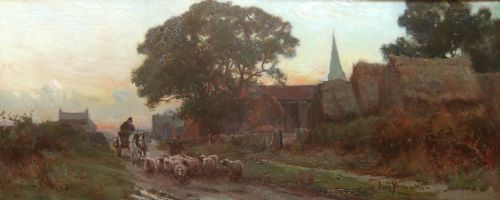


Rustic Landscape Canvas
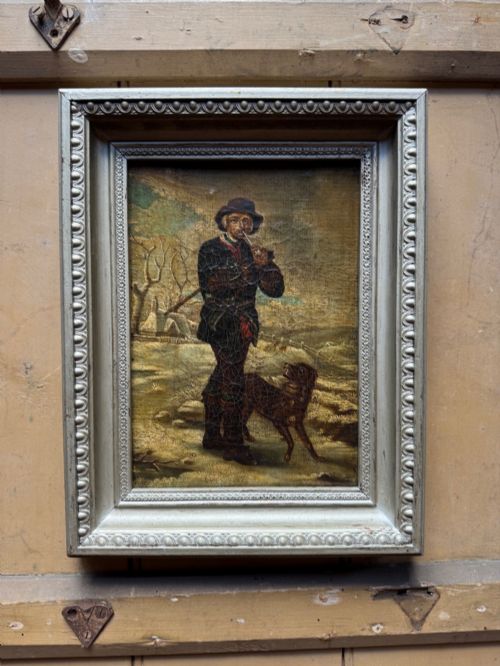
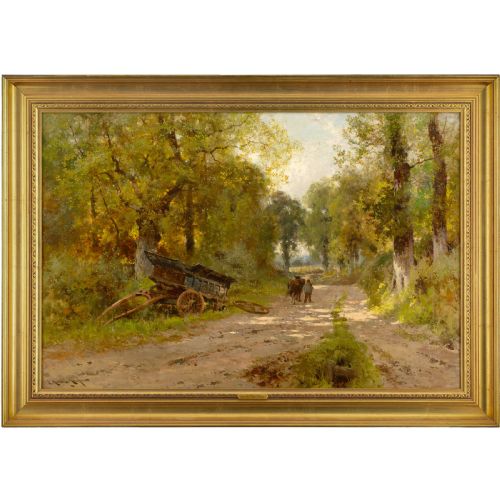
When you search for rustic landscape canvas, you are looking at oil paintings on canvas depicting rural scenes from past centuries.
Rustic Landscape Canvas
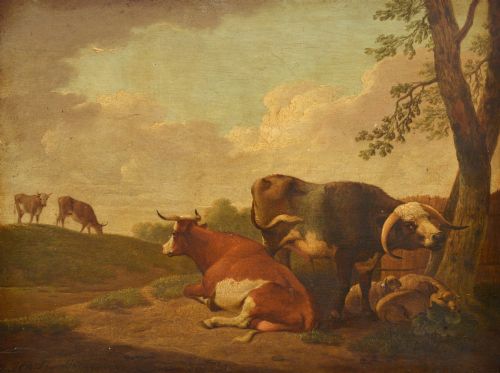
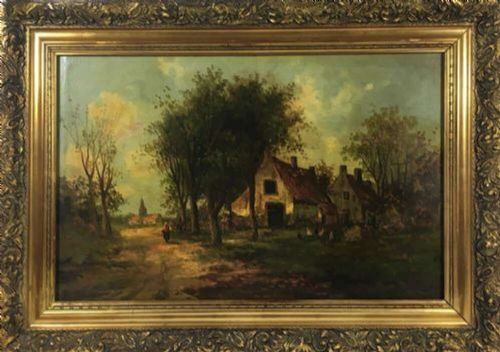
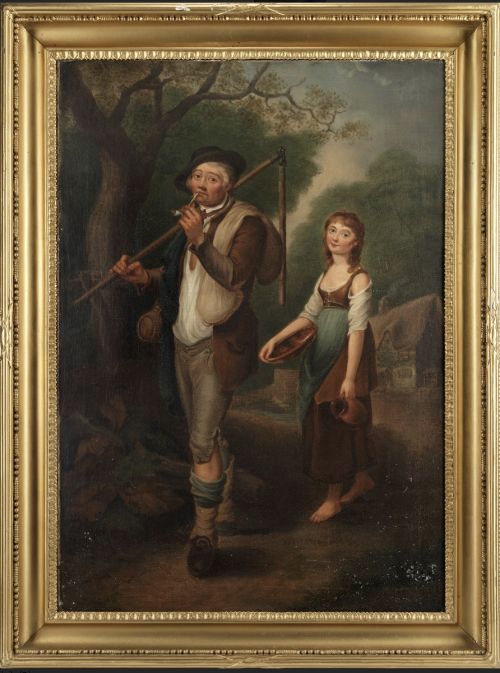
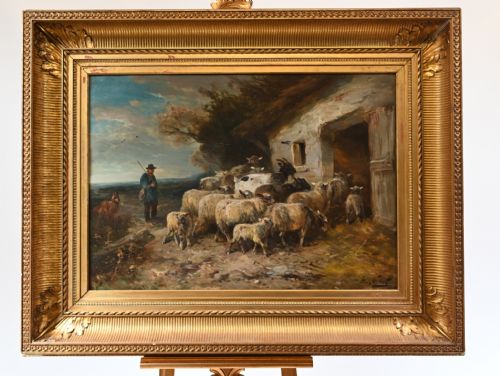
A rustic landscape canvas captures rural life, agricultural scenes, and pastoral views, often featuring cottages, farmyards, cattle, or figures in the countryside. These works span from the eighteenth century through to the mid twentieth century, encompassing British and European schools of painting.
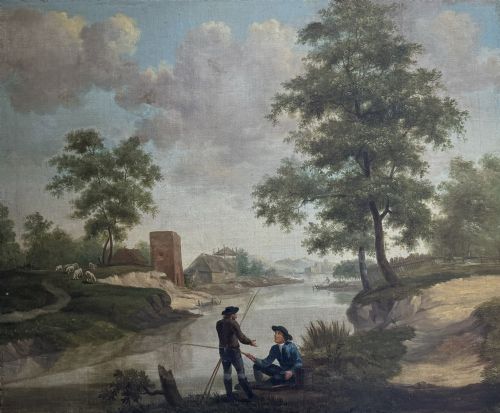
The versions most commonly met on this page date from the nineteenth century, including Victorian works, alongside examples from the early twentieth century and the eighteenth century. They appear in forms ranging from intimate studies of horses and carts to large farming landscapes and river views.
How They Were Made
These works are executed in oil paint upon woven canvas, occasionally laid onto wooden board for structural support during later conservation. Pigments are applied with brushes, building up rich textures that define foliage, water, rustic dwellings, and livestock.
Supports are framed by wood, sometimes ornamented with gesso and giltwood mouldings that complement the palette of the composition. The physical construction relies on traditional stretcher frames which hold the canvas taut.
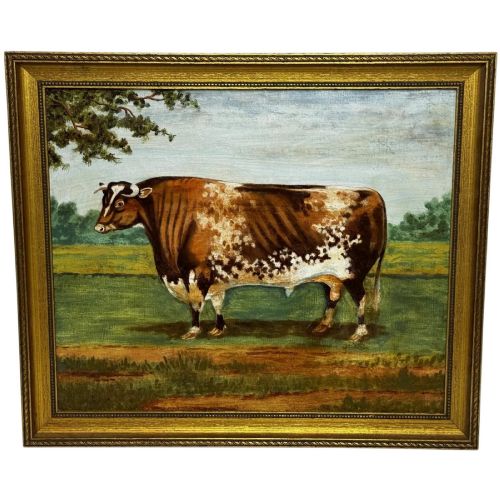
Several canvases record specific agricultural pride, capturing prize-winning shorthorn bulls alongside traditional farmyard cottages.
What Varies in Quality
Quality rests upon the confidence of the brushwork and the handling of light within the pastoral scene, separating competent records from works of greater artistic ambition. The articulation of natural details, such as animal anatomy, foliage, and atmospheric distance, marks the skill of the painter.
The integrity of the canvas surface and the preservation of the original paint layer influence the standing of an individual painting. Works by recorded painters or established regional schools generally display a surer compositional balance.
John Horace Hooper·Hendrik Willem Schweickhardt·Thomas Barker of Bath·Henry Schouten·Thomas Hicks·Owen Bowen·John Constable·W.E. Evans·Henry John Yeend King·Andre de Moller·Charles Vickers·J Barclay·James William Booth·John Wright Oakes·Ralph Dorrance·Fred Stead·John Henry Dell·Paul Jones·Robert Russell MacNee·Nasmyth·Kershaw Schofield·Abraham Hulk Junior·Thomas Spinks·GW Horlor·John Syer Junior
The Rustic Landscape Canvas Glossary
- Canvas
- A heavy woven fabric, usually linen or cotton, stretched tightly across a wooden frame to serve as the foundation for oil paintings.
- Gesso
- A plaster-like mixture applied to wooden frames to create a smooth surface for gilding or painting.
- Giltwood
- Wood that has been coated with a thin layer of gold leaf or gilt finish, commonly found on traditional picture frames.
- Impressionism
- An art movement characterised by relatively small, thin, yet visible brush strokes and an open depiction of light.
- Pastoral
- A genre of painting that depicts rural life and idealized country landscapes in a peaceful, natural setting.
Rustic Landscape Canvas: Frequently Asked Questions
What periods do these paintings come from?
The selection includes works originating from the eighteenth, nineteenth, and twentieth centuries. Many pieces date specifically to the Victorian era and the early decades of the 1900s.
Examples span from Georgian sensibilities through to British Impressionism and mid-century pastoral views.
How should I hang an oil painting?
Choose an interior wall away from direct sunlight and dramatic temperature fluctuations, which can affect the canvas and paint layers. Ensure the hanging hardware is securely fixed to support the weight of both the canvas and its wooden frame.
allow adequate space around the piece so the composition can be viewed clearly without visual clutter.
How do I identify the school of painting?
Look for stylistic markers, signatures, or inscriptions on the reverse of the canvas or frame that hint at the regional origin or artist. British and European schools often share distinct approaches to depicting light, agricultural animals, and rural architecture.
Comparison with documented works by regional painters helps clarify attribution.
What is the difference between oil and canvas?
Oil refers to the medium of oil paint used by the artist, consisting of pigments suspended in a drying oil. Canvas is the woven textile support upon which that oil paint is applied.
Together they form the standard combination for easel paintings produced across the centuries.