


French Rural Landscape Painting
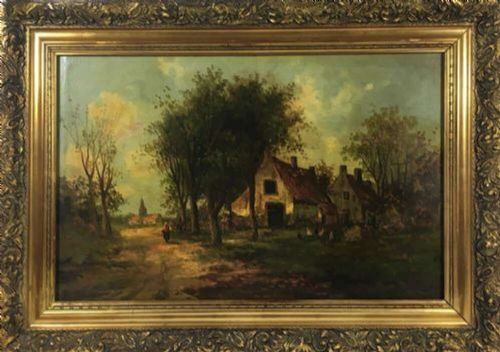
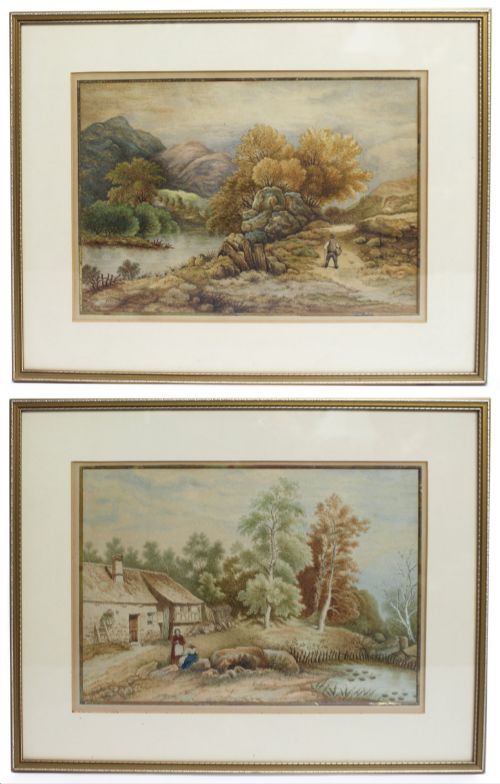
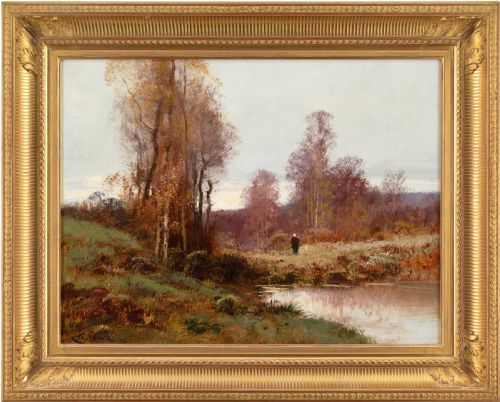
These French rural landscape painting works capture the quiet beauty of provincial fields, riversides, and farmyards.
French Rural Landscape Painting
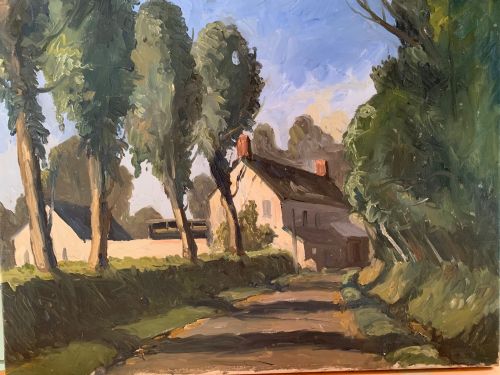
A French rural landscape painting depicts the countryside, agricultural life, and natural scenery of France through various historical periods. When searching for a French rural landscape painting, buyers encounter works ranging from mid-nineteenth-century Barbizon school compositions to early twentieth-century Post-Impressionist canvases.
The subjects frequently include farmyards, winding country paths, cattle by streams, and workers in Provence or Normandy. These pieces document rural routines such as laundry by haystacks or horses at troughs.
Most examples found in the collection date from the nineteenth and twentieth centuries, utilising traditional framing and mediums. They offer a window into provincial life preserved through oil on canvas, oil on panel, and watercolour on paper.
Materials and execution
Artists relied primarily on oil paint applied to stretched canvas or wooden panels, capturing light and texture across rural scenes. Watercolours on paper also appear among the selections, offering a lighter touch for pastoral views.
Giltwood frames frequently house these artworks, complementing the tones of the oil paint and the period aesthetic. The physical construction combines traditional canvas preparation with expressive brushwork characteristic of French Realism and Impressionism.
French Rural Landscape Painting Retail Price Guide 2026
Typical asking prices for french rural landscape painting among the pieces listed under this phrase on Sellingantiques today, from the lower quarter to the upper quarter. They describe what is for sale here now, not the wider market.
Several canvases quietly document chickens, laundry days, and farm gates as stubborn reminders of unchanging provincial routines.
Judging quality in rural scenes
The strength of a composition lies in the handling of light, atmospheric depth, and the naturalism of the brushwork. Works by recognised artists or those associated with specific movements like the Barbizon school often display superior tonal control.
Condition of the canvas and paint surface plays a significant role in determining the integrity of the piece. Original frames and documented artist signatures further distinguish the finer examples from anonymous decorative works.
Th. Thibault·Charles Clair·Raimond Louis Lecourt·Majorie Hoare·Robert McGregor·Eugene Battaille·Antoine Bouvard·Maurice Asselin·Jeffrey Pratt·Henri Joseph Harpignies
The French Rural Landscape Painting Glossary
- Barbizon School
- A nineteenth-century French art movement dedicated to realism in landscape painting, emphasising rural subject matter and direct observation of nature.
- Post-Impressionism
- An artistic movement following Impressionism that extended its use of vivid colours and thick application while emphasising geometric forms and expressive content.
- Giltwood
- Wood that has been treated with gold leaf or gold paint, commonly used for traditional picture frames.
- Provenance
- The documented history of ownership of an artwork, establishing its authenticity and origin.
- Oil on Panel
- A painting executed on a wooden support rather than canvas, often found in smaller nineteenth and early twentieth-century works.
French Rural Landscape Painting: Frequently Asked Questions
What periods do these paintings cover?
The available works span from the nineteenth century through the mid-twentieth century, capturing various artistic movements.
Key eras represented include the Barbizon school period, Victorian works, and early twentieth-century Post-Impressionism.
Where were these rural scenes painted?
The artworks depict various regions across France, including Normandy, Provence, Brittany, and the banks of the Loire.
Specific local details often reflect the distinct geography and agricultural practices of these rural areas.
How should I frame an antique painting?
Many pieces come in their original giltwood frames, which suit the historical context of the artwork.
If framing a canvas independently, select a period-appropriate moulding that complements the colour palette without overpowering the composition.
Are these paintings signed by the artists?
Several works feature visible signatures, initials, or documented attributions to known painters and school members.
Unsigned pieces are typically attributed through stylistic analysis, materials, and historical context.
What subjects are most common?
Common subjects include farmyards, agricultural workers, riverbanks, and pastoral landscapes with livestock.
Scenes often focus on everyday rural life, such as laundry washing, working horses, and winding country paths.