






Barbizon School Art
Barbizon school art captures the quiet gravity of nineteenth-century rural France through painters who turned their backs on academic studios to work directly from nature.
Barbizon School Art
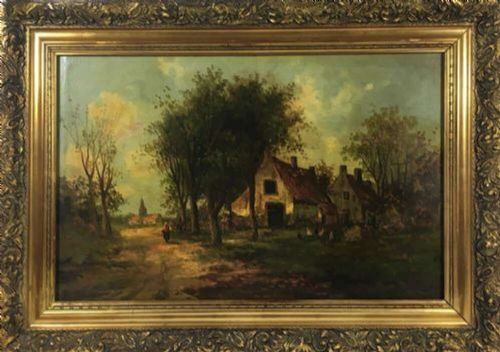
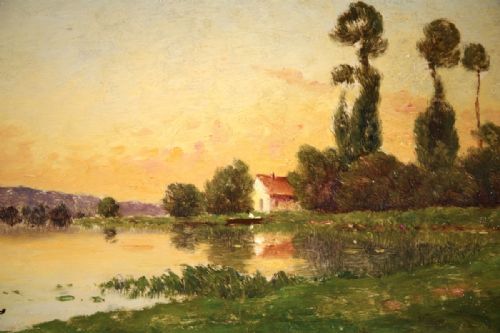
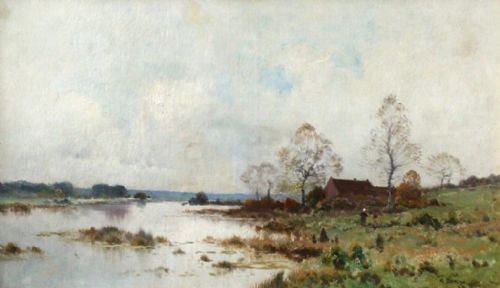
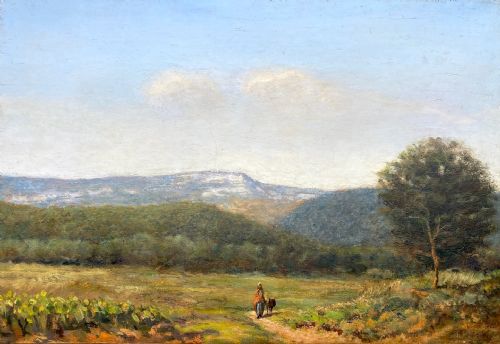
Barbizon school art encompasses nineteenth-century French landscape painting, pastoral scenes, and rural views centred on the Forest of Fontainebleau and surrounding villages. These works emerged as artists sought out unidealised views of forests, rivers, farmyards, and cattle grazing by streams.
The selections available here range from oil paintings on canvas to watercolours, charcoal drawings on paper, and framed works housed in giltwood frames. Pieces span the nineteenth century, including works dated to the eighteen-sixties, eighteen-seventies, and eighteen-nineties, alongside Victorian-era interpretations influenced by the French movement.
Buyers will find both signed works by known artists of the period and pieces bearing the distinct Barbizon influence from British and French hands. Subject matter frequently includes woodland paths, riverbanks, and provincial cottages rendered with a deep observation of natural light and atmosphere.
What varies in quality
Quality rests upon the strength of the composition, the handling of light, and the sureness of touch in rendering foliage, earth, and sky. The finest works demonstrate a profound tonal harmony and a confident economy of marks that convey the texture of bark, water, and soil.
Provenance and attribution also shape the standing of a piece, distinguishing signed works by core practitioners from circle productions or later provincial followers. The integrity of the original canvas, the preservation of the paint surface, and the appropriateness of the giltwood frame all contribute to the stature of an individual work.
Current listings feature oil on canvas, watercolour, and charcoal works spanning the nineteenth century, including dated pieces from eighteen-sixty to nineteen-twenty.
Paul Désiré Trouillebert·Henri Jaques Delpy·Henri Joseph Harpignies·Alphonse Robert·Pierre Emmanuel Eugene Damoye
The Barbizon School Art Glossary
- Barbizon School
- A nineteenth-century French art movement dedicated to realistic, naturalistic landscape painting. Artists associated with the group lived and worked in the village of Barbizon near the Forest of Fontainebleau.
- Giltwood
- Wood carved and coated with gold leaf or gold paint, frequently used for traditional picture frames of the nineteenth century. It provides a warm, reflective border that enhances the tones of oil paintings.
- Impasto
- Paint applied thickly to a canvas, standing out in relief from the surface. This technique allows brush marks and knife strokes to retain their physical texture.
- Pastoral
- A genre of art depicting rural life, shepherds, cattle, and tranquil country landscapes. These scenes emphasise a harmonious relationship between humans, animals, and the natural environment.
- Provenance
- The documented history of ownership of an artwork from its creation to the present. A clear record supports authenticity and attribution.
Barbizon School Art: Frequently Asked Questions
What is Barbizon school art?
Barbizon school art refers to nineteenth-century French landscape and pastoral painting rooted in direct observation of nature. Artists gathered around the village of Fontainebleau to paint forests, rivers, and rural workers.
These works marked a shift away from grand historical subjects towards unidealised, atmospheric portrayals of the French countryside.
How do I display these paintings?
These works suit traditional and period interiors, particularly when paired with adequate wall space and controlled lighting to highlight the canvas texture and giltwood frames. Hang them at eye level away from direct sunlight to protect the oil paint and paper.
Consider the weight of the frame when choosing fixings, as nineteenth-century wooden frames can be substantial.
How do I tell different periods apart?
Earlier works from the mid nineteenth century often feature tighter brushwork and darker, earthier palettes influenced by academic traditions. Later pieces from the eighteen-eighties and eighteen-nineties show brighter light and looser handling closer to impressionism.
Signatures, dates, and framing styles also offer clues to the specific decade of creation.
Were these works painted outdoors?
Many Barbizon artists pioneered plein air painting, taking small canvases and boards directly into the Forest of Fontainebleau to sketch changing light and weather. Finished paintings were sometimes completed back in the studio using these direct studies for reference.
This method gave their landscapes a truthful spontaneity absent from strictly studio-bound compositions.