

French Rustic Wood Table
A french rustic wood table brings decades of rural utility into a modern room, shaped by honest everyday wear.
French Rustic Wood Table
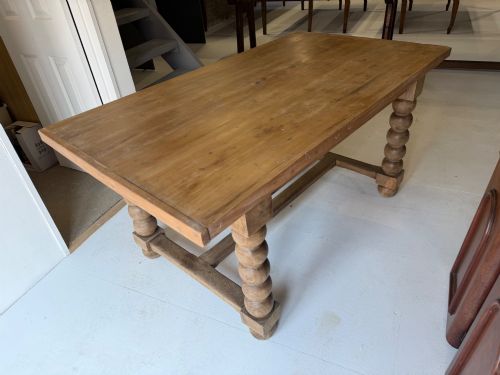
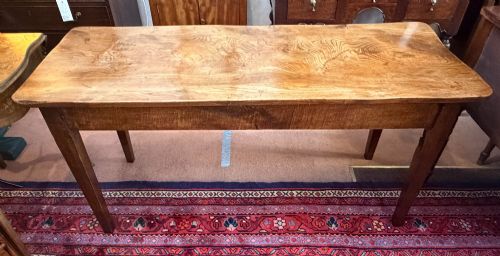
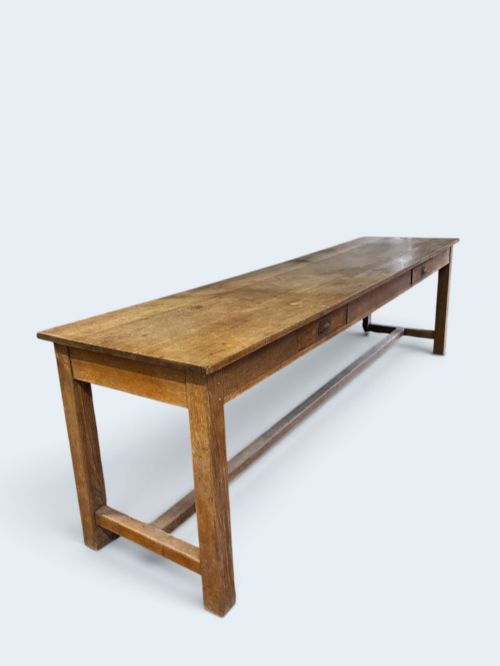
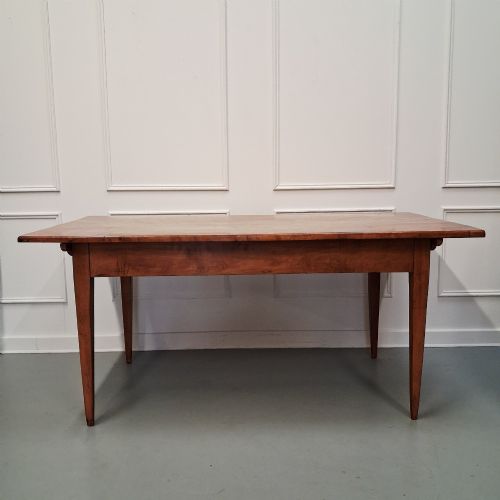
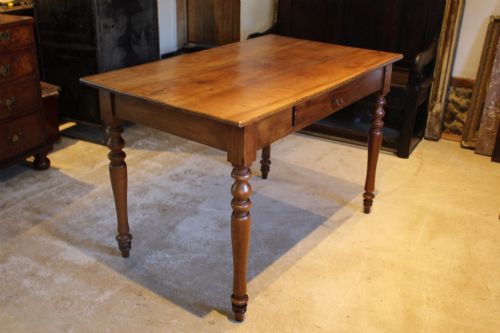
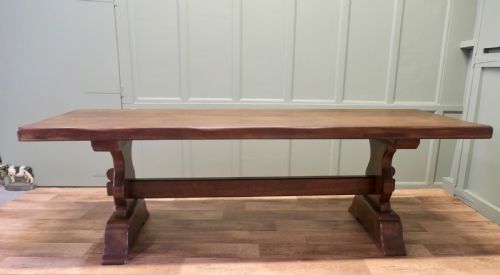
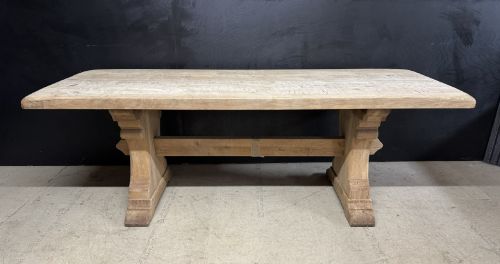
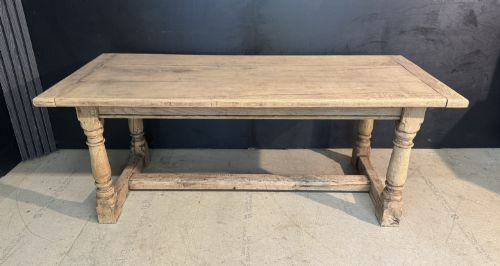
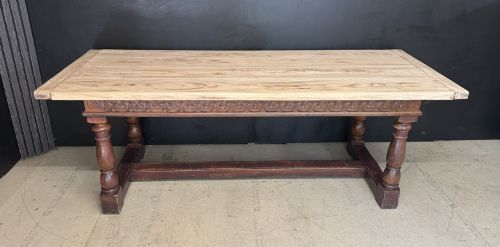
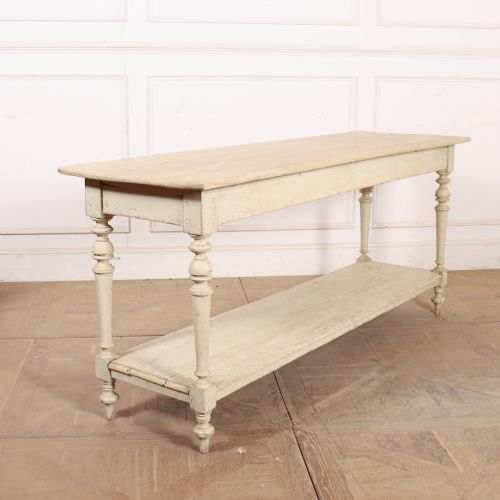
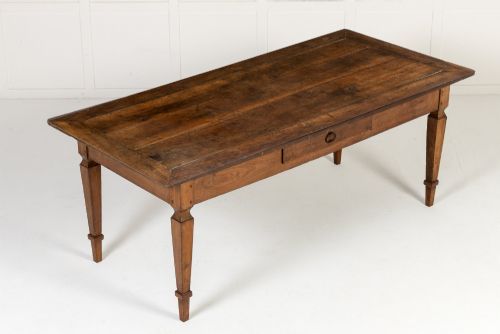
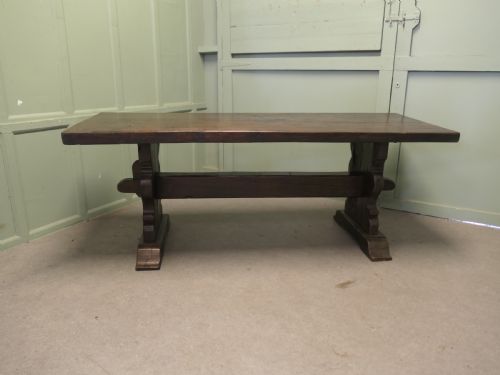
A french rustic wood table encompasses heavy dining refectories, narrow console surfaces, and low coffee forms alongside utilitarian workbenches, chopping blocks, and laundry tables. These pieces originate from provincial farmhouses, village kitchens, and rural workshops where timber served a strictly practical daily purpose.
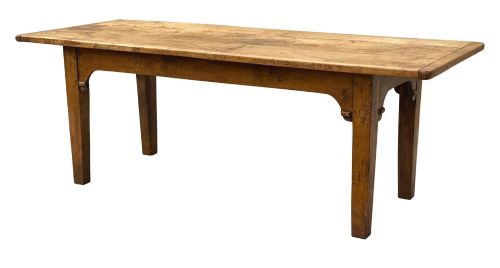
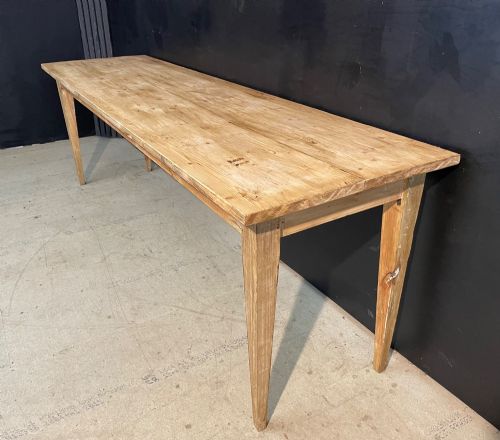
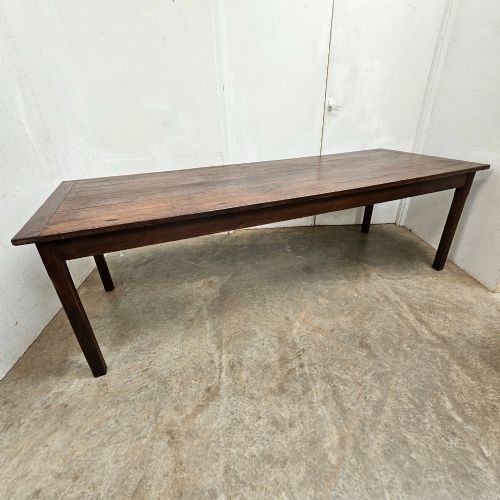
The version most frequently met on this page is the 19th century oak or pine farmhouse dining table, often displaying a generous length suited to communal meals. Alongside these sit smaller elm, cherrywood, and beech preparation tables, game blocks, and serving surfaces shaped by provincial vernacular traditions.
Materials and Construction
Construction relies heavily on robust domestic hardwoods and softwoods including oak, pine, elm, cherrywood, fruitwood, beech, and sycamore, joined to withstand rigorous domestic or agricultural labour. Many examples utilise multi-board plank tops, pegged joints, and solid timber stretchers for structural stability.
Surfaces frequently show the natural grain of the wood, sometimes scrubbed clean, bleached, or lightly painted, retaining the tool marks and dents accumulated through generations of use. Hardware elements like brass or iron appear sparingly on functional components such as workbenches and prep tables.
Listings span oak, pine, elm, cherrywood, walnut, and beech across 19th-century dining, console, and workbench forms.
Gradations in Quality
Quality rests primarily in the integrity of the original timber and the proportional balance of the base, distinguishing honest provincial craftsmanship from later or heavily altered adaptations. Tables retaining their original untrimmed boards and uncompromised structural stretchers hold greater character.
The depth of patination on the wood surface dictates visual appeal, separating pieces with organic, time-softened finishes from those with sterile or overworked restorations.
The French Rustic Wood Table Glossary
- Refectory table
- A long, narrow dining table traditionally used in communal dining halls and large rural kitchens. These forms typically feature substantial legs connected by low longitudinal stretchers.
- Bleached oak
- Oak timber treated to lighten its natural dark tone, creating a pale, scrubbed appearance popular in mid-century and modern French country interiors.
- Workbench
- A heavy utilitarian table fitted with vices, clamping bars, or thick working slabs designed for manual crafts rather than dining. These pieces showcase raw utility and robust timber construction.
- Patina
- The deep, lustrous surface sheen developed on wood through decades of handling, polishing, waxing, and natural ageing. This quality cannot be artificially replicated with ease.
- Fruitwood
- Dense timber harvested from fruit-bearing trees such as cherry, pear, apple, and plum, utilised by rural cabinetmakers for its fine grain and warm hue.
French Rustic Wood Table: Frequently Asked Questions
How do I clean a rustic wood table?
Maintain the surface using a soft, dry cloth and mild natural beeswax rather than modern chemical polishes that strip the historic finish. Avoid placing wet or hot items directly onto the raw timber to protect the historic patina.
Regular gentle waxing nourishes the dry grain and preserves the subtle texture built up over centuries of daily rural use.
Can I use an antique workbench as a dining table?
Many workbenches and prep tables adapt well into dining or console use, provided the height and knee clearance match your chairs. Their narrow proportions and thick timber tops suit modern kitchen spaces exceptionally well.
Consider the presence of integrated vices or clamping bars when planning seating arrangements along the sides of the table.
What is the difference between refectory and farmhouse tables?
Refectory tables traditionally feature longer, narrower proportions with prominent end stretchers designed for large communal halls. Farmhouse tables encompass a broader range of domestic kitchen formats with varied leg styles and board configurations.
Both types share a sturdy vernacular construction intended for heavy daily service in a rural setting.
How do I date a 19th-century French table?
Examine the timber preparation methods, tool marks on the underside, and the method of joint construction used by the provincial maker. Hand-sawn boards and pegged mortise and tenon joints typically indicate earlier 19th-century origin.
Wear patterns around the edges and stretcher joints also provide clear evidence of age and sustained domestic use.