



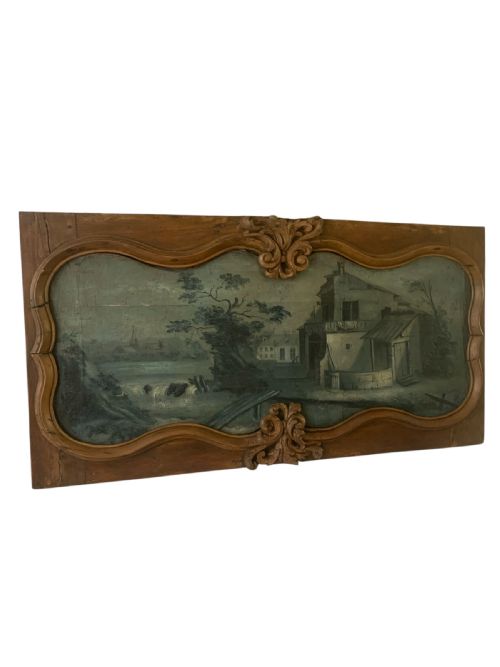


French Rococo Painted Panel
When you search for french rococo painted panel, you enter a world of giltwood frames, pastoral scenes and cabinetwork that brings nineteenth-century drawing rooms to life.
French Rococo Painted Panel
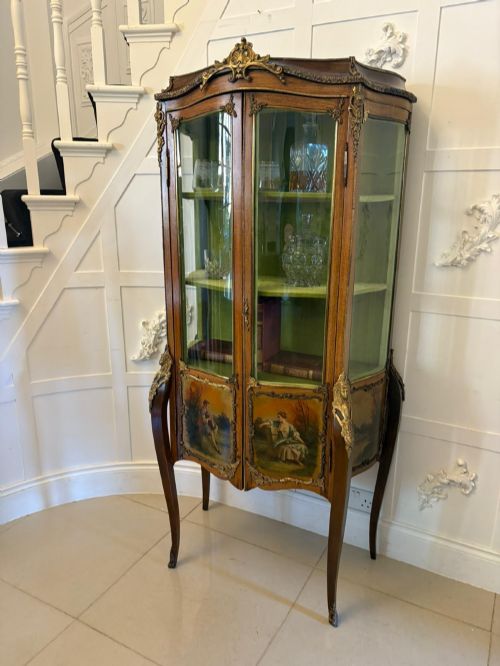
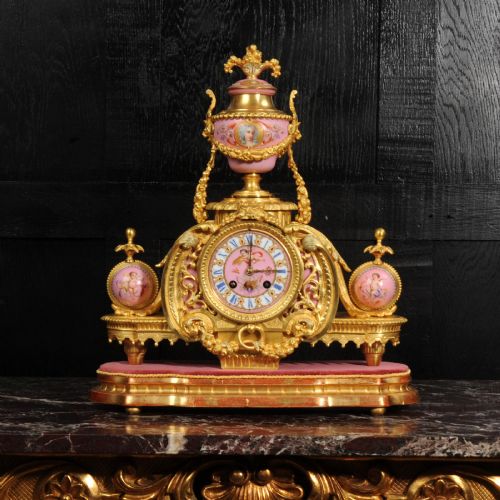
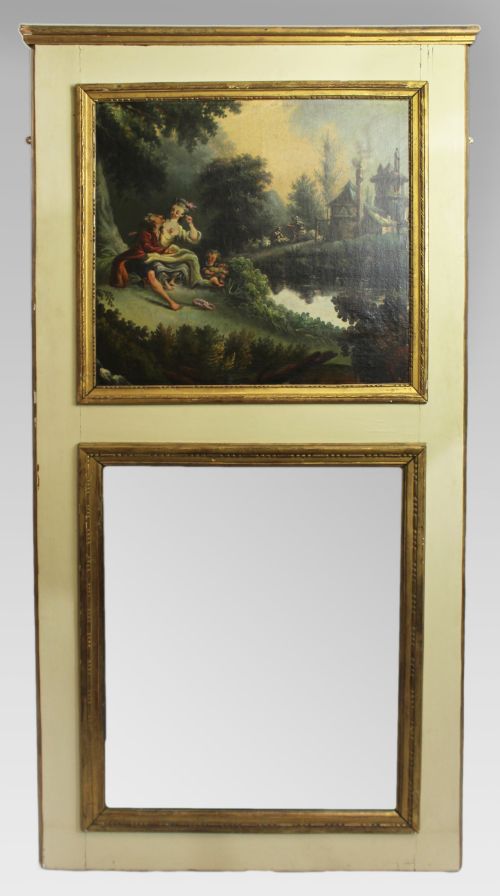
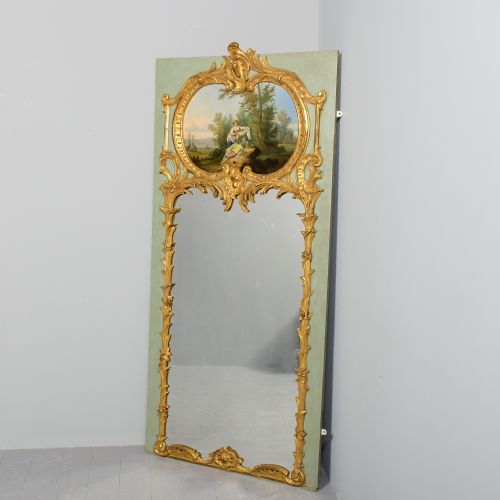
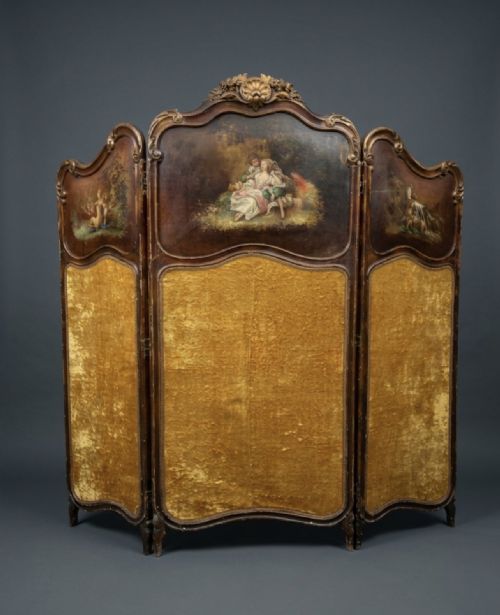
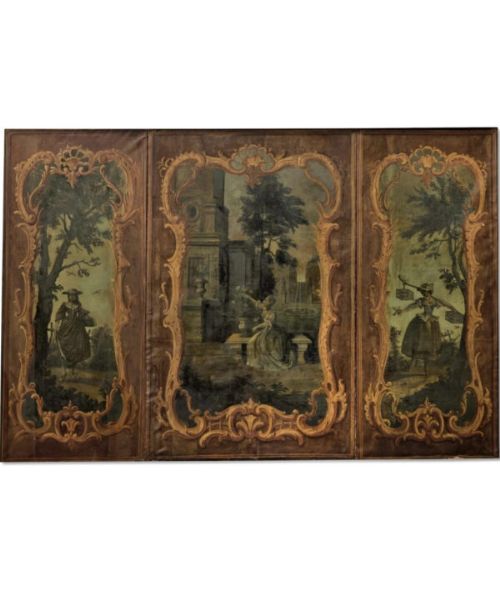
A french rococo painted panel brings together decorative woodwork and pictorial art, taking the form of overdoor panels, boiserie wall sections, folding room dividers, and trumeau mirrors. These pieces display pastoral subjects, figures, and decorative motifs executed in oil paint or lacquer.
The versions most commonly met on this page date from the nineteenth century, including revivals from the 1870s to 1900, alongside earlier eighteenth-century examples from around 1750. They appear integrated into larger furnishings such as display cabinets, vitrines, and writing desks, or as standalone architectural panels.
Makers and craftsmen utilised woods like kingwood, walnut, and rosewood, mounting the painted sections within giltwood or ormolu frames. The resulting objects served to decorate grand French chateaux and drawing rooms, establishing a distinct interior atmosphere.
Materials and construction methods
The construction relies on timber carcasses of walnut, kingwood, or rosewood, which provide the structural support for decorative panels and glazed display sections. Artisans applied specialist techniques such as Vernis Martin lacquer and oil paint on wood, canvas, or copper to create the pictorial scenes.
Mounts in cast ormolu and giltwood framing complete the assemblies, securing the painted panels within larger cabinets, folding screens, and trumeau mirrors. These materials were combined using traditional cabinetmaking joints suited to high-status nineteenth-century and eighteenth-century furnishings.
Distinctions in quality
Quality rests upon the execution of the painted imagery, where finely rendered pastoral figures and accomplished brushwork distinguish superior panels from simpler decorative treatments. The articulation of the surrounding woodwork, particularly the crispness of ormolu mounts and carved giltwood details, marks the distinction between standard production and masterwork pieces.
The integration of the panel within its host object dictates the overall cohesion, as seen in cabinets where kingwood veneers and lacquer work align seamlessly with the proportions of the glazed vitrine doors. Originality of surface and the preservation of the underlying paint layers remain central to the integrity of each piece.
Achille Brocot·Paul Sormani
The French Rococo Painted Panel Glossary
- Vernis Martin
- A simulated Japanese lacquer technique developed by the Martin brothers in eighteenth-century France, utilised on panels and cabinet doors to achieve a translucent, polished finish.
- Trumeau mirror
- A decorative wall mirror featuring an integrated painted panel or oil painting positioned above the glass, commonly framed within carved wood.
- Ormolu
- Gilt bronze mounts cast and chased to ornament the corners, legs, and frames of high-status furniture and display cabinets.
- Boiserie
- Carved wood panelling applied to interior walls, frequently incorporating painted decorative panels within symmetrical mouldings.
- Vitrine
- A glass-fronted display cabinet designed for the presentation of porcelain and objets d'art, often incorporating painted panels in the lower sections.
French Rococo Painted Panel: Frequently Asked Questions
How were painted panels used in historic interiors?
These panels functioned as architectural boiserie set directly into room walls, or were incorporated into overdoor positions above doorways. They also formed the hinged sections of folding room screens and the lower doors of display cabinets.
In domestic settings, they provided a decorative focal point that mirrored the pastoral themes popularised during the reign of Louis XV. Their placement helped unify the painted imagery with the carved and gilded woodwork of the room.
What is the difference between an eighteenth-century panel and a nineteenth-century revival piece?
Eighteenth-century panels, originating around 1750, carry the direct aesthetic and material characteristics of the original rococo period. Nineteenth-century examples, produced during the widespread revivals of the 1870s to 1900, reinterpreted these forms with contemporary cabinetmaking techniques.
While both utilise oil paint and lacquer on wood or canvas, revival pieces often appear integrated into Victorian vitrines, pedestal stands, and trumeau mirrors.
How do you care for painted panels and lacquered surfaces?
Maintenance requires stable environmental conditions with minimal fluctuations in temperature and humidity to protect the wood substrate and prevent paint cracking. Surfaces should be dusted gently with a soft, dry cloth without the application of modern polishes or solvents.
Direct sunlight must be avoided to prevent the fading of oil paints and lacquer finishes over time.
Where should a trumeau mirror be hung?
Trumeau mirrors are traditionally hung above a mantelpiece or on a principal drawing room wall where the integrated oil painting sits at eye level. Their vertical proportions suit spaces with high ceilings, reflecting light while displaying the pastoral artwork.
Due to the weight of the timber frame, glass, and painted panel, secure wall fixings into structural masonry or studs are essential.