






Green Painted Landscape Panel
A green painted landscape panel brings the quiet of the countryside indoors, capturing rural scenery directly onto sturdy wooden surfaces.
Green Painted Landscape Panel
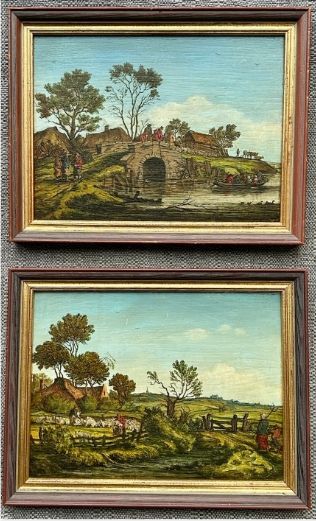
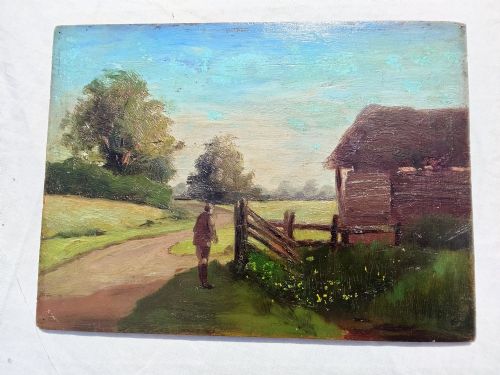
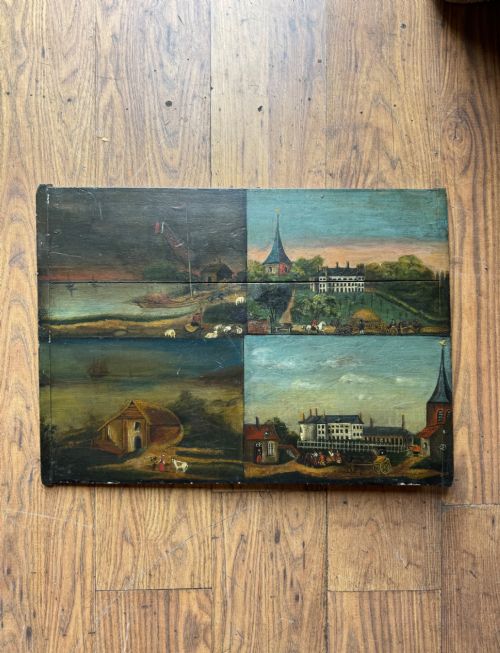
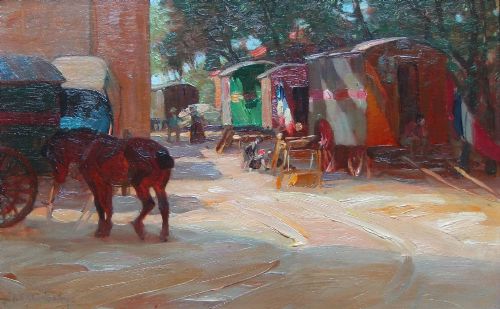
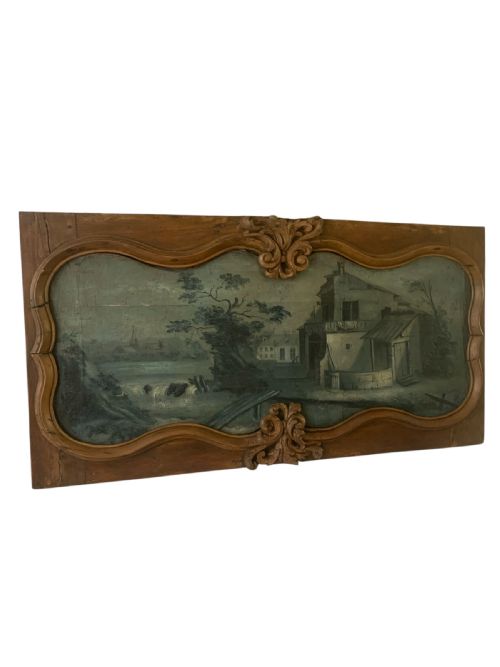
When you search for a green painted landscape panel, you encounter oil paintings created directly on wooden supports rather than stretched canvas. These works range from provincial naive folk art and architectural overdoor panels to signed pieces by British, Scottish, and Flemish school artists across several centuries.
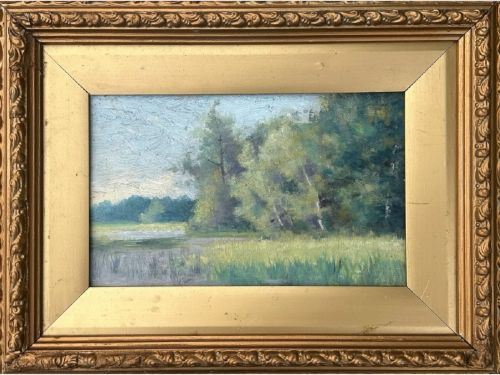
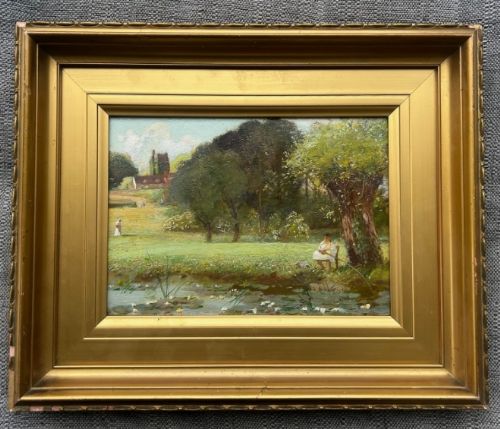
The subjects span river valleys, highland pastures, and wooded copse scenes, often framed in gilt wood or presented directly on board. While many date from the nineteenth and early twentieth centuries, examples stretch back to the eighteenth century, showing varied regional interpretations of rural life.
Materials and construction methods
Artists painted primarily with oil paint applied to prepared wooden panels, oak boards, or sturdy wood supports. This medium allowed for rich, layered application of green pigments to depict foliage, meadows, and rivers.
Many surviving examples are housed in their original gilt wood frames, protecting the edges of the panel and complementing the earthy tones of the landscape within.
Listings feature oil paintings on wood panels spanning from the eighteenth century through the mid-twentieth century, encompassing British Impressionism and Naive Folk Art.
Evaluating quality and execution
Quality rests in the handling of pigment and the confidence of the brushwork across the wooden surface. Finer panels display nuanced tonal shifts in the foliage and sky, whereas simpler naive works rely on direct, charmingly straightforward application.
The integrity of the wood panel itself matters greatly, as stable boards without warping provide a superior foundation for the oil paint over centuries of preservation.
Tom Campbell·W Klombeck·Maud Raphael Jones·Paul Ehrenberg·Hubert Wellington·Sir David Murray·Florence Hess·John Gilbey Bowles·George Lambert·Kershaw Schofield·E Van Drielst·Henri Joseph Harpignies
The Green Painted Landscape Panel Glossary
- Wood panel
- A flat piece of timber used as a rigid support for painting instead of canvas. Artists frequently utilised oak or other stable woods for durability.
- Oil paint
- A slow-drying paint made with pigments suspended in oil, commonly linseed. This medium permits subtle blending and rich colour depth.
- Gilt wood frame
- A wooden framing structure coated in gold leaf or gold-coloured finish. These frames often accompany antique paintings to enhance the artwork.
- Naive folk art
- Artistic work produced by painters without formal academic training. These pieces are characterised by a charming directness of perspective and form.
- Overdoor painted panel
- A decorative artwork designed to fit directly into the architectural space above a doorway. Such panels often depict pastoral or architectural scenes.
Green Painted Landscape Panel: Frequently Asked Questions
What is a green painted landscape panel?
It is an artwork executed in oil paint directly onto a wooden board, featuring rural scenery dominated by natural earth tones and foliage.
These pieces range from intimate sketches by regional painters to substantial architectural overdoor decorations.
How do I care for a wood panel painting?
Keep the panel away from direct sunlight and sudden temperature shifts, which can cause wood to warp or paint to crack.
Display the work in a stable indoor environment and avoid using liquid cleaners on the painted surface or the frame.
Are these panels signed by the artist?
Many examples carry signatures, monograms, or attribution notes from the painters who created them, while others reflect anonymous provincial traditions.
Signatures often appear discretely in the lower corners of the wooden board.
How can I tell the age of the panel?
Age is determined by examining the type of wood preparation, the style of the brushwork, and the framing materials used.
Nineteenth and early twentieth-century works frequently display characteristic pigments and framing conventions of their respective eras.