


French Revival Fauteuil
A french revival fauteuil brings open-armed seating from earlier centuries back into nineteenth and early twentieth century rooms with distinct historical flair.
French Revival Fauteuil
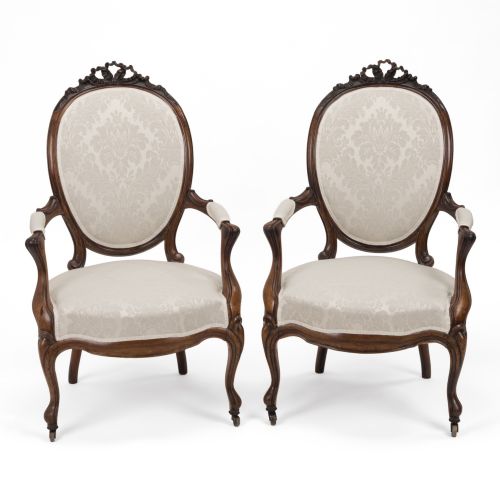
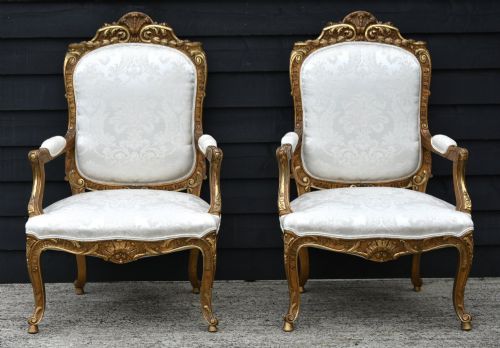
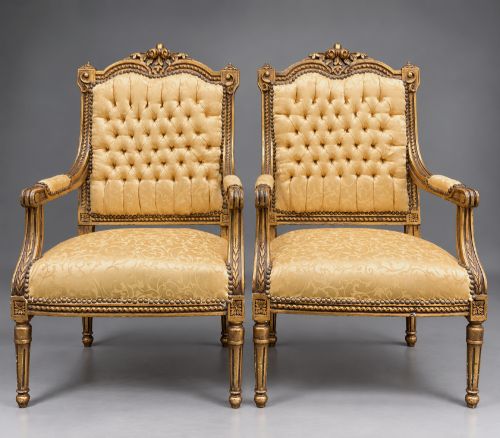
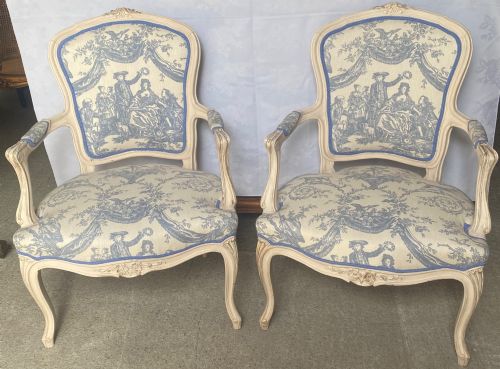
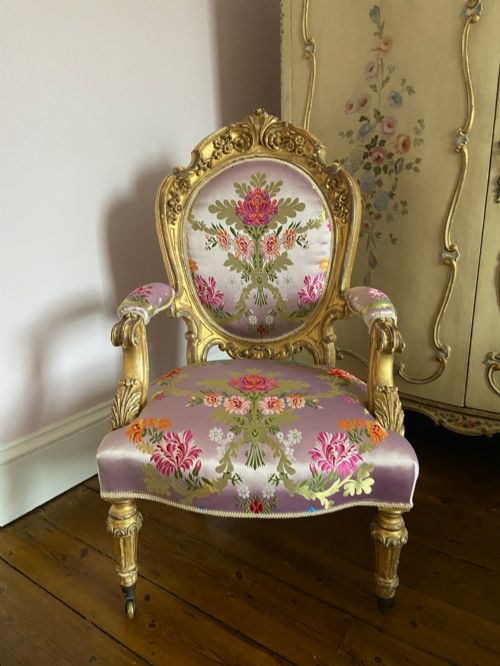
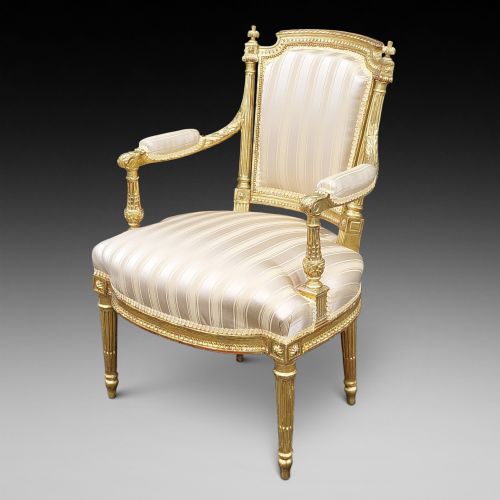
A french revival fauteuil is an open-armed upholstered seat created during the nineteenth and early twentieth centuries, drawing inspiration from earlier French royal styles. The pieces on this page span several decades from the mid nineteenth century into the early twentieth century, reflecting ongoing enthusiasm for historical forms.
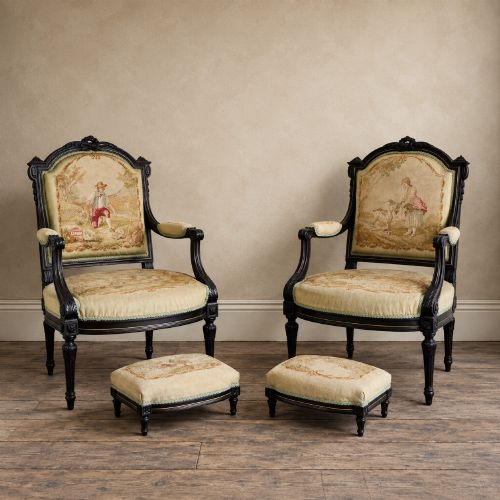
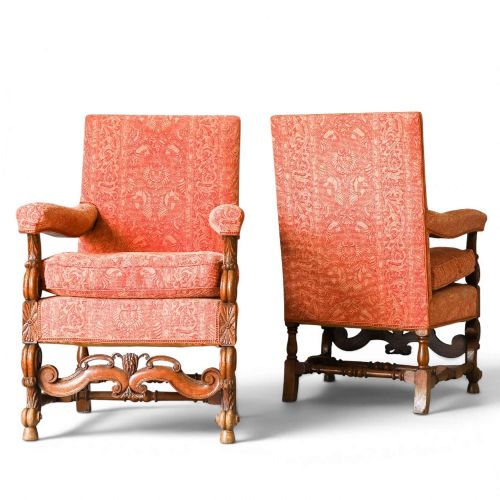
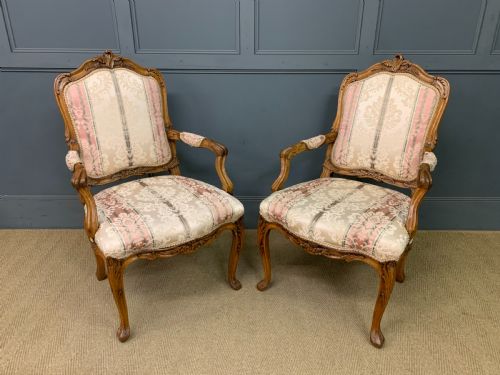
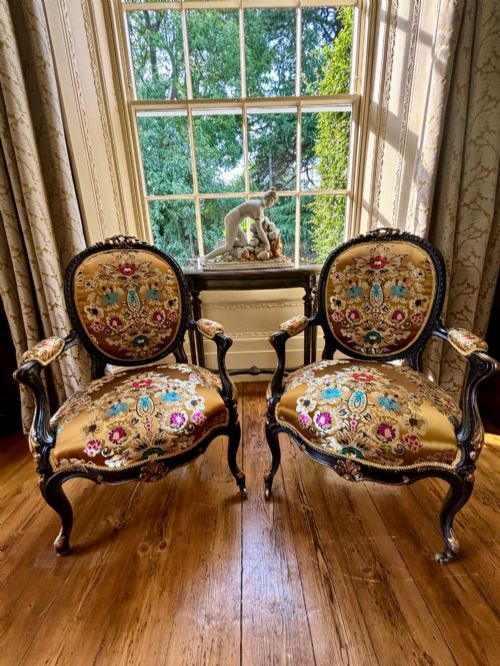
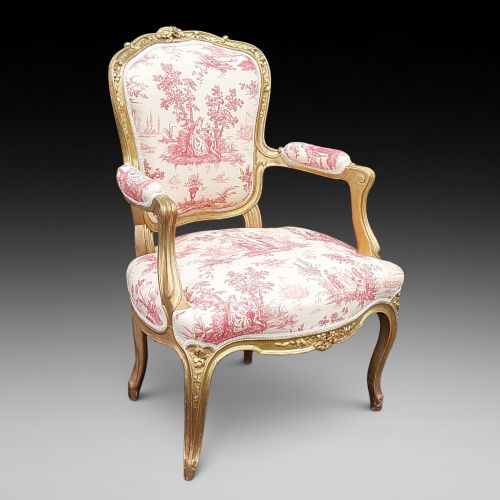
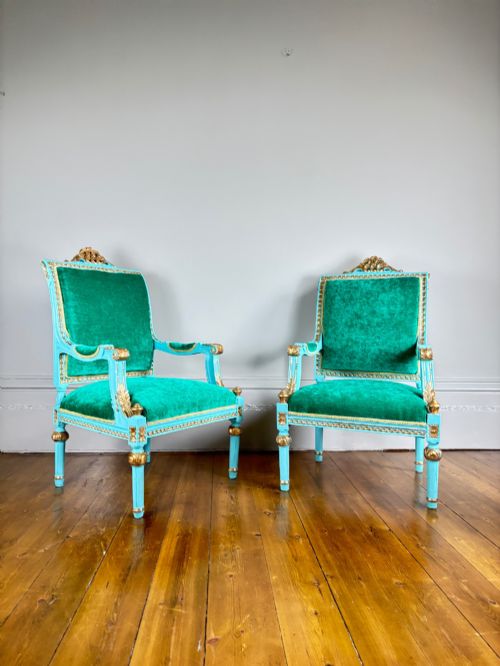
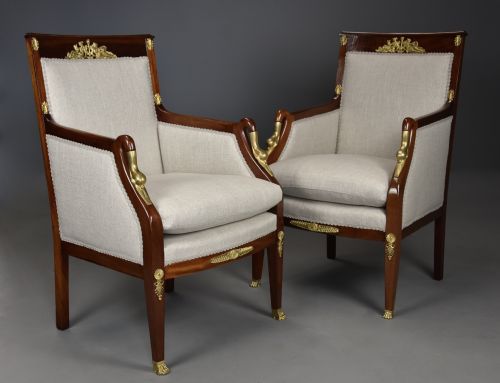
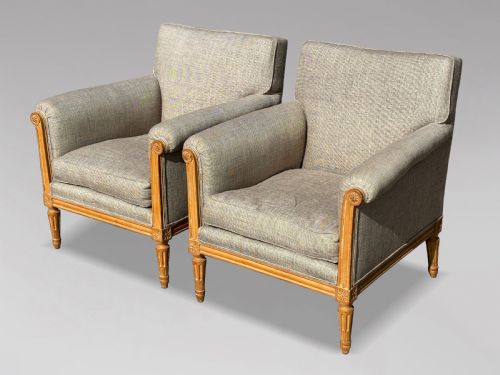
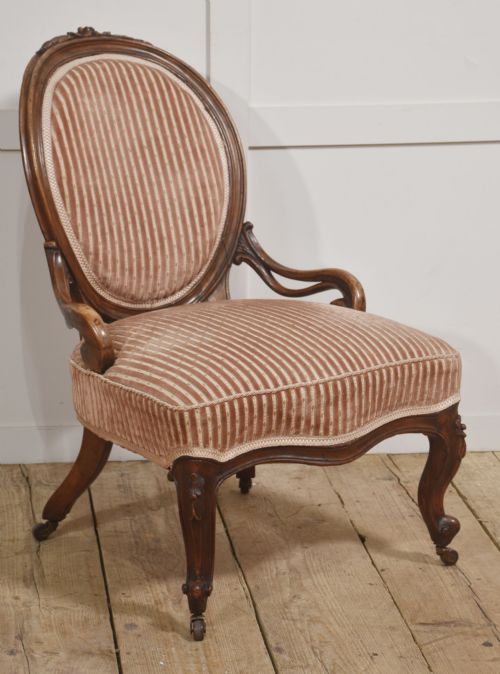
Most examples found here fall under specific stylistic revivals including Louis XV, Louis XVI, Empire, and Renaissance styles. They appear primarily as individual salon chairs or in pairs, alongside related salon suites designed for formal reception rooms.
Materials and construction
Frames are constructed from sturdy timbers like walnut, mahogany, oak, and beech, alongside softer woods that received paint, ebonising, or gilding. Giltwood and ormolu mounts appear frequently on pieces referencing the more opulent royal courts.
Upholstery relies on traditional textiles recorded in the inventory, including silk fabric, velvet, petit point, and modern or period replacement coverings. Painted and carved details on the wooden armframes define the distinct aesthetic of each revival sub-style.
French Revival Fauteuil Retail Price Guide 2026
Typical asking prices for french revival fauteuil among the pieces listed under this phrase on Sellingantiques today, from the lower quarter to the upper quarter. They describe what is for sale here now, not the wider market.
Listings span from the 1860s through the 1920s, featuring timber frames in walnut, mahogany, and giltwood alongside silk and velvet upholstery.
Distinctions in quality
Quality rests in the crispness of the wood carving and the depth of the gilding or finish applied to the frame. Superior examples demonstrate confident hand-carved ornamentation on walnut or giltwood rather than flat or mechanical tooling.
The integrity of the frame construction and the fidelity to historical proportions separate standard production from exceptional pieces. Selection of upholstery materials, such as heavy silk or textured velvet, matches the ambition of the carved woodwork.
Holland and Sons
The French Revival Fauteuil Glossary
- Fauteuil
- An open-armed upholstered armchair originating in France, traditionally designed for domestic salon use. The open wooden sides distinguish it from fully upholstered armchairs.
- Giltwood
- Timber coated with a thin layer of gold leaf or gilt preparation. It is common on formal nineteenth century revival seating.
- Ormolu
- Cast brass that has been gilded and used as decorative mountings on furniture. It frequently highlights Empire style armchairs.
- Petit point
- A tent stitch embroidery worked on canvas, often utilised for historical chair seat and back upholstery. It adds textural depth to period seating.
French Revival Fauteuil: Frequently Asked Questions
What defines a french revival fauteuil?
A french revival fauteuil is an open-armed armchair produced in the nineteenth or early twentieth century that mimics earlier court furniture styles like Louis XV or Louis XVI.
These chairs combine period shapes with the manufacturing techniques of their actual period of creation.
How were these armchairs used historically?
These seats served primarily in formal drawing rooms, parlours, and salons for entertaining guests or social conversation.
Their open arm design allowed individuals to sit comfortably while wearing voluminous historical garments.
How do I identify different revival styles?
Louis XV revival pieces feature flowing asymmetrical curves and naturalistic floral carvings, while Louis XVI revival pieces exhibit straighter lines and neoclassical symmetry.
Empire style chairs display heavier mahogany or ormolu mounts inspired by classical antiquity.
Can I use these chairs in a modern room?
These armchairs function effectively as statement pieces in contemporary interiors, providing textural contrast against minimal backgrounds.
Pairs work well placed opposite a sofa or flanking a fireplace in a sitting room.