
Antique Gilt Fauteuils
These antique gilt fauteuils are open-armed ceremonial seats offering ornate carved frames and historic luxury for formal interiors.
Antique Gilt Fauteuils
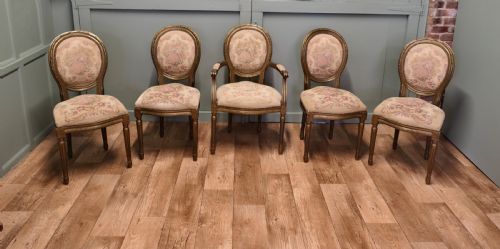
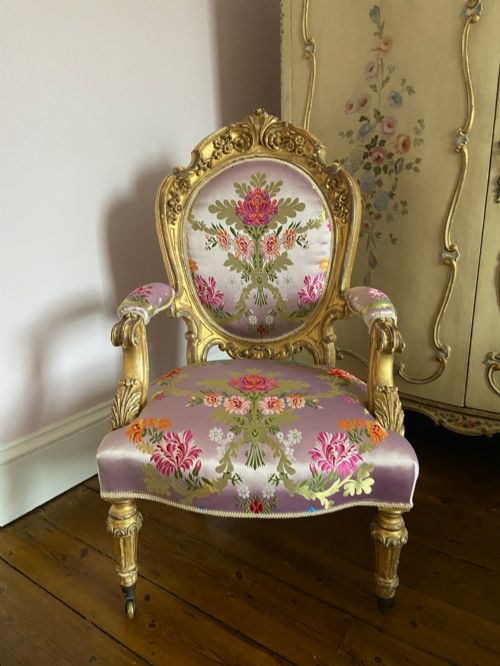
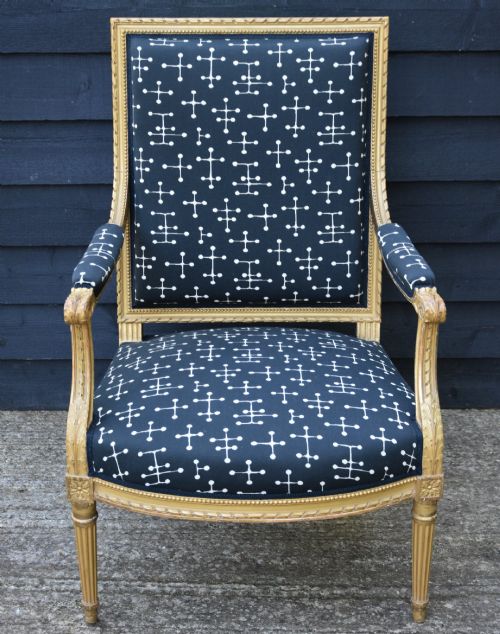
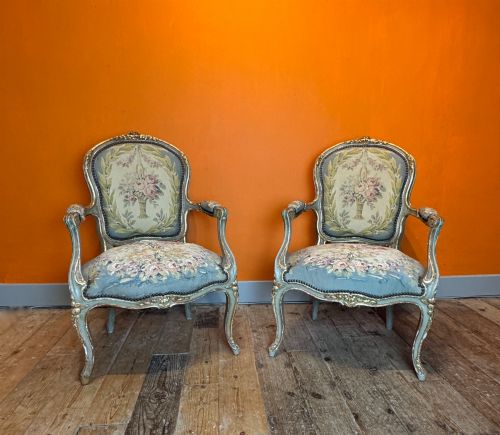
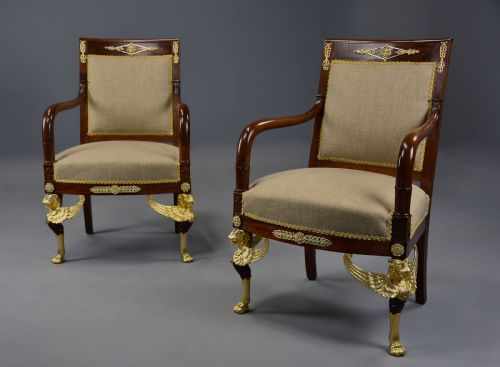
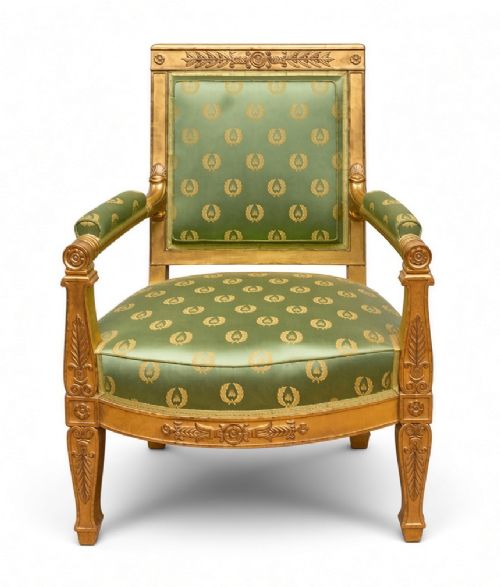
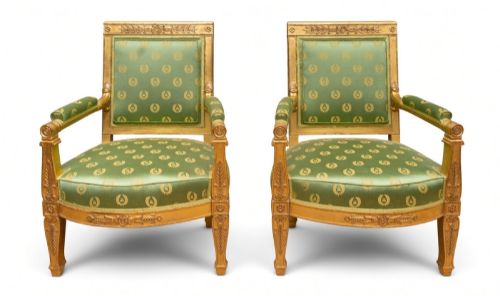
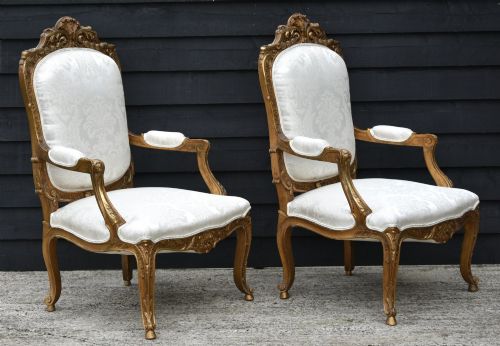
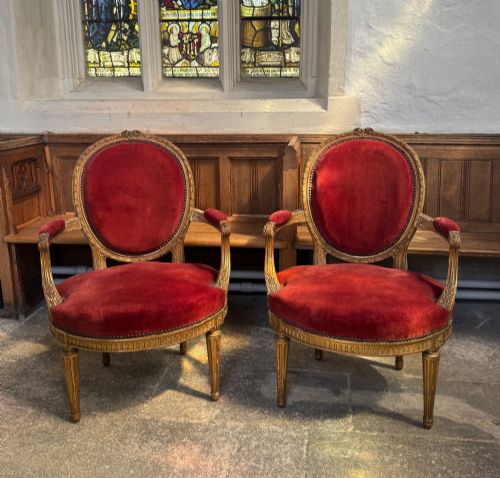
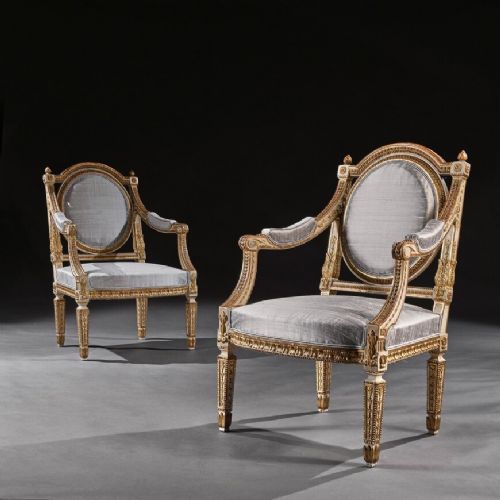
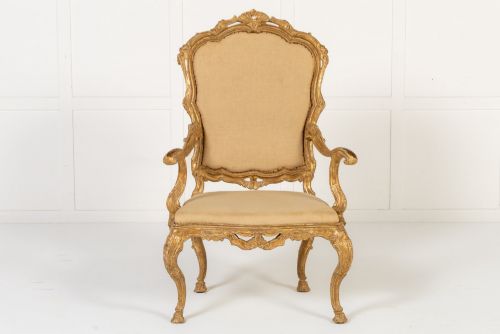
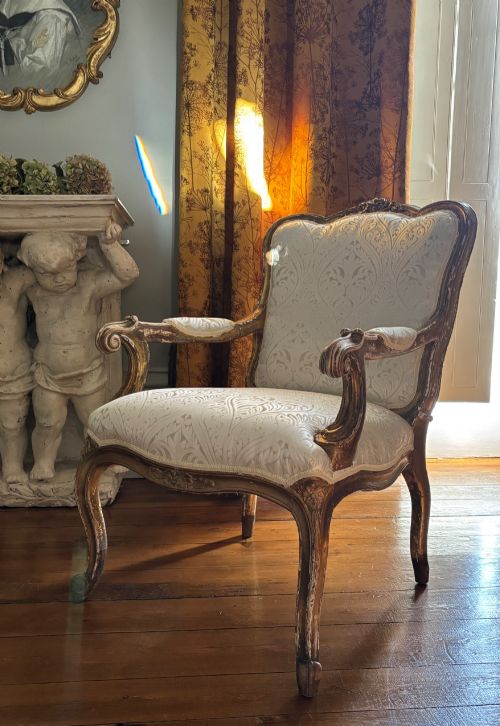
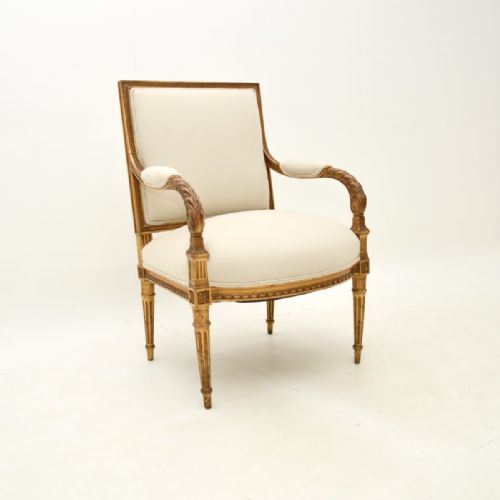
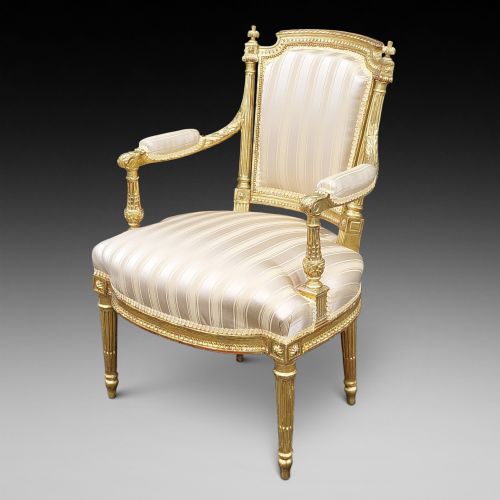
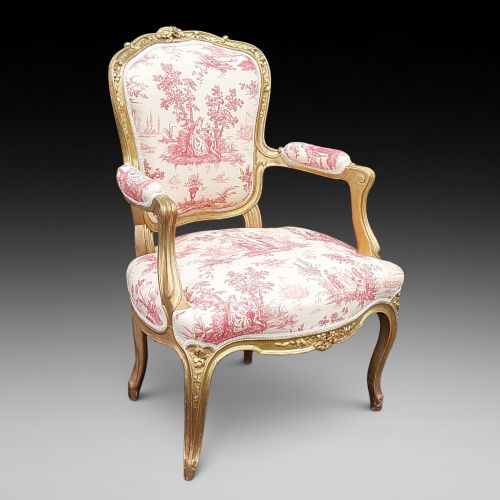
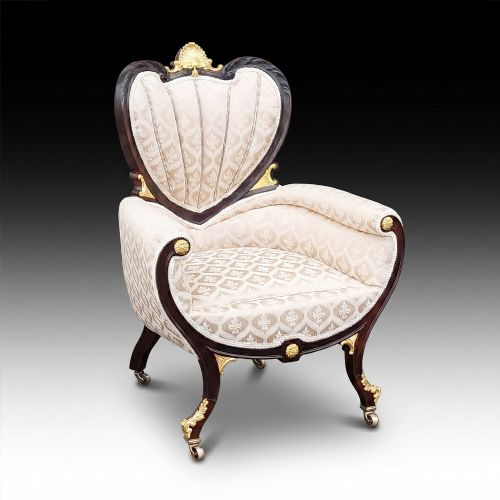
Antique gilt fauteuils are open-armed upholstered seats originating primarily from French and Italian traditions across the eighteenth and nineteenth centuries. These items appear in forms such as salon suites, desk chairs, and individual armchairs styled in Louis XVI, Empire, and Rococo revivals.
How they were made
Craftsmen shaped these frames from woods including beech, mahogany, and walnut before applying a delicate layer of gold leaf or paint and parcel gilt. Joinery relied on traditional carved woodwork techniques rather than modern assembly methods.
Upholstery involved securing fabrics like silk, velvet, and tapestry over supportive interior padding, sometimes incorporating brass or ormolu mounts to accent the structural woodwork.
Several diminutive chairs in the selection were built specifically as children's salon seats, proving that miniature aristocracy required proper posture too.
What varies in quality
The sophistication of the hand-carved wooden ornament dictates much of the distinction between standard examples and exceptional items. Crisp detailing in the acanthus leaves, fluting, or figurative motifs reveals the hand of a skilled artisan.
The integrity of the original gilt surface and the quality of subsequent gilding applications define the visual impact of the frame. Similarly, the historical appropriateness of the textile upholstery affects the overall coherence of the piece.
Jacob Desmalter·Blaise Maucuy·Holland and Sons
The Antique Gilt Fauteuils Glossary
- Giltwood
- Timber coated with a thin layer of gold leaf or gold powder applied over a prepared gesso ground. This finish provides the characteristic metallic sheen seen on period frames.
- Ormolu
- Cast bronze mounted details finished with an applied gold amalgam. These metallic ornaments highlight the structural lines of Empire and revival pieces.
- Rococo
- A decorative style characterised by asymmetric scrolls, shell motifs, and natural curves. This aesthetic heavily influences eighteenth-century Italian and French seating designs.
- Regency
- A period of British design spanning the early nineteenth century influenced by classical Greek and Roman forms. Chairs from this era often incorporate painted and gilded finishes.
Antique Gilt Fauteuils: Frequently Asked Questions
What is a fauteuil?
A fauteuil is an upholstered armchair featuring open wooden arms. The design originated in France to accommodate voluminous period fashion.
These seats served primarily in formal salons and receiving rooms rather than private studies.
How do I style these chairs?
These chairs function well as focal points in traditional drawing rooms or libraries. They pair effectively with antique wooden tables and contemporary minimalist decor alike.
Placing a single armchair or a matched pair creates an intentional seating zone within a larger living space.
How do I identify Louis XVI style?
Louis XVI pieces exhibit neoclassical restraint through straight tapered legs, fluted columns, and geometric frames. Carved motifs often include ribbons, pearls, and laurel leaves.
This aesthetic contrasts sharply with the earlier curved asymmetry of Rococo designs.
Are these chairs comfortable for daily use?
While historic seats offer supportive seating, their upright postures and firm period padding differ from modern loungers. They suit formal sitting areas and reading corners.
Many examples feature newly upholstered silk or velvet surfaces suited for regular domestic interaction.