



Neoclassical Giltwood Chair
A neoclassical giltwood chair brings architectural poise and gilded brilliance to a room, offering both seating and monumental presence.
Neoclassical Giltwood Chair
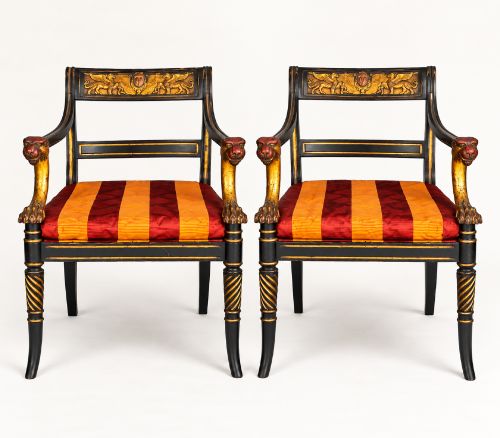
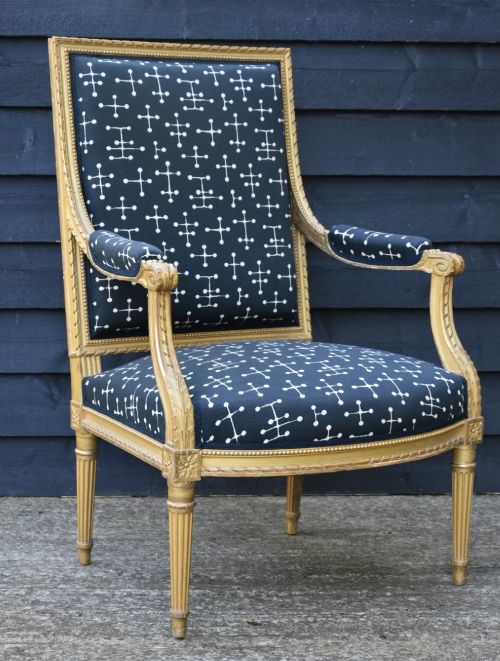
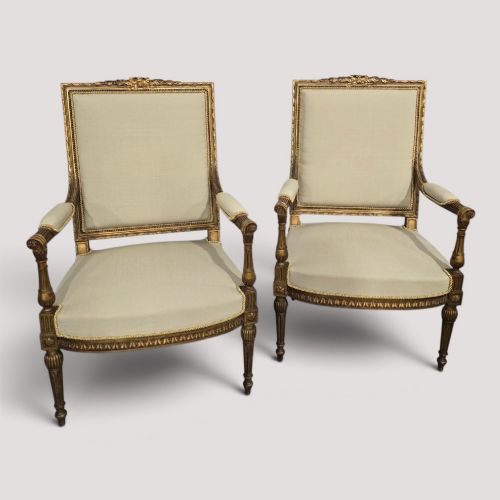
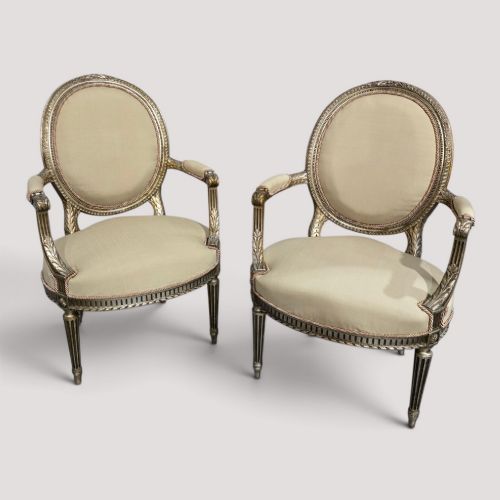
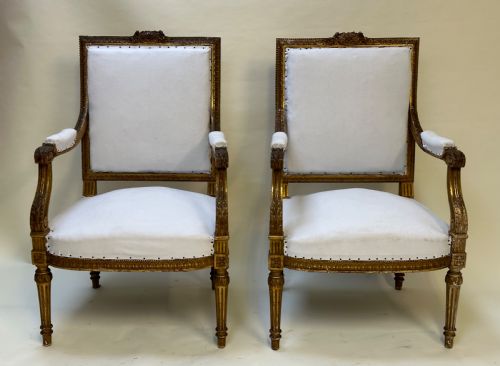
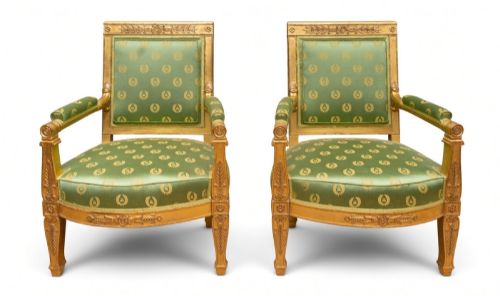
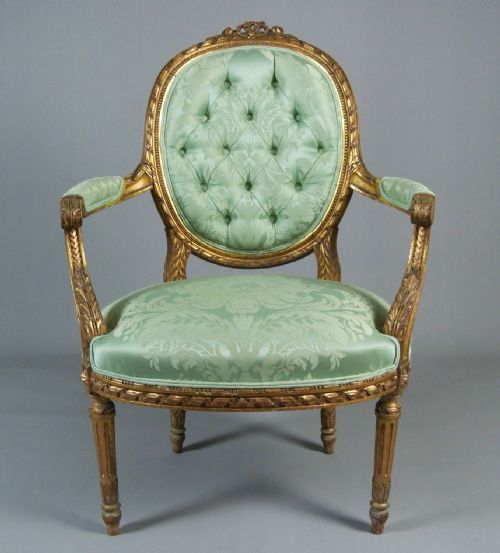
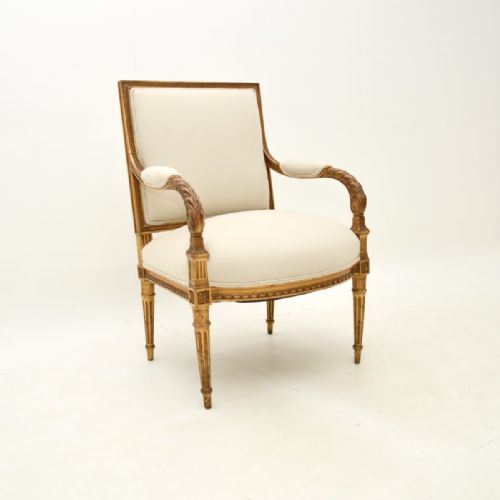
A neoclassical giltwood chair embodies the structured restraint and classical ornamentation of the late eighteenth and nineteenth centuries, drawing on antique motifs. When you search for a neoclassical giltwood chair, you encounter forms ranging from formal dining seats to grand armchairs and salon chairs.
The selections span English, French, Italian, and Swedish origins, encompassing George III pieces, Regency examples, and later revivals. Armchairs, dining chairs, and salon chairs dominate the offerings, often appearing as pairs or matched suites.
Materials and construction
Makers shaped timber into precise frames before applying thin sheets of gold leaf to the prepared surface, creating the characteristic giltwood finish. Carved wooden details define the structural members, providing the rigid support necessary for gilded ornamentation.
Upholstery relies on traditional textiles such as silk, silk damask, fabric, and velvet to finish the seats and backs. These soft materials contrast with the hard, metallic gleam of the gilded wood frames.
Neoclassical Giltwood Chair Retail Price Guide 2026
Typical asking prices for neoclassical giltwood chair among the pieces listed under this phrase on Sellingantiques today, from the lower quarter to the upper quarter. They describe what is for sale here now, not the wider market.
One exceptional suite includes forty-two matching dining chairs, ensuring no royal guest ever stood.
Gradations of quality
The finesse of the carved wooden ornament dictates the distinction between standard production and exceptional work. Crisp leaf-carving and balanced proportions elevate certain pieces above simpler, mass-produced revival counterparts.
The integrity of the original gilt surface and the quality of the textile upholstery determine the overall preservation grade. Intact gold leaf and period-appropriate silk damask enhance the visual impact of the seating.
Jacob-Desmalter·Thomas Chippendale
The Neoclassical Giltwood Chair Glossary
- Giltwood
- Wood that has been coated with thin gold leaf. This technique creates a luminous, reflective surface characteristic of formal seating.
- Fauteuil
- An open-armed upholstered armchair originating in France. The wooden armrests typically feature padded elbows.
- Silk damask
- A reversible patterned fabric woven from silk. It provides a luxurious upholstery surface for formal salon and dining chairs.
- Curule stool
- An ancient Roman chair form featuring crossed legs. This classical shape appears in nineteenth-century revival seating.
- Regency
- A British design period spanning the early nineteenth century. It is known for drawing heavily on classical Greek and Roman archetypes.
Neoclassical Giltwood Chair: Frequently Asked Questions
How do I clean giltwood?
Dust the gilded frame gently with a soft, dry brush to prevent accumulation. Avoid all liquid cleaners and commercial polishes, as moisture can lift the delicate gold leaf from the wood beneath.
Take care not to press hard against the carved details when dusting. Professional conservation is required if the gilding begins to flake or separate.
Where should I place these chairs?
Position these chairs in formal reception rooms, drawing rooms, or hallways where their decorative frames can be appreciated. They serve well as occasional seating rather than heavy daily loungers.
Keep them away from direct sunlight and heat sources to protect both the fragile gold leaf and the delicate silk or velvet textiles.
Can I use them at a dining table?
Dining chairs within this style are designed for formal meals and structured seating. Ensure the seat height and upholstery clearance suit your specific table dimensions before daily use.
Limit heavy daily wear to preserve the antique wooden frames and period upholstery fabrics from premature fatigue.
How do I date a giltwood chair?
Examine the timber species beneath the gilding, the tool marks left by the carver, and the construction methods used in the frame joints. Eighteenth-century pieces typically show hand-cut joinery and deep, crisp carving.
Compare the decorative motifs, such as fluted legs or neoclassical urns, against known period styles. Revival pieces from later eras often mimic these forms with standardised machine-assisted cuts.