

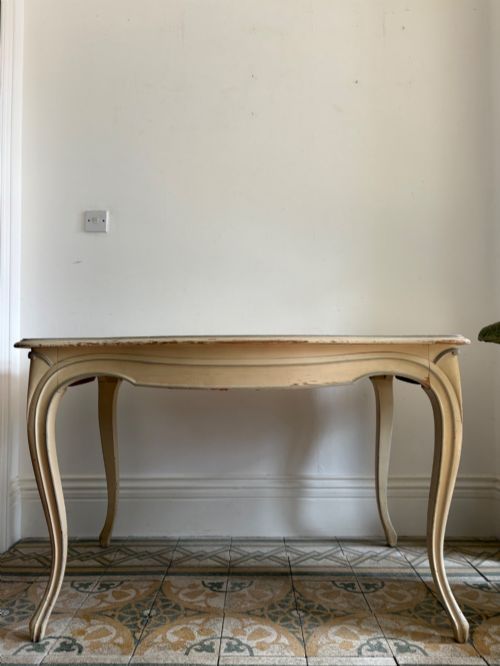
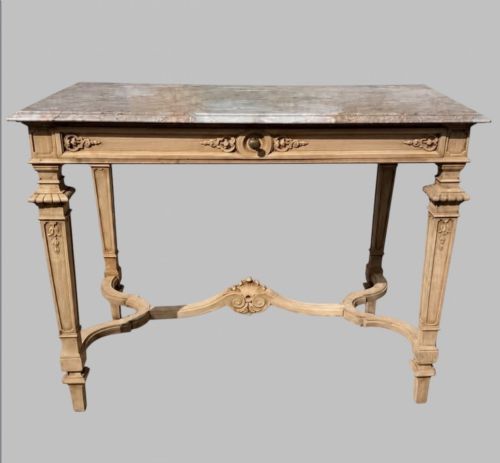
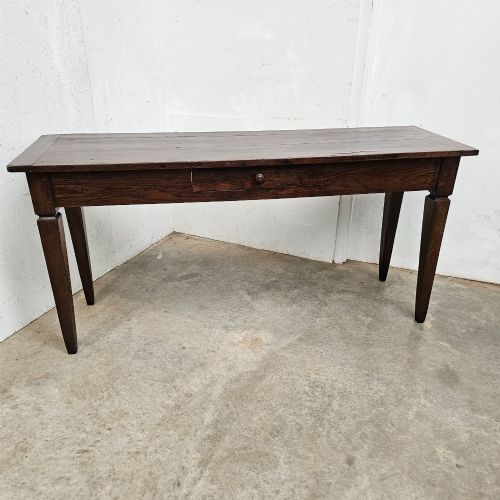

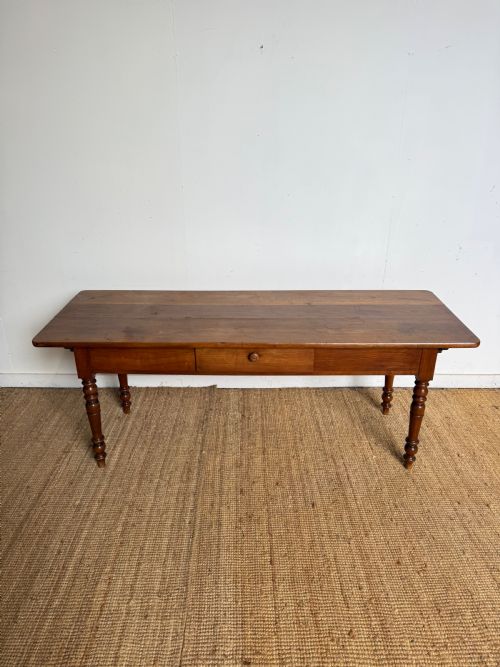


French Provincial Sofa Table
A french provincial sofa table brings rustic elegance to a room, offering practical surface space with distinct regional charm.
French Provincial Sofa Table
A french provincial sofa table encompasses various console, side, serving, and centre tables originating from or inspired by regional French traditions. These pieces often serve multifunctional roles as hallway consoles, serving surfaces, or lamp tables behind seating.
The selection on this page relies heavily on forms spanning the nineteenth century through the early twentieth century, including Edwardian examples. Buyers most frequently encounter wooden console and serving tables displaying straightforward regional utility.
Regional styles visible in the evidence range from classic French Provincial and French Country to Scandinavian Country and Louis XVI Revival variations. Each style brings subtle differences in silhouette and decorative restraint to the home.
Materials and Construction
Construction relies on solid timbers such as oak, cherrywood, pine, walnut, and burr elm, often shaped into sturdy trestle, console, or pedestal formats. Joinery reflects traditional workshop methods designed for daily utility in domestic and service spaces.
Surfaces frequently feature painted finishes, cream paint, or bleached wood treatments alongside functional additions like brass hardware or inset suede tops. Certain pieces incorporate marble tops, adding a durable and refined working surface to the timber base.
French Provincial Sofa Table Retail Price Guide 2026
Typical asking prices for french provincial sofa table among the pieces listed under this phrase on Sellingantiques today, from the lower quarter to the upper quarter. They describe what is for sale here now, not the wider market.
Periods represented span the nineteenth century, Edwardian era, and the 1920s and 1930s.
Understanding Quality Variations
Quality in these tables depends on the selection of timber and the integrity of the regional construction. Dense hardwoods like cherrywood and oak command attention for their durability and grain character compared to simpler pine alternatives.
The execution of painted finishes and decorative details such as cabriole legs or brass fittings dictates the visual refinement of a piece. Better examples show careful integration of materials, balancing rustic utility with balanced proportions.
The French Provincial Sofa Table Glossary
- Console Table
- A table designed to stand against a wall, frequently featuring slim proportions suitable for hallways or living rooms. These pieces often anchor a mirror or display decorative objects.
- Serving Table
- A utility surface traditionally used in dining areas for presenting food or holding dishes. In modern settings, they function effectively as sideboards or console surfaces.
- Cabriole Leg
- A furniture leg that curves outward and then tapers inward, mimicking the shape of an animal's leg. This form is common in revival and refined provincial designs.
- Trestle Table
- A table structure consisting of two or more support frames connected by a horizontal beam. This design provides robust stability and ample legroom.
- Burr Elm
- Wood harvested from the growth excrescences of elm trees, prized for its swirling grain patterns. It adds distinct decorative movement to small tabletops.
- Potboard
- A lower shelf integrated into the base of a table or dresser, originally intended for storing pots and kitchen utensils. It provides substantial structural bracing and lower display space.
French Provincial Sofa Table: Frequently Asked Questions
What is a french provincial sofa table used for?
These tables provide a convenient surface for lamps, books, and decorative objects behind a sofa or against a wall. Their narrow proportions allow them to fit easily into hallways and reception rooms without obstructing walkways.
Historically, similar console and serving tables functioned as practical work surfaces in domestic interiors. Today, they bring both storage utility and regional character to living spaces.
How do I date a french provincial sofa table?
Dating relies on examining the timber species, construction joinery, and surface treatments visible on the piece. Pieces from the nineteenth century often display hand-finished timber surfaces and traditional pegged joints.
Later pieces from the early twentieth century or the Edwardian period may incorporate specific painted finishes or manufactured hardware. Comparing the structural form to established period styles helps narrow down the decade of production.
What woods are used in these tables?
Makers utilised a variety of regional timbers, including oak, cherrywood, pine, walnut, and burr elm. Hardwoods like oak and cherry provide robust structural integrity for daily use.
Softer woods or secondary timbers like pine frequently appear beneath painted or bleached finishes. Burr elm is selected specifically for its decorative grain on smaller tabletops.
Are these tables painted or natural wood?
The inventory includes both natural timber surfaces and painted finishes, such as cream paint and bleached wood treatments. Painted finishes often reflect regional decorating traditions aimed at brightening domestic interiors.
Natural wood tables highlight the grain of oak, walnut, or cherrywood. The choice of finish typically depends on the specific regional style and period of the piece.