




French Provincial Serving Table
A french provincial serving table brings robust regional utility into a modern room, offering generous timber surfaces shaped by provincial makers.
French Provincial Serving Table
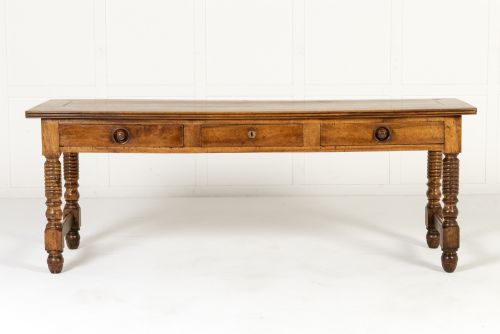
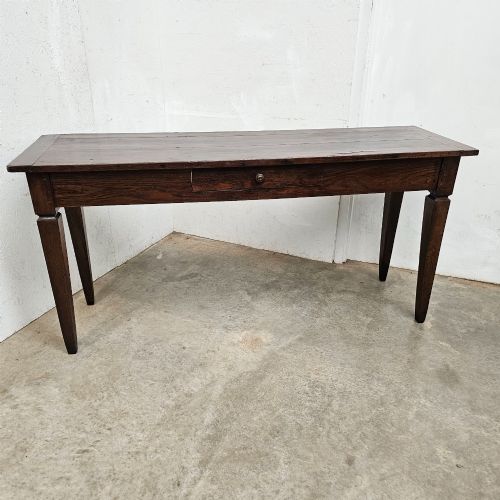
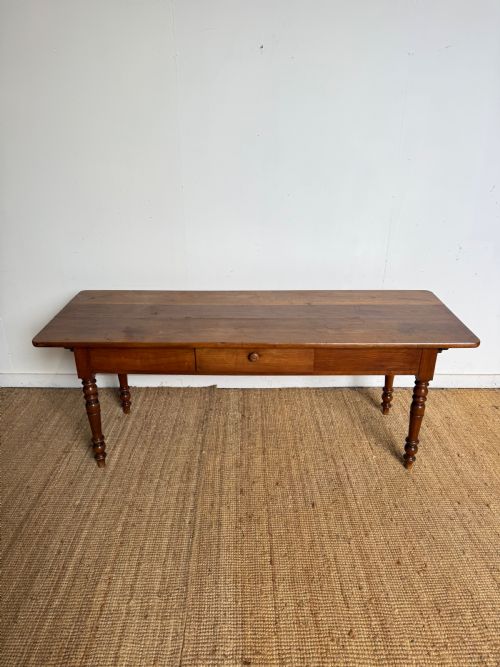
A french provincial serving table serves as a sturdy piece of furniture designed for practical use in domestic spaces, often appearing alongside console tables, work tables, and drapers tables. These items emerge primarily from nineteenth century workshops, capturing the functional needs of rural households.
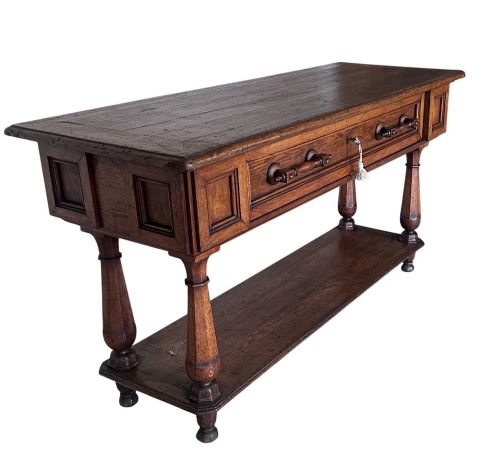
The versions most commonly met on this page span oak, cherrywood, and pine constructions, sometimes bearing traces of paint or featuring pot shelves and drawers. Makers shaped these items to function as servers, sideboards, or console tables depending on the room's requirements.
Regional variations include pieces originating from specific areas like Alsace, as well as forms categorised under French country and Scandinavian country styles. Such tables balance rustic simplicity with the solid proportions characteristic of provincial cabinetmaking.
How they were made
Provincial joiners relied on regional timbers, most frequently oak, cherrywood, fruitwood, and pine, selecting them for durability and local availability. These woods were often left in their natural state or finished with paint to protect the surface.
Metal hardware such as brass handles and iron fittings appeared on drawers and structural joints, adding both functional strength and subtle contrast to the timber. Construction techniques prioritised straightforward joinery suited to daily utility rather than elaborate court ornamentation.
French Provincial Serving Table Retail Price Guide 2026
Typical asking prices for french provincial serving table among the pieces listed under this phrase on Sellingantiques today, from the lower quarter to the upper quarter. They describe what is for sale here now, not the wider market.
Several tables retain working drawers that still smell faintly of old timber and generations of dried lavender.
What varies in quality
The grade of timber and the integrity of the original construction distinguish one piece from another, particularly in how the drawers and two-tier pot shelves meet the main frame. Heavier, dense hardwoods like oak and cherrywood generally display superior structural endurance compared to lighter pine variants.
The presence of untouched regional surfaces, whether bleached oak or weathered paintwork, determines the character of the piece. Subtle details in the turning of legs and the hand-cut joinery separate standard utility items from more considered provincial work.
The French Provincial Serving Table Glossary
- Pot-shelf
- A lower tier integrated into a table or server, originally intended for storing heavy pots and culinary vessels. This feature lifts items off the floor while adding rigidity to the legs.
- Drapers table
- A long, utilitarian table traditionally used for measuring and displaying textiles, characterised by a generous rectangular top and sturdy underframing. They provide expansive surface area for modern domestic use.
- Cherrywood
- A dense, fine-grained timber favored by regional makers for its warm tone and smooth finish. It ages to a deep patina over decades of use.
- Console table
- A wall-mounted or freestanding table designed to stand against a vertical surface, often sharing proportions with narrow servers. They occupy minimal floor space while offering functional display space.
French Provincial Serving Table: Frequently Asked Questions
How were these tables used originally?
In provincial households, they functioned as work surfaces, sideboards, and utility tables for daily domestic tasks.
Their robust timber construction allowed them to handle heavy kitchen and workshop demands without delicate ornamentation.
How do I identify the wood type?
Examining the grain pattern, weight, and colour helps distinguish between dense hardwoods like oak and cherrywood and softer alternatives like pine.
Some pieces also feature painted finishes or bleached surfaces that alter the natural appearance of the timber.
Are pot-shelf serving tables common?
Pot-shelf variants appear regularly among nineteenth-century listings, offering an extra lower tier for storage.
This shelf connects the legs near the base, providing both visual weight and additional structural stability.
How do I style a serving table at home?
These tables fit easily into dining rooms, kitchens, or hallways as sideboards, console tables, or display surfaces.
Their neutral timber tones and rustic proportions complement both traditional and contemporary interiors.