


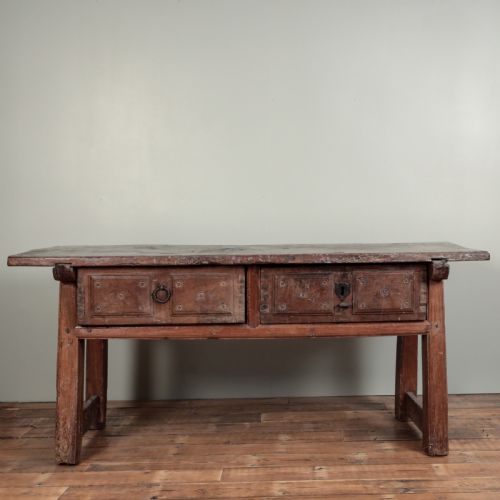


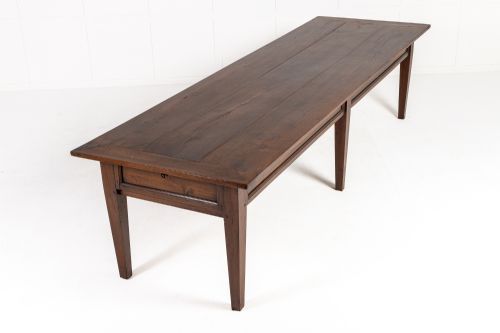


Rustic Walnut Trestle Table
A rustic walnut trestle table brings sturdy timber and centuries of provincial character straight into your dining room.
Rustic Walnut Trestle Table
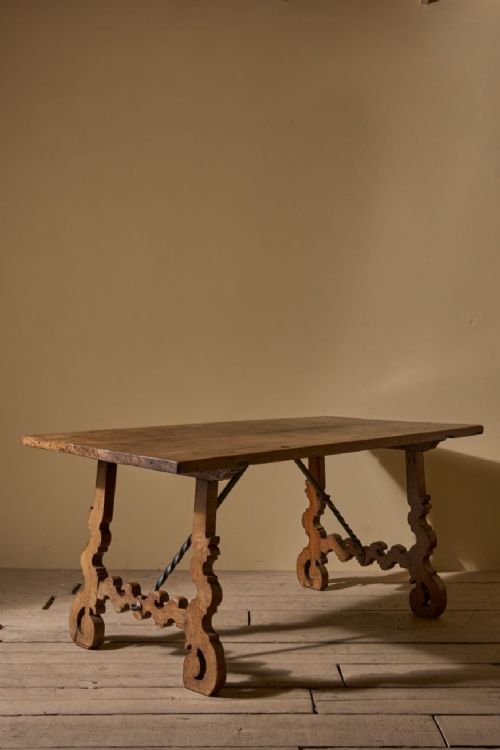
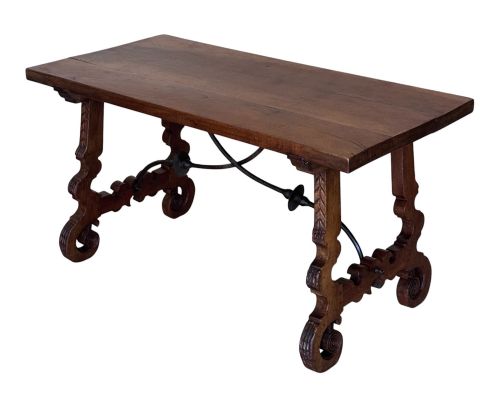
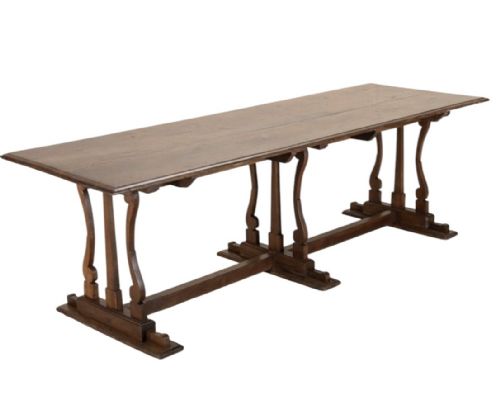
A rustic walnut trestle table is a substantial timber surface supported by end uprights, appearing across dining rooms, kitchens, and studies in various formats. You will most frequently meet large dining tables and refectory styles rooted in 18th century and 19th century provincial traditions, alongside earlier 17th century Spanish examples.
The selection ranges widely in form beyond simple dining pieces, including console tables, serving tables, centre tables, desks, side tables, and coffee tables. Continental provincial and Spanish Baroque aesthetics dominate the selection, bringing heavy timber construction and simple lines into domestic spaces.
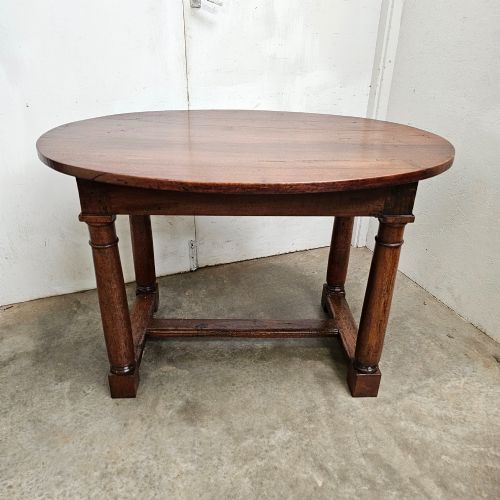
The timber itself defines the visual weight of these pieces, often paired with wrought iron or oak elements depending on the specific regional origin. Whether you select an oval table, a wide dining board, or an H stretcher format, each piece carries the marks of utilitarian furniture built for heavy daily use.
How they were made
Makers built these tables primarily from solid walnut and fruitwood timbers, selecting dense woods that could withstand generations of hard use. Wrought iron and standard iron often reinforced the structural framework, appearing in stretchers and braces to stabilise the long trestle spans.
Carpenters relied on traditional joinery methods to lock the heavy timber tops onto sturdy trestle bases, accommodating the natural movement of large wooden boards over time. Secondary timbers like oak occasionally appear in internal frames or supports, matching the utilitarian demands of farmhouse and monastery workshops.
Walnut and wrought iron dominate the material selection across these listings, appearing alongside oak and fruitwood in 17th and 18th century pieces.
What varies in quality
Quality rests in the depth of the timber grain and the integrity of the original structural joinery, separating honest period construction from later revivals. Walnut surfaces that display rich patination through decades of friction outshine boards that have been stripped back to raw timber.
The sophistication of the trestle bracing and the restraint of the provincial carving dictate the visual success of the piece. Early examples from the 17th century carry different structural expectations compared to later 19th century interpretations or 1920s revival items.
The Rustic Walnut Trestle Table Glossary
- Trestle table
- A table consisting of two or more supports connected by a horizontal beam under a flat top. This form distributes weight efficiently across long spans.
- Refectory table
- A long narrow dining table historically used in monasteries and large households. These surfaces accommodate communal dining and heavy daily gatherings.
- H stretcher
- A horizontal timber or iron brace shaped like the letter H that connects the legs of a table. This component adds lateral stability to the trestle base.
- Fruitwood
- Dense timber harvested from fruit-bearing trees such as pear or cherry, frequently utilised alongside walnut in provincial cabinetmaking. It offers a tight grain and warm tone.
- Spanish Baroque
- A decorative style from the 17th century featuring dramatic forms, heavy proportions, and restrained ornament. It heavily influences Iberian tables of the period.
Rustic Walnut Trestle Table: Frequently Asked Questions
How do I care for a walnut table top?
Clean the surface regularly with a dry or barely damp cloth to remove dust without stripping the natural wax finish. Avoid placing the timber near direct heat sources to prevent the heavy boards from splitting.
Apply a traditional beeswax polish occasionally to nourish the walnut grain and maintain its subtle sheen. Protect the vintage timber from sharp impacts and standing liquids during daily use.
Where should I place a trestle table?
Position the table in a dining room or spacious kitchen where the trestle base has plenty of clearance for seating along the sides. Keep the timber away from persistent direct sunlight to prevent uneven fading across the large walnut top.
Ensure the room has stable humidity levels so the solid wood and iron components remain sound. The substantial form works well centred in open spaces rather than pushed tight against a wall.
How do I distinguish 17th century tables?
Examine the timber boards for deep hand-planed marks and the construction joints for traditional pegging methods. Earlier pieces often display heavier proportions and simpler, more utilitarian bracing than later revival items.
Look closely at the wear patterns around the trestle feet and stretcher beams, which accumulate organic friction over centuries. Comparing the specific ironwork and wood density helps clarify the manufacturing era.
What is the difference between provincial and baroque styles?
Provincial tables focus on sturdy, practical construction intended for regional homes, featuring minimal ornamentation and honest utility. They rely on the natural grain of walnut or fruitwood for visual interest.
Baroque pieces incorporate more formal architectural lines and heavier proportions designed to project authority and status. This style leans into dramatic Spanish traditions rather than simple rural farmhouse aesthetics.