




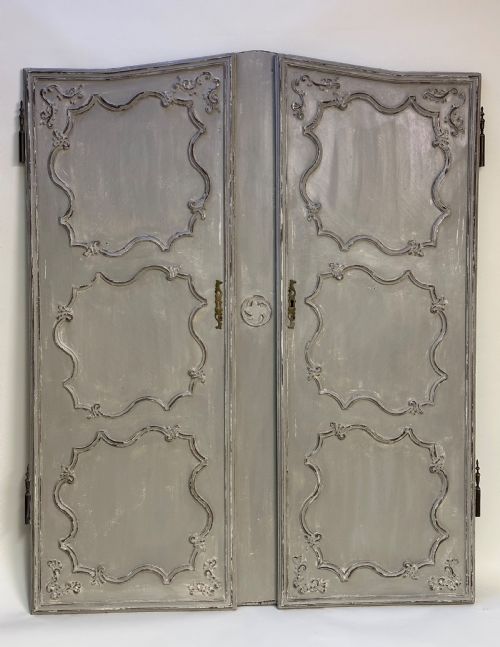


French Painted Panel Doors
These French painted panel doors bring genuine architectural character to a room, offering historic timber and weathered finishes that transform an ordinary interior.
French Painted Panel Doors
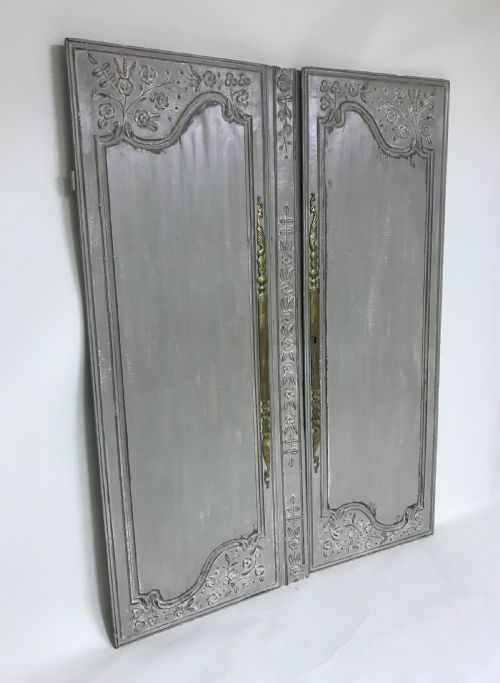
When you search for French painted panel doors, you encounter architectural salvage and fitted elements spanning the eighteenth century through to the Art Deco period. These pieces encompass cabinet doors, armoire panels, over-doors, and full pairs of room dividers salvaged from period properties.
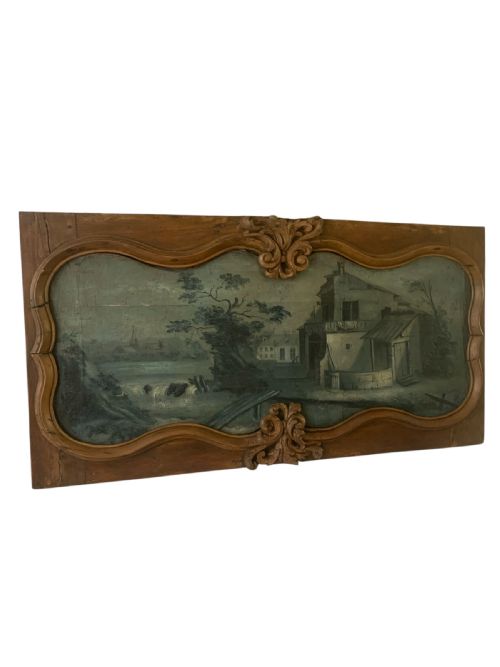
Many items blur the line between functional joinery and decorative art, including wall reliefs and theatrical faux doorways. Buyers select these elements to integrate authentic continental craftsmanship into modern interior schemes.
Materials and construction
Joiners relied on solid hardwoods such as walnut and cherrywood, shaping timber by hand to create durable panel configurations. Traditional mortise and tenon joinery ensured structural stability across large pairs of doors and architectural screens.
Surfaces received layers of hand-applied paint, sometimes accented with gold leaf or detailed with carved wood motifs. Iron and brass hardware, including hinges and latches, completed the construction of these functional architectural elements.
French Painted Panel Doors Retail Price Guide 2026
Typical asking prices for french painted panel doors among the pieces listed under this phrase on Sellingantiques today, from the lower quarter to the upper quarter. They describe what is for sale here now, not the wider market.
Listings span from the mid-eighteenth century to the Art Deco period of nineteen twenty, featuring wood, iron, and paint.
Indicators of quality
Superior examples display deep, hand-carved detailing that retains crisp edges beneath layers of historic paint. The integration of original iron or bronze hardware elevates a piece beyond standard joinery.
The integrity of the timber foundation dictates the longevity of the panel, with dense hardwoods resisting warping over centuries. Depth of character in the painted surface, developed through natural ageing, distinguishes finer decorative panels from simpler utility doors.
The French Painted Panel Doors Glossary
- Architectural salvage
- Building components rescued from demolition or renovation for reuse in interior design. This salvage preserves historic craftsmanship.
- Over-door
- A decorative panel or painting positioned directly above a doorway. These elements unify high-ceilinged rooms.
- French Provincial
- A style reflecting the rustic, practical furniture of eighteenth-century French rural regions. It values simple utility over ornate court aesthetics.
- Louis XVI
- A neoclassical style defined by straight lines, symmetry, and restrained classical ornamentation. This aesthetic dominated late eighteenth-century French design.
French Painted Panel Doors: Frequently Asked Questions
How do I hang antique doors?
Hanging heavy timber doors requires robust modern framing and heavy-duty hinges capable of supporting substantial weight. Professional installation ensures the panels hang true despite centuries of minor timber movement.
Historic wood can swell with humidity changes, so leaving precise clearance around the perimeter prevents binding. Matching the existing iron or brass hardware maintains the visual integrity of the installation.
How do I clean painted wood?
Dust surfaces gently with a soft, dry cloth to prevent abrasion of fragile historic paint layers. Avoid harsh chemical cleaners or excess moisture that could lift original finishes.
Conservators recommend microfibre cloths and minimal handling to preserve delicate gold leaf and aged patinas. Periodic checks ensure the underlying timber remains stable in changing indoor climates.
What defines an eighteenth-century panel?
Eighteenth-century panels exhibit hand-tooled joinery and dense hardwoods like walnut shaped by traditional hand planes. The paint layers on these pieces show significant natural ageing and craquelure.
Proportions typically reflect classical architectural ratios popular during the period. Surviving examples often display the minor irregularities characteristic of pre-industrial workshop production.