

French Oval Mirror
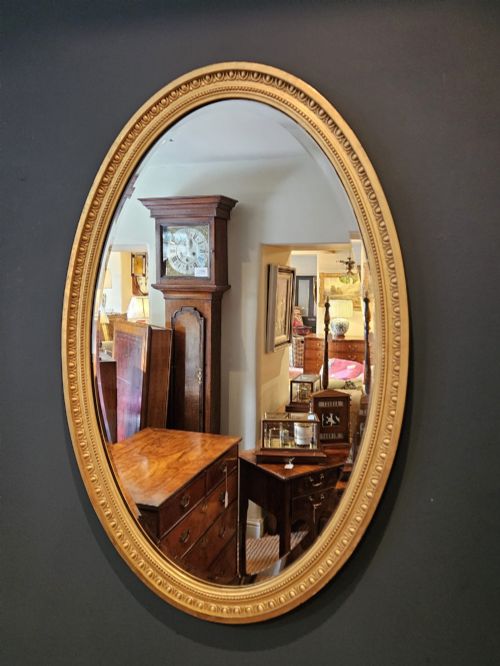
A french oval mirror brings classical symmetry and reflective depth to a room, framing light within ornate gilded curves.
French Oval Mirror
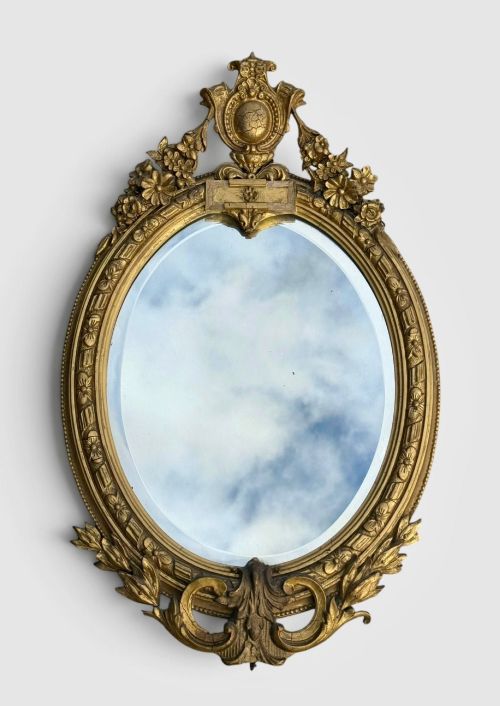
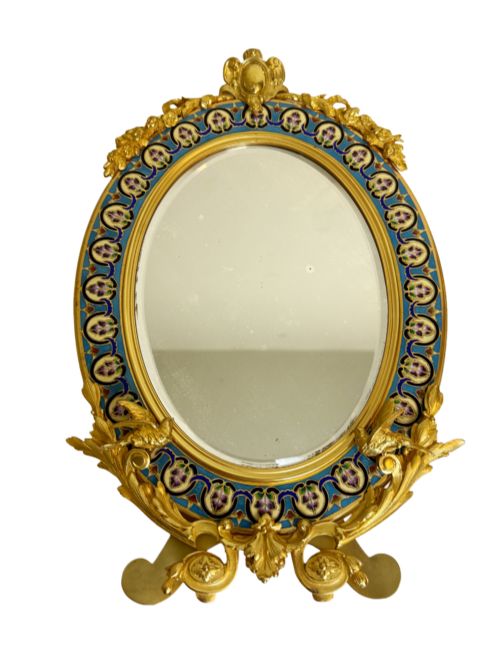
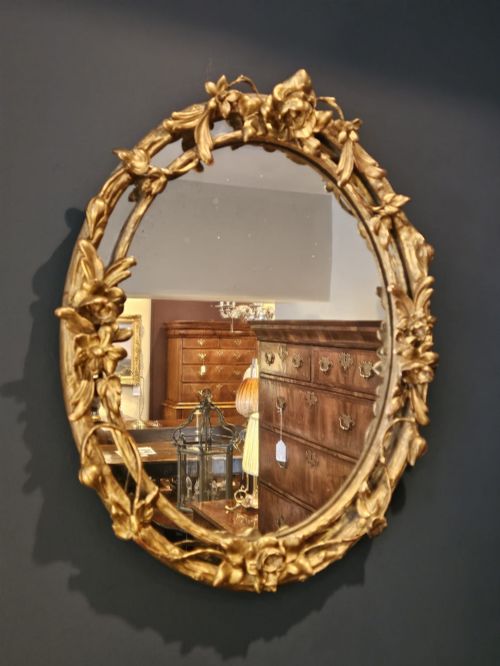
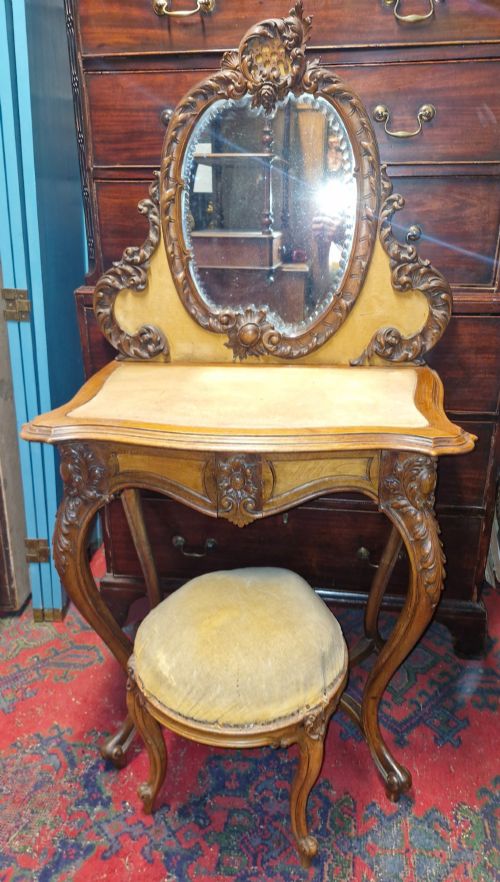
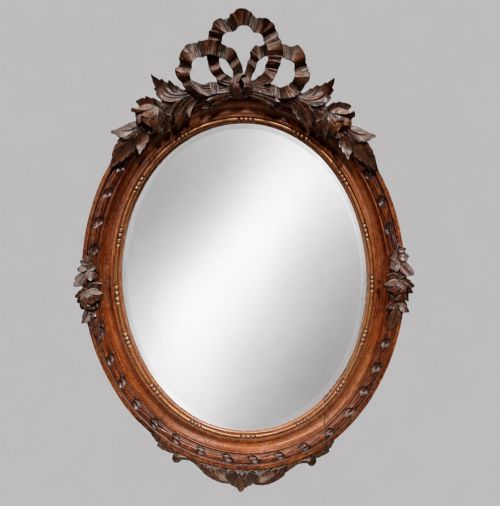
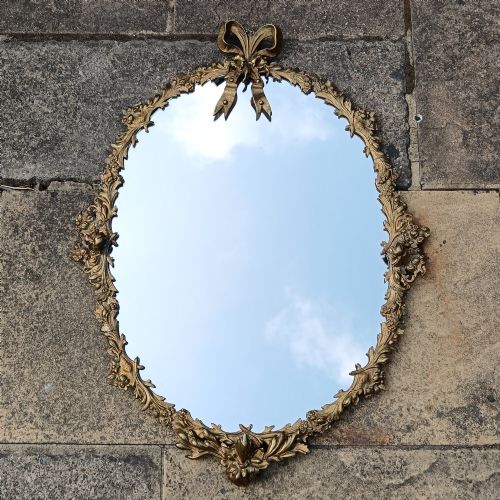
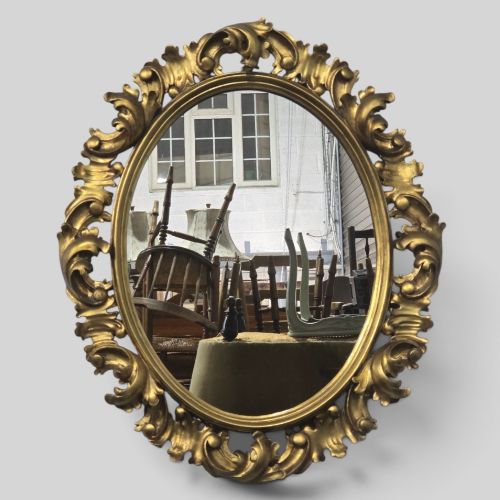
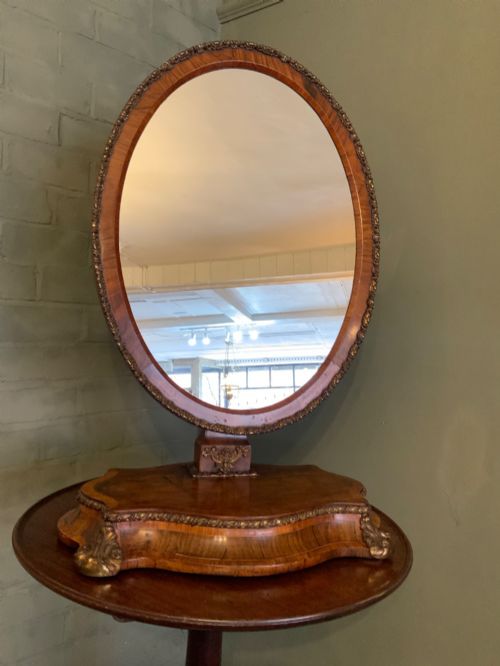
A french oval mirror functions primarily as a decorative wall hanging or a functional dressing table accessory. These pieces span the eighteenth century through to the early twentieth century, incorporating revival styles such as Rococo and Louis XVI.
The domestic selection centres heavily upon wall-mounted formats alongside smaller table and toilet mirrors. Surviving examples demonstrate the enduring appeal of oval frames within both formal reception rooms and private chambers.
Materials and construction methods
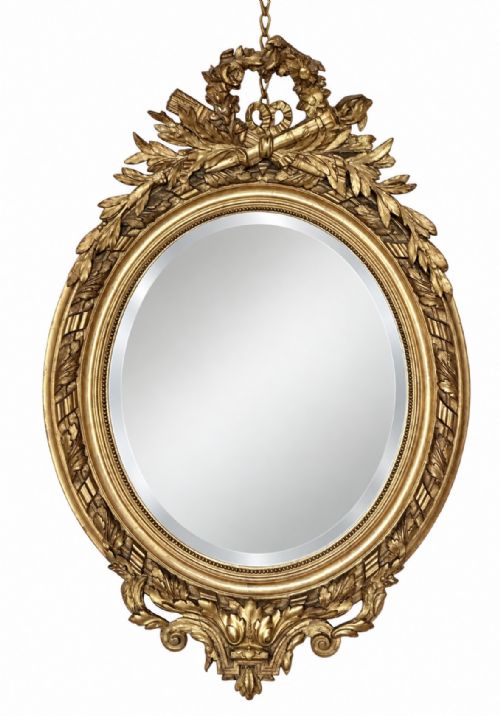
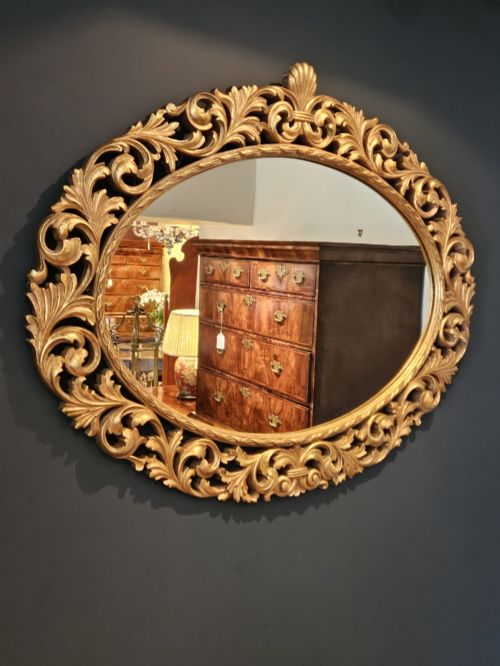
Frames rely on carved timber, gesso, and plaster foundations built up to receive gold leaf, paint, or parcel-gilt finishes. Artisans applied thin sheets of gold leaf over prepared gesso layers or utilised bronze and brass mounts to secure decorative flourishes.
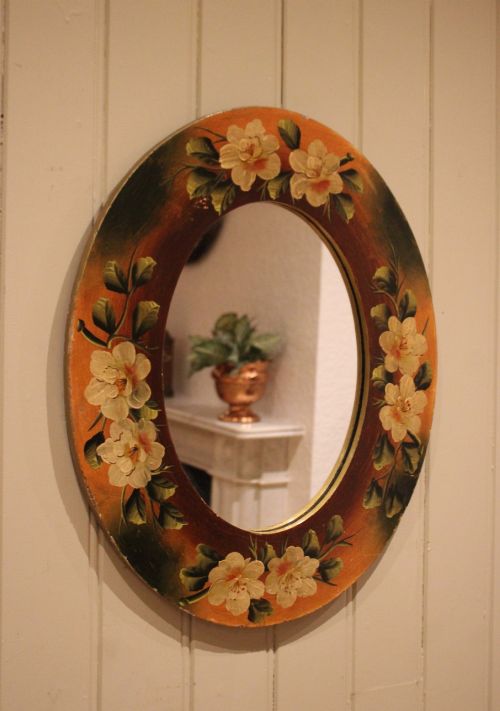
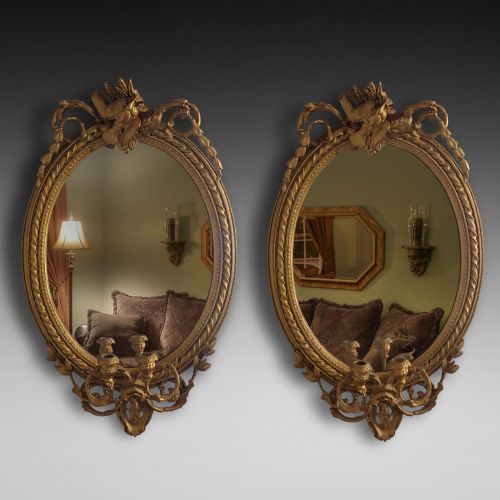
Glazing involves mercury plate or standard mirror glass cut to fit curved frames, occasionally featuring original backing plates or hand-painted floral details. Structural stability depends on pegged wooden joints and cast metal armatures where girandole arms or display brackets are attached.
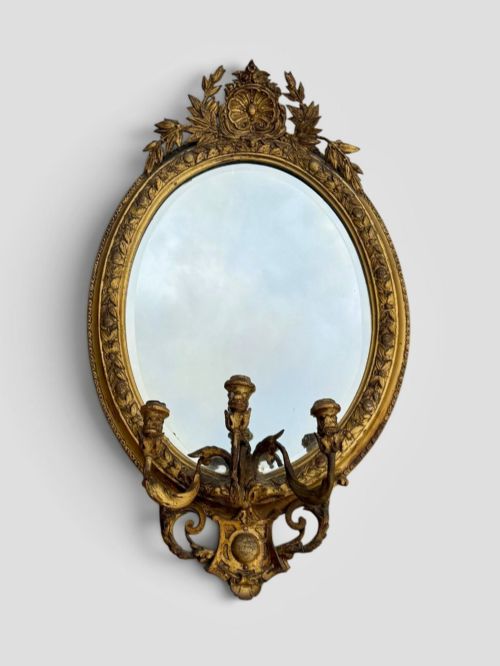
Certain surviving mirrors retain miniature display brackets designed purely to hold delicate porcelain figurines.
Distinctions in craftsmanship
The crispness of carved ornamentation and the depth of the gesso relief distinguish finer workshop output from simpler commercial production. Superior examples exhibit hand-chased gilt bronze mounts, finely modelled floral or crest details, and well-preserved original gilding.
Glass preservation and frame integrity dictate the overall calibre of a piece. Original mercury plates showing authentic ageing differ significantly from later replacement glass, while tightly joined timber frames reflect superior initial assembly.
The French Oval Mirror Glossary
- Giltwood
- Timber coated with a thin layer of gold leaf over a prepared base. This finish provides the characteristic warm metallic gleam seen on period frames.
- Gesso
- A plaster-like mixture applied to wood frames to create a smooth surface for carving and gilding. It allows for intricate relief decoration.
- Girandole
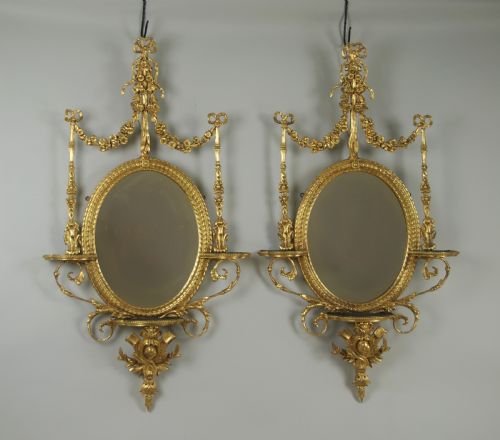
- A wall mirror featuring attached candle sconces. The reflective glass multiplies the candlelight within a room.
- Mercury plate
- An early mirror glass manufacturing process utilising a tin and mercury amalgam. It produces a characteristic mottled reflective surface.
- Parcel-gilt
- Woodwork where only specific carved details are highlighted with gold leaf, leaving the contrasting painted or stained timber exposed beneath.
French Oval Mirror: Frequently Asked Questions
Where should I hang an oval wall mirror?
These mirrors suit spaces requiring vertical emphasis, such as above a mantelpiece, a console table, or within a hallway.
Their curved silhouette softens the linear geometry of standard doorways and panelling.
How do I care for antique gilt surfaces?
Dust frames gently with a dry, soft brush to prevent damage to delicate gesso and gold leaf. Avoid liquid cleaning solutions entirely.
Moisture can penetrate porous plaster grounds and lift the historic finish from the timber base.
What is a girandole mirror?
A girandole incorporates integrated candle arms projecting from the lower frame. Historically, this design doubled the ambient illumination in dimly lit interiors.
In modern settings, they serve as striking focal points that combine lighting hardware with reflective art.
How can I identify original mirror glass?
Original mirror plates often display subtle foxing, minor dark spots, and a slightly uneven reflection caused by historical manufacturing techniques. Mercury plates show a distinct shimmering depth compared to modern float glass.
Replacement glass typically appears exceptionally clear and lacks the characteristic surface ripples of nineteenth-century production.