

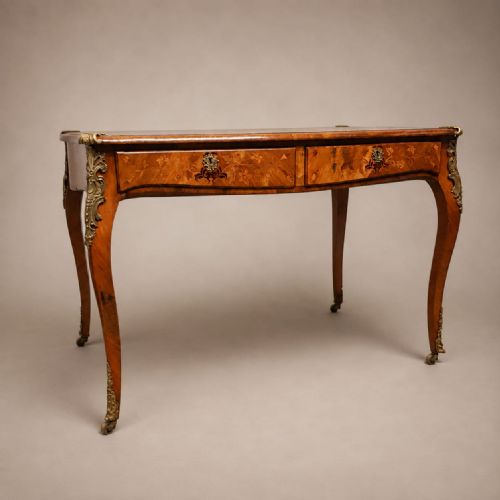
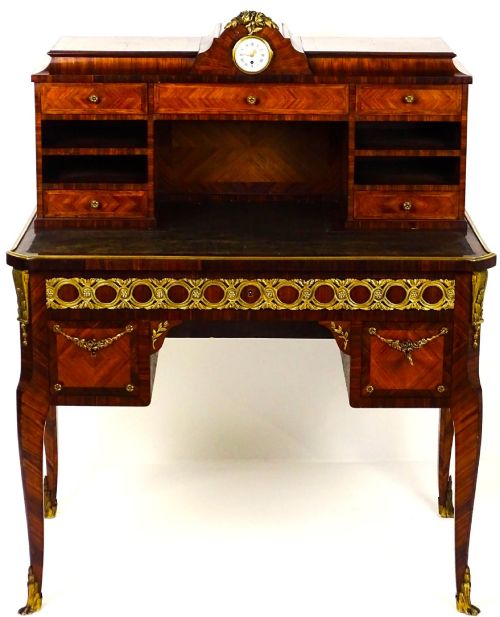
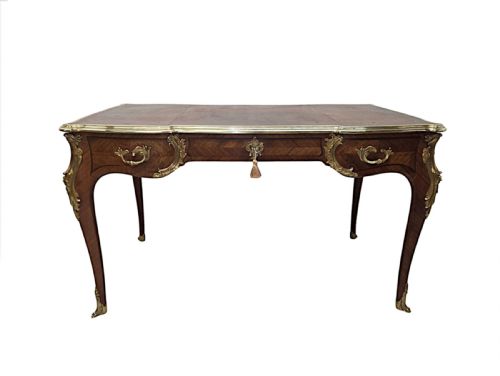
French Ormolu Writing Table
A French ormolu writing table brings elaborate nineteenth-century craftsmanship and gilded mounts to a study or salon.
French Ormolu Writing Table
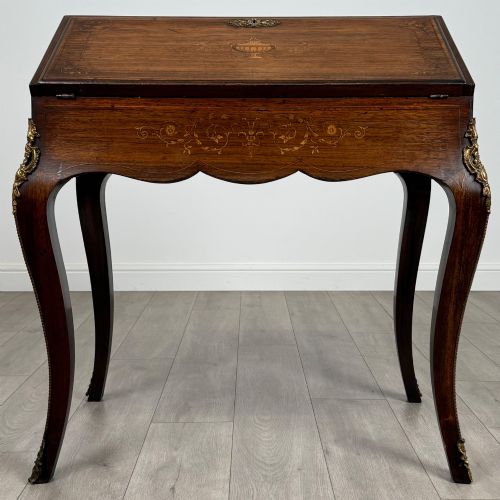
A french ormolu writing table encompasses freestanding bureau plat desks, cylinder desks, and compact bonheur du jour writing cabinets originating primarily from nineteenth-century France.
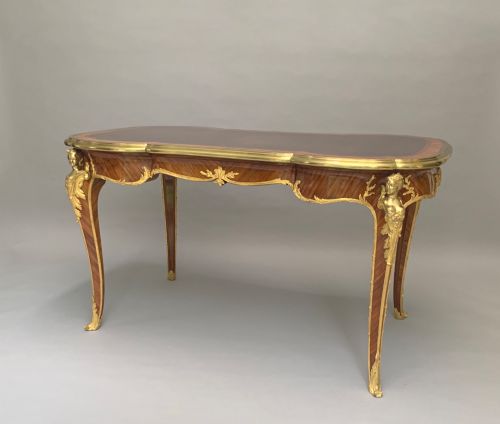
Makers and workshops construct these pieces in varied revivals of Louis XV and Louis XVI styles, frequently utilising serpentine shapes and kidney outlines.
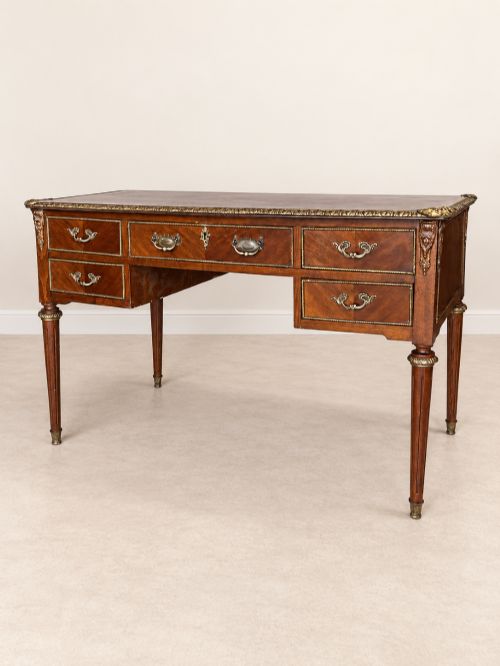
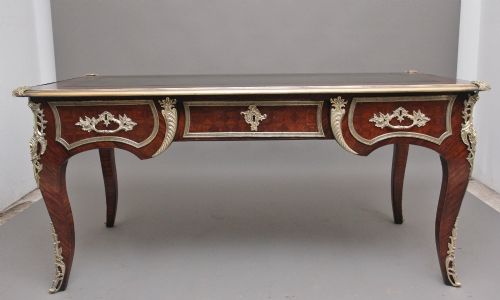
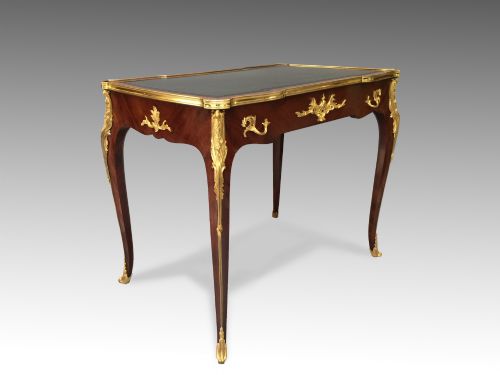
The version most commonly met on this page is the nineteenth-century bureau plat in kingwood or walnut, finished with cast gilt bronze mounts and leather writing surfaces.
Materials and Technique
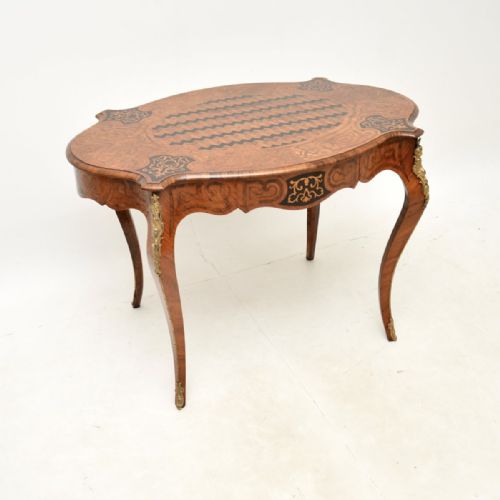
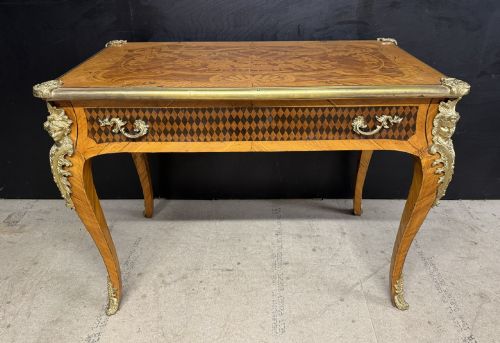
Cabinetmakers build foundational carcases in hardwoods such as mahogany, walnut, or oak, before applying decorative veneers of kingwood, rosewood, and amboyna in marquetry or geometric parquetry patterns.
Gilt bronze or ormolu mounts are cast, chased, and secured to corners, legs, and drawer edges to accentuate the contours of the revival styles.
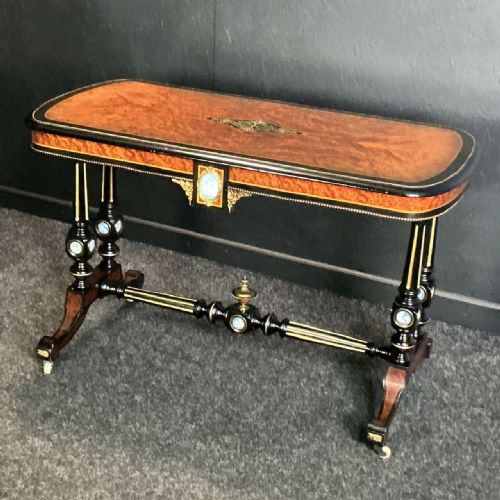
Insets of tooled leather provide the primary writing surface on bureau plat desks, while brass inlay and porcelain plaques occasionally decorate the surrounding timber.
Form variations range from kidney-shaped side tables and cylinder desks to grand bureau plat designs associated with French revival periods.
Evaluating Quality
The precision of the ormolu chasing sets finer pieces apart, as sharp definition and heavy gilding distinguish skilled foundry work from softer, later castings.
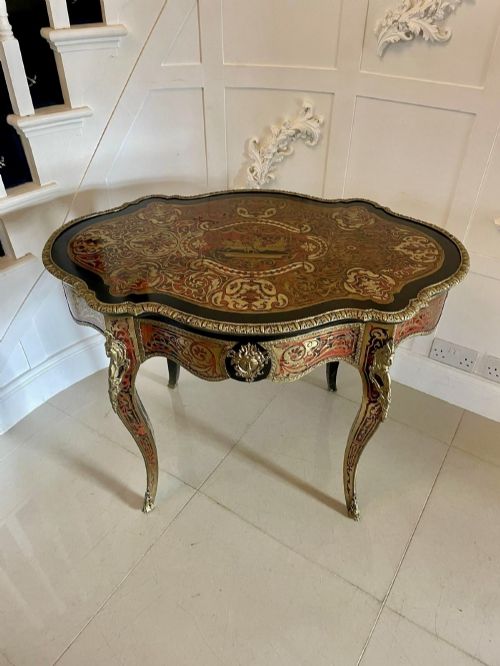
The complexity of the timber work defines the upper tiers, where intricate parquetry, matched grain patterns, and genuine tortoiseshell and brass boulle inlay demand advanced carpentry.
Signatures or stamps from documented makers and retailers indicate workshop provenance and elevate the standing of a desk within the nineteenth-century corpus.
François Linke·Edwards and Roberts·Paul Sormani·CH Jeanselme and Co·Alphonse Tahan·JAS Shoolbred
The French Ormolu Writing Table Glossary
- Ormolu
- Gilt bronze mounts applied as decorative ornaments to furniture. The technique involves treating metal with a mercury and gold amalgam before heating.
- Bureau Plat
- A freestanding double-sided writing table with drawers in the frieze. These desks typically feature a leather-lined top and substantial ormolu mounts.
- Marquetry
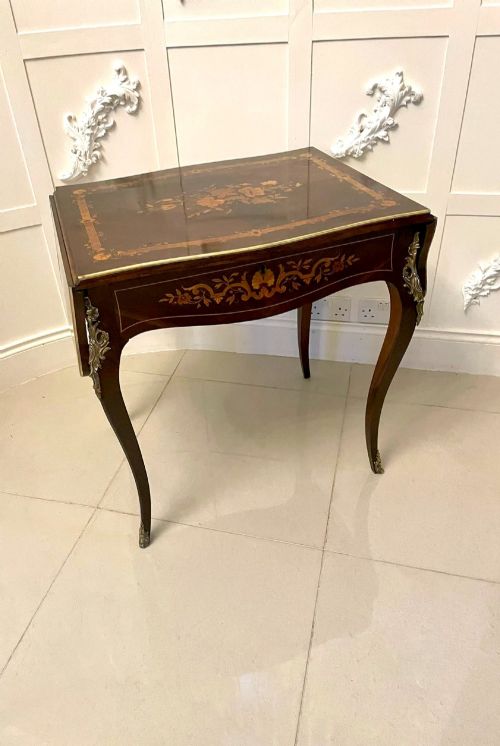
- Veneering technique forming pictorial or decorative patterns using varied wood species. Artisans cut thin sheets of timber to fit together precisely within the carcase.
- Parquetry
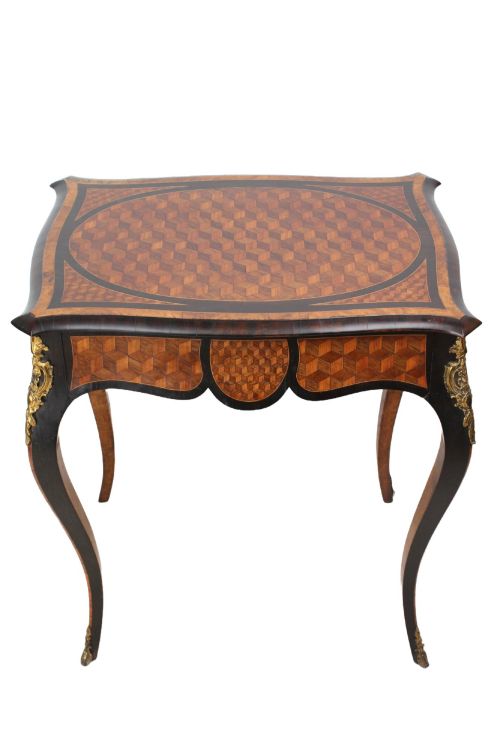
- Geometric wood inlay forming repeating patterns such as cubes or checkers. This method decorates the flat surfaces of many nineteenth-century tables.
- Bonheur Du Jour
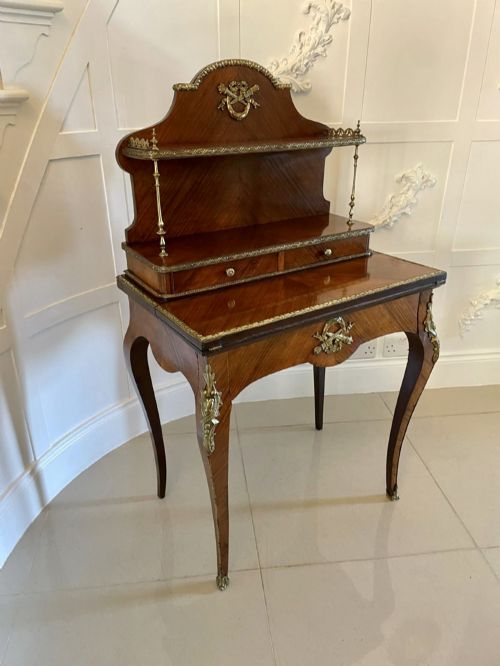
- A small ladies writing desk featuring a super-structure of small drawers and shelves above the main writing surface. These compact pieces often include ormolu mounts and porcelain plaques.
- Boulle
- Marquetry style combining brass and tortoiseshell developed during the reign of Louis XIV. Nineteenth-century makers revived this technique on ebonised carcases.
French Ormolu Writing Table: Frequently Asked Questions
What is a bureau plat?
A bureau plat is a freestanding writing table featuring a flat top, usually lined with leather, and one or more drawers built into the frieze.
Unlike traditional wall desks, these tables are finished on all sides so they can sit prominently in the centre of a room.
How do I identify Louis XV style?
Louis XV style furniture relies on asymmetrical curves, cabriole legs, and naturalistic scrollwork without straight architectural lines.
On these desks, ormolu mounts follow the flowing contours of the serpentine woodwork to accentuate the Rococo revival aesthetic.
What woods were used?
Cabinetmakers utilised exotic and domestic hardwoods, favouring kingwood, rosewood, walnut, and mahogany for their rich grain patterns.
These timbers served as backing for intricate marquetry scenes or geometric parquetry panels framed by gilt bronze mounts.
Are these desks suitable for daily use?
Many buyers place these tables in studies or home offices to serve as functional writing desks.
The durable leather insets provide a practical surface for modern writing, though care must be taken to protect antique veneer and ormolu finishes.