


Antique French Dressing Desk
An antique French dressing desk combines the surface of a writing table with the mirrors and compartments needed for daily toilette.
Antique French Dressing Desk
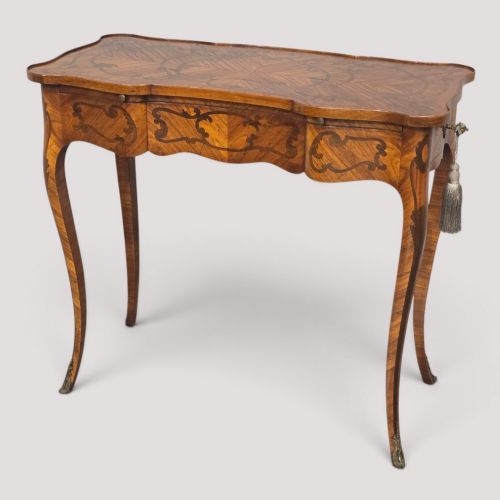
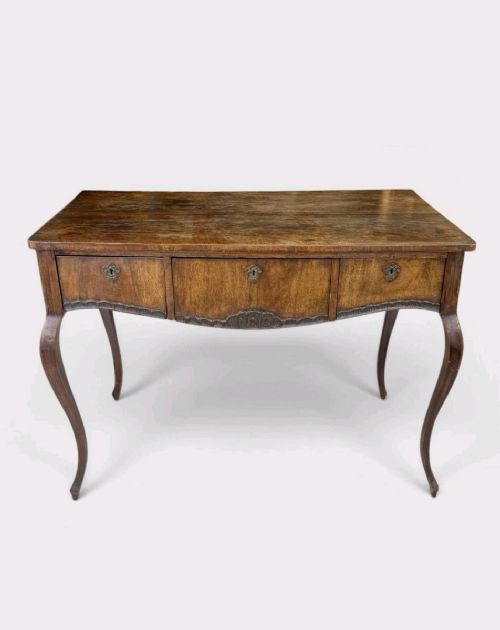
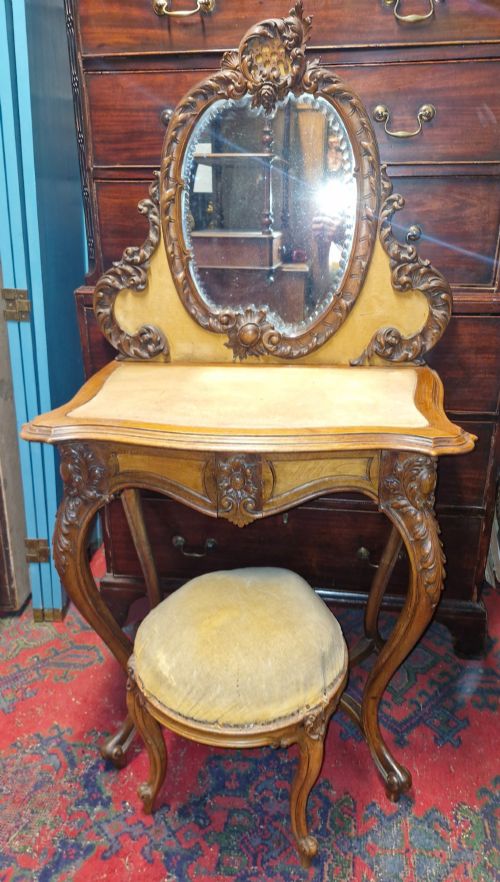
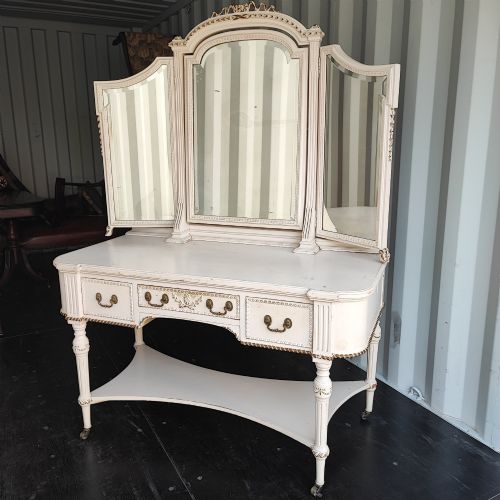
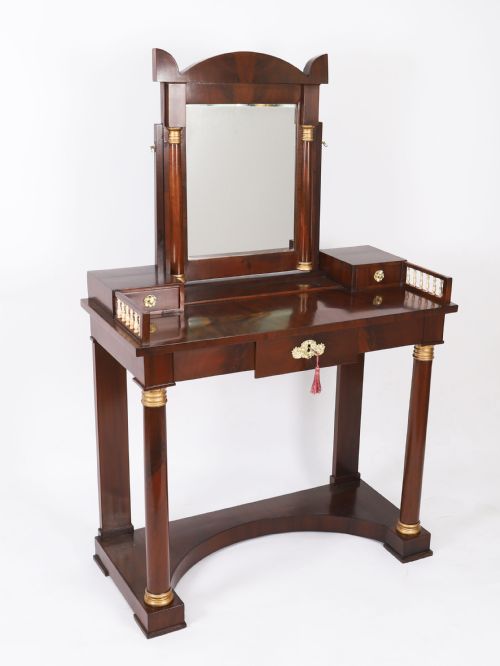
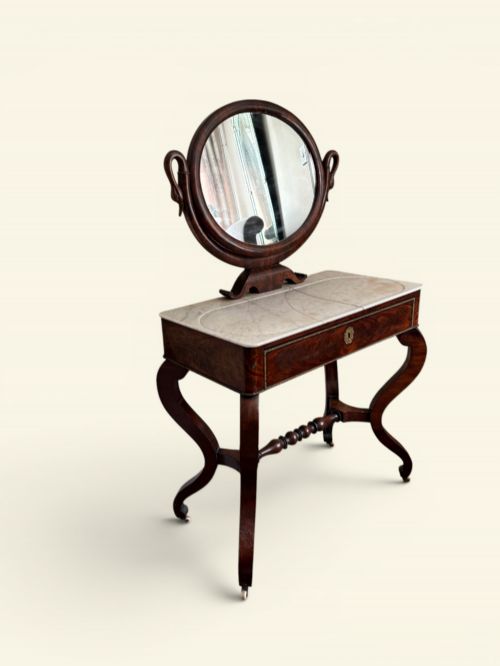
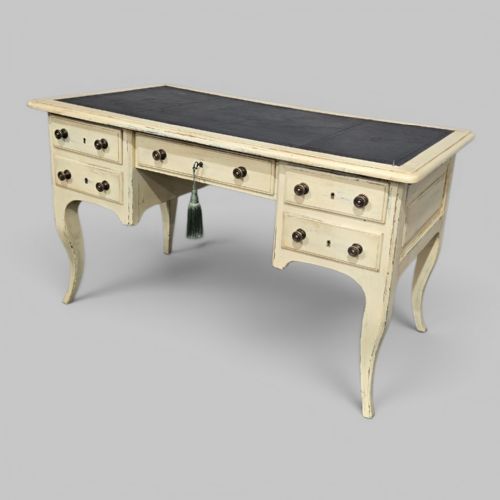
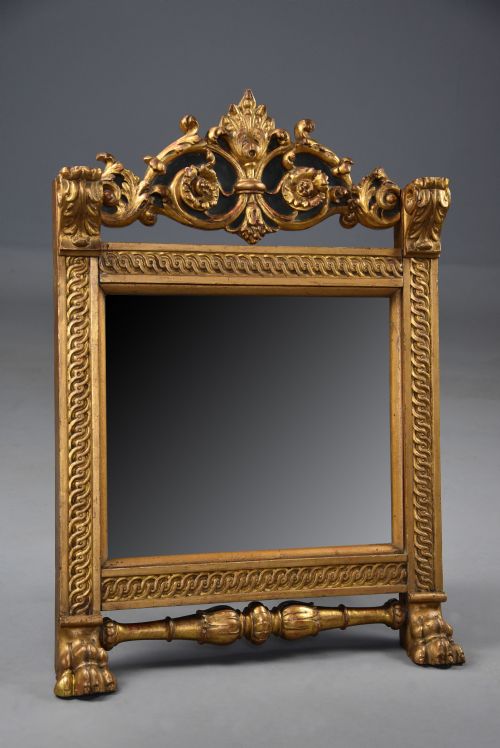
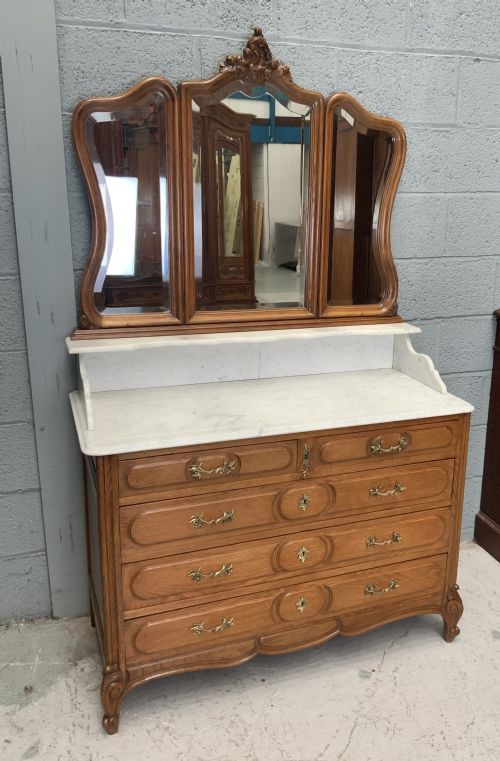
When you search for an antique French dressing desk, you encounter pieces spanning the eighteenth century through the early twentieth century, taking forms such as dressing tables, poudreuses, writing tables, and bonheur du jour desks.
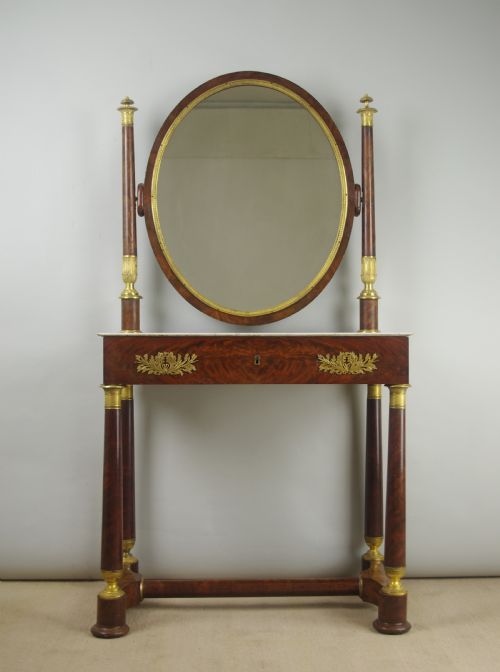
The most common examples on this page date from the nineteenth century, often displaying revival styles like Louis XV, Louis XVI, and French Empire alongside provincial or chateau influences.
These dual-purpose items served both writing and grooming, frequently incorporating drawers, fitted compartments, and matching or integrated mirrors into their domestic layouts.
How they were made
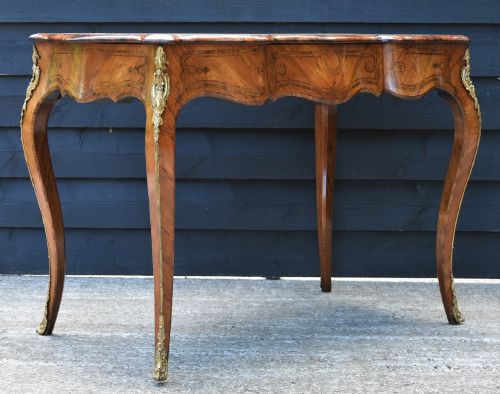
Cabinetmakers constructed carcass frames and table bodies from solid timbers like mahogany, walnut, oak, and rosewood, applying decorative veneers such as kingwood, tulipwood, and satinwood over secondary woods.
Surface ornamentation relied on marquetry and parquetry inlays alongside cast or chased ormolu mounts in brass, pewter, and giltwood.
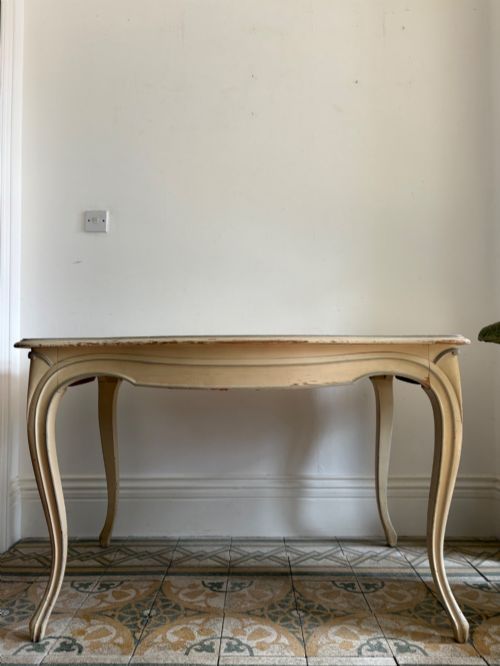
Marble tops appeared on specific regional or classical models, while painted and cream or gilt finishes characterised provincial and later revival iterations.
Several tables manage to be a desk, a mirror, and a secret hiding spot all at once, which makes paperwork significantly more dramatic.
What varies in quality
The standard of timber selection and the precision of the marquetry or parquetry cutting set individual examples apart, distinguishing simple workshop production from finer cabinet work.
The crispness and weight of the ormolu mounts, together with how neatly they fit the contours of the wood, indicate the original cost and skill invested in the piece.
Original hardware, integrated mirrors, and intact internal compartments preserve the integrity of the design more effectively than later replacements or alterations.
Maples of London and Paris·Louis Auguste Moreau
The Antique French Dressing Desk Glossary
- Poudreuse
- A French dressing table featuring a folding top that opens to reveal a mirror and partitioned compartments for cosmetics. This form gained popularity during the eighteenth century.
- Ormolu
- Gilded bronze mounts applied to furniture for decorative accent. Makers cast and chased these metal elements to complement wood veneers.
- Marquetry
- Inlaid wood veneers arranged to form pictorial or geometric patterns on table tops and drawer fronts. Craftsmen used contrasting timbers to achieve tonal variation.
- Bonheur du jour
- A light ladies writing desk featuring a small cabinet or set of drawers superstructure on the main writing surface. These compact desks appeared in refined nineteenth-century interiors.
- Cabriole leg
- A furniture leg curving outward at the knee and inward at the ankle, ending in a pad or foot. This profile frequently defines French provincial and revival forms.
- Serpentine
- A front edge or surface curving outward in the centre and inward at the sides. This contour requires skilled carpentry to shape accurately.
Antique French Dressing Desk: Frequently Asked Questions
How do I use a dressing desk today?
These tables function well as compact writing desks, hallway consoles, or bedroom vanities depending on whether they feature kneeholes or enclosed compartments.
Their historic drawers and surface spaces accommodate modern stationery, laptops, or daily accessories without altering the original timber.
What is the difference between a writing table and a poudreuse?
A writing table provides a flat surface primarily for correspondence, sometimes fitted with drawers beneath the top.
A poudreuse is specifically designed for grooming, incorporating folding panels and internal mirror arrangements alongside cosmetic wells.
Are marble tops original to these desks?
Marble inserts appear frequently on eighteenth and nineteenth-century French case pieces, particularly those influenced by classical revival styles.
These heavy stone slabs provided a durable, water-resistant surface suitable for washing and dressing routines.
How do I distinguish Empire style from Louis XVI?
Empire pieces display heavy neoclassical symmetry, dark mahogany surfaces, and prominent ormolu mounts celebrating military and classical motifs.
Louis XVI furniture favours lighter proportions, straight tapered legs, delicate marquetry, and restrained geometric or floral inlays.