
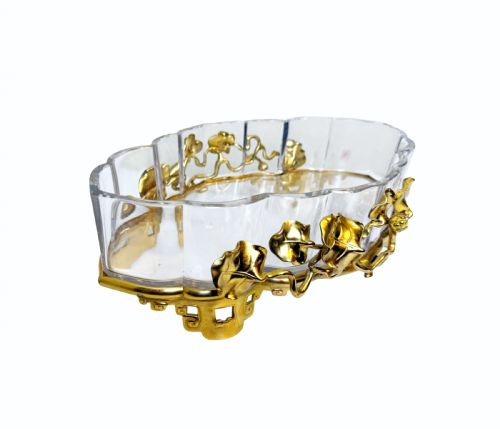
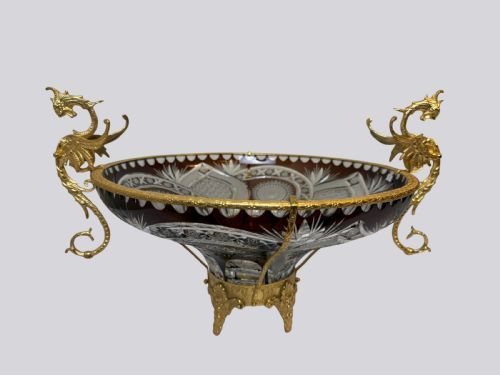


French Ormolu Fruit Bowl
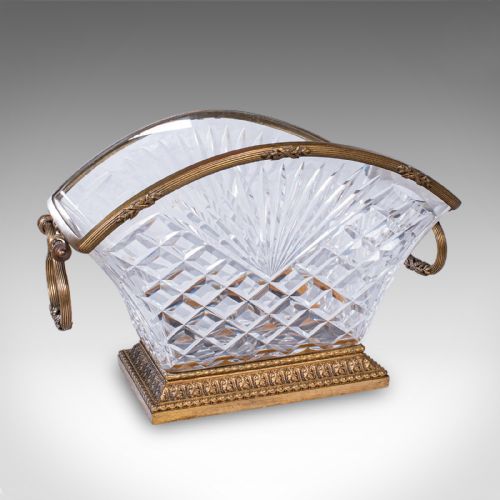
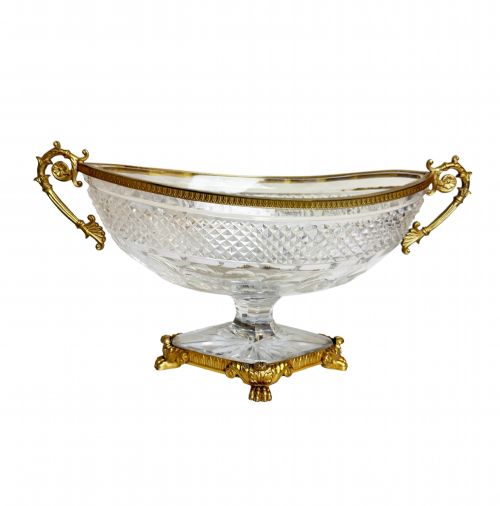
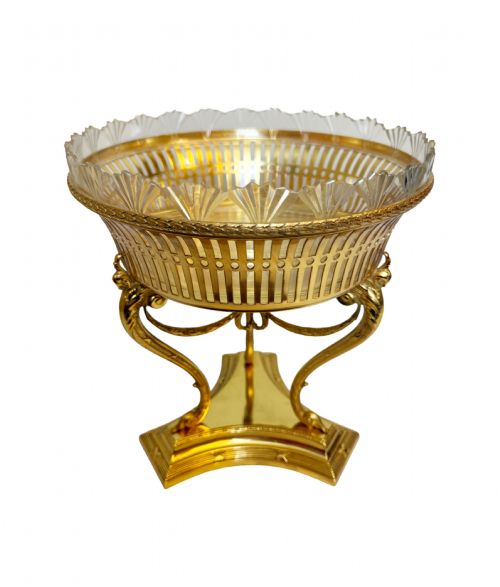
These french ormolu fruit bowl pieces bring gilded metalwork and crystal together to anchor a dining table with Continental presence.
French Ormolu Fruit Bowl
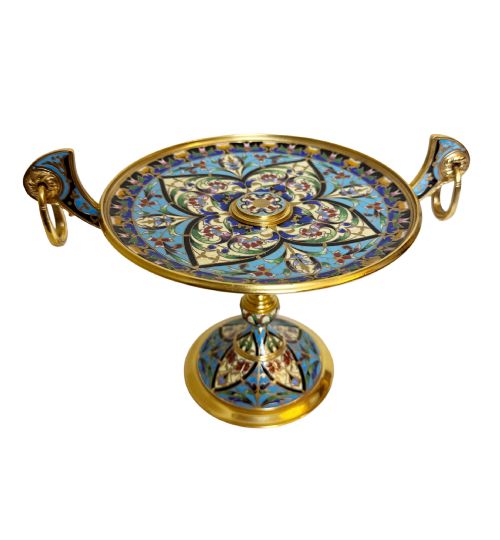
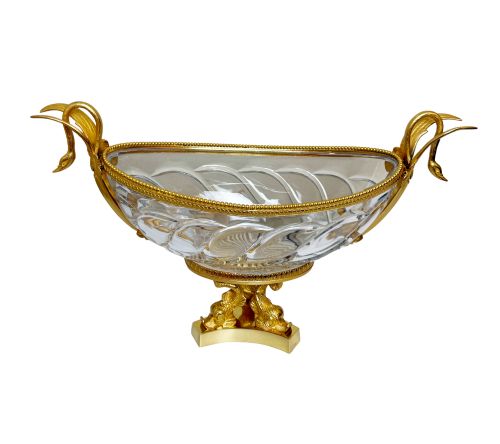
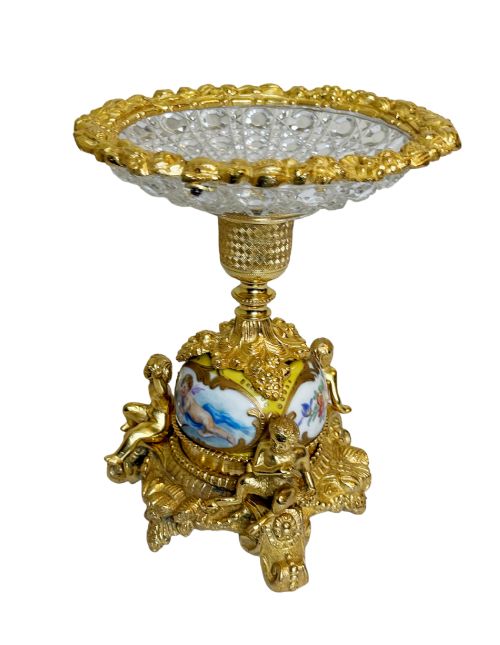
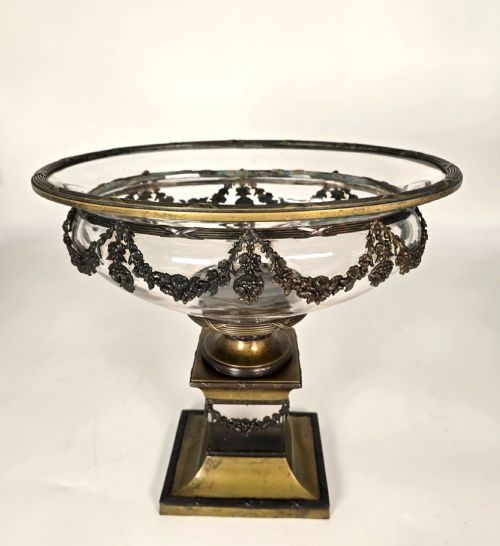
A french ormolu fruit bowl combines cast metal mounts with glass, crystal or porcelain inserts designed to hold fruit or serve as a central table decoration. The form spans the nineteenth century through the early twentieth century, taking shape as centrepieces, tazzas, comports and pedestal bowls.
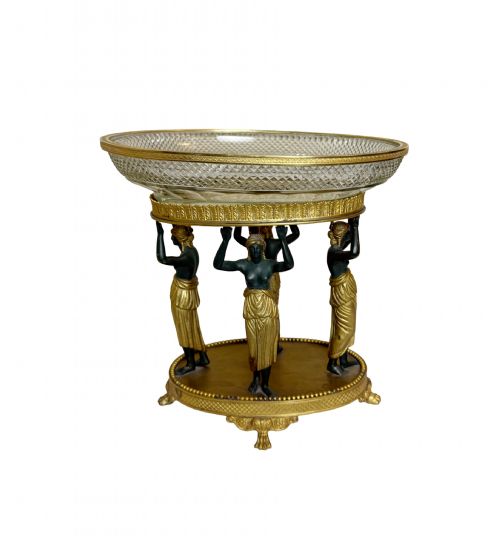
Makers and workshops produced these pieces in distinct stylistic revivals including French Rococo and Empire. Pieces frequently incorporate figural details such as cherubs or mermen alongside decorative motifs executed in gilt bronze.
The nineteenth century accounts for the bulk of these objects, running from early Empire taste pieces through Victorian interpretations up to turn-of-the-century examples.
Materials and construction
Casting forms the basis of the metalwork, utilising bronze that receives a gilt or ormolu surface finish to achieve its bright golden appearance. Artisans paired this heavy cast metal with blown or cut crystal, cut glass, coloured glass and porcelain inserts.
Specialised techniques appear in specific components, such as champleve enamelling on metal frames and Limoges enamel plaques inset into bowls. Mounts are secured to glass and porcelain bodies through threaded rods, pins and collars designed to hold heavy vessels firmly in their stands.
Several nineteenth-century models feature vigilant mermen gripping the crystal bowls as if guarding the fruit from hungry dinner guests.
Judging quality
Quality rests primarily on the crispness of the bronze chasing and the depth of the gilding across the mounts. Finer examples display sharp relief in figural elements like cherubs and mermen, whereas simpler pieces show softer, less defined casting detail.
The material integrity of the insert dictates the standing of the piece, with heavy cut crystal and hand-painted Sevres style porcelain elevating the work above plain glass vessels. The weight and stability of the frame and the integration of enamel work further separate standard production from elevated examples.
Christofle Paris·Sevres·Samson·Limoges
The French Ormolu Fruit Bowl Glossary
- Ormolu
- Gilded bronze produced by applying a mercury and gold amalgam to a bronze base before heating. This historical technique creates a durable golden finish with a warm lustre.
- Tazza
- A shallow bowl or cup elevated on a standard and a base. These serving vessels date back to antiquity and appear frequently in nineteenth-century gilt bronze and crystal.
- Comport
- A large decorative dish or bowl raised on a foot or pedestal, traditionally used for serving fruit or sweets. They often feature porcelain or glass bowls set within metal stands.
- Champleve
- An enamelling technique where troughs or cells are sunk into the surface of the metal and filled with vitreous enamel powder before firing. The resulting design shows vibrant colour framed by metal lines.
- Empire Style
- A neoclassical design movement originating in France during the rule of Napoleon, characterised by military motifs, classical figures and formal symmetry. Pieces from this tradition often utilise dark patinated bronze alongside bright gilt mounts.
French Ormolu Fruit Bowl: Frequently Asked Questions
What were these bowls used for?
These vessels served as formal table decorations designed to hold fruit or sweetmeats during dining courses. Wealthy households placed them at the centre of dining tables to display wealth and reflect candlelight off the gilt surfaces.
Over time, many functioned purely as decorative ornaments on sideboards and mantelpieces rather than serving pieces for food.
How do I style a centrepiece bowl at home?
Place the piece on a large dining table, a heavy wooden sideboard or a low console table where its height and materials remain visible. Leave the bowl empty to showcase the cut crystal, porcelain or enamel work, or fill it with seasonal fruit.
Keep surrounding objects minimal to let the gilt bronze frame and reflective glass draw focus within the room.
How do I tell Rococo Revival pieces from Empire style?
Rococo Revival pieces feature asymmetrical scrolls, naturalistic floral motifs, C-scrolls and playful figures such as cherubs. The lines are curved, organic and elaborate.
Empire style pieces rely on strict symmetry, classical columns, military trophies and straight geometric lines that reflect ancient Roman and Greek design.
Are the glass inserts usually original to the bronze frames?
Most surviving examples retain their original matching glass or porcelain inserts, which were custom-fitted to the bronze mounts during production. The contours of the metal collar typically match the rim or base of the insert precisely.
Replacements do occur due to breakages over the centuries, so look for a snug fit where the glass rests within the metal supports.