


French Ormolu Card Table
A french ormolu card table brings opulent nineteenth century Parisian revival style and clever folding mechanics to any formal reception room.
French Ormolu Card Table
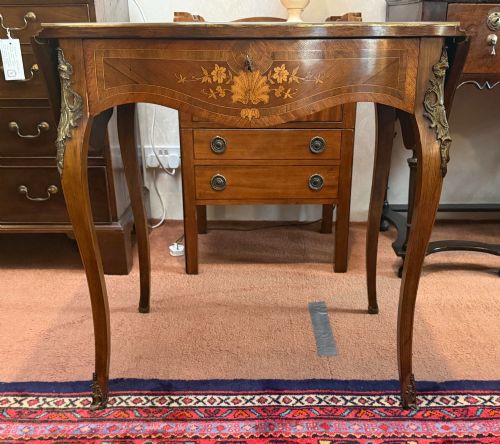
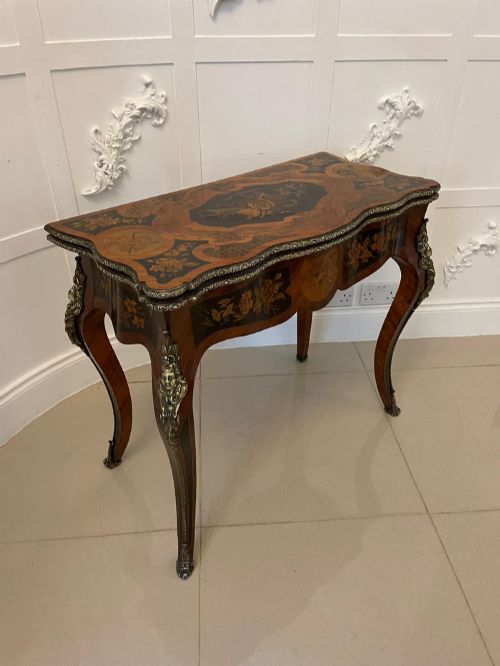
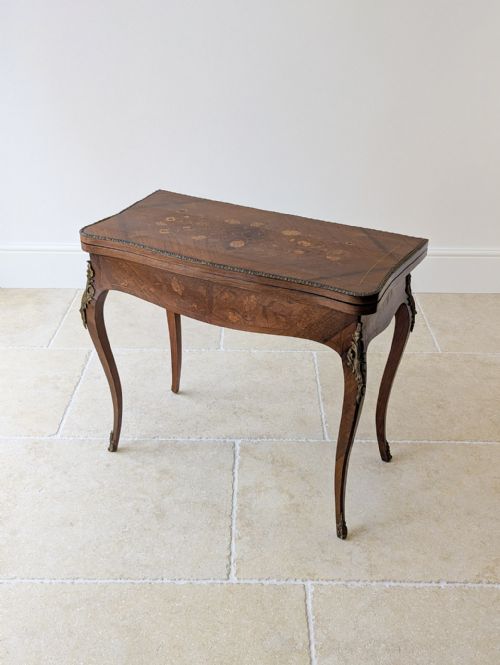
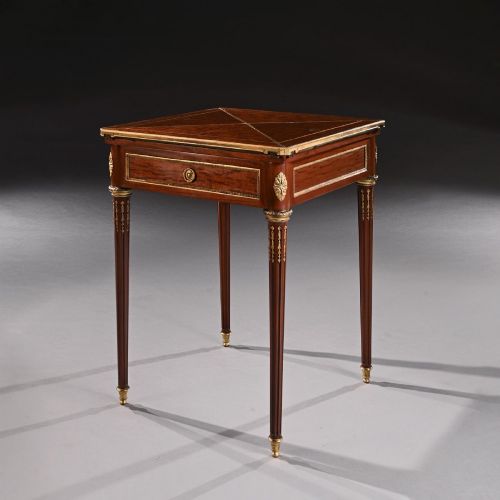
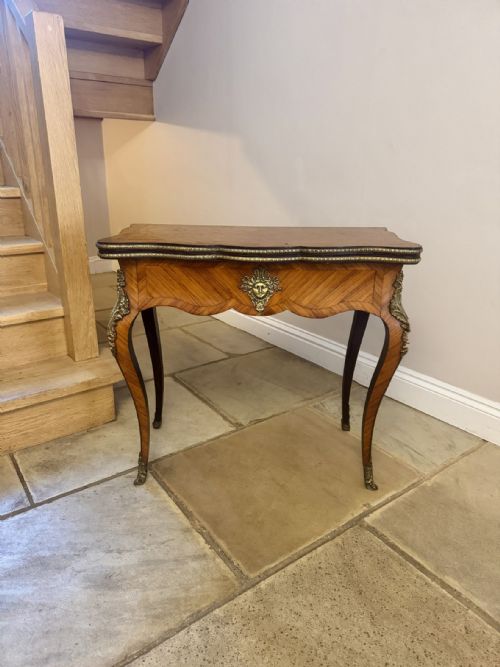
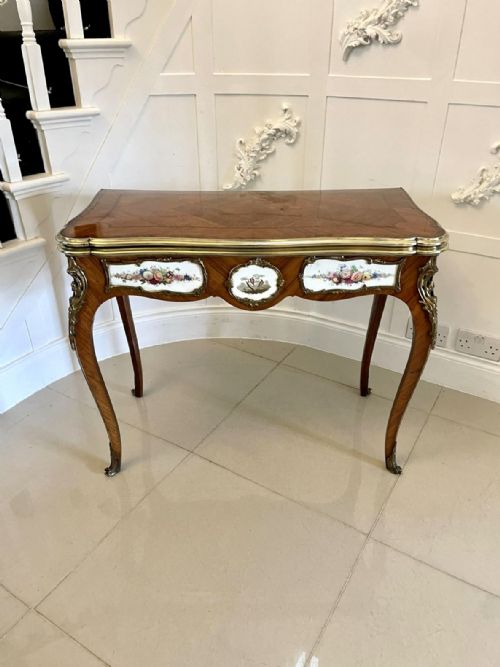
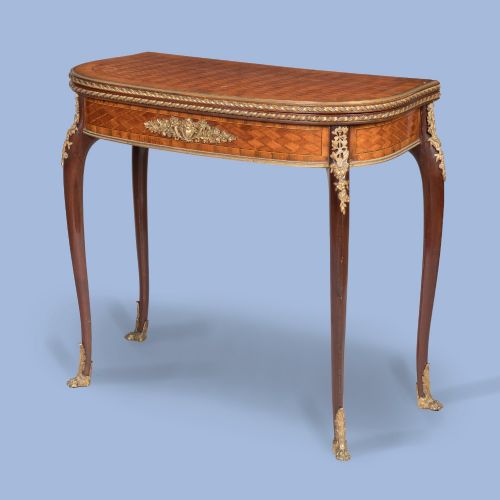
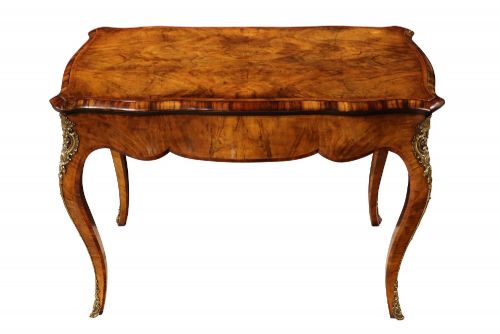
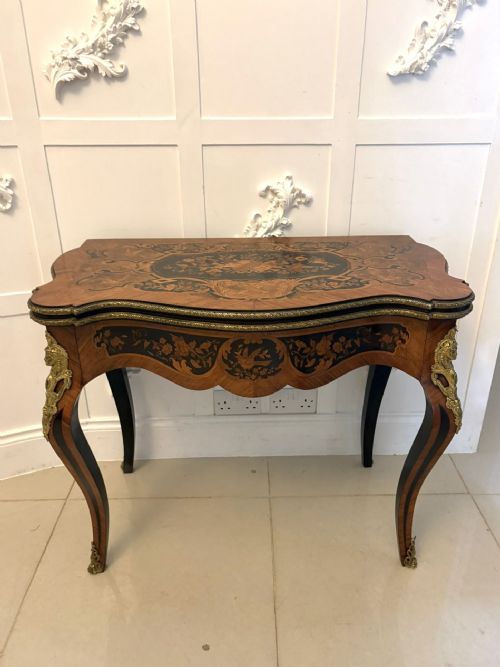
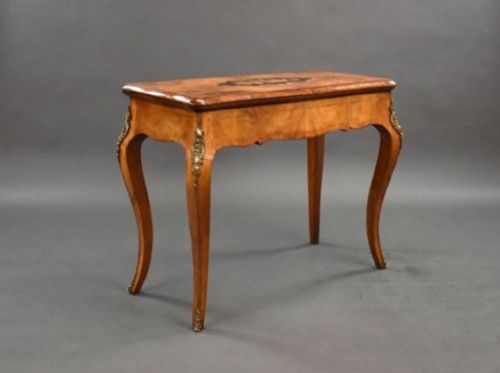
When searching for a french ormolu card table, one encounters nineteenth century revival furniture designed primarily for parlour games and formal entertaining. These pieces typically feature a fold over top supported on slender cabriole legs, shifting easily from a slim console to a finished gaming surface.
The versions most commonly met on this page date from the Victorian era up to nineteen hundred, showing heavy influence from Louis XV and Louis XVI aesthetics. Makers combined exotic timbers with gilt bronze mounts to create striking dual purpose furniture for elite interiors.
How They Were Made
Craftsmen built these tables using a sturdy carcass of walnut or mahogany, overlaid with decorative veneers of kingwood, rosewood, and burr walnut in geometric parquetry or intricate floral marquetry patterns. Brass and exotic wood inlays frequently accent the main timber surfaces.
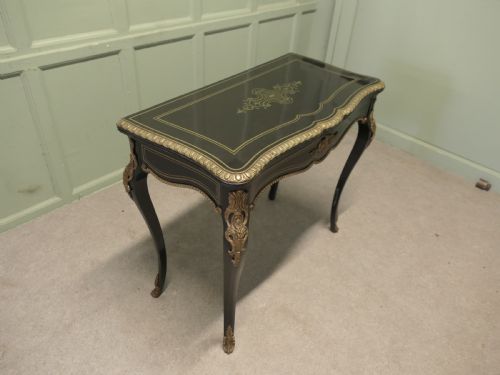
Gilt bronze, known as ormolu, forms the sculptural mounts that trim the corners, aprons, and legs, while specific examples incorporate porcelain plaques or champleve enamel details to heighten the decorative scheme.
Listings feature nineteenth century pieces utilising kingwood, walnut, ormolu, and porcelain elements.
What Varies in Quality
The standard of a french ormolu card table rests largely on the crispness of the bronze casting and the precision of the marquetry work. Finer examples display deeply chased ormolu mounts with sharply defined details and seamless timber parquetry.
Structural execution also dictates worth, particularly the smoothness of the pivoting or folding mechanism and the integration of secondary woods. Tables bearing documented workshop signatures generally exhibit superior refinement in every joint and mount.
Antoine Lampre·G T Morant·François Linke·Maison Mottheau·Joseph Emmanuel Zwiener·Maison Millet·Edwards and Roberts·Henry Dasson
The French Ormolu Card Table Glossary
- Ormolu
- Gilt bronze ornamentation applied to furniture and decorative objects. This technique involves gilding a bronze base with gold amalgam.
- Marquetry
- Decorative veneer patterns assembled from various coloured woods to form pictorial or floral designs. Artisans cut these pieces meticulously before gluing them to the table surface.
- Parquetry
- Geometric wood inlay patterns such as cubes or chequers. It creates a structured, repeating motif across the top of the table.
- Kingwood
- A dense, richly grained exotic timber imported from South America and frequently utilised in high end nineteenth century French cabinetmaking. Its contrasting dark and golden tones made it a favourite for decorative crossbanding.
- Boulle
- A marquetry technique combining tortoiseshell and brass. It appears on several revival pieces in distinct patterns.
French Ormolu Card Table: Frequently Asked Questions
How do I use a folding card table?
The hinged top swivels and folds outward to rest upon an extended wooden leaf or a swinging rear leg frame. This creates a stable surface covered in felt or polished wood for playing cards.
When not in use, the top folds flat and the table sits flush against a wall as a decorative console.
Are these tables sturdy enough for daily use?
While structurally sound, nineteenth century tables feature delicate veneers and gilt bronze mounts that warrant gentle care. They function best in low traffic areas away from direct sunlight and excessive heat.
Lifting rather than dragging the piece prevents strain on the slender cabriole legs.
How do I distinguish Louis XV style from Louis XVI style?
Louis XV style pieces display asymmetrical curves, flowing rococo scrolls, and sweeping cabriole legs. The overall aesthetic feels organic and dynamic.
Louis XVI style items introduce neoclassical restraint, featuring straight tapered legs, geometric symmetry, and rectangular profiles.