


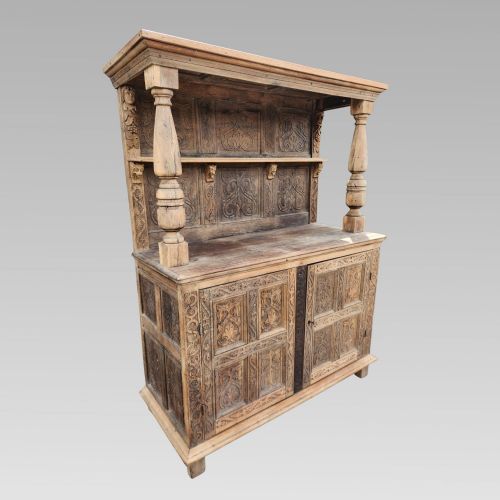

French Oak Sideboard
A french oak sideboard brings solid rural practicality and rich grain to a dining room or hallway.

The French Oak Sideboard
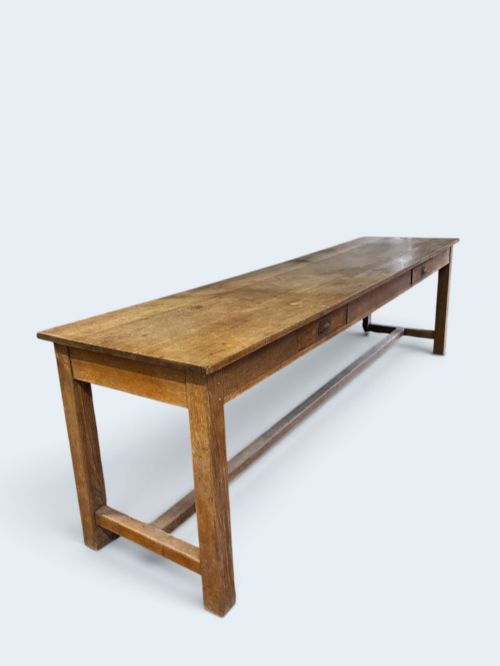
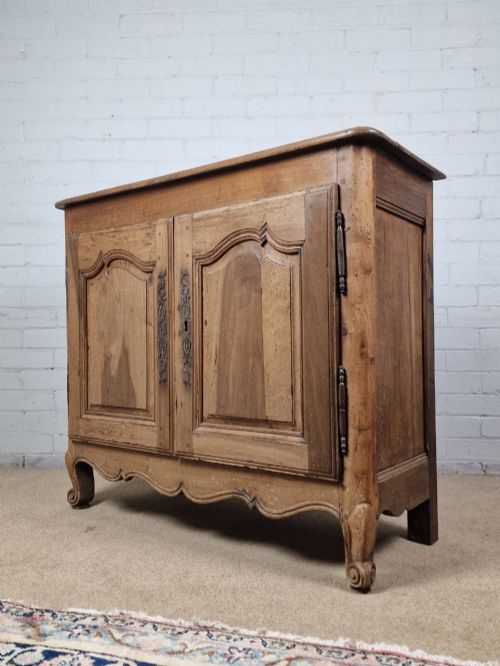
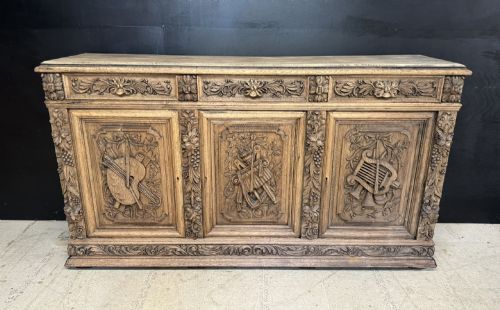
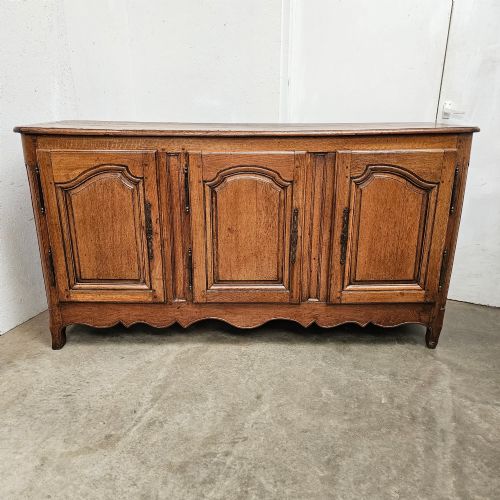
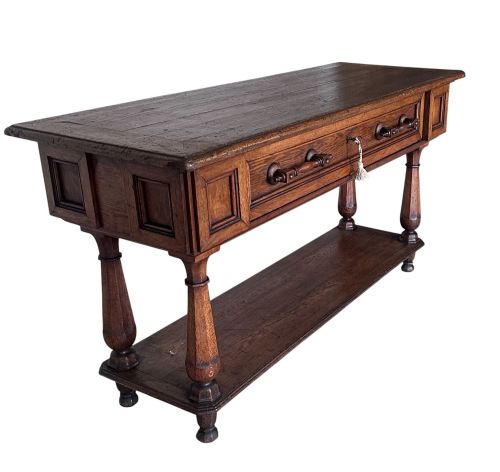
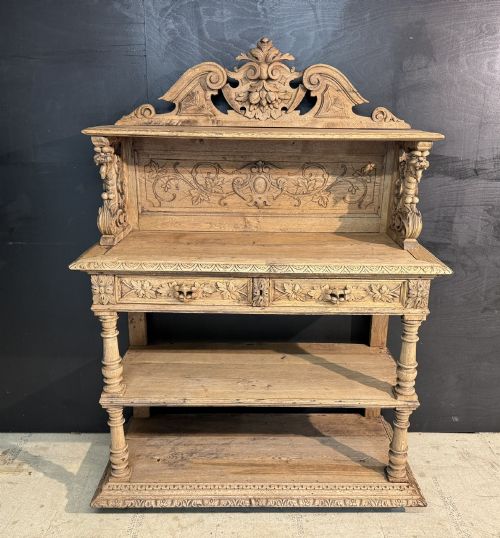
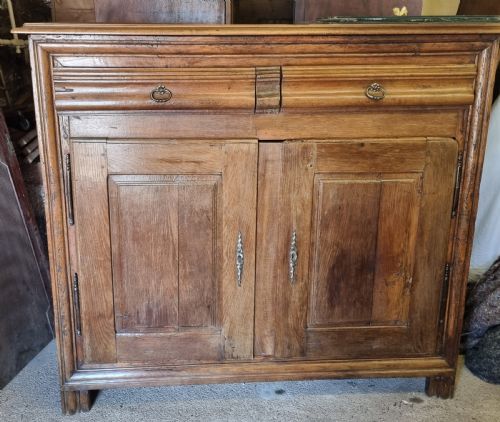
A french oak sideboard encompasses low buffets, sacristy cabinets, dresser bases and server sideboards spanning the eighteenth and nineteenth centuries, alongside twentieth century iterations. These pieces function as heavy storage furniture for dining spaces, kitchens and hallways, emerging primarily from provincial workshops.
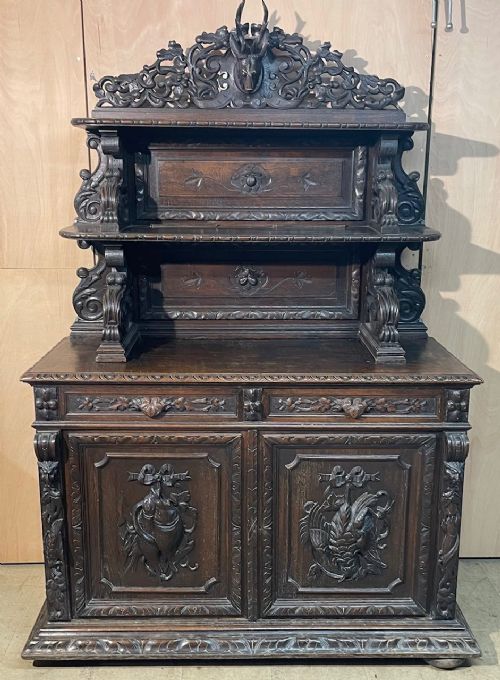
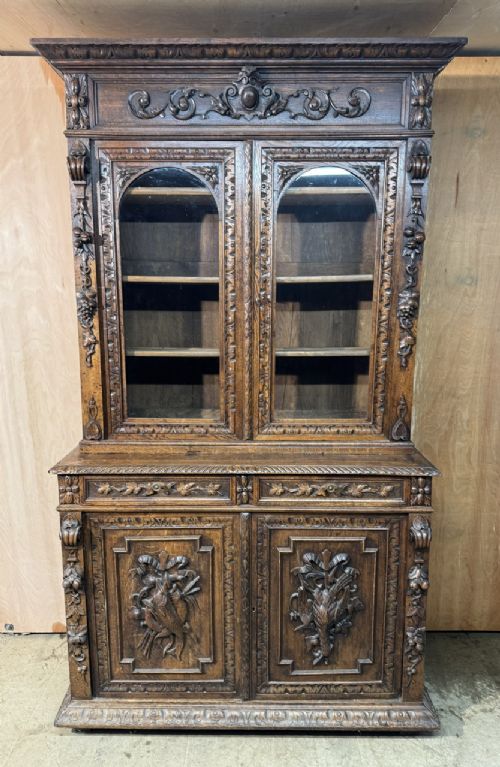
The nineteenth century examples appear most frequently on this page, often featuring hand-carving and substantial proportions. Alongside these, eighteenth century pieces and later bleached or painted variants populate the selection.
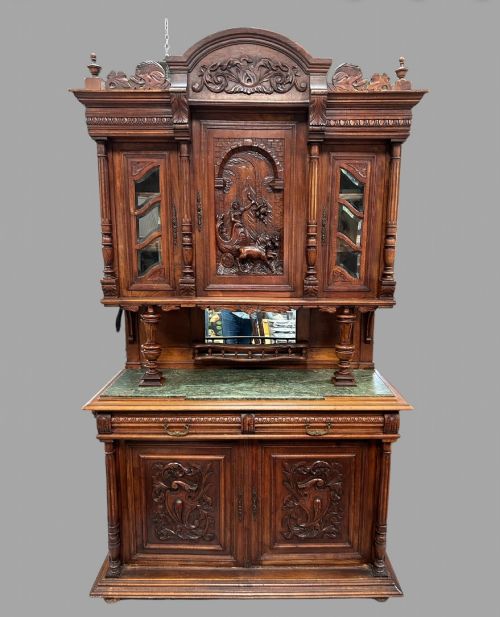
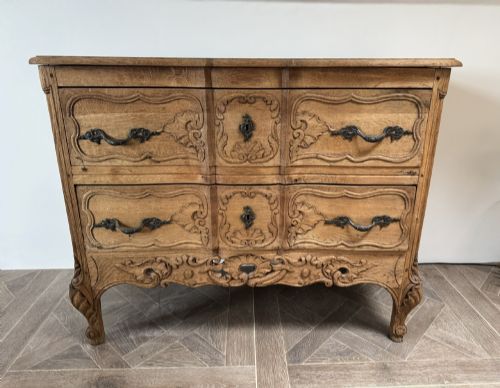
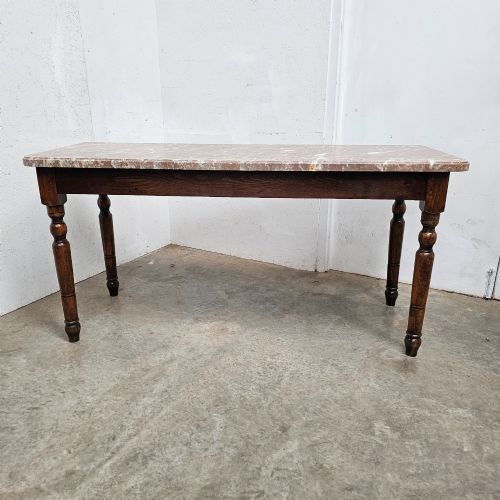
Forms range from serpentine commodes and Gothic revival cabinets to long farmhouse servers and marble topped buffets. Each type utilises the dense character of oak to anchor a room.
Materials and Construction
Makers built these pieces primarily from solid oak, sometimes pairing the timber with marble tops, slate, bronze or iron hardware, and occasional painted finishes. The construction relies on traditional joinery, heavy panels and hand carving.
Surface treatments vary between natural waxed grain, cerused finishes and deliberate bleaching, particularly on mid nineteenth century and later twentieth century examples. Brass and iron hinges, handles and keyplates secure doors and drawers.
Retail Price Guide 2026
Typical UK retail prices for french oak sideboard, calculated from the Sellingantiques database of over a million retail prices indexed since 2003. This retail price guide relies exclusively on Sellingantiques data; no external sources or auction records are used, so the figures do not describe the wider market.
Some provincial cabinets retain the quiet smells of old oak and beeswax from centuries of country farmhouse kitchens.
Assessing Quality
The standard of carving distinguishes superior pieces from plain utility furniture, with crisp relief work on doors and friezes indicating skilled hands. Depth of colour and the untouched patina of the oak also elevate a piece.
Integrity of materials matters deeply, such as the thickness of the marble or slate slab on topped variants and the retention of original iron or brass hardware. Proportions that balance weight with refined mouldings separate exceptional regional pieces from heavier, uninspired formats.
Gaston Poisson
The French Oak Sideboard Glossary
- Sacristy cabinet
- A low cabinet originally used for ecclesiastical storage, repurposed as a buffet for kitchens or living dining rooms.
- Dresser base
- The lower section of a kitchen or dining dresser, functioning as a standalone sideboard with drawers and cupboards.
- Serpentine commode
- A chest of drawers or low cabinet featuring a distinct undulating front curve.
- Bleached oak
- Timber treated to lighten the natural dark tone, creating a pale, neutral finish popular in mid century and later French pieces.
- Cerused oak
- Wood finished with a contrasting white or light pigment rubbed into the open grain to highlight the texture.
Frequently Asked Questions
What is a french oak sideboard?
A heavy wooden storage cabinet originating from France, built primarily from oak with doors and drawers for dining rooms and hallways.
These pieces range from eighteenth century provincial buffets to nineteenth century carved servers and twentieth century bleached designs.
How do I date a french oak sideboard?
Dating relies on construction methods, hardware, style details and the type of wood finish present on the piece.
Eighteenth century examples show simpler, rustic joinery and deep patination, while nineteenth century versions often display heavier Gothic revival or provincial carving.
Can I use a marble topped sideboard in a kitchen?
Marble and slate topped sideboards provide a durable, cool surface that suits food preparation and serving duties.
These topped variants appear across the nineteenth and twentieth centuries, offering practical resistance to kitchen use.
What is the difference between a buffet and a sideboard?
Buffets and sideboards both provide surface space and enclosed storage for dining ware, though terms overlap in regional French furniture.
Sacristy cabinets, dresser bases and servers all serve this function under different historic names.