



French Oak Bedroom Storage
French oak bedroom storage brings robust utility and provincial character to a room, offering heavy timber construction and practical drawers or hanging space.
French Oak Bedroom Storage
When you search for french oak bedroom storage, you encounter substantial wooden furniture designed for domestic organisation originating from French workshops. The inventory spans several centuries, running from the mid-eighteenth century up through the early twentieth century.
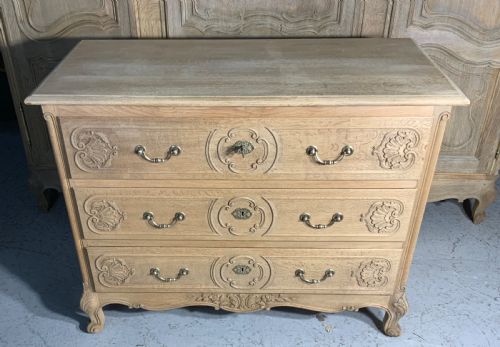
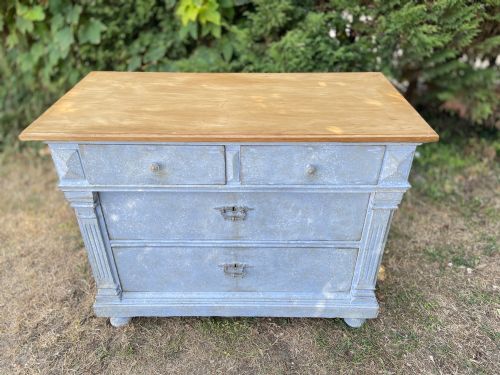
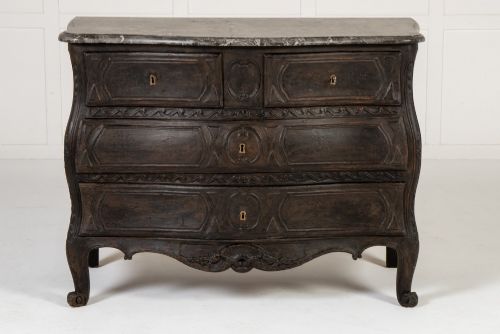
The objects themselves divide primarily into chests of drawers, commodious commodes, and tall armoires or wardrobes. Within these categories, you meet pieces finished in scrubbed oak, bleached surfaces, dark ebonised tones, or painted wood.
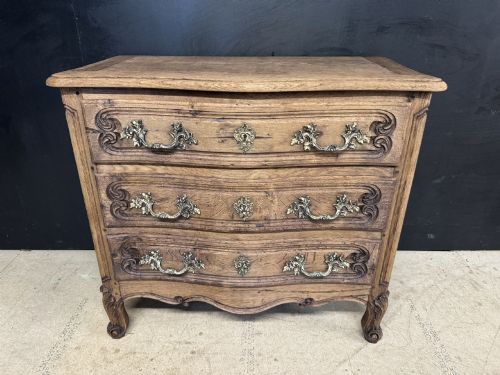
Stylistic variations draw heavily upon French provincial, French country, Gustavian, and Louis XV or Louis XVI influences. The most frequently encountered format on this page is the oak commode or chest of drawers featuring three distinct tiers.
Construction and materials
Makers built these pieces predominantly from solid oak, sometimes supplemented by pine for secondary internal structures. Surfaces frequently display visible carved details, diamond-point panelling, or serpentine shaping cut directly into the dense timber.
Functional hardware relied on brass and other metals for drawer pulls, key escutcheons, and hinges. Certain items integrate additional tactile elements such as marble tops or glass panel inserts within the primary wooden framework.
French Oak Bedroom Storage Retail Price Guide 2026
Typical asking prices for french oak bedroom storage among the pieces listed under this phrase on Sellingantiques today, from the lower quarter to the upper quarter. They describe what is for sale here now, not the wider market.
Materials in this selection combine solid oak with brass, metal, marble, pine, painted wood, glass, and paint.
Judging the work
Quality rests upon the crispness of the timber carving and the sophistication of the overall silhouette, whether straight-lined or serpentine. Pieces featuring complex diamond-point fronts or bombe curves demand greater joinery skill than plain box constructions.
The condition of the surface finish also dictates distinction, ranging from naturally scrubbed or bleached patinas to polished ebonising. Surviving original brass mounts and integrated marble slabs elevate the execution of a commode or armoire.
The French Oak Bedroom Storage Glossary
- Commode
- A low chest of drawers or cabinet, typically standing on legs and originating in France. In this inventory, commodes often feature three drawers and serpentine or bombe profiles.
- Armoire
- A large wardrobe or cupboard used for hanging clothes or storing linens. These tall wooden storage pieces provide enclosed vertical capacity for a bedroom.
- Bombe
- A convex or bulging swelling shape characteristic of certain eighteenth-century case furniture. This undulating contour requires advanced woodworking techniques to achieve.
- Serpentine
- A front contour that curves inward centrally and outward at the ends, creating a gentle wave effect. It appears frequently on the drawer fronts of better commodes.
- Scrubbed oak
- Timber that has been repeatedly washed to create a pale, matte, raw-wood appearance. This surface treatment removes heavy dark varnishes to expose the natural grain.
French Oak Bedroom Storage: Frequently Asked Questions
What is a commode?
A commode is a low chest of drawers, functioning primarily as bedroom storage for folded garments and personal items. These pieces typically feature between three and four drawers.
In French tradition, they often sit on short legs and display decorative fronts such as serpentine shaping or diamond-point detailing.
How do I date these pieces?
Dating relies upon observing the structural joinery, the hardware style, and the overall silhouette of the timber case. Eighteenth-century examples often display bombe profiles or hand-cut serpentine lines.
Nineteenth and early twentieth-century iterations tend towards scrubbed surfaces, bleached oak finishes, or restrained provincial styling without excessive ornamentation.
Where were they made?
These storage pieces originate from France, encompassing regional provincial workshops as well as more formal stylistic centres. Makers utilised local hardwoods, predominantly oak, reflecting domestic carpentry traditions.
Stylistic markers often point to specific regional tastes, including French country, Gustavian, or Louis XV design influences.
How do I maintain oak furniture?
Maintenance involves keeping the timber away from direct heat sources and sudden humidity shifts to prevent wood movement. Regular dusting with a dry, soft cloth preserves the natural grain and surface patina.
Depending on whether the oak is scrubbed, bleached, or ebonised, appropriate natural waxes can be applied sparingly to nourish the dry wood.