
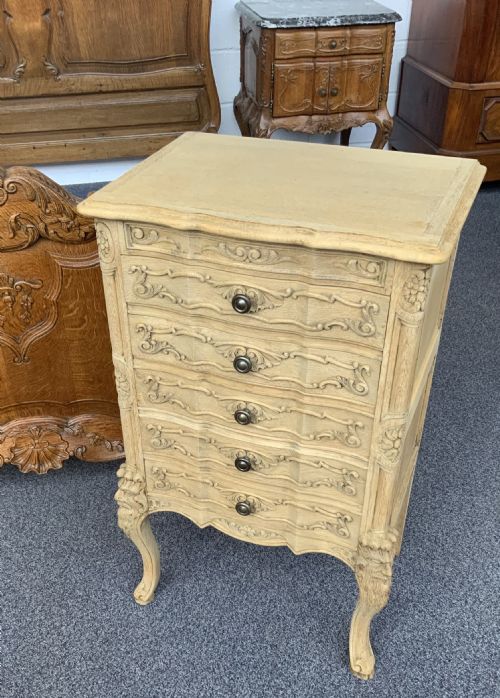
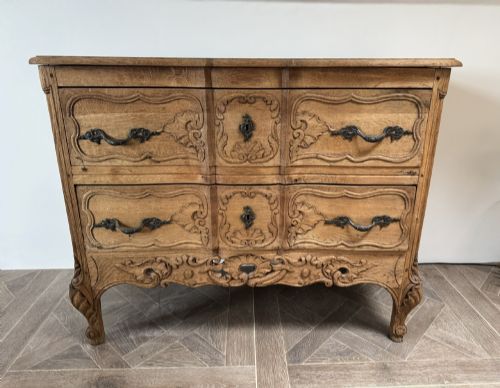


Bleached Oak Chest of Drawers
A bleached oak chest of drawers brings a pale, relaxed warmth to a room while offering deep storage in solid timber.
Bleached Oak Chest of Drawers
A bleached oak chest of drawers is a storage unit built from sturdy timber that has been treated to achieve a lighter, softened tone. These pieces range from simple utilitarian storage to grand continental commodes.
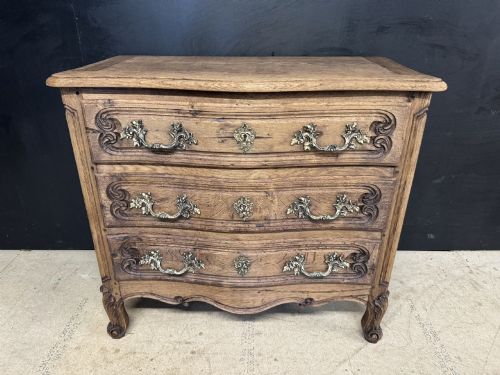
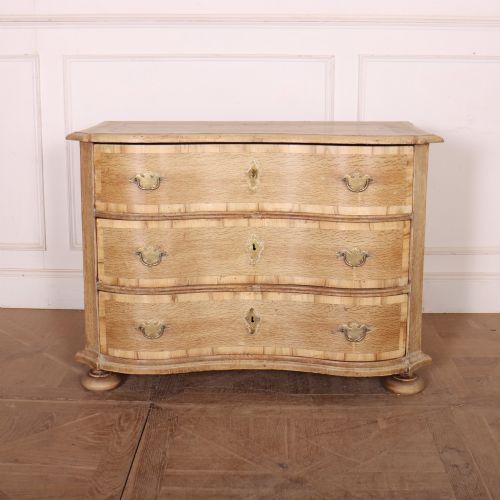
You will most frequently meet French commodes on this page, often featuring carved drawer fronts and serpentine or bombe shapes. Examples span from the eighteenth century through to the early twentieth century.
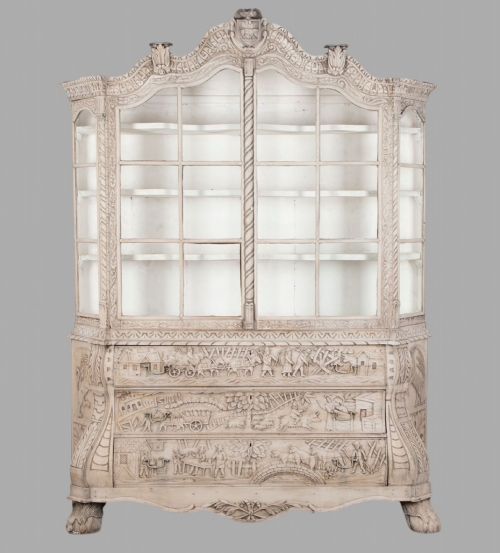
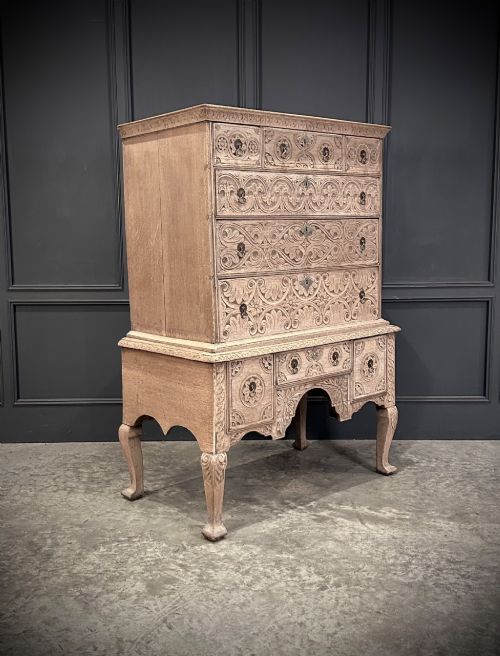
Alongside standard drawer units, the selection includes pieces with taller proportions such as chests on stand and display cabinets. These variations give options for different spatial demands in a domestic interior.
Construction and Materials
The primary material is oak, selected for its strength and prominent grain pattern, sometimes found alongside limed or scrubbed surface treatments. Metal hardware, brass handles, and iron fittings provide functional contrast to the pale timber.
Cabinet makers utilised traditional joinery techniques to construct the carcasses and drawers, often incorporating detailed carving directly into the solid wood. Glass and marble occasionally appear on specific variants like display cabinets and commodes.
Listings feature oak, brass, marble, and glass across periods spanning the eighteenth through to the early twentieth century.
Quality Variations
The sophistication of the carved detail and the harmony of the overall proportions distinguish finer examples from simpler workshops. Movement in the timber and the crispness of the surface bleaching also influence the visual presence of each piece.
Construction methods, such as the dovetailing of drawer boxes and the retention of original brass or iron hardware, separate standard domestic furniture from more ambitious continental commissions.
The Bleached Oak Chest of Drawers Glossary
- Commode
- A low chest of drawers, frequently associated with French design and decorative carving. These pieces often serve as focal points in a bedroom or living space.
- Bombé
- A swelling, outward-curving profile found on the front and sides of certain chests and commodes. This curved form requires advanced woodworking skill to execute properly.
- Serpentine
- A line that curves inward at the centre and outward at the ends, creating a gentle wave effect along the front of a chest. It appears frequently on eighteenth and nineteenth century commodes.
- Chest on stand
- A taller storage configuration where a main drawer section sits elevated upon an open framework or support base. This form lifts the storage higher off the floor.
- Limed oak
- Timber treated with a specialised finish that leaves a white or pale pigment in the grain recesses. This technique highlights the natural texture of the wood.
Bleached Oak Chest of Drawers: Frequently Asked Questions
How do I clean a bleached oak chest?
Dust the surface regularly with a soft, dry cloth to prevent dirt accumulation in the grain. Avoid harsh chemical cleaners that might strip the pale finish.
Apply a minimal amount of appropriate furniture wax only if the wood appears dry, following the direction of the grain.
Are these drawers suitable for daily use?
Solid timber construction and sturdy traditional joinery mean these chests are built to hold clothing and household items securely. The drawers glide on wooden runners shaped during initial manufacture.
Care should be taken not to overload deeper drawers to preserve the original internal structure.
How do I date an oak chest?
Examine the construction methods of the drawer boxes, such as hand-cut dovetails and timber thickness, which indicate earlier periods. Styles of carving and hardware also point toward specific centuries like the eighteenth or nineteenth.
Secondary woods used inside the carcass can offer further clues to the origin and age of the piece.
What is the difference between a commode and a chest?
A commode generally refers to a lower, more decorative French or continental chest of drawers often featuring shaped fronts. Standard chests tend to follow more rectilinear British or provincial designs.
Both provide similar storage functions but carry distinct stylistic lineages.