


French Neoclassical Writing Desk
A french neoclassical writing desk brings proportion and restraint to a room, offering a disciplined workspace framed in mahogany and ormolu.
French Neoclassical Writing Desk
A french neoclassical writing desk brings together the architectural clarity of the late eighteenth century and the craftsmanship of nineteenth-century revival periods. When you search for this phrase, you encounter bureau plat tables, cylinder desks, and freestanding writing tables rooted in the Empire, Directoire, and Louis XVI styles.
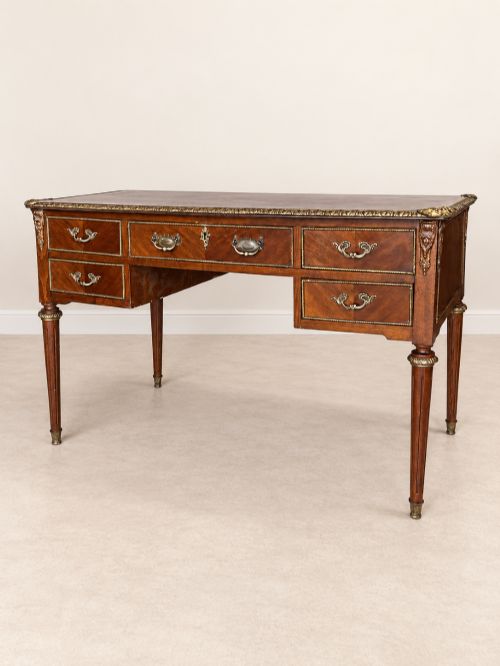
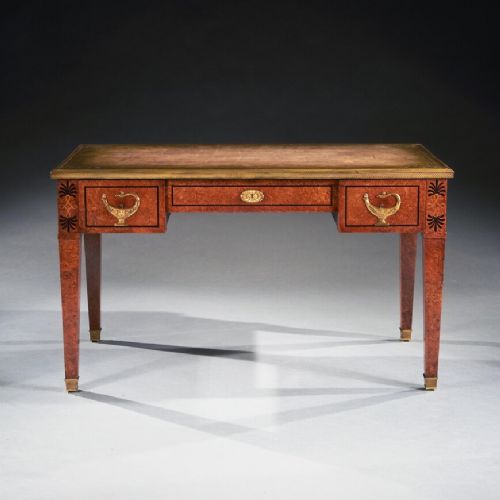
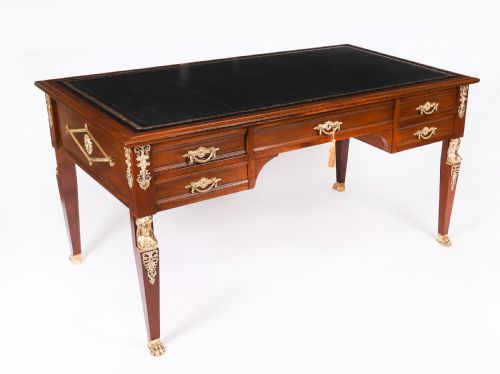
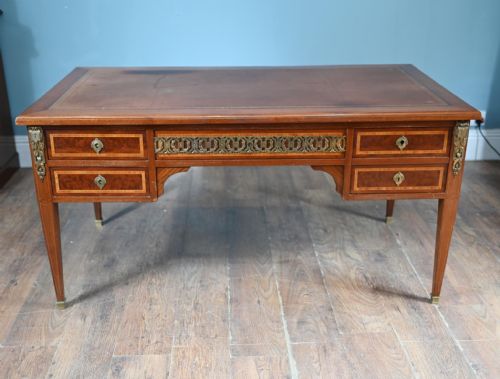
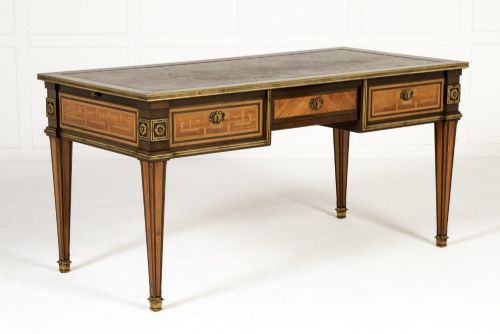
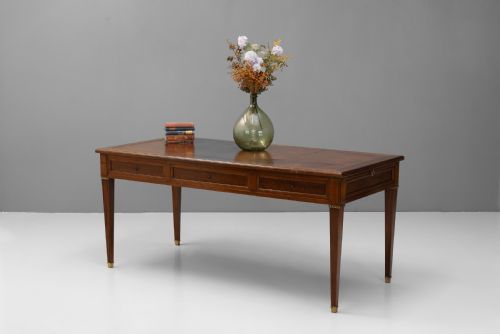
The pieces appearing on this page span the nineteenth century and the early twentieth century, alongside Edwardian interpretations. The bureau plat form dominates, characterised by a rectangular leather-lined top set above frieze drawers and supported by tapered or column legs.
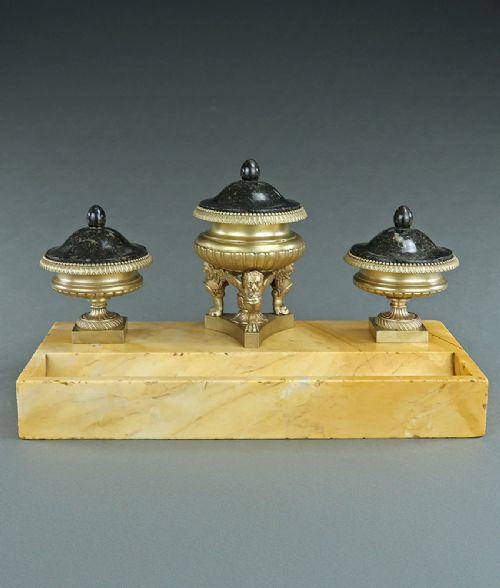
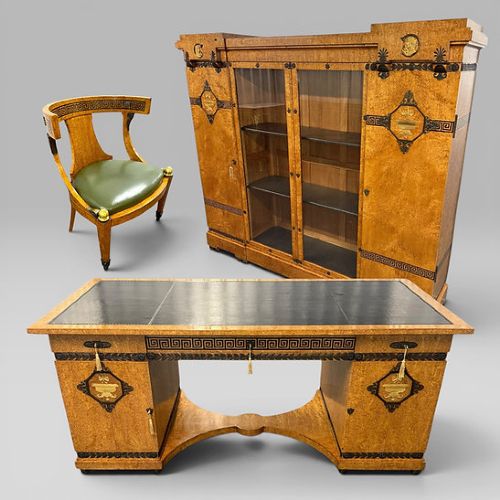
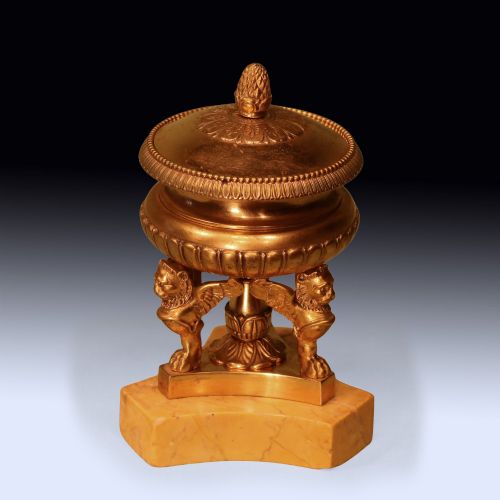
Makers and workshops of the period also produced matching office sets, secretaires, and smaller accessories such as marble encriers and ormolu inkstands. These works reflect a continuous European demand for symmetrical forms and classical restraint across decades of production.
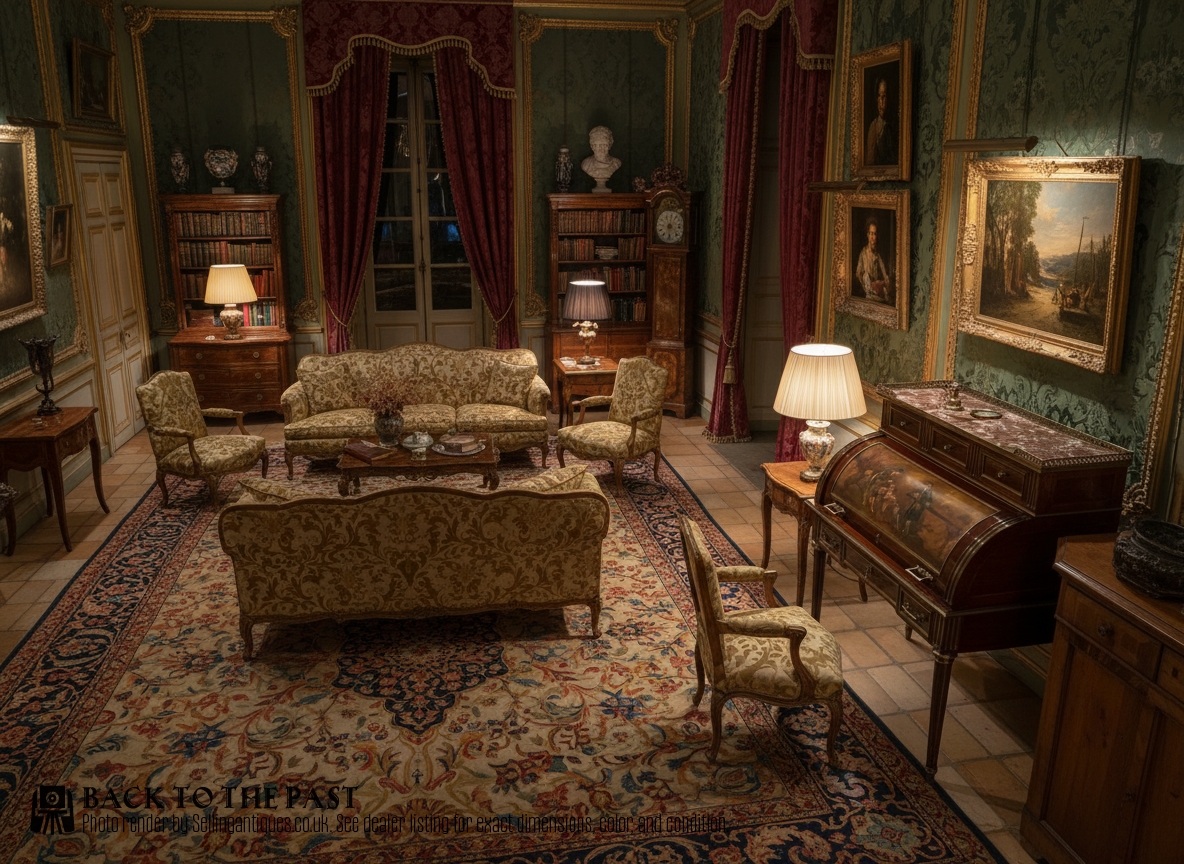
Materials and construction
Cabinetmakers constructed the primary carcasses of these desks using dense hardwoods such as mahogany, walnut, kingwood, and satinwood, often laid over supportive pine or oak frameworks. Selected veneers display balanced grain patterns across the main writing surfaces and drawer fronts.
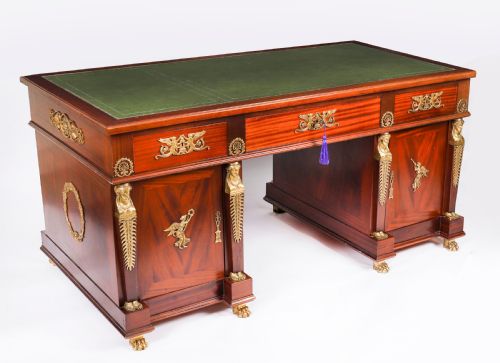
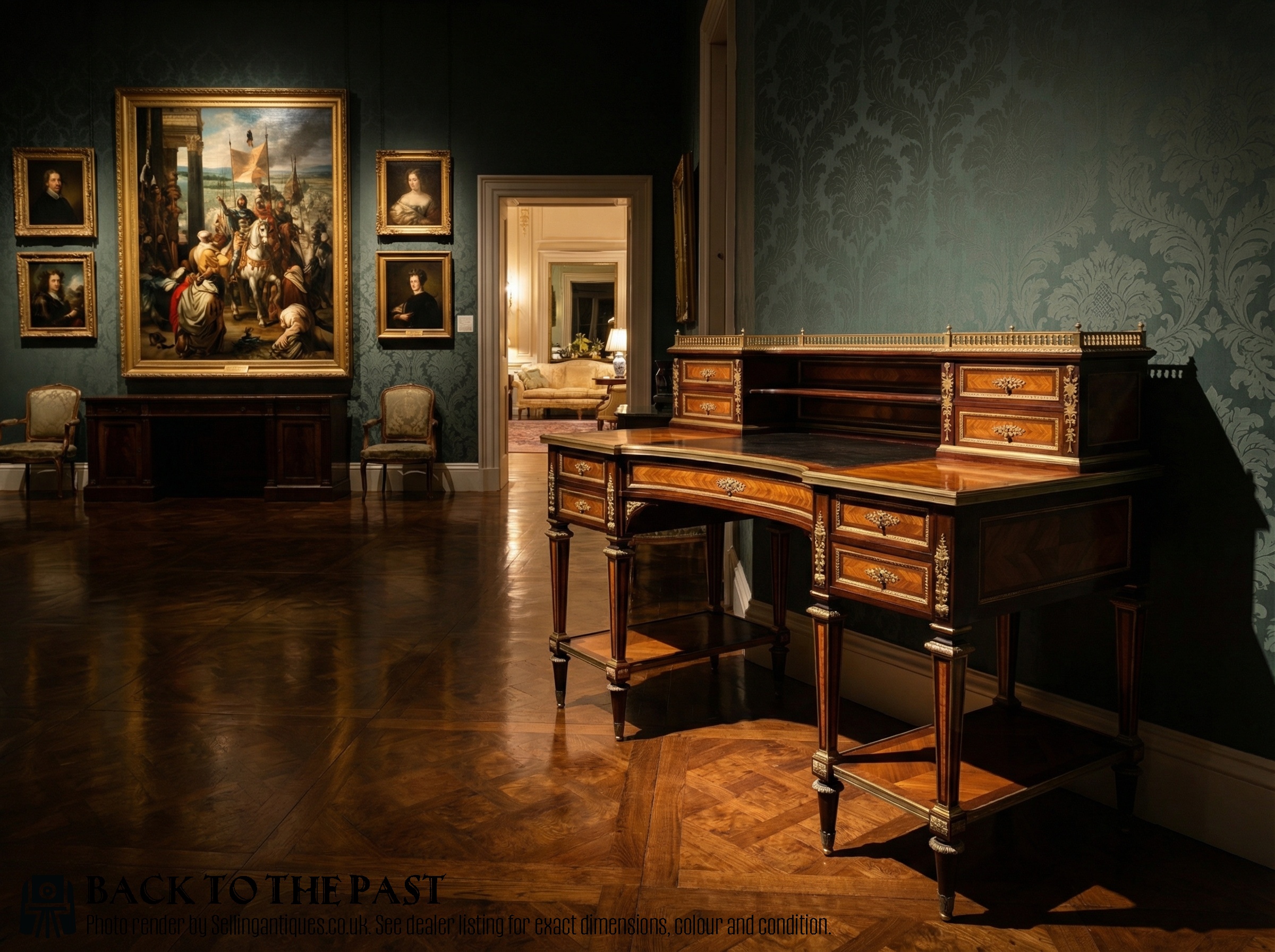
Cast and chased ormolu and gilt bronze mounts define the neoclassical aesthetic, accentuating corners, aprons, and drawer pulls with classical motifs. Inset writing surfaces utilise worked leather, while structural elements frequently incorporate white or sienna marble tops.
Joinery relies on traditional hand-cut dovetails for drawer construction and pegged mortise and tenon frames for stability. Ebonised finishes and parcel-gilding appear on specific Empire and Napoleon III variations, altering the visual weight of the wood.
Listings feature nineteenth-century mahogany, walnut, and kingwood desks mounted with gilt bronze and marble.
Standards of execution
Quality in a french neoclassical writing desk rests on the crispness of the bronze ormolu casting and the depth of its fire-gilt finish. Finer examples display hand-chased detail that remains sharp across every acanthus leaf and rosette.
The selection of timber grain and the precision of the parquetry or veneer matching determine the visual harmony of the piece. Workshops known for high production standards ensured that secondary woods and internal drawer linings matched the exterior standard.
The integration of secondary elements, such as matched marble slabs or original tooled leather inserts, separates standard commercial items from pieces carrying maker signatures or direct attribution to notable Parisian ateliers.
Mercier Frères·Henry Dasson·Francoise Linke·Jean Werner·Diehl Paris·Paul Sormani
The French Neoclassical Writing Desk Glossary
- Bureau plat
- A freestanding writing table with a rectangular top and one or more rows of frieze drawers, designed to stand away from the wall. This form serves as the primary desk type within neoclassical French furniture.
- Ormolu
- Gilt bronze ornaments applied to furniture mounts, feet, and key escutcheons. The technique involves applying a mercury-gold amalgam to cast bronze before heating.
- Encrier
- A desk set or inkstand, typically combining a metal inkwell with a marble or porcelain base. These accessories often accompany larger writing tables.
- Directoire style
- A transitional neoclassical style bridging Louis XVI and Empire aesthetics. It favours pared-down classical geometry and restrained ornament.
- Bonheur du jour
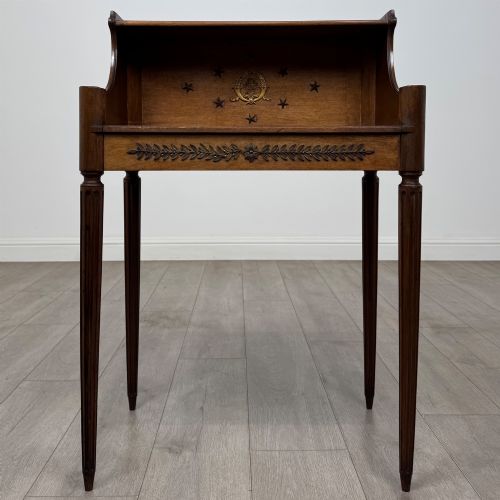
- A small, light ladies' writing desk featuring a set of small drawers or a cabinet on the upper surface. This form gained popularity during the late eighteenth century and persisted through revival periods.
French Neoclassical Writing Desk: Frequently Asked Questions
What is ormolu?
Ormolu refers to gilded bronze mounts applied to the corners, legs, and aprons of neoclassical furniture. The process uses mercury gilding on cast bronze to achieve a lasting golden lustre.
On higher-quality desks, these mounts are hand-chased with cold chisels after casting to sharpen the botanical and geometric details. They serve both a structural role in protecting corners and a decorative purpose.
Are these desks suitable for daily work?
Many period writing tables accommodate modern laptops and desk accessories while preserving historical character. The leather writing surfaces provide a stable, traditional platform for daily tasks.
Buyers should verify the kneehole height and overall dimensions to ensure the desk matches modern seating comfort. Freestanding tables offer generous surface area without heavy cabinetry blocking light.
How do I tell Empire from Louis XVI style?
Louis XVI furniture draws on archaeological discoveries from Pompeii, displaying straight tapered fluted legs and restrained classical motifs like ribbons and beads. The overall effect is light, balanced, and rectilinear.
Empire furniture, popular under Napoleon, introduces heavier proportions, ebonised woods, and assertive military or imperial symbols like sphinxes, laurel wreaths, and winged figures. Ormolu mounts on Empire pieces tend to be more massive and dominant.