


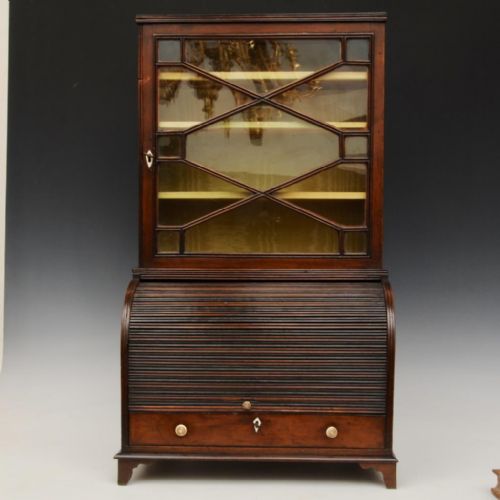

Small Cylinder Bureau Desk
These small cylinder bureau desk pieces are compact writing furniture with curved roll covers that conceal fitted interiors, offering discreet elegance and practical workspace.
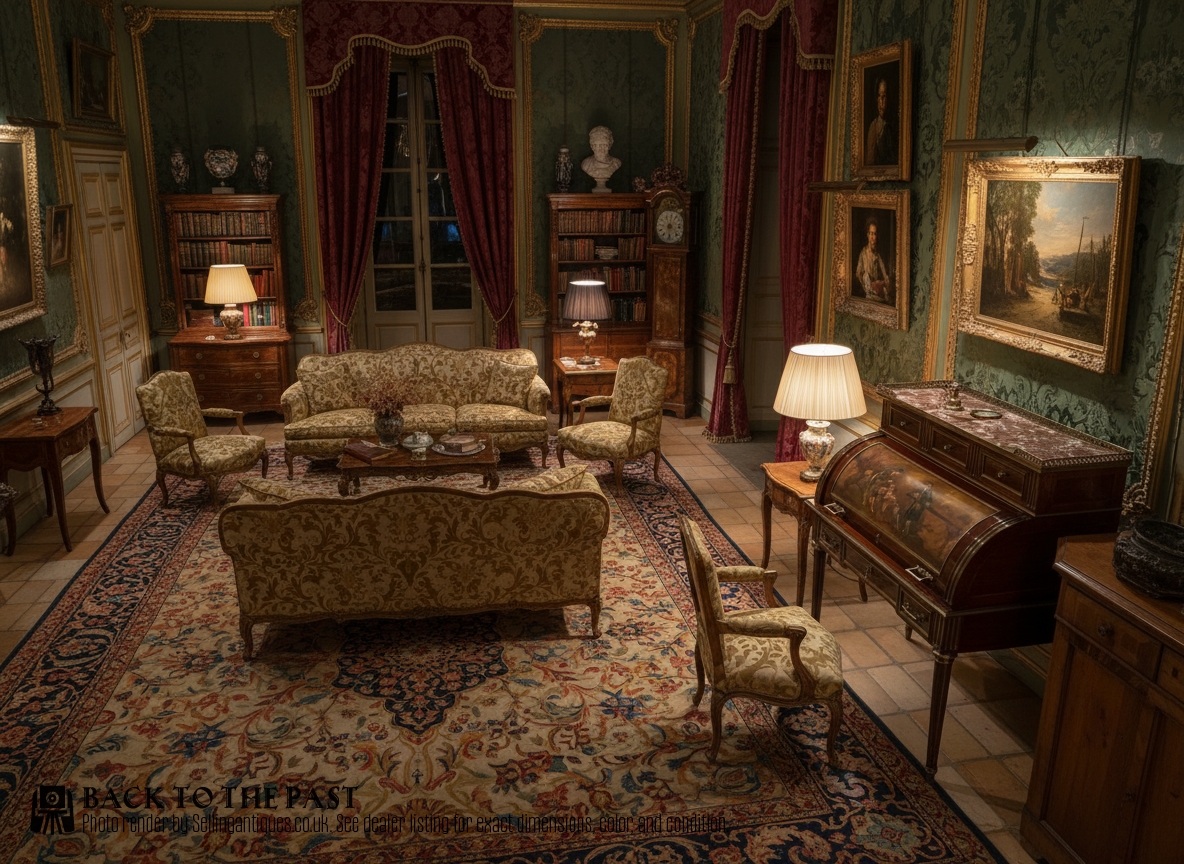
Small Cylinder Bureau Desk
A small cylinder bureau desk is a compact form of writing furniture distinguished by its curved rolling shutter that conceals fitted interior compartments and a pull-out writing surface. When searching this phrase, a buyer encounters pieces primarily from the Georgian, Victorian, Edwardian, and 19th Century periods.
Mahogany remains the predominant timber across these listings, often enhanced by satinwood, walnut, or fruitwood. Makers utilised brass handles, leather writing inserts, and occasionally marble tops or glass elements to finish the pieces.
How they were made
Cabinet makers constructed these desks using solid timbers and fine veneers like mahogany, walnut, and satinwood over sturdy carcases. The characteristic cylinder mechanism relies on precise curved slats or panelling running in hidden tracks to enclose the writing compartment smoothly.
Surface ornamentation involved intricate marquetry, parquetry, and delicate string inlay work, particularly on Edwardian and French revival examples. Detail was further elevated through the integration of brass mounts, gallery rails, and leather lined writing surfaces.
The current listings span multiple eras from the 18th Century through Georgian, Victorian, and Edwardian periods up to 1900.
What varies in quality
Quality in a small cylinder bureau desk lies in the precision of the rolling cylinder mechanism and how smoothly it tracks within its housing. Superior examples feature seamless movement without binding, alongside tight joinery in the internal stationery compartments and drawers.
The refinement of the timber selection and the execution of inlay work separate standard pieces from finer ones. Crisp marquetry details, well cast brass hardware, and carefully chosen grain patterns indicate higher workshop standards.
The Small Cylinder Bureau Desk Glossary
- Cylinder desk
- A writing desk with a quarter circle curved wooden shutter that rolls back to reveal the writing surface and interior drawers. This mechanism protects the desk contents while maintaining a tidy closed profile.
- Marquetry
- Decorative patterns formed by fitting together thin veneers of various wood types, coloured woods, and other materials. It creates pictorial or geometric designs across the exterior surfaces.
- Parquetry
- Geometric mosaic woodwork used for repeating patterns on furniture tops and drawer fronts. It employs contrasting wood grains to build striking visual rhythm.
- Satinwood
- A lustrous, hard timber with a golden yellow sheen frequently used for decorative banding and inlay work on late furniture. It provides bright contrast against darker woods like mahogany.
Small Cylinder Bureau Desk: Frequently Asked Questions
What is a cylinder desk?
A cylinder desk is a form of writing furniture featuring a curved, quarter-circle wooden shutter that rolls back into the body of the desk. This action simultaneously reveals the pull-out writing surface and internal pigeonholes.
Unlike standard slope-front bureaux, these desks maintain a smooth cylindrical top when closed, offering a tidy and architectural appearance suitable for principal rooms.
How do I identify the period?
Dating relies on observing timber choices, construction methods, and stylistic cues present in the design. Georgian and 18th Century pieces typically show restrained mahogany construction with simple proportions, while Victorian and Edwardian examples often incorporate lighter inlays or revival styling.
French pieces from the late 19th century frequently display marquetry and specific regional details like marble tops, reflecting the tastes of their respective eras.
Where were they used?
These compact desks served primarily as private writing spaces in parlours, bedrooms, or reception rooms where larger partners desks proved too dominant. Their enclosed nature kept correspondence and personal papers private.
Ladies writing desks and miniature versions were particularly suited for lighter administrative tasks and intimate domestic settings.
Are they practical to use today?
Their compact footprints make them well suited for modern homes requiring smaller scale antique furniture that provides functional surface area. The internal compartments remain useful for organising stationery and modern correspondence.
Care should be taken to maintain stable humidity levels to ensure the wooden cylinder mechanism continues to track smoothly within its runners.