




French Mahogany Writing Table
When you search for a french mahogany writing table, you are looking at sophisticated writing furniture produced across the nineteenth and twentieth centuries, often designed as a bureau plat or freestanding centre table.
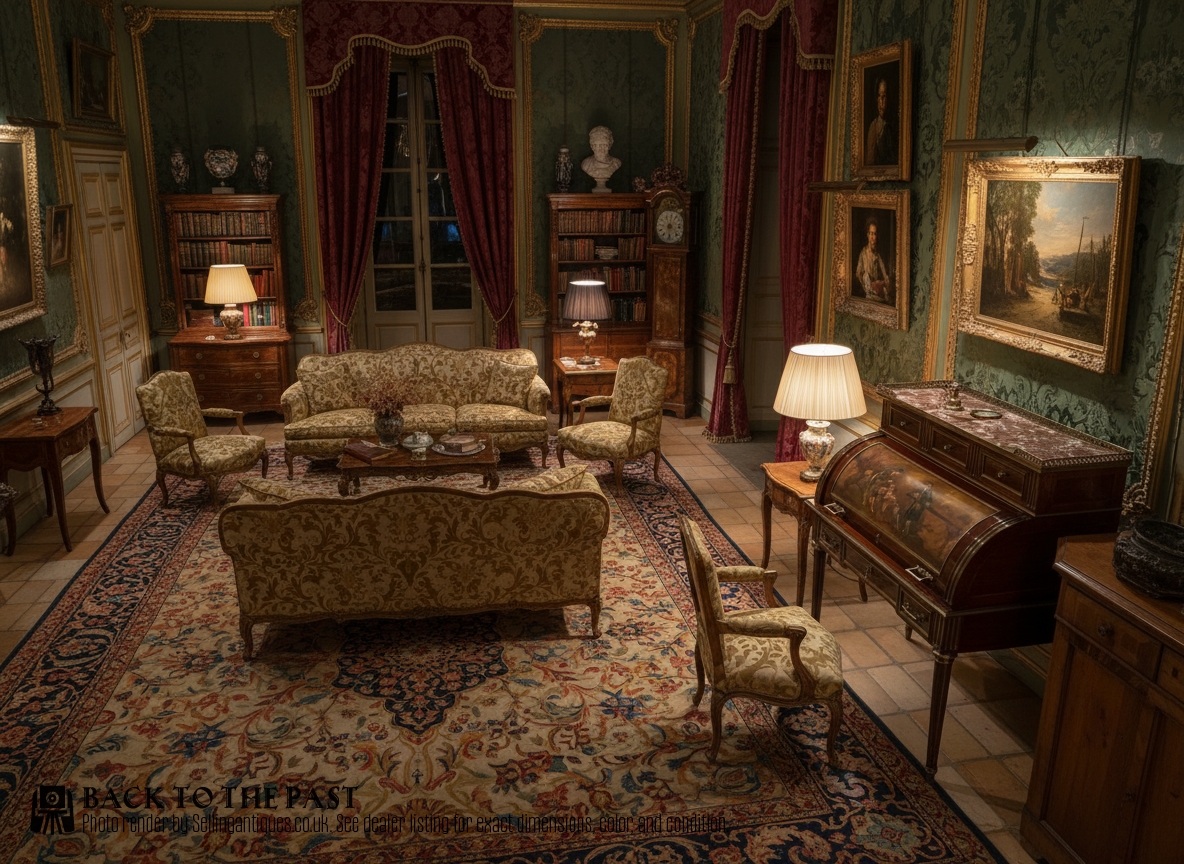
French Mahogany Writing Table
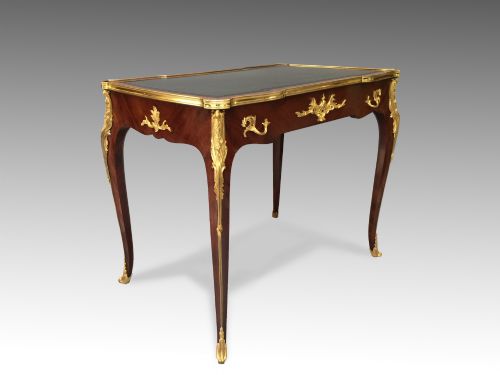
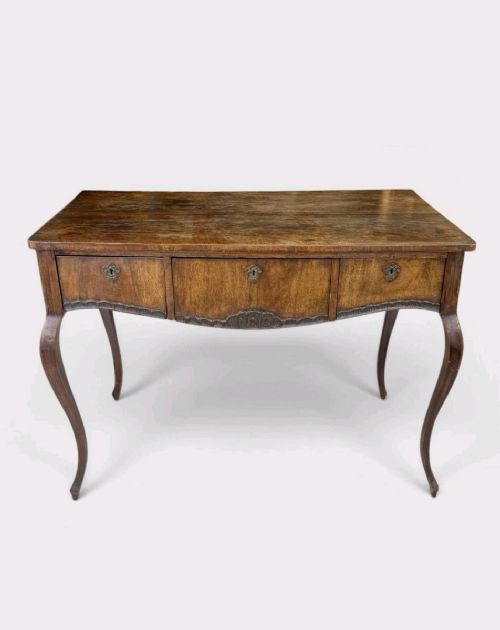
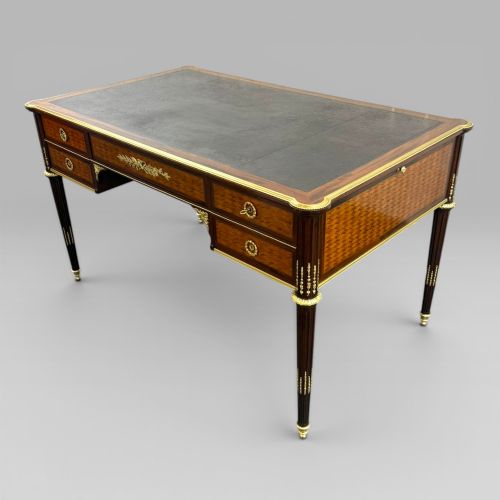
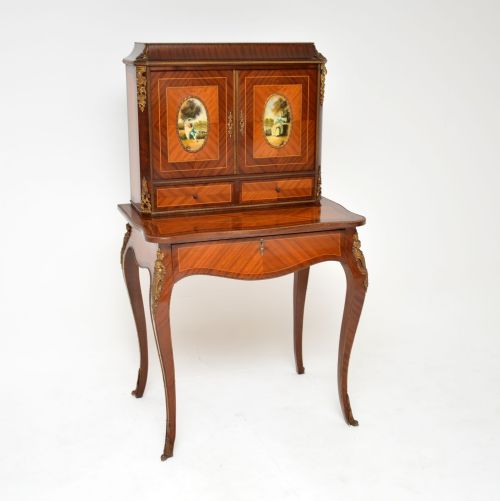
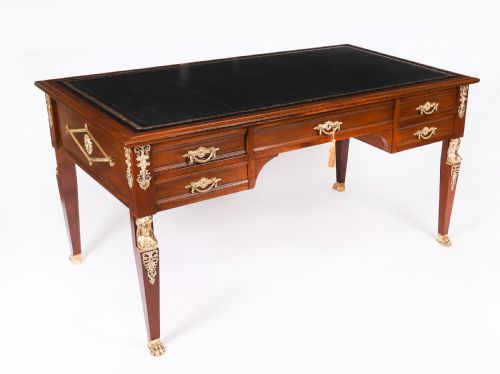
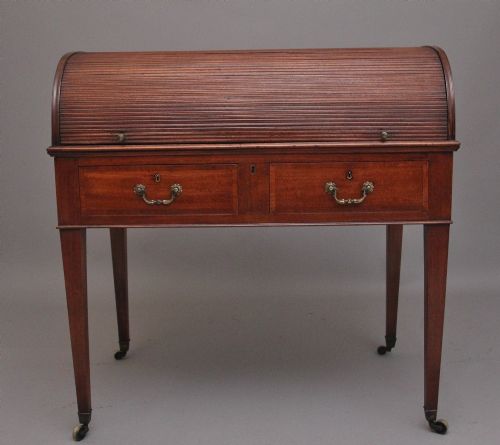
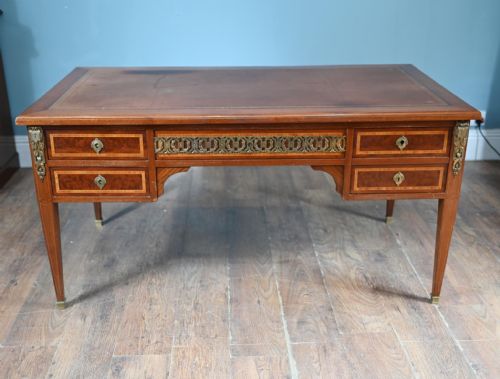
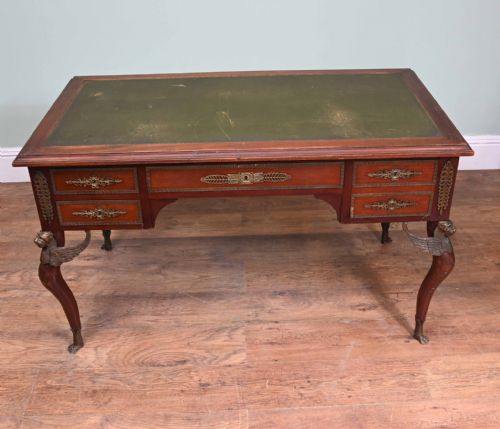
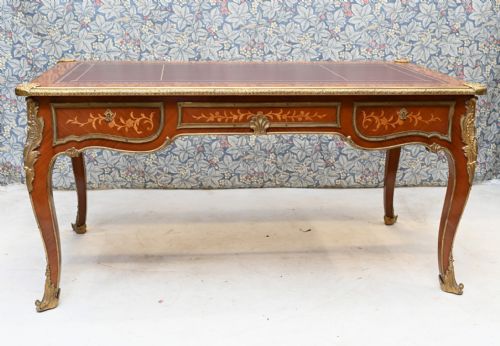
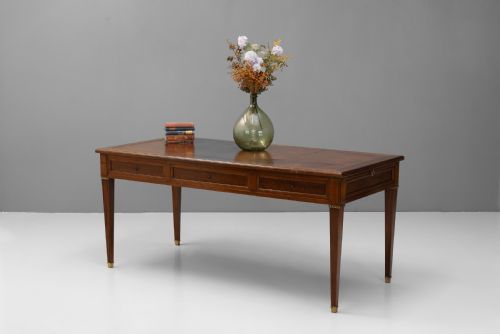
A french mahogany writing table typically takes the form of a freestanding bureau plat or a refined ladies desk designed to sit centrally in a room rather than against a wall. These pieces frequently incorporate inset leather writing surfaces and multiple frieze drawers, balancing practical function with decorative presence.
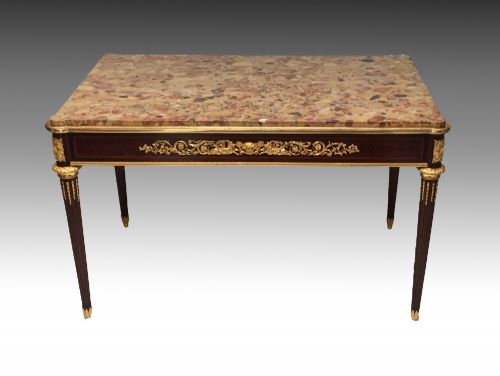
The materials span solid and veneered mahogany, frequently accented with contrasting satinwood or kingwood parquetry. Metal mounts in ormulu, gilt bronze, and brass define the revival styles, while marble tops appear on related console and centre tables.
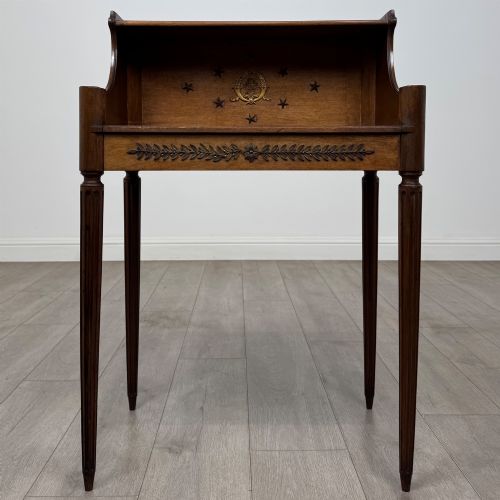
Most examples date from the nineteenth century, including Victorian interpretations and specific revival periods such as Louis XVI and French Empire. Maker-attributed pieces by notable cabinetmakers sit alongside simpler utilitarian forms.
How they were made
Makers utilised dense mahogany timbers, often selected for flame grain patterns, as the structural base for carcases and drawer fronts. Cabinetmakers then applied delicate veneers of satinwood or kingwood in geometric parquetry patterns across the tops and friezes.
Decorative metalwork formed an integral part of the construction, with cast ormulu and gilt bronze mounts screwed or pinned to corners, legs, and drawer edges. Brass stringing and inlay were frequently channelled directly into the mahogany surfaces to accentuate the linear design of the table.
Writing surfaces were typically inset with tooled leather panels, bordered by blind or gold tooling. Drawer construction relied on traditional dovetail joints, housed within serpentine or straight friezes supported by tapering or cabriole legs.
The archive and active inventory span eighteenth-century roots through Victorian interpretations to Edwardian and twentieth-century reproductions.
What varies in quality
The standard of the cast ormulu mounts distinguishes exceptional pieces from standard workshop output. Finely chased bronze mounts with sharp detail and deep fire-gilding indicate superior craftsmanship compared to softer, unchased brass alternatives.
The choice and execution of timber veneers create a distinct hierarchy in these tables. Flame mahogany with matched figuring and precise parquetry inlays demonstrate greater skill than plain, uniform mahogany surfaces.
Structural integration of the design determines overall refinement. Tables finished on all sides for freestanding placement, complete with functioning locks and numbered maker signatures, represent the highest tier of production.
François Linke·Edwards & Roberts·Jean-Joseph Chapuis·A. Beurdeley·Alphonse Tahan
The French Mahogany Writing Table Glossary
- Bureau Plat
- A freestanding writing table, usually featuring drawers in the frieze and designed to be viewed from all sides. This form became popular in France during the eighteenth century and was widely revived in the nineteenth.
- Ormolu
- Gilt bronze mounted on furniture pieces for decorative effect. The technique involves applying a mercury and gold amalgam to cast bronze before firing.
- Parquetry
- Geometric wood inlay patterns assembled from small veneer tiles. Makers used contrasting timbers like satinwood and mahogany to create optical illusions of depth.
- Frieze
- The horizontal section of the table directly beneath the top edge, which commonly houses one or more pull-out drawers. In finer examples, this area carries the richest bronze mounts and marquetry.
- Bonheur du Jour
- A small ladies writing desk featuring a super-structure of small drawers, cabinets, or shelves above the main writing surface. These dainty pieces gained popularity during the Louis XV and Louis XVI periods.
French Mahogany Writing Table: Frequently Asked Questions
Where should I place a bureau plat?
Because these tables are finished on all sides with polished mahogany and detailed mounts, they work best positioned in the centre of a room rather than pushed against a wall.
They function effectively as executive desks or library tables where the rear is fully visible to anyone entering the space.
How do I care for the leather top?
The inset leather writing surface benefits from occasional treatment with appropriate leather balms or neutral waxes to prevent drying and cracking.
Avoid placing excessive moisture directly on the leather, and use blotting paper if utilising traditional fountain pens.
How do I distinguish Empire style from Louis XVI style?
Empire style pieces, influenced by classical antiquity and military campaigns, favour heavier proportions, dense mahogany, and bold ormulu mounts depicting sphinxes, laurels, and military trophies.
Louis XVI style tables typically display lighter rectilinear frames, fluted tapering legs, and restrained neoclassical brass or gilt bronze enrichment.
What is the difference between a writing table and a bureau plat?
The terms are often used interchangeably in the trade, but a bureau plat specifically denotes a formal French writing table with a finished back and frieze drawers.
A general writing table may include simpler British or provincial variants that were historically intended to stand against a wall.