

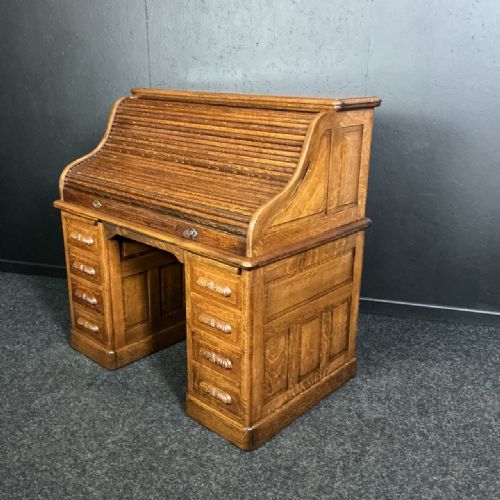
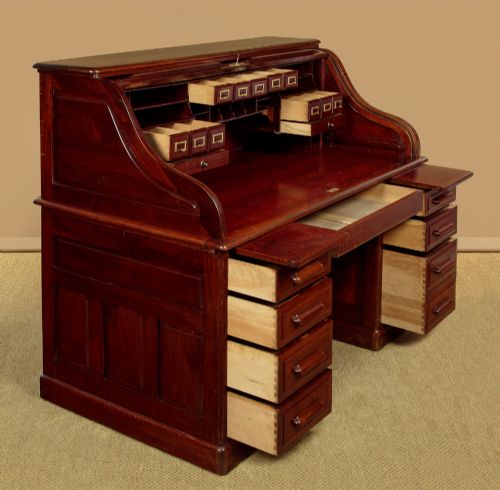

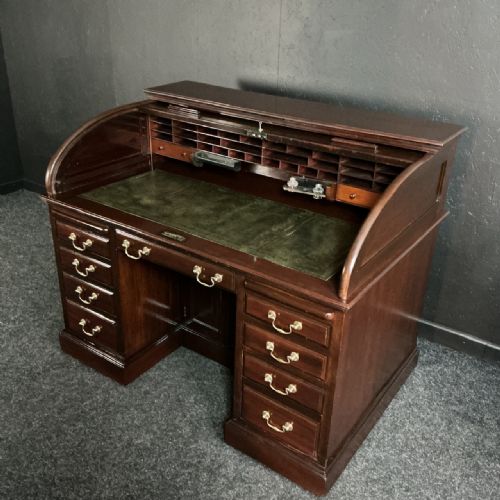


Cylinder Rolltop Desk
These cylinder rolltop desk designs conceal paperwork behind curved timber fronts, offering a practical writing surface that locks away the clutter of daily correspondence.
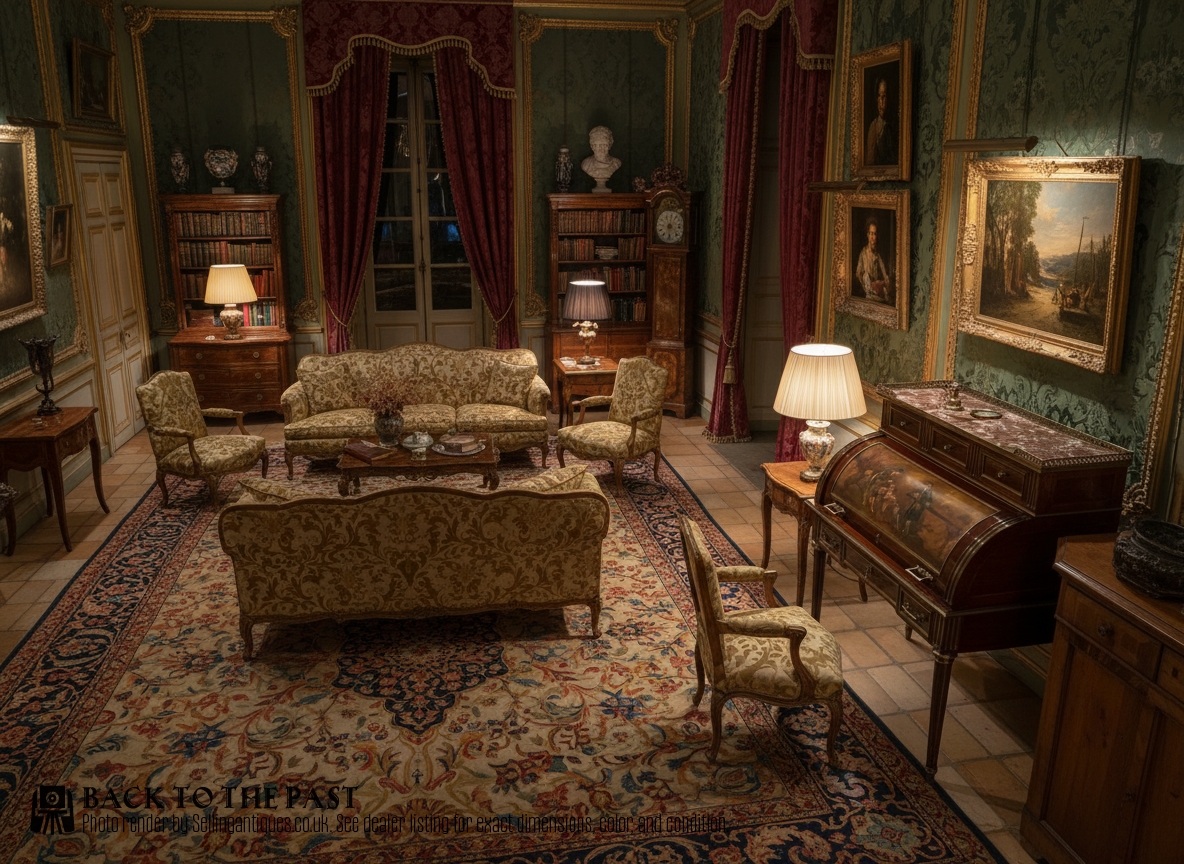
Cylinder Rolltop Desk
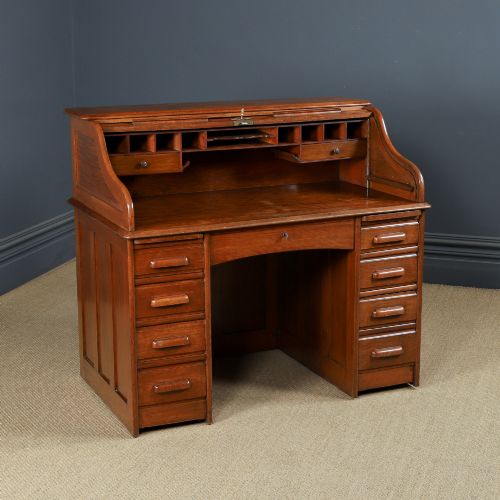
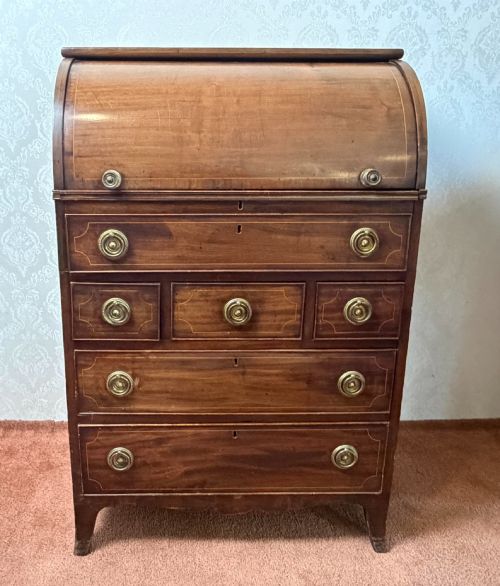
A cylinder rolltop desk takes many forms across the evidence, appearing in English mahogany and oak alongside Continental walnut and satinwood. Buyers encounter Georgian and Regency examples, as well as later Victorian and Edwardian variations built for home or office use.
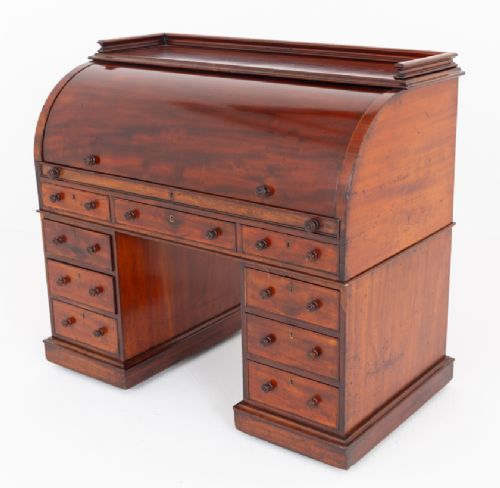
The standard configuration relies on a curved wooden shutter that slides back to reveal an interior arrangement of pigeonholes and small drawers above a pull-out writing slide. Pieces range from large pedestal office desks to compact freestanding writing tables and bureau bookcases.
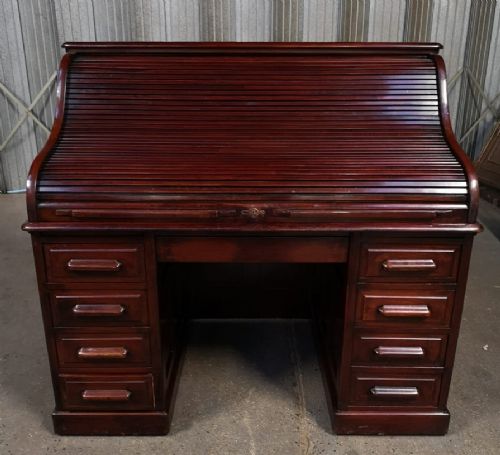
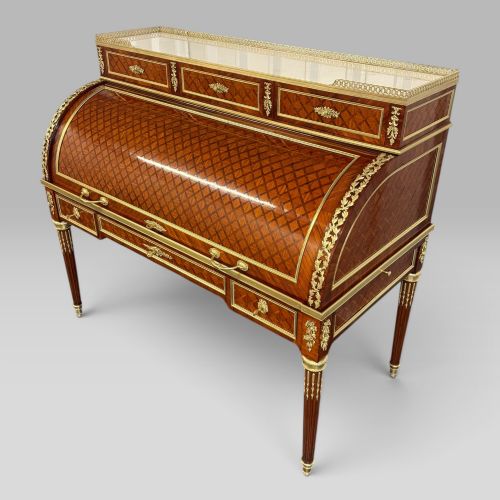
Revival styles heavily influence the selection, with French Louis XVI, Louis XV and Sheraton Revival designs frequently joining heavy oak office rolltops. Cabinet makers utilise tambour slats or solid rolling cylinders to enclose the desk surface.
Materials and construction
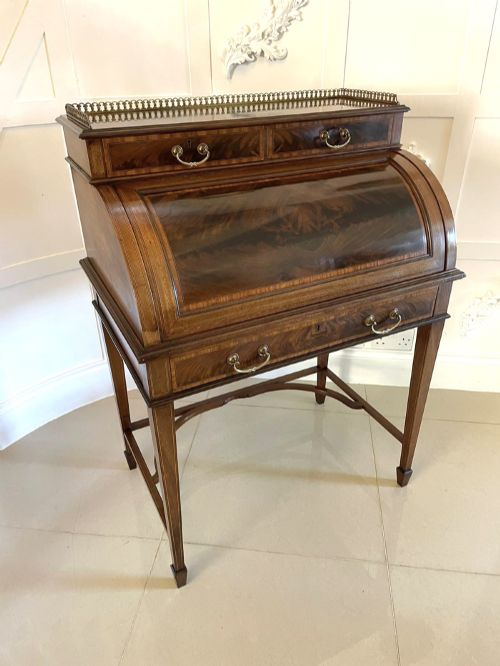
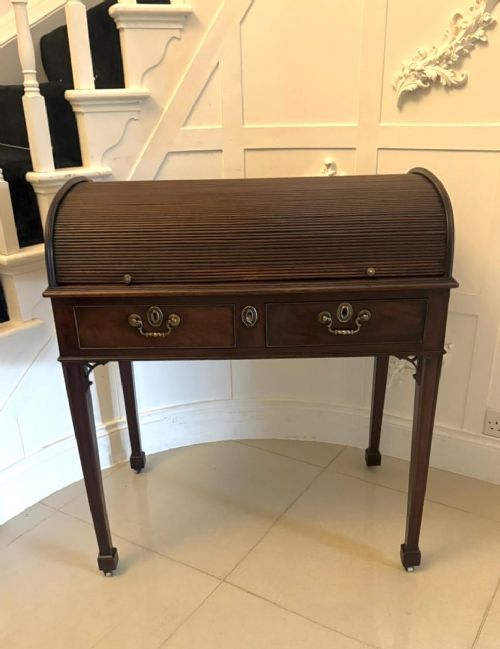
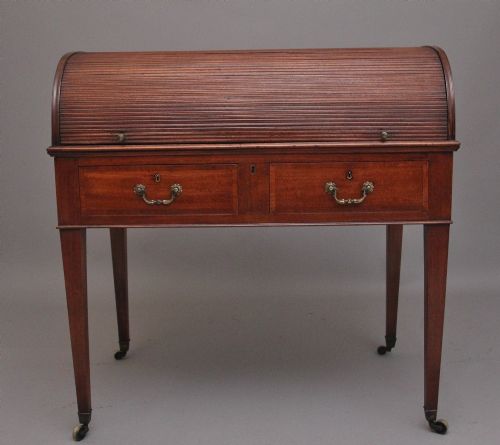
Craftsmen built these desks primarily using solid and veneered mahogany, oak and walnut, often accentuating the exterior with flame mahogany, satinwood or intricate floral marquetry and parquetry. Tambour desks employ tightly fitted narrow strips of wood glued to a fabric backing to achieve the flexible rolling action.
Higher specification pieces incorporate brass mounts, ormolu details and leather writing inserts, whilst structural elements utilise dovetailed drawer construction and turned wooden pedestals. French and English workshops applied polished finishes that highlighted the natural grain of the timber.
Listings feature woods including mahogany, oak, walnut, satinwood, fruitwood, and ormolu mounts.
Defining quality in cylinder desks
The smoothness of the mechanical rolltop or tambour action separates superior examples from inferior ones, as well-adjusted tracks allow the curved wooden shutter to glide without binding. Timber selection dictates overall merit, where figured flame mahogany or finely executed marquetry elevates a piece far above standard office utility furniture.
Internal joinery and secondary woods reveal the standard of workshop execution, with hand-cut dovetails and well-fitted internal stationery compartments marking out superior craftsmanship. The integrity of the brass hardware, leather surfaces and structural stability further define the distinction between mass-produced items and high-grade cabinet work.
Maple & Co London·Boston Chair Company
The Cylinder Rolltop Desk Glossary
- Cylinder desk
- A writing desk featuring a quarter-circle or half-cylinder wooden lid that rolls back to uncover the writing surface and internal compartments. This mechanism protects the desk contents while maintaining a neat exterior appearance.
- Tambour
- A flexible shutter made from narrow strips of wood glued to canvas or leather, allowing the surface to follow a curved track around the back of the desk. It functions as an alternative to a solid pivoting cylinder.
- Ormolu
- Gilt bronze mounts applied to furniture for decorative effect, commonly found on French revival pieces from the nineteenth century. The technique involves fusing a mercury and gold amalgam onto bronze.
- Parquetry
- Geometric wood-mosaic work used to decorate furniture surfaces in repeating patterns. Craftsmen cut various coloured timbers to fit together precisely across tabletops and cylinder fronts.
- Pigeonhole
- A small open compartment inside a desk designed for sorting letters and documents. These compartments sit above the main writing slide beneath the rolling cylinder.
Cylinder Rolltop Desk: Frequently Asked Questions
How does a cylinder desk differ from a bureau?
A bureau typically uses a sloping hinged flap that folds down to create a writing surface, whereas a cylinder desk employs a rolling curved shutter that slides vertically or horizontally back into the body of the cabinet.
This cylindrical mechanism allows users to leave papers standing upright on the writing slide while closing the desk, a feature impossible with a flat folding flap.
Were these desks used for offices or homes?
The evidence shows both domestic and commercial applications, with heavy oak pedestal versions designed for corporate offices and refined mahogany or satinwood pieces built for private libraries.
Edwardian iterations frequently catered to the growing home office market, whilst earlier Georgian and Victorian examples served grand drawing rooms and studies.
How do I maintain the rolling mechanism?
The wooden tracks and sliding tambour slats require careful cleaning and occasional waxing to ensure smooth operation without sticking. Keeping the furniture in a room with stable humidity prevents the timber from warping and binding the rolling shutter.
Avoid applying heavy oils or modern lubricants that might damage the fabric backing on tambour strips or stain the surrounding mahogany and walnut veneer.
What periods are most common for these desks?
Victorian and Edwardian pieces appear most frequently in walnut and oak, particularly robust office rolltops and simpler home writing desks.
Earlier Georgian and eighteenth-century examples tend to feature fine mahogany, satinwood, and intricate marquetry, representing high-status cabinet making.