
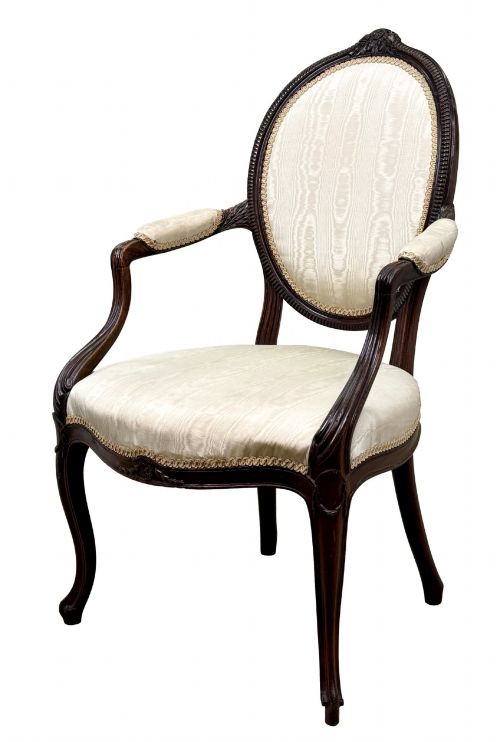


French Neoclassical Seating
French neoclassical seating brings the refined geometry and classical restraint of the eighteenth century into domestic interiors through carved frames and upholstered forms.
French Neoclassical Seating
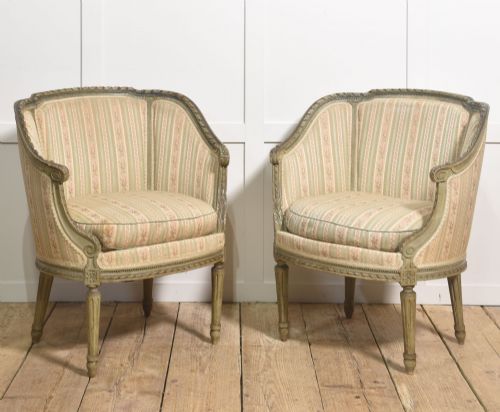
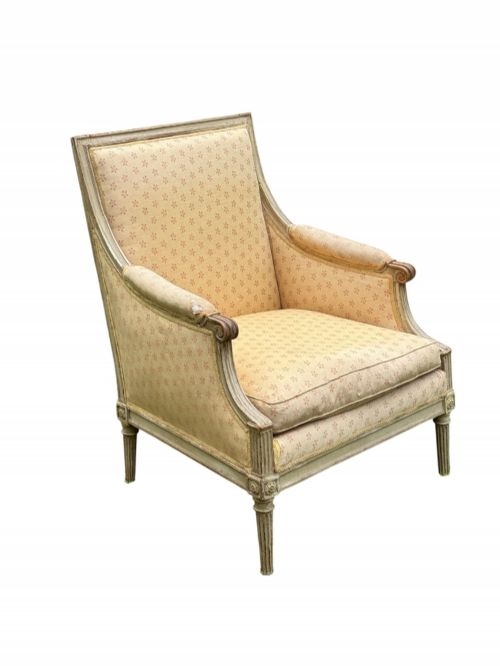
French neoclassical seating spans a variety of forms designed for the salon and bedchamber, encompassing armchairs, settees, window seats, and stools. You will encounter pieces dating from the eighteenth century through to the early twentieth century, including revivals in the Louis XVI, Empire, and Gustavian styles.
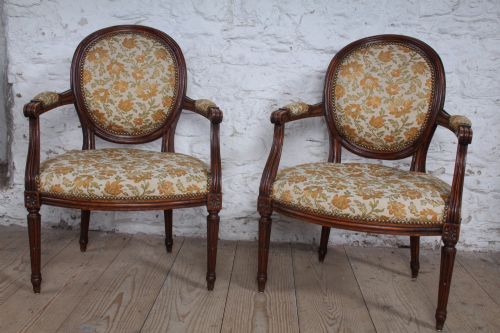
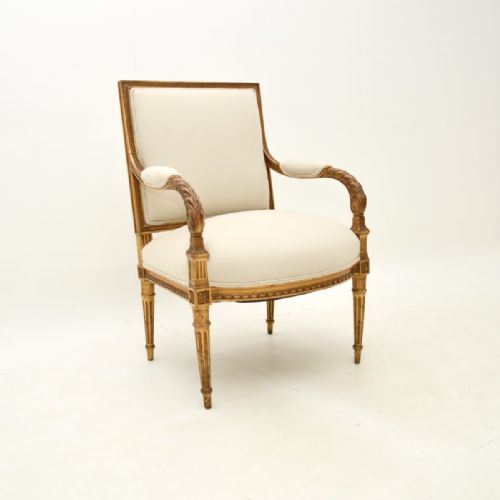
The armchairs and side chairs often display rectilinear structures, fluted legs, and carved details drawn from classical architecture. Settees and daybeds provide larger seating options with exposed wooden frames finished in gilt, paint, or natural polish.
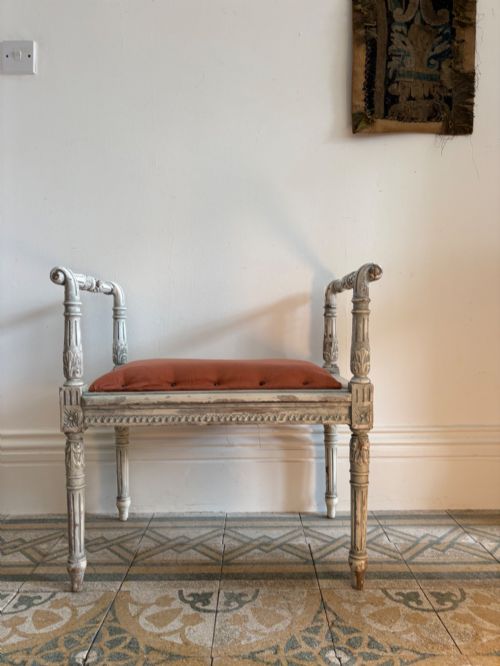
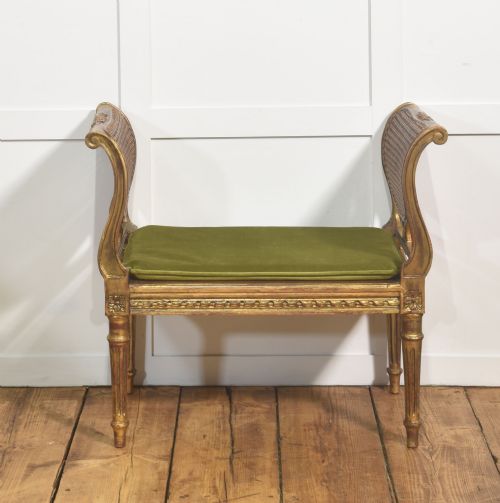
Stools and window seats complete the offering, ranging from simple X-frame constructions to cane-seated designs intended for placement beneath domestic windows.
Materials and construction methods
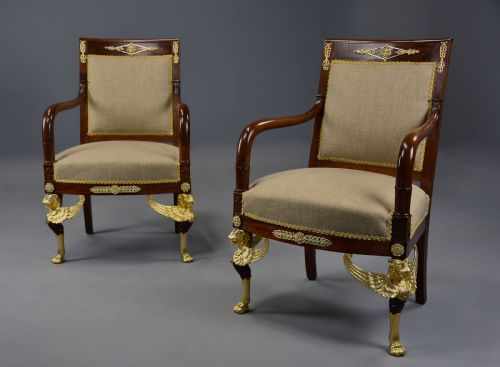
Makers utilised solid timbers such as mahogany, walnut, and beech to construct the load-bearing frames, often carving decorative motifs directly into the wood before applying a gilt or painted surface. Giltwood, painted finishes, and patinated bronze or ormolu mounts define the exterior appearance of these seats.
Upholstery forms an integral part of the construction, utilising fabrics such as silk, velvet, and needlepoint panels secured over padded seats and backs. Canework appears on specific chair backs and window seats, providing a lighter texture alongside the solid woodwork.
Look closely for miniature children's salon chairs scaled down for nineteenth-century drawing rooms.
Factors that distinguish examples
The crispness and depth of the woodcarving separate standard production from finer work, as skilled hands render acanthus leaves, fluting, and floral paterae with distinct relief. The quality of the gilding or original painted surface dictates the visual integrity of the frame over time.
Structural execution, from the joinery of the frame to the retention of period upholstery materials like needlepoint or silk, determines the historical fidelity of the piece. Ormolu mounts and cast bronze details show variation in their chasing and finish, reflecting the workshop standards of their period of origin.
Etienne-Henri Dumaige·Henri Jacob
The French Neoclassical Seating Glossary
- Fauteuil
- An open-arm armchair with upholstered back and seat, typically featuring exposed wooden arms and carved frame details.
- Ormolu
- Gilded bronze applied as decorative mounts to furniture frames, particularly prominent in Empire style pieces.
- Gustavian
- The Swedish interpretation of neoclassical design, characterised by light paint finishes and restrained classical motifs.
- Canework
- Woven rattan or cane used for seats or back panels, offering a lighter texture on chairs and window stools.
- X-frame
- A stool or chair base formed by intersecting diagonal legs, frequently utilised in neoclassical design.
French Neoclassical Seating: Frequently Asked Questions
What is French neoclassical seating?
French neoclassical seating comprises chairs, settees, and stools influenced by the archaeological discoveries of the eighteenth century, favouring straight lines and classical motifs over baroque curves.
These pieces emerged during the reign of Louis XVI and saw subsequent revivals through the nineteenth and early twentieth centuries.
How do I identify Louis XVI style chairs?
Louis XVI style seating is distinguished by geometric shapes, rectilinear frames, and fluted columns rather than the curved cabriole legs of the preceding rococo period.
Common markers include oval or square backs, carved rosettes at the joints, and straight tapered legs.
Where were window seats placed?
Window seats were designed specifically to fit into the architectural recesses of tall windows in period homes, providing a spot for reading or needlework.
They typically feature low backs or no backs at all to avoid obstructing the window light.
How do I care for giltwood frames?
Giltwood frames require gentle dusting with a soft, dry brush to prevent the accumulation of dirt on the delicate gold leaf surface.
Avoid liquid cleaners and moisture, which can lift the gesso and gold leaf from the underlying wood.