


French Marquetry Tallboy
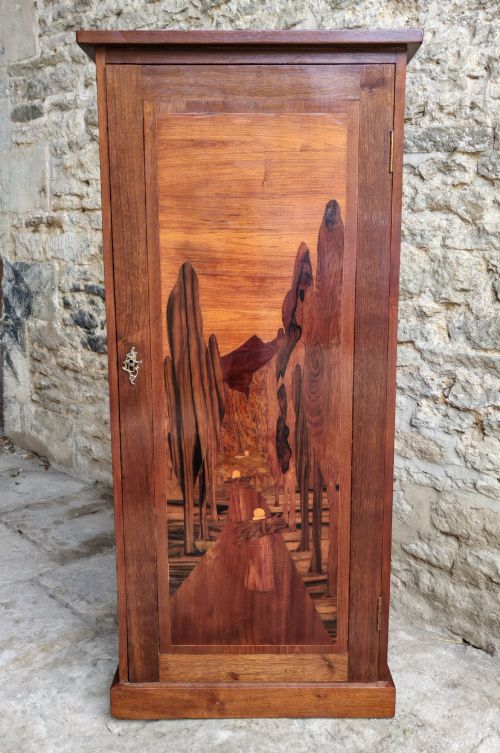
A French marquetry tallboy brings together intricate floral wood-inlay and commanding vertical storage, offering a striking focal point for any grand interior.
French Marquetry Tallboy
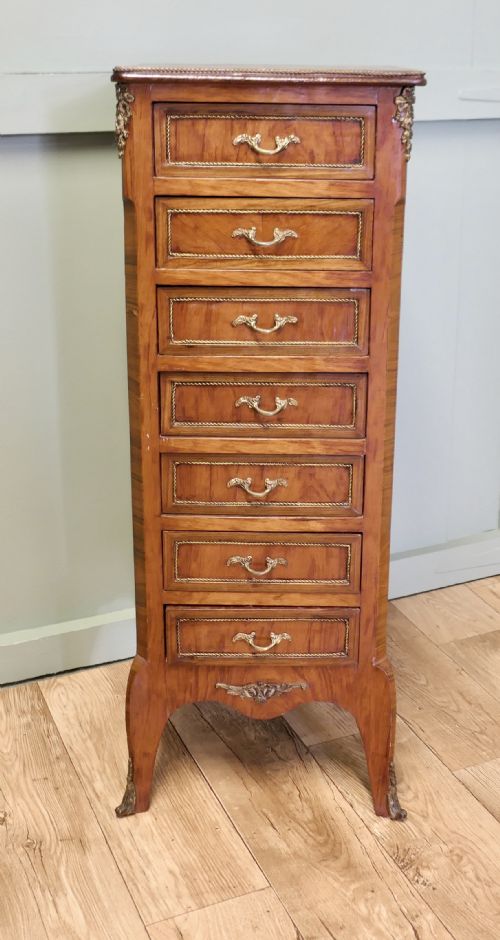
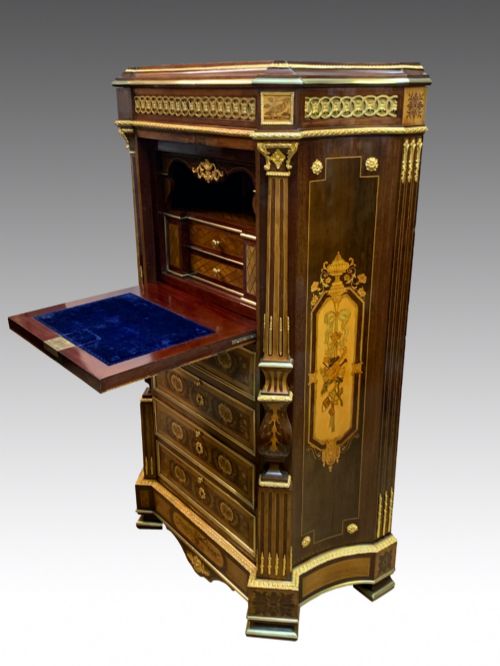
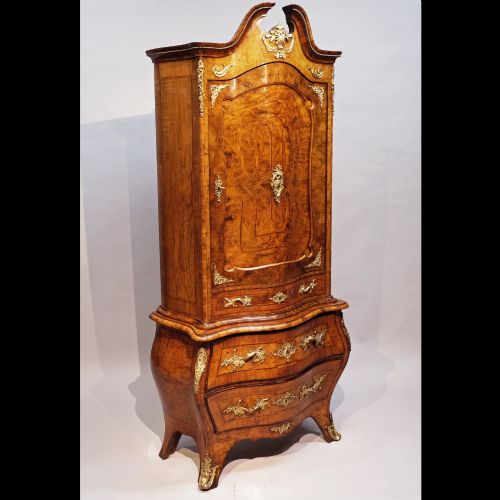
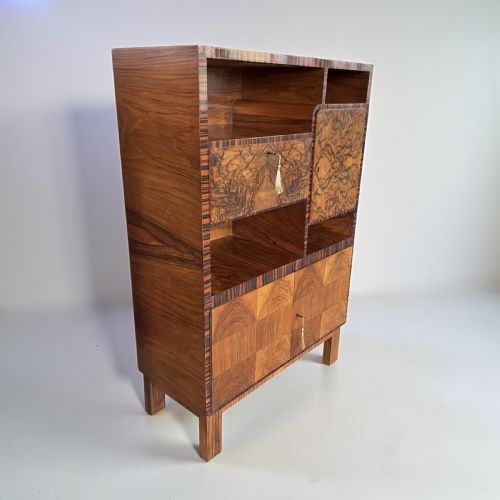
A French marquetry tallboy is a vertical storage piece designed to maximise floor space while displaying elaborate wood veneers on its facade. These pieces encompass tall chests of drawers, secretaire semaniers, and cabinets originating across the nineteenth and early twentieth centuries.
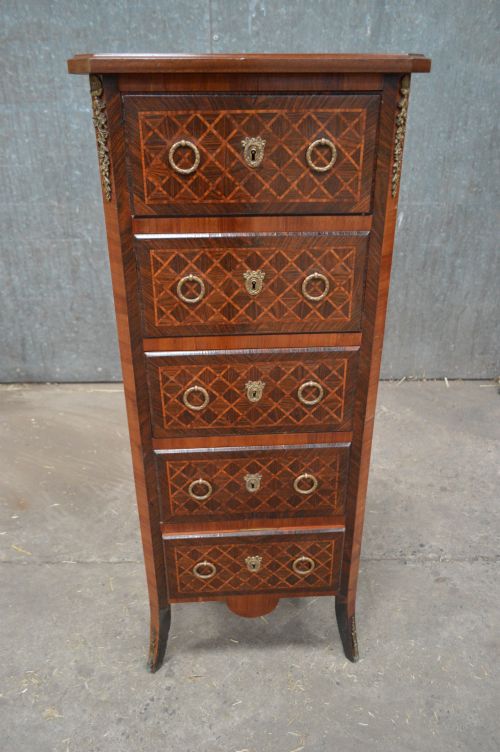
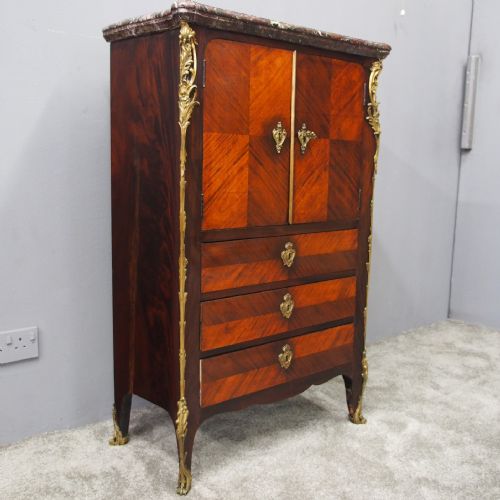
Buyers frequently encounter pieces echoing the Louis XV, Louis XVI, and Rococo Revival styles, alongside later Art Deco examples. The taller proportions allow craftsmen to arrange intricate floral or geometric patterns across multiple stacked drawers.
Origins span from specific nineteenth-century workshops to broader revival periods, incorporating distinct regional timber choices. The scale ranges from narrow seven-drawer semaniers to substantial walnut and mahogany cabinets.
Assessing Craftsmanship and Quality
The precision of the veneer work dictates the visual success of the piece, separating tight, seamless botanical inlays from simpler geometric bands. Richness deepens when cabinetmakers select contrasting natural wood grains to depict petals, leaves, and architectural shading.
Mount quality defines the upper tiers of production, where cast bronze and ormolu details exhibit crisp chasing rather than soft, blurred edges. The integration of structural elements, such as the snug fit of marble slabs and the smooth action of deep drawers, reveals the maker's underlying skill.
Listings span from the eighteenth to the twentieth century, uniting walnut, rosewood, kingwood, and mahogany across diverse revival styles.
Maison Krieger·Leonard Boudin
The French Marquetry Tallboy Glossary
- Marquetry
- The art of applying decorative pieces of veneer to a structure to form intricate pictorial designs. Craftsmen use varied timber tones to create depth and shadow.
- Semainier
- A tall seven-drawer chest traditionally designed to hold a week's worth of linen or daily wear. This form is particularly common in nineteenth-century French workshops.
- Ormolu
- Gilded bronze used for decorative mounts and furniture hardware. The technique involves applying a mercury-gold amalgam to cast bronze.
- Kingwood
- A dense, richly figured timber featuring dark violet and brown tones. It was widely favoured by elite cabinetmakers for high-status veneer work.
- Parquetry
- Geometric mosaic woodwork used for floors and furniture surfaces. It differs from marquetry through its reliance on repeating angles rather than pictorial scenes.
French Marquetry Tallboy: Frequently Asked Questions
How do I care for marble tops?
Marble surfaces require gentle cleaning with damp cloths and mild, pH-neutral soap to prevent chemical etching. Avoid placing acidic liquids or harsh chemical cleaners directly on the stone.
Polishing with specialised stone wax helps maintain the natural sheen and protects the porous material from staining. Regular dusting keeps the intricate parquetry or woodwork beneath safe from abrasive grit.
Where were these pieces used?
These tall cabinets were historically placed in bedrooms, boudoirs, and private dressing rooms for personal garments and accessories. Their vertical orientation suited rooms with limited wall space but generous ceiling heights.
Today, they transition easily into living rooms, hallways, and dining spaces as statement storage units. Their combination of drawers and cabinets accommodates modern organizational needs.
How do I identify Louis XV style?
Louis XV style furniture is characterised by asymmetric curves, naturalistic floral motifs, and gentle cabriole legs. Makers avoided straight lines, favouring flowing serpentine drawer fronts and organic bronze mounts.
Pieces from this revival movement often showcase marquetry panels depicting flowers, foliage, and musical trophies. The overall aesthetic emphasises lightness, grace, and rich surface ornamentation.