



French Marquetry Etagere
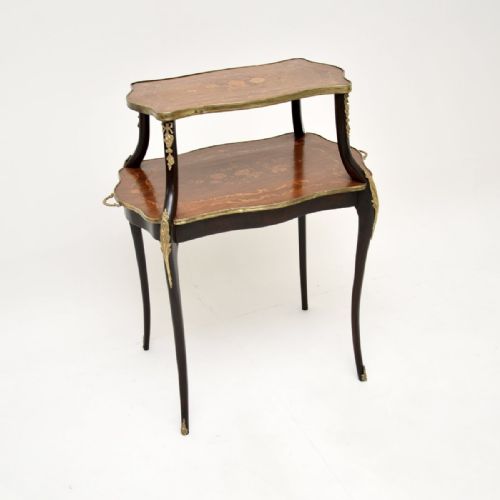
A French marquetry etagere brings tiered display space together with intricate floral or geometric wood veneers.
French Marquetry Etagere
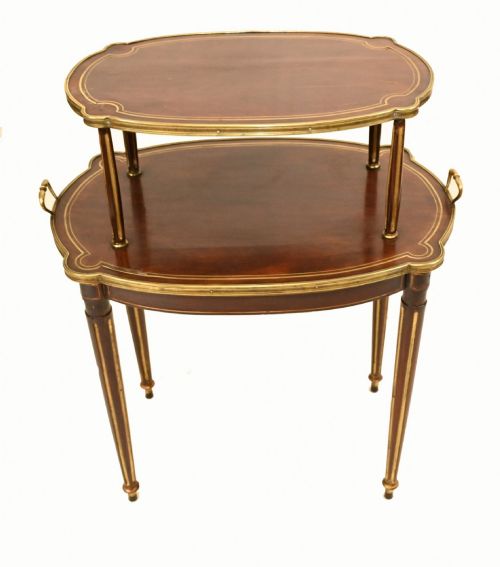
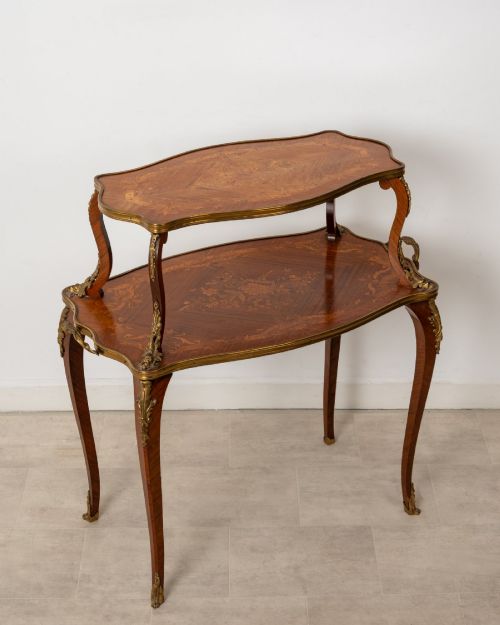
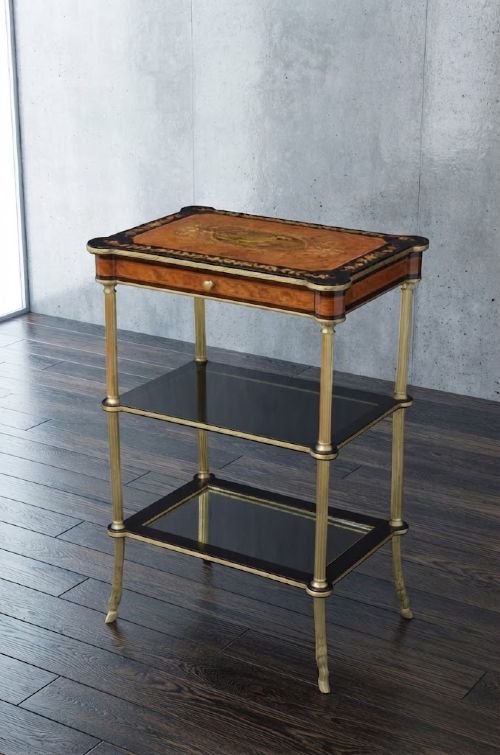
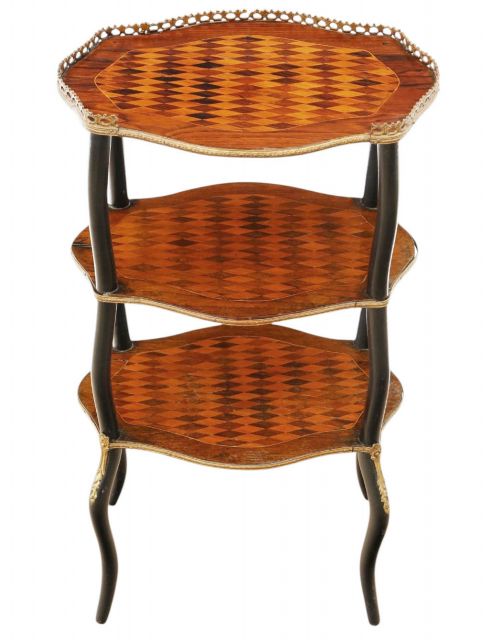
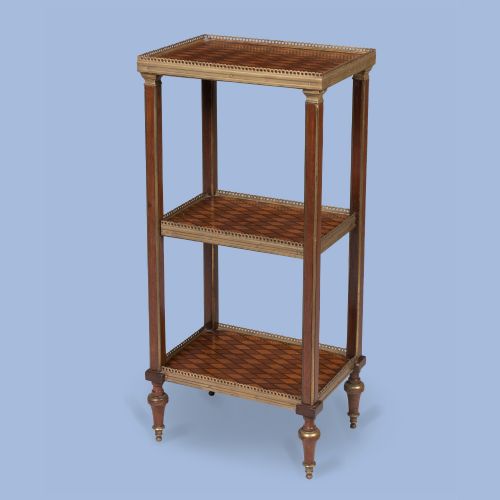
A French marquetry etagere functions primarily as an open tiered display stand or side table, holding decorative objects on multiple levels. These pieces emerge in various configurations, from two-tier occasional tables to taller three-height display shelves and tabletop units.
The material vocabulary relies heavily on contrasting timbers such as kingwood, walnut, rosewood, and satinwood, frequently enriched with floral or geometric marquetry inlay. Makers often integrate ebonised wood alongside brass galleries and ormolu mounts to accent the structural tiers.
Most examples date from the nineteenth century, spanning Victorian and Napoleon III periods, alongside later twentieth-century revivals. Buyers encounter Louis XV and Louis XVI stylistic influences that dictate the curved lines, cabriole legs, or symmetrical frameworks of each tier.
How they were made
Cabinetmakers constructed the foundational carcase using sturdy timbers like mahogany or walnut before applying decorative veneers. Thin sheets of kingwood, rosewood, and satinwood were hand-cut and pieced together to form elaborate floral bouquets or geometric patterns.
Craftsmen elevated the status of these tables by integrating cast bronze or ormolu mounts on the corners and feet. Perimetric brass galleries were often fitted to the upper and lower tiers to secure glassware and ornaments during use.
French Marquetry Etagere Retail Price Guide 2026
Typical asking prices for french marquetry etagere among the pieces listed under this phrase on Sellingantiques today, from the lower quarter to the upper quarter. They describe what is for sale here now, not the wider market.
Primary timbers recorded in the evidence include walnut, kingwood, rosewood, and satinwood, enhanced by brass and ormolu mounts.
What varies in quality
The precision and complexity of the marquetry inlay establish the baseline tier of craftsmanship. Pieces featuring detailed, multi-timber floral arrangements demand greater skill than those with repetitive geometric parquetry.
The weight and chasing of the ormolu mounts, together with the quality of the brass gallery work, separate standard cabinetmaking from exceptional workshops. Substantial secondary timbers and harmonious grain matching across the tiers signal superior construction.
Edwards & Roberts·Donald Ross
The French Marquetry Etagere Glossary
- Etagere
- A piece of furniture consisting of a set of open shelves for displaying small objects or ornaments. Multiple tiers allow items to be viewed from several angles.
- Marquetry
- Decorative inlay work where small pieces of variously coloured wood veneer are fitted together to form pictorial designs. Floral motifs and geometric patterns dominate this technique.
- Ormolu
- Gilded bronze mounts applied to furniture for decorative accent and edge protection. These metallic elements reflect the prevailing French taste of the nineteenth century.
- Kingwood
- A dense, richly figured tropical timber utilised extensively in high-end cabinetmaking for contrasting veneer panels. Its dark brown tones feature distinct lighter grain markings.
- Parquetry
- Geometric mosaic woodwork used for floors or furniture surfaces. Squares, triangles, and lozenges create repeating patterns across the table tiers.
French Marquetry Etagere: Frequently Asked Questions
What is an etagere used for?
An etagere provides multiple open tiers for displaying small decorative objects, porcelain, or silver.
Historically, these tiered stands occupied drawing rooms and parlours where hosts exhibited their finest curiosities.
How do I identify a French style etagere?
French examples typically feature curved cabriole legs, delicate ormolu mounts, and elaborate floral marquetry veneers.
Look also for raised brass galleries running along the outer edges of the individual display tiers.
Where should I place an etagere at home?
These open shelving units suit empty corners, hallway landings, or alongside seating arrangements as occasional side tables.
Mirrored tiers found on certain nineteenth-century examples help reflect light within smaller living spaces.
How do I care for antique marquetry furniture?
Keep wooden pieces away from direct sunlight and steady heat sources to prevent the delicate veneer from drying out.
Apply a traditional wax polish sparingly to maintain the natural lustre of the kingwood and rosewood surfaces.