
French Marquetry Drawers
French marquetry drawers bring complex floral and geometric wood veneers together with serpentine forms and marble tops.
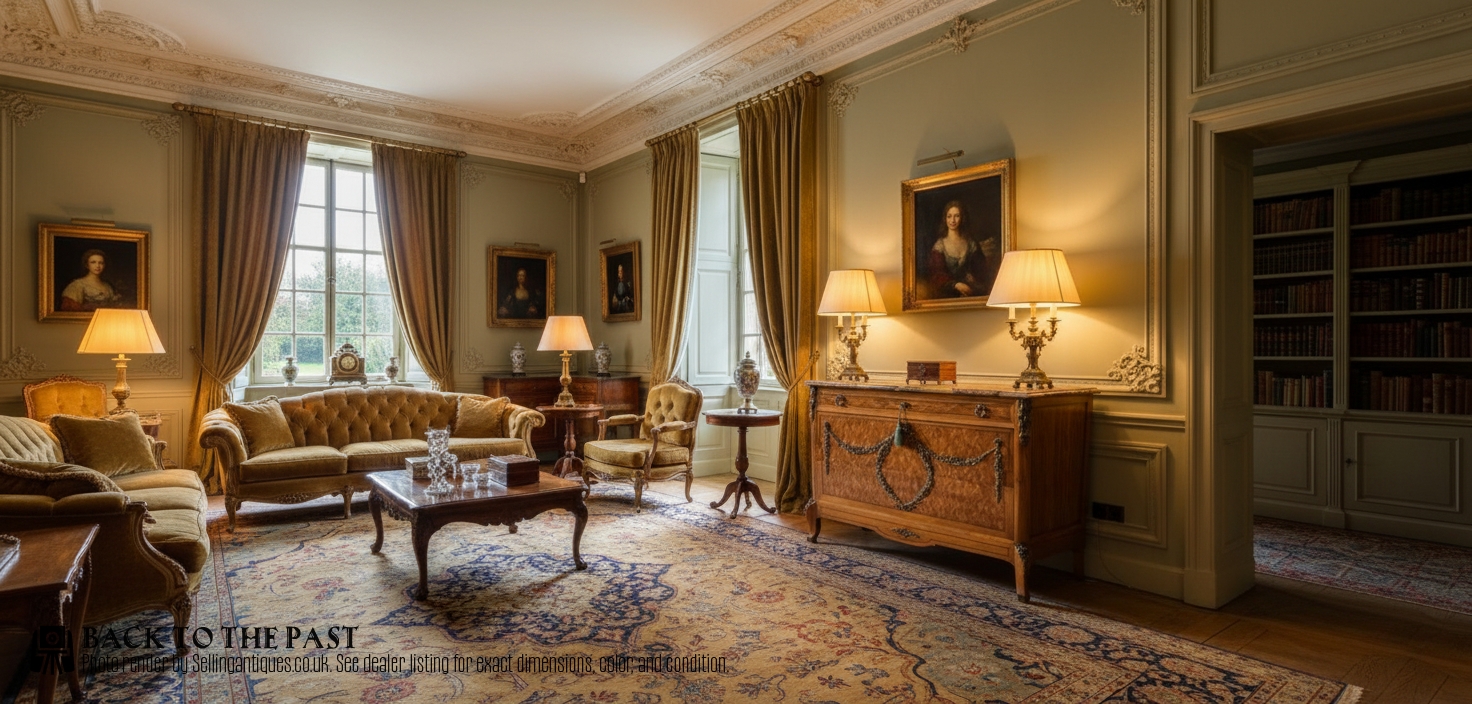
French Marquetry Drawers
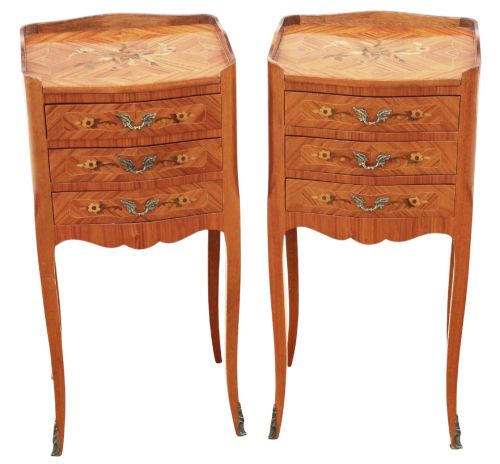
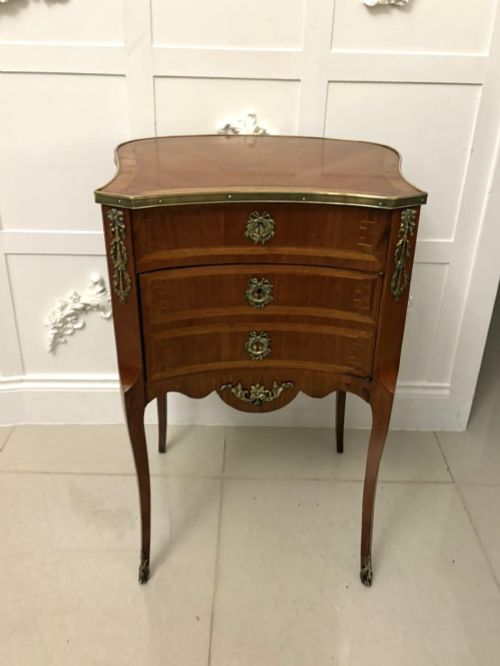
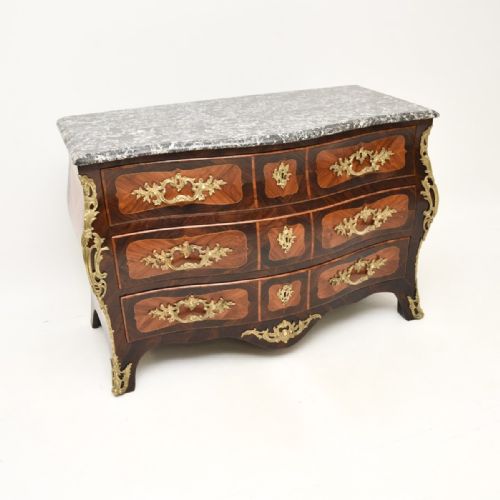
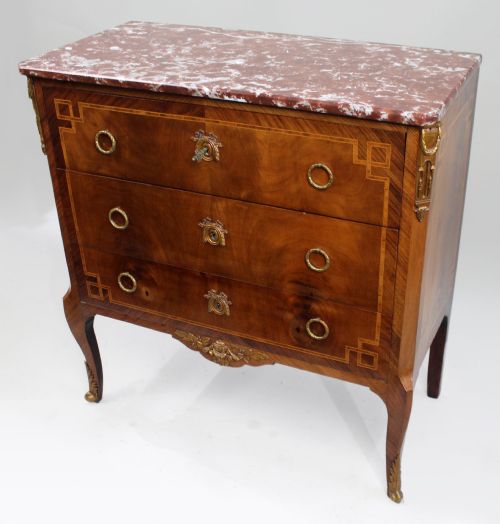
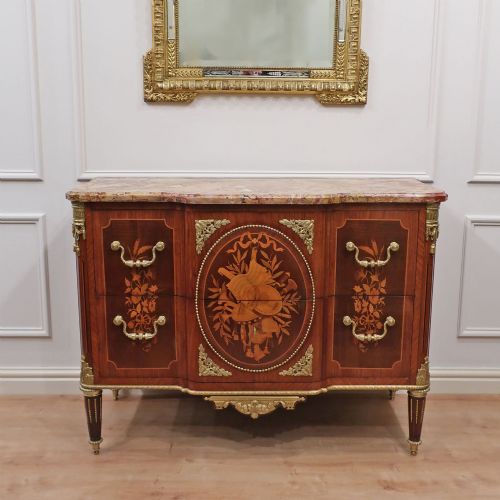
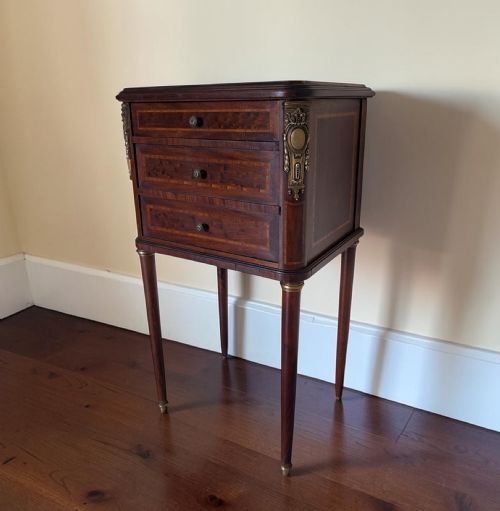
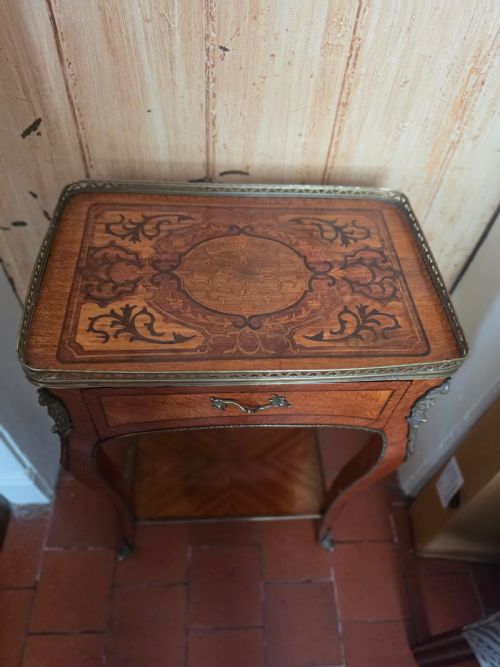
French marquetry drawers encompass commodes, bedside tables, and side cabinets originating from the eighteenth century onwards through various revival periods. These pieces demonstrate intricate surface patterns created with contrasting veneers set into hardwood carcases.
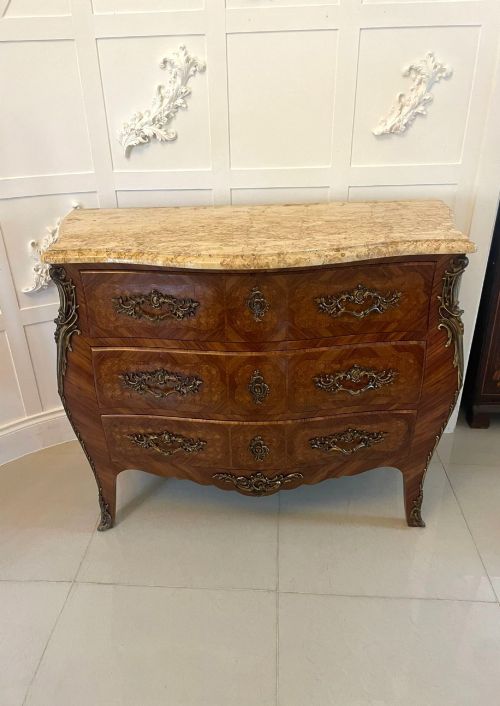
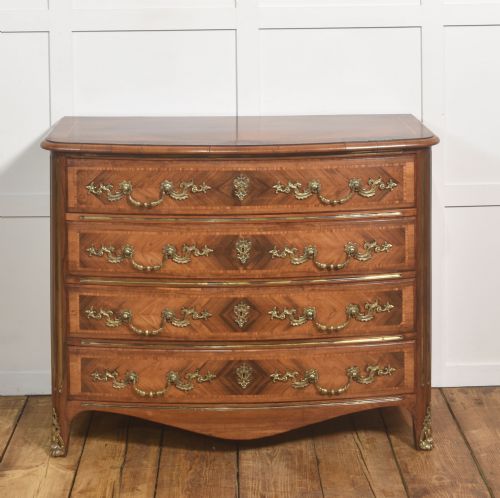
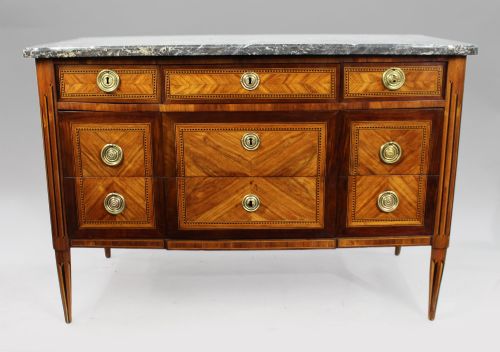
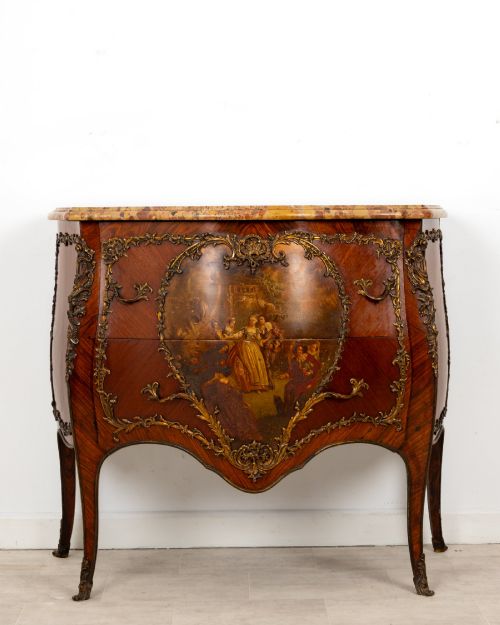
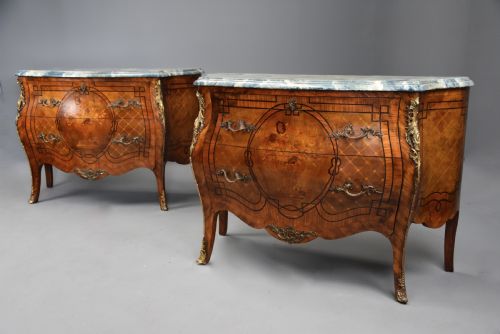
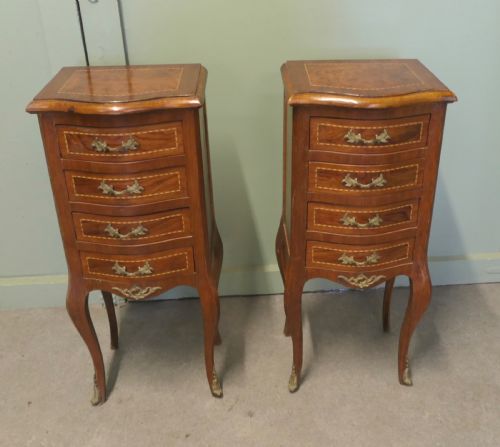
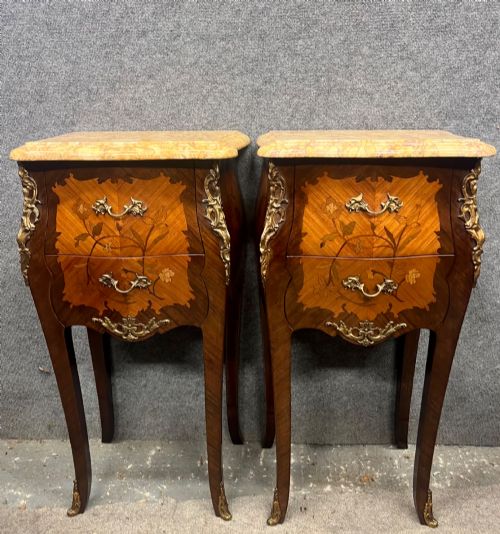
The most common examples encountered in this selection include nineteenth-century Louis XV and Louis XVI style commodes and matched pairs of bedside cabinets. Makers frequently adopted serpentine or bombe shapes alongside rectilinear forms, finishing the tops with shaped marble slabs.
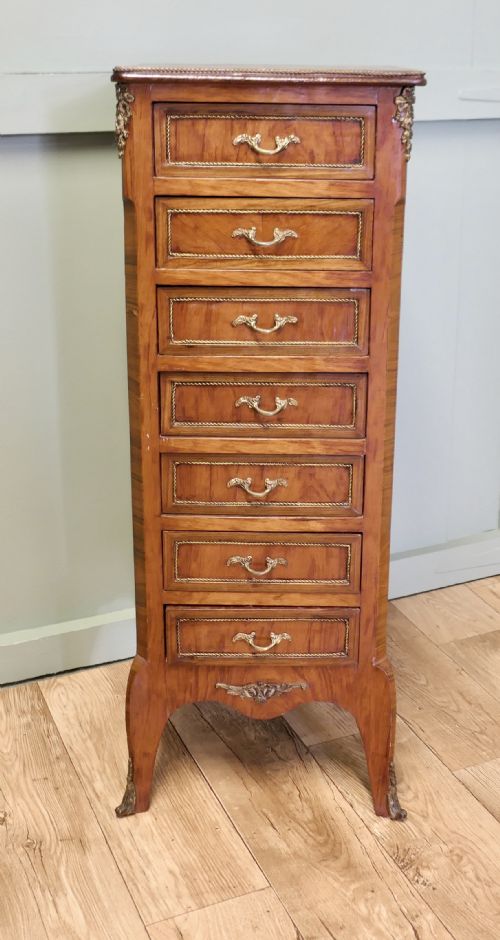
Originating largely from Parisian workshops and provincial French centres, these items combine practical storage with decorative cabinet work. Pieces range from full-sized hall chests to smaller nightstands with multiple operational drawers.
Materials and Construction
Cabinet makers constructed the foundational carcases using sturdy timbers such as walnut and oak, applying fine veneers of kingwood, rosewood, and other exotic woods across the visible surfaces. Marquetry patterns were hand-cut and pieced together before being glued to the frame.
Mounts and decorative accents of ormolu, gilt bronze, and cast brass were applied to corners, handles, and aprons to highlight the contours of the furniture. Heavy marble slabs, including rouge and white varieties, were shaped to fit precisely onto the upper surfaces of commodes and cabinets.
Listings feature items spanning from the eighteenth century through to the 1930s, incorporating marble, kingwood, and ormolu.
Evaluating Craftsmanship
Quality rests upon the precision of the veneer work and the complexity of the botanical or geometric designs integrated into the panels. Finer examples display seamless alignment across drawer joints and subtle tonal variations within the wood selection.
The weight and crispness of the bronze or ormolu mounts dictate the overall grade of the piece, alongside the thickness and quality of the fitted marble top. Interior drawer construction, utilising hand-cut dovetails and secondary timbers, further separates standard production from superior cabinet making.
Jacques Bircklé·Maison Krieger·Thomas Hache
The French Marquetry Drawers Glossary
- Marquetry
- Decorative veneer work forming pictures or patterns using various tinted woods. These pieces utilise precision-cut elements laid onto a solid carcase.
- Commode
- A low chest of drawers, typically featuring decorative mounts and a marble top. The form developed significantly during the eighteenth century in France.
- Ormolu
- Gilded bronze used for decorative mounts and handles on fine furniture. This material provides metallic contrast against dark wood veneers.
- Bombe
- A swelling, outward-curving commode shape characteristic of Louis XV designs. This profile requires specialised shaping of both the wooden frame and the veneer.
- Parquetry
- Geometric wood inlay forming repeating patterns such as cubes or chequers. Unlike marquetry, these designs rely on straight-lined symmetry rather than pictorial motifs.
French Marquetry Drawers: Frequently Asked Questions
How do I clean marble tops safely?
Use a soft cloth dampened with warm water and mild soap, avoiding acidic cleaners that etch the polished stone surface.
Dry the marble thoroughly afterwards to prevent water spots and maintain the natural sheen.
Are these drawers suitable for daily use?
These items serve well for everyday storage when treated with care, though delicate veneers require protection from excessive moisture and direct heat.
Drawer interiors function reliably once adjusted, but heavy loads should be avoided in smaller bedside cabinets.
How do I distinguish Louis XV from Louis XVI style?
Louis XV pieces feature flowing, asymmetrical curves, serpentine fronts, and cabriole legs.
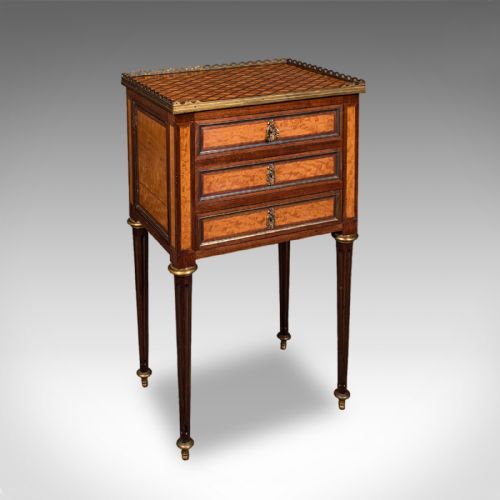
Louis XVI pieces emphasise straight lines, neoclassical symmetry, fluted columns, and geometric parquetry patterns.
What causes veneer lifting on old furniture?
Fluctuations in room temperature and humidity cause the underlying animal glue to dry out and fail over decades of exposure.
Professional conservation involves re-securing loose sections with appropriate adhesives to prevent further loss of the marquetry.