



French Neoclassical Drawers
French neoclassical drawers bring classical proportion and restrained ornament into a room through commodes, bedside cabinets and writing tables.
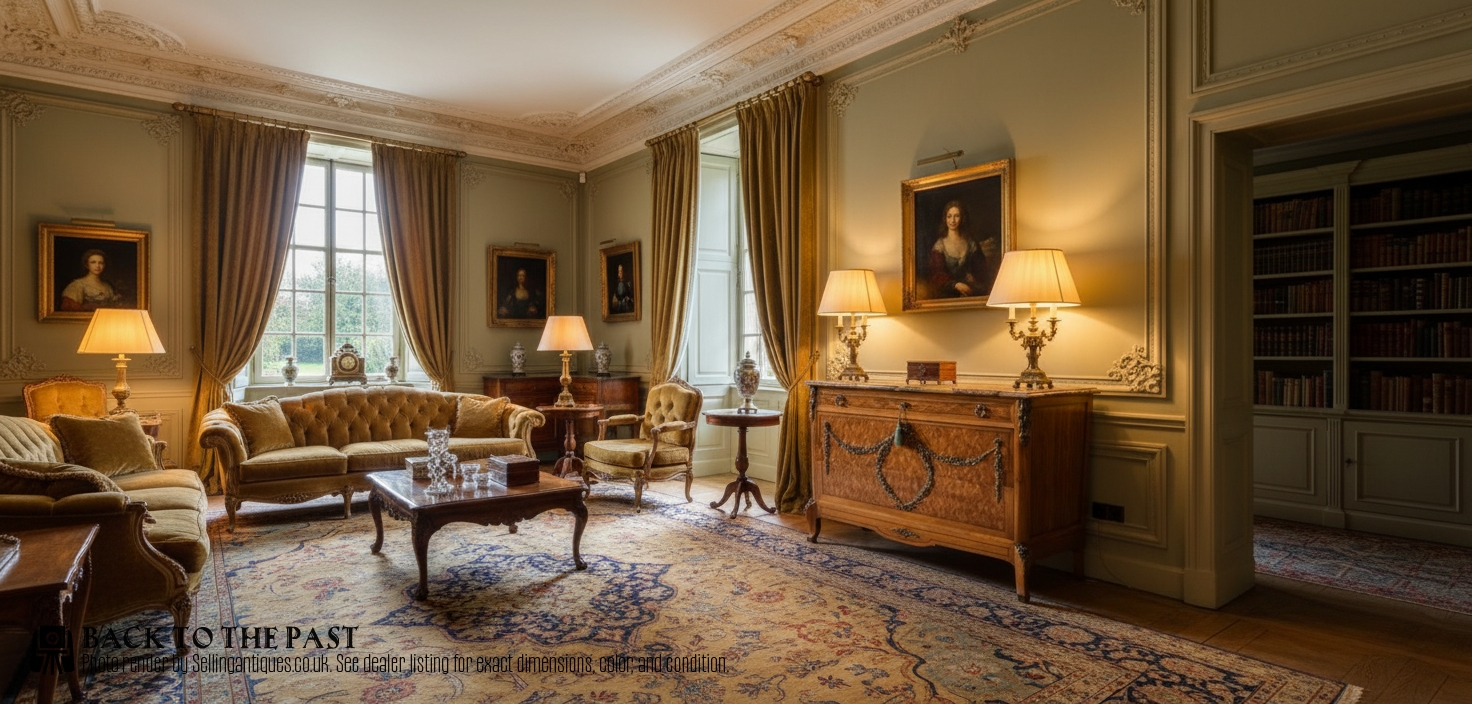
French Neoclassical Drawers
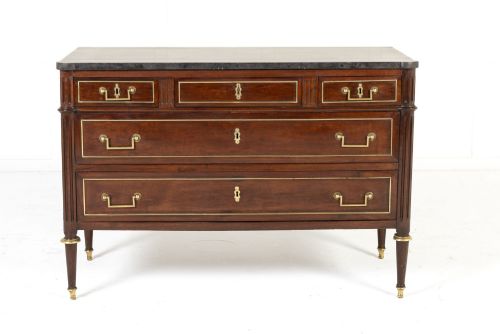
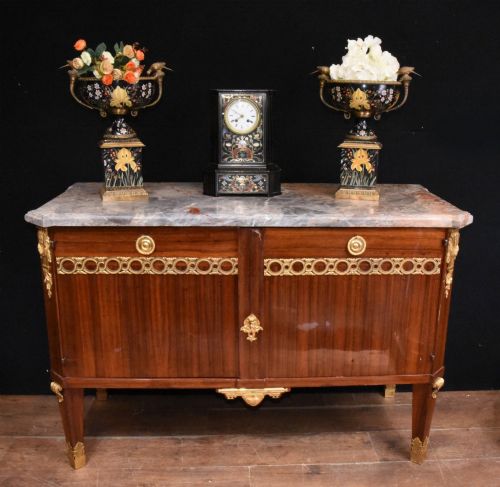
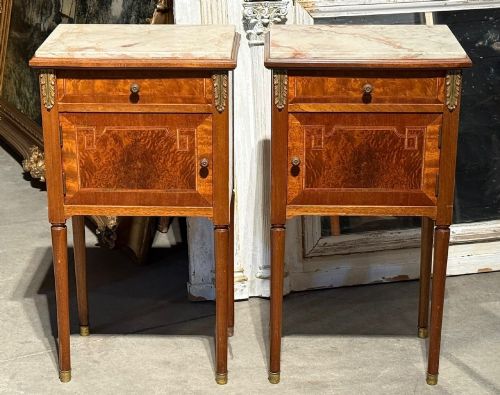
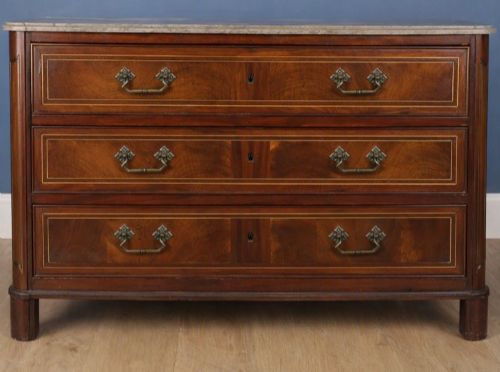
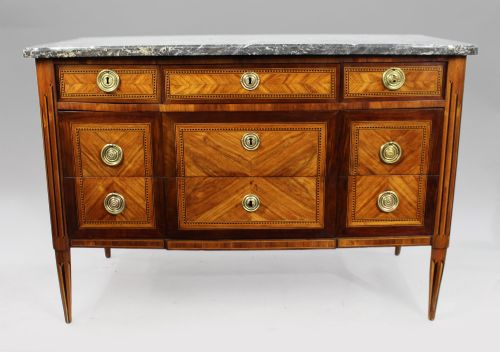
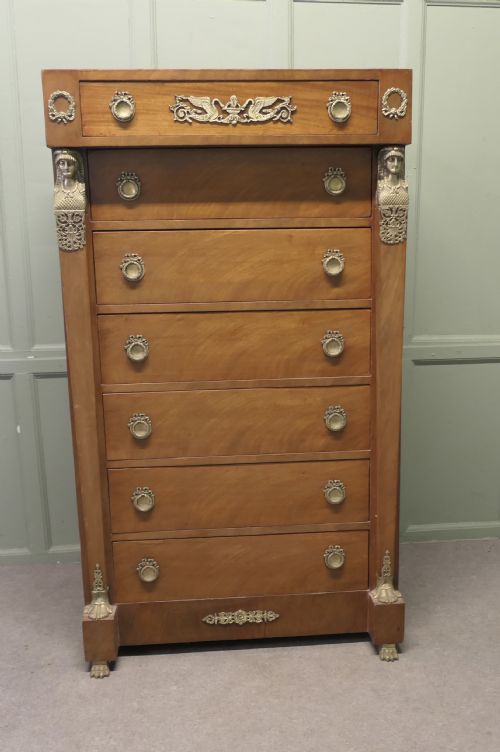
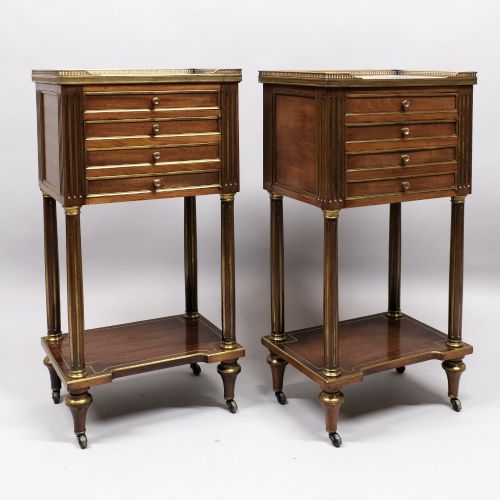
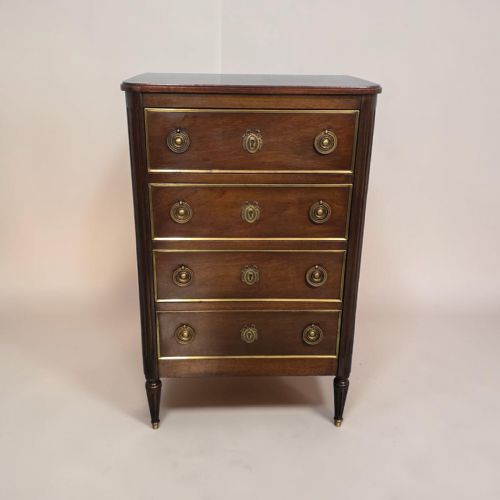
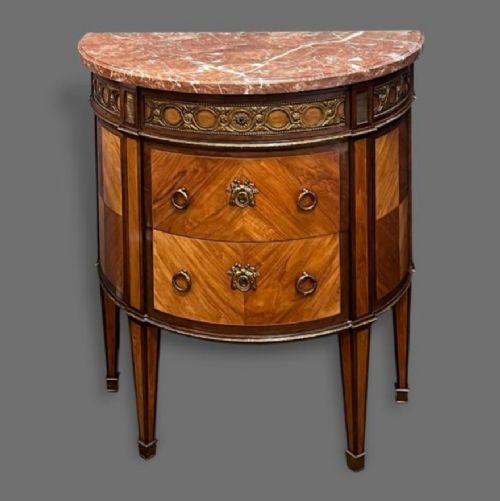
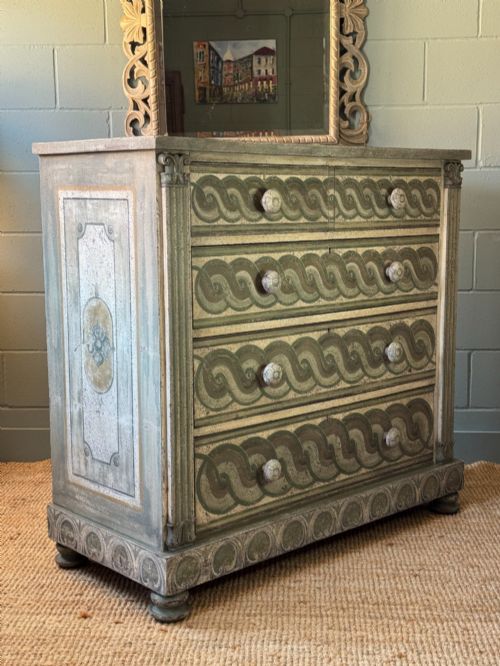
French neoclassical drawers encompass commodes, bedside cabinets and writing tables dating from the eighteenth century through to the early twentieth century. Buyers seeking french neoclassical drawers encounter formal commodes with marble tops, alongside painted night tables and tall chests reflecting Louis XVI and Empire styles.
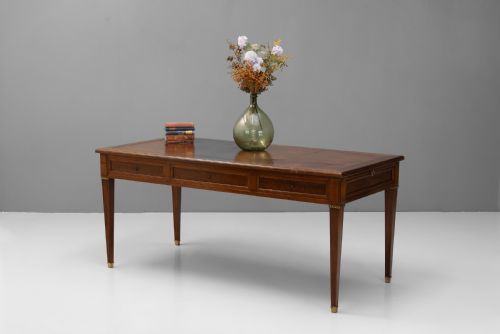
The pieces originate predominantly from French workshops, with occasional continental examples in walnut, mahogany, satinwood and cherrywood. Side tables and desks with drawers supplement the main group of storage furniture.
Makers and designers of the period embraced straight lines and symmetry, moving away from rococo curves towards architectural columns and parquetry. Surviving pieces range from provincial painted oak commodes to finely mounted satinwood and mahogany creations.
Materials and construction
Cabinetmakers constructed carcass frames in solid timbers such as walnut, mahogany and oak, applying veneers of satinwood, harewood and mahogany in geometric parquetry patterns. Marble slabs, sourced for their durability and veining, form the upper surface on many commodes and bedside cabinets.
Ormolu mounts, cast and gilt bronze, accentuate structural lines, drawer surrounds and corners on formal pieces. Brass embellishments and leather inserts appear on writing tables and bookcases, while painted finishes utilise neutral or muted tones on softwood and oak structures.
French Neoclassical Drawers Retail Price Guide 2026
Typical asking prices for french neoclassical drawers among the pieces listed under this phrase on Sellingantiques today, from the lower quarter to the upper quarter. They describe what is for sale here now, not the wider market.
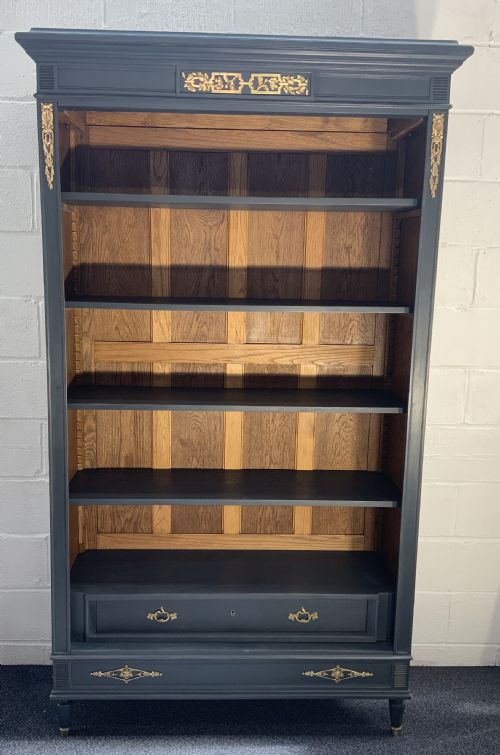
Object forms recorded here include chests of drawers, bedside cabinets, writing tables, bookcases, and console tables.
Distinctions in quality
Quality rests upon the precision of the cabinetmaker's joinery, the selection of figured veneers, and the crispness of the cast ormolu mounts. Finer examples display symmetrical parquetry and substantial marble tops shaped to follow the serpentine or demi-lune contours of the carcass.
Provincial pieces employ local timbers such as cherrywood or oak with simpler painted surfaces, offering a domestic interpretation of court styles. The integration of functional drawers within balanced architectural proportions distinguishes standard utility furniture from sophisticated salon pieces.
Mon Krieger·Riesener
The French Neoclassical Drawers Glossary
- Commode
- A low chest of drawers or cabinet designed for domestic use. These pieces often feature marble tops and decorative veneer work.
- Ormolu
- Gilt bronze mounts applied to furniture for decorative effect. The technique involves coating cast bronze with a gold amalgam.
- Parquetry
- Geometric patterns formed by fitting small pieces of veneer together. Cabinetmakers used contrasting timbers to create optical depth on drawer fronts.
- Demi-lune
- A half-moon or semicircular shape. Commodes and side tables built in this form fit flush against flat walls.
- Serpentine
- A curved line that undulates inwards and outwards. This contour appears frequently on the front edges of high-status commodes.
French Neoclassical Drawers: Frequently Asked Questions
What is a french neoclassical commode?
A french neoclassical commode is a low chest of drawers characterised by straight architectural lines, symmetrical proportions, and classical ornamentation. These pieces often feature marble tops and detailed parquetry.
Craftsmen built them using native and exotic hardwoods, sometimes mounting them with cast ormolu to highlight the structural form.
How do I distinguish Louis XVI from Empire style?
Louis XVI pieces rely on restrained classical motifs, fluted columns, and light parquetry veneers. They project an air of delicate rectilinear balance.
Empire style, emerging later, favours heavier mahogany construction, bold ormolu mounts, and military or classical symbols reflecting Napoleonic influence.
Where were these chests of drawers used?
Original owners placed commodes and cabinets in principal bedchambers, salons, and formal sitting rooms. They served for storing linen, garments, and personal valuables.
Smaller bedside tables and writing desks with drawers functioned as functional bedside or study furniture for daily correspondence.
Are marble tops original to these pieces?
Marble tops on eighteenth and nineteenth-century commodes were typically specified at the time of manufacture to provide a durable and luxurious surface. They rest directly upon the wooden carcass.
Matching the marble's thickness, edge profile, and geological type to the period helps confirm its authenticity.